

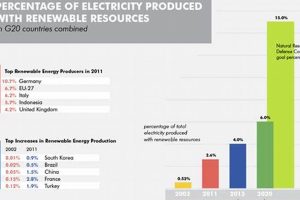

The proportion of total energy generated globally that originates from sources naturally replenished, such as solar, wind, hydro, geothermal, and biomass, represents a critical metric in evaluating energy sustainability. This percentage reflects... Read more »
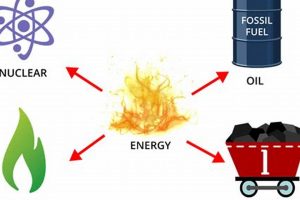
Materials sourced from the Earth, which cannot be replenished within a human lifetime, are critical to modern society. Examples of these finite materials include coal, a combustible sedimentary rock composed mostly of... Read more »

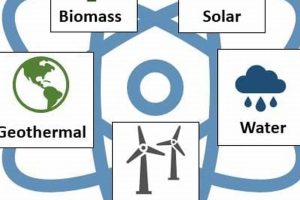
Harnessing energy from naturally replenishing sources offers a pathway towards a more sustainable future. Solar power, derived from the sun’s radiant energy, represents one such avenue. Wind energy, captured through the kinetic... Read more »

A comprehensive examination of power generation methods that naturally replenish, such as solar, wind, hydro, geothermal, and biomass, constitutes a vital area of study. Such analyses often delve into the technological advancements,... Read more »
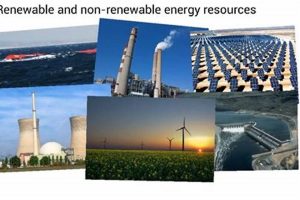
A common question structure in assessments focuses on discerning between energy sources that naturally replenish and those that do not. These questions present a list of options, requiring the test-taker to identify... Read more »
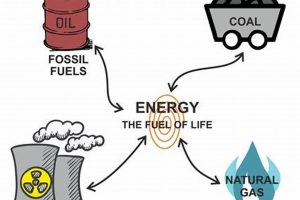
These are finite natural resources that cannot be replenished at the same rate at which they are consumed. Once depleted, these sources will not be available for future use within a human... Read more »
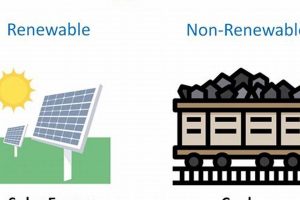
Harnessing power from naturally replenishing sources offers a sustainable alternative to traditional energy production. These encompass a spectrum of options, including solar energy captured from sunlight, wind power converted by turbines, geothermal... Read more »

Geothermal energy taps into the Earth’s internal heat, a virtually inexhaustible reservoir originating from planetary formation and radioactive decay. This heat, constantly replenished from the Earth’s core, distinguishes it from fossil fuels,... Read more »
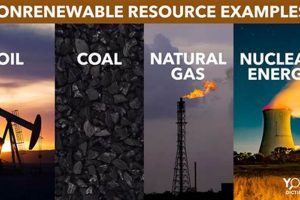
These finite materials, derived from the Earth, are consumed at a rate exceeding their natural replenishment. Fossil fuels, such as coal, petroleum, and natural gas, exemplify this category. Their formation requires geological... Read more »
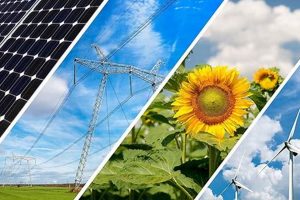
The surrounding ecological system and its capacity to provide materials and energy that can be replenished at a rate comparable to their rate of consumption form a critical foundation for societal well-being.... Read more »