The concept of hydrocarbon resources replenishing within a human timescale is not supported by current scientific understanding. The formation of these resources requires specific geological conditions and extended periods, spanning millions of years, to accumulate organic matter and transform it into usable forms. Factors such as intense pressure, heat, and anaerobic environments are critical for this transformation process.
Its perceived strategic importance in the 20th and 21st centuries stems from its widespread use in transportation, manufacturing, and energy generation. Historically, its accessibility and relatively high energy density made it a primary fuel source. However, extraction and utilization practices have raised concerns regarding environmental sustainability, including greenhouse gas emissions and habitat disruption.
Discussions surrounding energy production and sustainability often involve comparing finite resources with those that naturally replenish. This frequently leads to exploration of alternative energy sources and strategies for mitigating the environmental impact of current practices. Focus shifts towards renewable technologies and improving energy efficiency.
Considerations Regarding Hydrocarbon Resource Management
The following points address key aspects related to the misconception of hydrocarbons as continuously generated resources.
Tip 1: Evaluate Resource Depletion Rates: Assess the rate at which these reserves are consumed against the geological timescale required for their formation. This comparison emphasizes the finite nature of these resources.
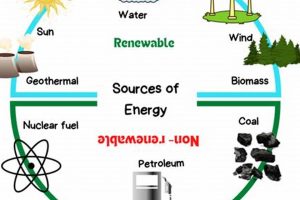
Tip 2: Promote Investment in Alternative Energy: Prioritize the development and deployment of truly renewable energy technologies, such as solar, wind, and geothermal, to reduce dependence on finite reserves.
Tip 3: Enhance Energy Efficiency: Implement strategies to minimize energy consumption across various sectors, including transportation, industry, and residential applications. Improving efficiency extends the lifespan of existing resources and reduces environmental impact.
Tip 4: Support Research and Development: Allocate resources to research innovative technologies for energy storage, carbon capture, and alternative fuel sources. This investment fosters a more sustainable energy future.
Tip 5: Implement Carbon Pricing Mechanisms: Consider carbon taxes or cap-and-trade systems to internalize the environmental costs associated with the combustion of hydrocarbon resources. This incentivizes reduced emissions and promotes cleaner energy alternatives.
Tip 6: Foster International Collaboration: Encourage global cooperation on energy policy, technology sharing, and sustainable resource management. Collaborative efforts are essential for addressing global energy challenges.
Tip 7: Educate the Public: Raise awareness about the finite nature of geological resources and the importance of transitioning to sustainable energy systems. Informed public discourse is crucial for driving policy changes and individual actions.
Prioritizing efficiency, investing in renewable energy, and understanding the limitations of geological processes are crucial steps towards a sustainable energy future. These actions mitigate reliance on finite resources and lessen environmental consequences.
By adopting comprehensive resource management strategies and promoting sustainable practices, a responsible approach to energy consumption can be established. This groundwork contributes to an environmentally conscious future.
1. Geological Formation

Geological formation is the process by which subterranean hydrocarbon deposits accumulate over extended geological timescales. Understanding this process is crucial to evaluating the assertion that such resources are renewable. The duration and specific conditions required for formation directly contradict the rapid consumption rate by human activity, thereby influencing perspectives on resource sustainability.
- Organic Matter Accumulation
The initial stage involves the accumulation of vast quantities of organic matter, primarily the remains of marine organisms, in oxygen-deprived environments. Examples include ancient seabeds and swampy regions. The lack of oxygen prevents complete decomposition, allowing the organic material to be preserved and buried under layers of sediment. This accumulation is a slow and gradual process that occurs over millennia, a timeframe significantly different from human consumption patterns.
- Sedimentation and Burial
Over time, the accumulating organic matter is buried under increasing layers of sediment, such as sand, silt, and clay. This burial compacts the organic material and subjects it to increasing pressure and temperature. The weight of overlying sediments gradually transforms the organic matter into kerogen, a waxy substance that is a precursor to hydrocarbons. The depth and duration of burial are critical factors determining the type and quality of resulting hydrocarbons.
- Transformation to Hydrocarbons
As the buried kerogen is subjected to higher temperatures and pressures, it undergoes a series of chemical reactions that break down the large organic molecules into smaller, more mobile hydrocarbon molecules. This process, known as catagenesis, transforms kerogen into crude and natural gas. The specific temperature and pressure conditions determine the type of hydrocarbon produced, with higher temperatures favoring the formation of natural gas. This transformation process typically occurs over millions of years.
- Migration and Trapping
The newly formed hydrocarbons, being less dense than the surrounding rock and water, migrate upwards through porous and permeable rock formations. This migration continues until the hydrocarbons encounter an impermeable barrier, such as a layer of shale or a fault line, which traps them in an underground reservoir. These reservoirs are the locations where commercial deposits of crude and natural gas are found. The effectiveness of trapping mechanisms is crucial for the concentration and accumulation of economically viable deposits.
These facets of geological formation reveal the extended timescales involved spanning millions of years making the resource, for practical purposes, non-renewable. The formation process is not dynamically replenishing at a rate commensurate with extraction, thereby challenging any classification of such resources as sustainable or dynamically renewable within a human context.
2. Timescale Mismatch

The concept of a “timescale mismatch” is central to understanding why the classification of geological resources as constantly renewing is inaccurate. These resources form through geological processes spanning millions of years, whereas human extraction and consumption occur at an exponentially faster rate. This disparity constitutes the fundamental reason why oil and similar resources are not considered dynamically regenerative.
Consider the Permian Basin in the United States, a significant geological region renowned for hydrocarbon production. The source rocks in this basin, containing the organic material that ultimately transformed into these resources, accumulated over millions of years during the Permian Period. The current extraction rate in this region far exceeds the natural replenishment rate, resulting in a net depletion of the resource base. This example demonstrates the practical significance of understanding the “timescale mismatch;” ignoring it can lead to unsustainable resource management practices and long-term economic and environmental consequences.
In summary, the substantial temporal difference between resource formation and depletion nullifies any claim that such resources are dynamically renewing. Recognition of this timescale difference is essential for responsible energy policy, promoting investment in alternative resources, and advancing sustainable energy solutions that can meet present and future energy needs without depleting finite geological reserves. Addressing the ‘timescale mismatch’ is crucial for environmental stewardship and energy security.
3. Finite Nature

The designation of a resource as having “finite nature” directly contradicts the concept of its continuous regeneration. Geological hydrocarbons exemplify this contradiction. Their formation necessitates specific geological conditions and extended periods, often millions of years. Extraction rates significantly outpace the natural formation, leading to a net reduction in available reserves. Consequently, classifying such resources as dynamically renewing is scientifically inaccurate and potentially misleading.
Consider the Athabasca oil sands in Canada. While representing a substantial hydrocarbon reserve, their extraction is resource-intensive and environmentally impactful. The rate at which these sands are being processed far exceeds any natural regeneration process. This exemplifies the practical implications of finite nature, where extraction decisions today limit future availability. Efficient extraction technologies and responsible environmental stewardship become paramount in the context of this finite resource.
Recognizing the finite nature of geologic reserves is vital for informed energy policy and investment decisions. Transitioning to renewable energy sources, improving energy efficiency, and developing sustainable resource management strategies are essential to mitigate the environmental and economic consequences of resource depletion. Acknowledging the limited nature of such resources promotes responsible consumption and encourages development of sustainable alternatives for the long term.
4. Environmental Impact

The assertion that “oil is a renewable energy source” is fundamentally incompatible with the extensive environmental consequences associated with its extraction, processing, and combustion. These processes contribute significantly to air and water pollution, habitat destruction, and climate change, undermining the viability of long-term environmental sustainability. The extraction phase, whether through conventional drilling or methods like hydraulic fracturing, frequently leads to the contamination of groundwater and surface water sources. Oil spills, both large-scale events and smaller, chronic leaks, further exacerbate water pollution, harming aquatic ecosystems and potentially affecting human water supplies. Furthermore, habitat destruction due to infrastructure development for extraction and transportation negatively impacts biodiversity.
The processing of geological resources into usable fuels generates considerable air pollution, releasing pollutants such as sulfur dioxide, nitrogen oxides, and particulate matter. These pollutants contribute to respiratory problems, acid rain, and smog. The combustion of these fuels for transportation, electricity generation, and industrial processes is a primary source of greenhouse gas emissions, including carbon dioxide, methane, and nitrous oxide. These emissions contribute to global warming and climate change, leading to rising sea levels, altered weather patterns, and increased frequency of extreme weather events. These far-reaching effects on the global climate and ecosystems further underscore the environmental burden associated with the utilization of geological reserves, challenging any notion of ecological renewability.
In summary, the substantial environmental consequences associated with all phases of the geological resource lifecycle directly contradict its classification as constantly renewing. The negative impacts on air and water quality, habitat preservation, and global climate stability highlight the need for a transition to truly sustainable energy sources. Understanding the environmental implications of using such resources is essential for informed policy decisions and the development of sustainable energy systems that minimize harm to the environment.
5. Resource Depletion

The concept of perpetually available hydrocarbon reserves stands in direct opposition to observable evidence of resource depletion. Extraction rates for these reserves vastly exceed the geological timescales required for their natural replenishment. This imbalance leads to a progressive reduction in readily accessible, economically viable deposits. Continued reliance on these resources, without considering depletion rates, presents long-term economic and environmental challenges. Examples such as the decline in production from certain previously prolific wells and fields underscore the finite nature of these reserves and the practical realities of resource depletion. Understanding this depletion is crucial for energy planning and the exploration of alternative resources.
Further exacerbating this depletion is the extraction of unconventional geological reserves, such as oil sands and shale resources. These sources often require more energy-intensive and environmentally impactful extraction methods compared to conventional drilling. While they may temporarily augment supply, their exploitation further accelerates the depletion of the overall resource base. The economic viability of extracting these unconventional resources is also sensitive to price fluctuations and technological advancements, highlighting the complexity of managing dwindling reserves.
In summary, the phenomenon of resource depletion directly contradicts the claim that geologic resources are continuously regenerating. Recognizing this reality is essential for transitioning to sustainable energy systems, promoting energy efficiency, and investing in alternative resources. Failure to acknowledge and address the issue of depletion can lead to increased energy insecurity, environmental degradation, and economic instability.
6. Combustion Consequences

The extensive environmental and atmospheric alterations resulting from the combustion of hydrocarbons directly challenge any classification of geologic resources as continuously regenerating. The release of pollutants and greenhouse gases during combustion creates far-reaching, detrimental effects, making the concept of oil as a renewable resource untenable.
- Greenhouse Gas Emissions
Combustion releases substantial quantities of carbon dioxide (CO2), methane (CH4), and nitrous oxide (N2O), all significant contributors to global warming. These gases trap heat within the atmosphere, leading to climate change, rising sea levels, and altered weather patterns. The cumulative effect of these emissions far surpasses any natural sequestration processes, underscoring the non-renewable nature of the overall system.
- Air Pollution
The burning of geologic resources generates harmful air pollutants, including particulate matter (PM), sulfur dioxide (SO2), nitrogen oxides (NOx), and volatile organic compounds (VOCs). These pollutants contribute to respiratory illnesses, cardiovascular problems, and other adverse health effects. Acid rain, formed from SO2 and NOx emissions, damages ecosystems and infrastructure. These emissions directly compromise environmental quality and human health, contradicting any assertion of dynamic renewability.
- Carbon Footprint
The concept of a carbon footprint quantifies the total greenhouse gas emissions associated with the entire lifecycle of a product or activity, including the extraction, processing, transportation, and combustion of geological resources. The substantial carbon footprint directly contradicts claims of dynamic renewal, emphasizing the net addition of carbon to the atmosphere and its lasting environmental impacts.
- Depletion of Oxygen
The combustion process consumes oxygen (O2) and produces carbon dioxide (CO2). While the Earth’s atmosphere is vast, sustained combustion of hydrocarbons, particularly at current rates, contributes to a gradual reduction in atmospheric oxygen levels in localized areas. Though not an immediate threat, the imbalance further highlights the non-sustainable nature of relying on combustion-based energy systems.
These consequences, ranging from global climate change to localized air pollution, underscore the detrimental impact of hydrocarbon combustion. The scale and scope of these effects directly challenge the notion that the source is constantly renewing. Recognizing these combustion-related ramifications is essential for promoting sustainable energy policies and transitioning to alternative energy sources that minimize environmental harm.
7. Alternative Energy
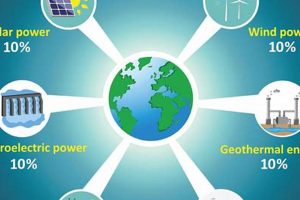
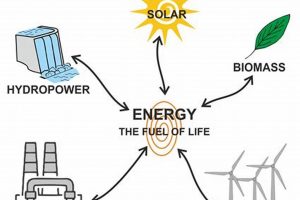
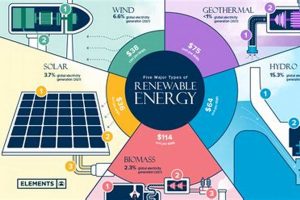
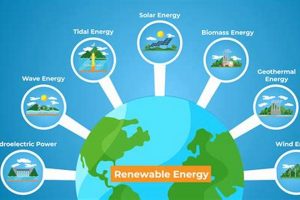
The development and adoption of alternative energy sources are intrinsically linked to the understanding that geological resources are not dynamically renewable. The recognition of finite reserves and the detrimental environmental consequences of extraction and combustion necessitate a shift toward sustainable energy alternatives. Alternative energy sources, such as solar, wind, geothermal, and hydro, offer the potential to meet energy demands without depleting finite geological reserves or exacerbating climate change. Therefore, the absence of a dynamically renewable nature drives the imperative to invest in and deploy alternative energy technologies.
For instance, Germany’s Energiewende (energy transition) exemplifies the practical application of this understanding. Recognizing the limitations and environmental burdens associated with geologic resources, Germany has invested heavily in renewable energy infrastructure, aiming to reduce its dependence on hydrocarbon imports and mitigate greenhouse gas emissions. Similarly, countries with abundant solar or wind resources, such as Spain or Denmark, are leveraging these resources to generate electricity and reduce reliance on traditional fuels. These examples demonstrate the tangible link between understanding the limitations of traditional fuel sources and the proactive pursuit of alternative energy options.
In conclusion, the exploration and adoption of alternative energy is not merely an isolated technological endeavor, but rather a direct consequence of recognizing the unsustainable nature of current reliance on finite geologic resources. Addressing the environmental and economic challenges associated with these geologic fuel sources necessitates a global transition towards sustainable energy solutions. This transition requires investment in research and development, supportive policies, and widespread adoption of alternative energy technologies to secure a sustainable energy future.
Frequently Asked Questions Regarding the Sustainability of Geologic Resources
The following questions address common misconceptions and concerns surrounding the renewability of subsurface geological deposits.
Question 1: Is hydrocarbon formation a continuous process, implying a sustainable resource base?
Hydrocarbon formation occurs over millions of years under specific geological conditions. Extraction rates significantly exceed natural formation rates, leading to depletion rather than sustainability.
Question 2: Can technological advancements render these geological resources dynamically renewable?
Technological advancements may improve extraction efficiency or reduce environmental impact, but they cannot accelerate the geological processes responsible for the formation of these resources.
Question 3: What is the significance of the timescale mismatch between formation and consumption?
The vast temporal difference between resource creation and utilization underscores the finite nature. Reserves are consumed at rates orders of magnitude faster than their replenishment.
Question 4: How does combustion contribute to the misconception of sustainability?
Combustion releases greenhouse gases and pollutants, exacerbating climate change and environmental degradation. These consequences contradict any claim of dynamic renewability.
Question 5: Does the presence of vast unconventional resources negate the concept of depletion?
Unconventional resources, such as oil sands and shale, require energy-intensive extraction methods and accelerate overall resource depletion, not negate it.
Question 6: Why is the promotion of alternative energy sources crucial for long-term sustainability?
Transitioning to alternative energy mitigates dependence on finite, environmentally damaging resources, promoting a sustainable energy future.
In summary, understanding the geological timescales involved in resource formation, acknowledging the impact of combustion, and promoting sustainable practices are essential for responsible resource management.
Consider further exploration into specific alternative energy technologies and sustainable resource management practices for deeper insights.
Oil is a Renewable Energy Source
This exploration has definitively demonstrated that the assertion “oil is a renewable energy source” is a scientifically inaccurate and misleading statement. The geological formation of hydrocarbon deposits requires millions of years, a timeframe drastically disproportionate to the rate at which these resources are extracted and consumed. Furthermore, the combustion of geological fuel sources releases substantial pollutants and greenhouse gases, contributing to environmental degradation and climate change. These consequences negate any claim of sustainability or dynamic renewal. The concept of an “oil is a renewable energy source” is therefore unsustainable.
The imperative for a transition towards truly sustainable energy systems is clear. Continued reliance on finite, environmentally damaging resources jeopardizes future energy security and planetary health. Acknowledging the irrefutable evidence against the idea that oil is a renewable energy source compels responsible action, including increased investment in alternative energy technologies, promotion of energy efficiency measures, and the development of sustainable resource management policies. The future depends on rejecting misconceptions and embracing tangible pathways toward environmental stewardship and a sustainable energy future.