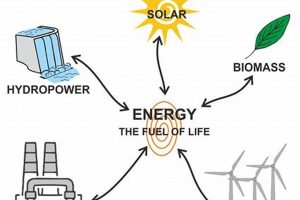
Resources that naturally replenish themselves over a relatively short period are considered sustainable energy options. These contrast with finite resources like fossil fuels, which take millions of years to form. Solar power, derived from the sun’s radiation, is one prominent example. Another is wind energy, captured through the movement of air currents. Geothermal energy, tapped from the Earth’s internal heat, also falls into this category. Hydroelectric power, generated from the flow of water, is a further illustration, as is biomass, which utilizes organic matter.
The significance of employing these sustainable options lies in their potential to reduce reliance on fossil fuels, thereby mitigating greenhouse gas emissions and combating climate change. Furthermore, the utilization of resources that replenish naturally ensures long-term energy security, as the sources are theoretically inexhaustible. Historically, reliance on these sources was limited by technological constraints, but advancements are steadily improving efficiency and reducing costs.
The subsequent discussion will delve into the specifics of these energy types, examining their respective technologies, advantages, and challenges. Exploration of current research and future development directions will also be undertaken, providing a comprehensive overview of their potential role in a sustainable energy future.
Harnessing Sustainable Energy
The adoption of energy sources that naturally replenish demands careful planning and execution. Maximizing the benefits of these technologies requires consideration of various factors, from resource availability to infrastructure development.
Tip 1: Assess Local Resource Availability: Before investing in any sustainable energy technology, conduct a thorough assessment of local resources. For example, solar potential varies greatly depending on geographical location and climate conditions. Wind resources similarly depend on regional weather patterns and terrain.
Tip 2: Prioritize Energy Efficiency: Reducing overall energy consumption minimizes the need for energy generation from any source. Implement energy-efficient practices in buildings, transportation, and industrial processes. These measures can significantly decrease the demand for energy, regardless of its origin.
Tip 3: Integrate Storage Solutions: Intermittency is a common challenge with some energy resources, such as solar and wind. Battery storage technologies, pumped hydro storage, and other energy storage solutions can help to stabilize the energy supply and ensure reliable access even when the primary source is unavailable.
Tip 4: Develop Smart Grids: Modernizing the electrical grid is crucial for integrating sustainable energy sources effectively. Smart grids utilize advanced sensors, communication technologies, and control systems to optimize energy distribution, manage fluctuations in supply and demand, and enhance grid stability.
Tip 5: Explore Hybrid Systems: Combining multiple sources can enhance reliability and resilience. A hybrid system might include solar panels, wind turbines, and a backup generator, ensuring a continuous power supply even if one component is offline.
Tip 6: Consider Lifecycle Costs: When evaluating different options, focus on the total cost of ownership, including installation, maintenance, and decommissioning. While some options may have higher upfront costs, their long-term operational expenses may be significantly lower.
Tip 7: Advocate for Supportive Policies: Government policies, such as tax incentives, feed-in tariffs, and carbon pricing, can play a critical role in promoting the adoption of sustainable energy technologies. Support policies that incentivize investment and innovation.
Implementing these strategies contributes to a more sustainable energy future, reducing environmental impact and enhancing energy security. Careful planning and strategic investment are key to realizing the full potential of these technologies.
The subsequent sections will explore the specific challenges and opportunities associated with each major type, providing a more detailed analysis of their potential contributions to a sustainable energy transition.
1. Solar Energy Systems

Solar energy systems represent a significant component of sustainable energy resources, directly contributing to the diversification of power generation away from finite fossil fuels. The fundamental connection resides in the inherent renewability of solar radiation, a constantly replenished resource that solar technologies harness. As a result, deploying solar systems reduces reliance on sources contributing to greenhouse gas emissions and finite resource depletion.
These systems encompass a range of technologies, including photovoltaic (PV) panels that convert sunlight directly into electricity and concentrated solar power (CSP) plants that use mirrors to focus sunlight, generating heat to drive turbines. A practical example is the widespread adoption of rooftop PV systems in residential and commercial buildings, which reduces the demand on traditional grid-supplied electricity. Large-scale solar farms, like those in the Mojave Desert, further exemplify the potential for utility-scale power generation. The cost-effectiveness of solar installations has improved dramatically, facilitating wider adoption and demonstrating their viability as a mainstream energy source.
In conclusion, solar energy systems are a tangible manifestation of using renewable resources to generate electricity, contributing significantly to a more sustainable energy future. Challenges such as intermittency (dependence on sunlight availability) are being addressed through energy storage solutions and grid modernization, further enhancing the role of solar energy as a crucial pillar in the transition to sustainable resources. Understanding the capabilities and limitations of solar energy systems is paramount for effective energy policy and investment decisions.
2. Wind turbine technology

Wind turbine technology represents a critical component of sustainable energy infrastructure, directly leveraging a naturally replenishing resource to generate electricity. Its significance is rooted in the potential to displace fossil fuel-based generation, thereby mitigating greenhouse gas emissions and promoting energy security. The following points detail key facets of this technology.
- Aerodynamic Design and Efficiency
The design of wind turbine blades is optimized for aerodynamic efficiency, maximizing the conversion of wind energy into mechanical energy. Modern blades often incorporate advanced airfoil profiles and twist distributions to capture wind energy effectively across a range of wind speeds. Improving blade design directly enhances the overall energy output of wind farms, contributing to a greater proportion of sustainable resources in the energy mix.
- Generator and Power Conversion Systems
Wind turbines utilize generators to convert mechanical energy into electrical energy. Various generator types, including doubly-fed induction generators and permanent magnet synchronous generators, are employed based on factors such as grid connection requirements and efficiency. Power conversion systems, including inverters and transformers, are essential for delivering electricity compatible with grid infrastructure. Efficient power conversion minimizes energy losses, improving the overall yield.
- Turbine Control Systems and Grid Integration
Sophisticated control systems monitor and adjust turbine operation in response to changing wind conditions, optimizing energy capture and ensuring structural integrity. Furthermore, these systems enable grid integration by regulating voltage, frequency, and power output to meet grid stability requirements. Intelligent control algorithms are crucial for maximizing efficiency and reliability, contributing to the seamless integration of wind energy into the existing electrical grid.
- Offshore Wind Technology
Offshore wind technology represents a significant expansion of wind energy potential, capitalizing on stronger and more consistent wind resources found over water. Offshore wind farms often utilize larger turbines and foundations suited to marine environments, requiring specialized engineering and construction techniques. While offshore wind projects have higher initial costs, the increased energy yield and reduced visual impact compared to onshore installations make them a viable option for contributing to sustainable energy generation.
These facets of wind turbine technology underscore its multifaceted contribution to a sustainable energy landscape. Continuous advancements in aerodynamic design, power conversion efficiency, control systems, and offshore technologies are driving down costs and increasing the overall potential of wind energy as a reliable and environmentally responsible power source. The development and deployment of wind turbines are crucial steps toward reducing dependence on finite resources.
3. Hydropower generation methods

Hydropower generation methods are an established approach to leveraging water’s kinetic energy to produce electricity, placing them squarely within the domain of sustainable resources. These methods harness the perpetual water cycle, a resource continuously replenished by natural processes, as an alternative to finite fossil fuels. The deployment of hydropower reduces reliance on sources that contribute to greenhouse gas emissions and ecological damage.
- Large-Scale Impoundment Dams
Large-scale impoundment dams involve constructing a dam to create a reservoir, storing significant water volumes. Controlled water release through turbines generates electricity. The Hoover Dam exemplifies this approach, providing substantial power and water management capabilities. However, large dams can have significant environmental and social impacts, including habitat disruption and displacement of communities, necessitating careful evaluation and mitigation strategies.
- Run-of-River Hydropower
Run-of-river hydropower diverts a portion of a river’s flow through a channel or penstock to power turbines, minimizing reservoir creation. This method generally has a lower environmental impact than large dams, as it avoids extensive flooding. The drawbacks are the dependence on consistent river flow, which can be affected by seasonal variations, and limited power generation capacity compared to impoundment dams. Projects of this type may have smaller scale and reduce alteration to the water ways involved.
- Pumped Storage Hydropower
Pumped storage hydropower utilizes two reservoirs at different elevations. During periods of low electricity demand, water is pumped from the lower reservoir to the upper reservoir. During peak demand, water is released back down to generate electricity. This method acts as an energy storage solution, improving grid stability and facilitating the integration of intermittent sources like solar and wind. The Dinorwig Power Station in Wales is a notable example. This solution has proven its place in sustainable energy practices.
- Small-Scale and Micro Hydropower
Small-scale and micro hydropower systems generate electricity from small streams or rivers, often without the need for large dams. These systems can provide power to remote communities or individual households, offering a decentralized energy solution. Micro-hydro projects offer the benefits of a reduction in envioronmental footprint and often help the immediate environment. These smaller-scale systems support energy independence and reduce transmission losses.
In summation, hydropower generation methods, encompassing large dams, run-of-river systems, pumped storage, and small-scale installations, provide valuable contributions to sustainable energy production. The selection of a particular method necessitates a comprehensive assessment of environmental, social, and economic factors to maximize benefits while minimizing adverse consequences. The continued refinement of hydropower technology, alongside responsible project planning, reinforces its role in diversified electricity generation and finite resource transition.
4. Geothermal power plants

Geothermal power plants directly exemplify the practical application of sustainable resources, drawing upon the Earth’s internal heat to generate electricity. The underlying principle revolves around tapping into a perpetually available heat source, unlike finite resources such as coal or natural gas. Consequently, these plants reduce dependence on fossil fuels, thereby diminishing greenhouse gas emissions and mitigating the environmental consequences associated with their extraction and combustion. The Geysers in California, one of the world’s largest geothermal fields, demonstrates the capacity of such plants to provide a significant and consistent power supply.
Various technologies are employed within geothermal facilities, including dry steam, flash steam, and binary cycle systems. Dry steam plants utilize steam directly from underground reservoirs to power turbines. Flash steam plants convert high-pressure hot water into steam, which then drives turbines. Binary cycle plants, suited for lower-temperature resources, pass hot water through a secondary fluid with a lower boiling point, creating vapor to turn turbines. These diverse methods enable the harnessing of geothermal energy across a wide range of geological conditions. Iceland’s widespread use of geothermal for both electricity and heating underscores the potential for comprehensive energy solutions.
In conclusion, geothermal power plants represent a crucial component of sustainable resources, offering a reliable and environmentally sound alternative to fossil fuel-based power generation. While geothermal resource availability is geographically constrained, ongoing technological advancements and responsible resource management contribute to its expanded role in a diversified and sustainable energy portfolio. The understanding of geothermal energy’s potential and limitations is essential for informed energy policy decisions and investment strategies aimed at mitigating climate change and ensuring long-term energy security.
5. Biomass energy conversion

Biomass energy conversion holds a crucial position among renewable energy sources due to its utilization of organic matter derived from plants and animals. This process transforms biomasssuch as wood, crops, and waste materialsinto usable energy forms like heat, electricity, and biofuels. The significance stems from biomass’s role in reducing dependence on fossil fuels, contributing to lower greenhouse gas emissions if sustainably managed. For example, power plants can co-fire biomass with coal, partially offsetting carbon emissions. Furthermore, biomass offers a pathway to manage waste streams, converting them into valuable energy resources rather than burdening landfills.
The practical applications of biomass conversion span diverse sectors. In electricity generation, biomass can be directly combusted in power plants or gasified to produce biogas for use in gas turbines. For heating, biomass boilers provide warmth for homes and industries, often utilizing wood pellets or agricultural residues. The transportation sector benefits from biofuels like ethanol and biodiesel, produced from crops such as corn and soybeans, offering alternatives to gasoline and diesel. However, sustainable sourcing and efficient conversion technologies are essential to mitigate potential negative impacts, such as deforestation or land-use competition with food production. The proper balance of sustainability is crucial.
In conclusion, biomass energy conversion represents a multifaceted approach to leveraging renewable resources, with applications across various energy sectors. While offering substantial benefits in terms of waste management and diversification of energy supplies, responsible implementation, focusing on sustainable sourcing and efficient conversion technologies, is paramount. Overcoming challenges related to land use, resource competition, and environmental impact is key to unlocking biomass’s full potential as a component of sustainable resources. The connection between responsible practices and the future of sustainable energy is clear.
Frequently Asked Questions Regarding Renewable Energy Sources
The following are answers to frequently asked questions concerning electricity generation using replenishable resources. Accurate information is crucial for making informed decisions about energy policy and investment.
Question 1: What constitutes a reliable renewable energy source?
Reliability in this context refers to the consistency and predictability of energy supply from a particular resource. While some, like geothermal and biomass, can provide continuous baseload power, others, such as solar and wind, are intermittent, depending on weather conditions. Hybrid systems and energy storage solutions are crucial for enhancing the reliability of intermittent renewable sources.
Question 2: What are the primary environmental concerns associated with hydroelectric power?
Hydroelectric projects, particularly large-scale impoundment dams, can lead to significant environmental impacts, including habitat disruption, alteration of river ecosystems, and displacement of local communities. Methane emissions from reservoirs and changes in water quality are also potential concerns. Run-of-river and small-scale hydro projects generally have a lower environmental footprint.
Question 3: How does energy storage improve the viability of renewable sources?
Energy storage technologies address the intermittent nature of resources such as solar and wind, allowing excess energy generated during periods of high production to be stored and utilized during periods of low production or high demand. This enhances grid stability, reduces reliance on fossil fuel peaker plants, and ensures a more consistent and reliable energy supply from replenishable sources.
Question 4: What factors influence the cost-effectiveness of solar energy?
Several factors affect the cost-effectiveness of solar energy, including the amount of available sunlight (solar irradiance), the efficiency of photovoltaic (PV) panels, installation costs, financing options, and government incentives. Technological advancements, economies of scale, and supportive policies are driving down costs and improving the economic viability of solar power.
Question 5: Is biomass truly carbon neutral?
The carbon neutrality of biomass is a complex issue. While burning biomass releases carbon dioxide, it is considered carbon neutral if the biomass is sourced sustainably, meaning that the amount of carbon absorbed by growing new biomass equals the amount released during combustion. However, factors such as deforestation, land-use change, and transportation emissions can negate the carbon neutrality of biomass.
Question 6: What are the key challenges in integrating renewable energy into existing power grids?
Integrating renewable energy into existing power grids presents several challenges, including the intermittent nature of some resources, the need for grid modernization, and the potential for grid instability. Smart grids, advanced forecasting techniques, and energy storage solutions are crucial for addressing these challenges and ensuring the reliable and efficient integration of renewable energy.
Accurate information and the application of technology are vital for expanding production and use of energy from replenishable sources.
The following section explores emerging technologies in the field.
Conclusion
This examination has delineated the diverse array of power sources that replenish naturally, emphasizing technologies like solar, wind, hydro, geothermal, and biomass. Each offers unique advantages and challenges concerning resource availability, technological maturity, and environmental impact. Careful consideration of these factors is vital for effective energy planning and policy development, particularly as societies seek to transition away from finite fossil fuels.
The ongoing evolution and integration of these sustainable alternatives is essential for mitigating climate change and securing long-term energy independence. Investment in research, infrastructure development, and supportive policies will be crucial in realizing their full potential and ensuring a sustainable energy future for generations to come. Further progress depends on a steadfast commitment to innovation and responsible resource management.
![Biogas: Is It a Renewable Source of Energy? [Answered] | Renewable Energy Solutions for a Sustainable Future | Clean & Green Power](https://pplrenewableenergy.com/wp-content/uploads/2026/03/th-204-300x200.jpg "Biogas: Is It a Renewable Source of Energy? [Answered] Renewable Energy Solutions for a Sustainable Future | Clean & Green Power")