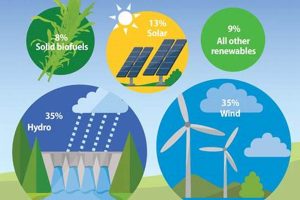
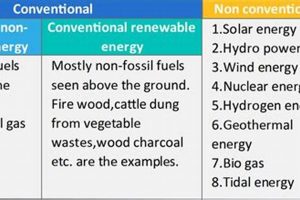
Energy derived from naturally replenishing resources is a critical component of a sustainable future. These resources are continuously replenished, unlike finite fossil fuels, offering a pathway toward reduced environmental impact and long-term energy security. This approach to energy production harnesses the power of the Earth’s natural processes.
The significance of utilizing these resources lies in their potential to mitigate climate change, decrease reliance on imported fuels, and stimulate economic growth through technological innovation and job creation. Historically, harnessing these resources on a large scale has been limited by technological constraints and economic considerations. However, advancements and increasing environmental awareness are driving widespread adoption.
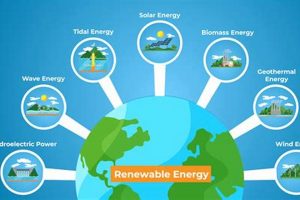
This article will explore several key methods of obtaining power from these infinitely available resources. Specifically, the subsequent sections will focus on harnessing solar irradiation, the movement of wind, the power of flowing water, and the geothermal heat present within the earth.
Effective Strategies for Integrating Renewable Energy Sources
The following guidelines offer insights into how to effectively utilize energy obtained from constantly replenishing resources. Successful integration requires careful planning and a commitment to sustainable practices.
Tip 1: Conduct a Feasibility Study: Before implementing any renewable energy system, a comprehensive study should evaluate resource availability (solar irradiance, wind speed, water flow, geothermal gradient), site suitability, and potential environmental impacts. This ensures the selected system aligns with specific location characteristics and energy needs.
Tip 2: Prioritize Energy Efficiency: Reduce overall energy demand through energy-efficient appliances, insulation, and building design before installing renewable energy systems. Lower energy consumption minimizes the required capacity of the renewable energy source, leading to cost savings and increased sustainability.
Tip 3: Consider Energy Storage Solutions: Integrate energy storage technologies, such as batteries or pumped hydro storage, to address the intermittent nature of solar and wind power. Storage ensures a consistent and reliable energy supply, even when the renewable resource is not actively generating power.
Tip 4: Implement Smart Grid Technologies: Utilize smart grid technologies to optimize energy distribution and manage fluctuations in renewable energy supply. Smart grids enhance grid stability, improve communication between energy producers and consumers, and facilitate the integration of distributed renewable energy sources.
Tip 5: Explore Hybrid Systems: Combine multiple energy-generating resources, such as solar and wind, to create a hybrid system that offers greater reliability and reduces dependence on a single resource. Hybrid systems can optimize energy production based on seasonal variations and local resource availability.
Tip 6: Secure Government Incentives and Rebates: Research and leverage government incentives, tax credits, and rebates available for renewable energy installations. These financial incentives can significantly reduce the upfront costs and improve the economic viability of renewable energy projects.
Tip 7: Invest in Regular Maintenance: Establish a routine maintenance schedule for all renewable energy systems to ensure optimal performance and extend equipment lifespan. Regular inspections, cleaning, and repairs prevent costly breakdowns and maximize energy production over the long term.
By strategically implementing these practices, stakeholders can significantly enhance the effectiveness and sustainability of systems utilizing naturally replenishing energy sources.
The strategies outlined above provide a pathway toward a more sustainable energy future.
1. Solar Irradiance Capture

Solar irradiance capture is a pivotal method within the framework of energy obtained from naturally replenishing resources. It involves converting sunlight into usable energy forms, contributing significantly to reducing dependence on fossil fuels. The process leverages photovoltaic or solar thermal technologies to harness solar energy, offering a sustainable energy solution.
- Photovoltaic (PV) Conversion
Photovoltaic conversion directly transforms sunlight into electricity using semiconductor materials. Solar panels, composed of PV cells, generate a direct current (DC) when exposed to sunlight. This DC electricity is then converted to alternating current (AC) via an inverter for use in homes, businesses, and the power grid. Large-scale solar farms, as well as small-scale residential installations, are examples of its application, significantly reducing carbon emissions and decreasing reliance on conventional energy sources.
- Solar Thermal Systems
Solar thermal systems use sunlight to heat a fluid, which then drives a turbine to generate electricity or is used directly for heating and cooling purposes. Concentrated solar power (CSP) plants use mirrors to focus sunlight onto a receiver, heating a working fluid to high temperatures. This heat is then used to generate steam, which drives a turbine and produces electricity. Solar water heating systems utilize sunlight to heat water for domestic or industrial use. Solar thermal systems offer a reliable and efficient way to harness solar energy for a variety of applications.
- Grid Integration Challenges
Integrating solar irradiance capture into existing electrical grids presents several challenges. The intermittent nature of solar energy, due to cloud cover and nighttime, necessitates grid management strategies. Energy storage solutions, such as batteries or pumped hydro storage, are essential to ensure a consistent energy supply. Smart grid technologies, which optimize energy distribution and balance supply and demand, also play a crucial role in accommodating solar energy fluctuations. Addressing these challenges is key to maximizing the benefits of solar power.
- Economic and Environmental Impacts
The deployment of solar irradiance capture technologies yields significant economic and environmental benefits. It creates jobs in manufacturing, installation, and maintenance sectors, contributing to economic growth. Environmentally, it reduces greenhouse gas emissions, mitigates air pollution, and conserves water resources compared to fossil fuel-based energy production. Solar energy’s environmental advantages and decreasing costs drive its increasing adoption worldwide.
These facets of solar irradiance capture underscore its importance among energy sources derived from naturally replenishing supplies. The combination of technological advancement, economic competitiveness, and environmental benefits makes solar energy a key component of a sustainable energy future.
2. Wind Kinetic Conversion

Wind kinetic conversion stands as a prominent methodology within the scope of naturally replenishing energy sources, functioning as a critical component in the transition toward sustainable energy production. The process hinges on transforming the kinetic energy inherent in wind into mechanical energy and, subsequently, electrical energy. This transformation typically occurs through the utilization of wind turbines, which capture the wind’s energy through rotating blades. The mechanical energy derived from this rotation is then used to power a generator, producing electricity. Its significance lies in its contribution to reducing reliance on fossil fuels and mitigating greenhouse gas emissions. For example, large-scale wind farms, such as those found in the American Midwest and various parts of Europe, demonstrate the practical application of this principle, supplying substantial amounts of electricity to regional grids.
The effectiveness of wind kinetic conversion depends on various factors, including wind speed, turbine design, and geographical location. Areas with consistently high wind speeds are particularly well-suited for wind farm development. Advances in turbine technology have led to increased efficiency and reduced costs, making wind energy an increasingly competitive alternative to traditional energy sources. Beyond large-scale wind farms, smaller turbines can also be deployed for distributed energy generation, serving individual homes or businesses. Furthermore, offshore wind farms, situated in coastal areas with strong and consistent winds, offer additional potential for harnessing wind energy. Real-world applications can also be found in some African countries with solar farms creating hybrid renewable energy systems to power various parts of the country and promote green environment.
In summary, wind kinetic conversion is a pivotal element within the collection of sustainable energy options. Its capacity to convert wind energy into electricity presents a viable and increasingly cost-effective means of reducing carbon emissions and diversifying energy portfolios. Addressing the challenges associated with intermittency and grid integration remains crucial for maximizing the potential of wind power.
3. Hydropower Generation

Hydropower generation harnesses the energy of moving water to produce electricity, establishing it as a significant contributor within naturally replenishing energy sources. The process involves channeling water, typically from a reservoir behind a dam, through turbines. As the water flows, it spins the turbines, which are connected to generators that convert the mechanical energy into electrical energy. The continuous cycle of precipitation replenishing rivers and lakes ensures a perpetual supply of the resource, fundamentally linking it to renewable energy principles. For example, the Itaipu Dam, a joint project between Brazil and Paraguay, generates a substantial portion of the electricity for both countries, demonstrating hydropower’s capacity for large-scale, sustained power production.
The importance of hydropower extends beyond mere electricity generation. It often provides additional benefits such as water supply for irrigation and drinking, flood control, and navigation. However, hydropower development also presents environmental challenges, including habitat disruption, alteration of river flow, and potential impacts on fish populations. Modern hydropower facilities incorporate environmental safeguards, such as fish ladders and minimum flow requirements, to mitigate these impacts. Furthermore, pumped storage hydropower, where water is pumped uphill to a reservoir and released when electricity demand is high, acts as a form of energy storage, complementing intermittent renewable sources like solar and wind.
In summary, hydropower generation is a well-established and essential component of renewable energy. Its ability to provide a reliable and dispatchable source of electricity, combined with its additional water management benefits, makes it a valuable asset in the transition towards a sustainable energy future. Addressing environmental concerns and optimizing dam operations will be critical for maximizing its long-term contribution. Its integration alongside other renewable technologies further enhances the resilience and stability of energy grids worldwide.
4. Geothermal Heat Extraction
Geothermal heat extraction represents a critical component of naturally replenishing energy sources, offering a stable and consistent alternative to traditional fossil fuels. Harnessing the Earth’s internal heat provides a reliable and environmentally conscious energy solution, fundamentally contributing to a diversified and sustainable energy portfolio.
- Direct Use Applications
Direct use applications involve utilizing geothermal heat directly without converting it to electricity. Examples include heating buildings, greenhouses, and aquaculture facilities. In Iceland, geothermal energy heats approximately 90% of homes, demonstrating the practicality and efficiency of direct use. This approach reduces the demand for conventional heating systems, mitigating carbon emissions and lowering energy costs.
- Geothermal Power Plants
Geothermal power plants convert geothermal heat into electricity. These plants typically access hot water or steam reservoirs deep underground, which then drive turbines connected to generators. The Geysers in California, one of the world’s largest geothermal complexes, generates enough electricity to power over one million homes. Geothermal power plants provide a baseload power supply, operating continuously regardless of weather conditions, enhancing grid stability.
- Enhanced Geothermal Systems (EGS)
Enhanced Geothermal Systems (EGS) technology expands geothermal energy’s potential by creating artificial reservoirs in hot, dry rock formations. This involves injecting water into fractured rocks deep underground, heating the water, and then extracting it to generate electricity. EGS could unlock geothermal resources in previously inaccessible areas, significantly increasing its contribution to the global energy supply. Ongoing research and development efforts are aimed at improving the efficiency and economic viability of EGS.
- Environmental Considerations
While geothermal energy is generally considered environmentally friendly, it is not without potential impacts. These include land use, greenhouse gas emissions (primarily carbon dioxide and hydrogen sulfide), and induced seismicity. Modern geothermal plants employ technologies to minimize these impacts, such as reinjecting cooled water back into the reservoir to maintain pressure and reduce emissions. Proper site selection and careful management are crucial for ensuring the sustainable development of geothermal resources.
The diverse applications of geothermal heat extraction, from direct use to power generation and the potential of EGS, highlight its versatility and importance within the context of sustainable energy resources. Addressing environmental concerns through responsible development practices ensures that geothermal energy can play a vital role in meeting future energy demands while minimizing ecological impact.
5. Biomass Energy Conversion

Biomass energy conversion represents a vital aspect within the framework of energy derived from naturally replenishing sources. It encompasses various processes designed to extract usable energy from organic matter, thereby contributing to a more sustainable energy ecosystem. The link between biomass energy conversion and the broader category of renewable energy is causal, where the utilization of organic materials as a fuel source replaces reliance on finite fossil fuels. As a component, biomass energy conversion offers versatility in application, ranging from direct combustion for heat to more complex methods such as gasification and anaerobic digestion for electricity generation and biofuel production.
The importance of biomass energy conversion lies in its ability to repurpose organic waste streams and dedicated energy crops into valuable energy resources. For instance, agricultural residues like corn stover and wheat straw, otherwise discarded, can be converted into biofuels or used to generate electricity through combustion. Similarly, forestry residues and wood waste can fuel combined heat and power (CHP) plants, providing both electricity and thermal energy for industrial and residential needs. Municipal solid waste, through waste-to-energy technologies, offers another avenue for biomass energy conversion, reducing landfill volumes and generating electricity simultaneously. This practice is exemplified by numerous waste-to-energy facilities across Europe and North America, which process municipal waste to produce electricity and district heating.
However, challenges associated with biomass energy conversion must be acknowledged. Sustainability concerns related to land use, water consumption, and potential impacts on biodiversity require careful management. Ensuring responsible sourcing of biomass feedstocks and implementing efficient conversion technologies are essential for minimizing environmental impacts. Despite these challenges, biomass energy conversion holds significant potential as a renewable energy source, particularly when integrated with sustainable resource management practices. Its practical significance is underscored by its ability to diversify energy sources, reduce greenhouse gas emissions, and create economic opportunities in rural areas.
6. Tidal Energy Exploitation

Tidal energy exploitation represents a viable, although less common, method of renewable energy generation. It harnesses the kinetic energy of tides to produce electricity, contributing to a diversified portfolio of energy sources and offering a predictable, if geographically limited, renewable resource.
- Tidal Barrage Systems
Tidal barrage systems are dams built across estuaries or bays that trap water during high tide and release it through turbines during low tide. This differential in water levels drives the turbines, generating electricity. La Rance Tidal Power Station in France, one of the earliest and largest tidal barrage facilities, exemplifies this technology. While effective, tidal barrages can have significant environmental impacts on estuarine ecosystems, altering water flow, sediment deposition, and fish migration patterns.
- Tidal Stream Generators
Tidal stream generators function much like underwater wind turbines. They are submerged turbines that capture the kinetic energy of tidal currents. Unlike tidal barrages, tidal stream generators do not require the construction of large dams, reducing their environmental footprint. The MeyGen project in Scotland represents a prominent example of tidal stream technology, demonstrating its potential for electricity generation in areas with strong tidal currents. The installation and maintenance of these generators can present technical challenges due to the harsh marine environment.
- Tidal Lagoons
Tidal lagoons are artificial enclosed bodies of water constructed along the coast. They capture water during high tide and release it through turbines during low tide, similar to tidal barrages but with a smaller environmental impact. The proposed Swansea Bay Tidal Lagoon in Wales exemplifies this concept. Tidal lagoons offer greater flexibility in terms of location and can potentially be integrated with coastal infrastructure, but their economic viability and ecological effects require careful assessment.
- Environmental and Economic Considerations
Tidal energy exploitation presents both environmental and economic considerations. While tidal energy is a renewable and predictable resource, the construction and operation of tidal energy projects can impact marine ecosystems, including fish populations, benthic habitats, and water quality. The economic viability of tidal energy projects depends on factors such as tidal range, construction costs, and government incentives. Technological advancements and economies of scale are crucial for making tidal energy a more competitive and sustainable energy source.
In summary, tidal energy exploitation provides a valuable, predictable source of renewable energy, supplementing solar, wind, and hydropower. The integration of tidal energy into a broader energy mix necessitates careful consideration of environmental impacts and economic feasibility, promoting a sustainable and responsible approach to harnessing the power of the tides.
Frequently Asked Questions
The following questions address common inquiries regarding diverse sources from naturally replenishing resources. Clarifying these aspects promotes a deeper understanding of their potential and limitations.
Question 1: Why is diversification among sources of naturally replenishing resources important?
Diversification mitigates reliance on single source vulnerabilities. Varying geographical and environmental conditions impact the availability and efficiency of individual resources. A diversified approach ensures a more stable and resilient energy supply, reducing the overall impact of localized disruptions.
Question 2: What role does energy storage play in maximizing the effectiveness of certain sources of naturally replenishing resources?
Energy storage addresses the intermittent nature of resources, like solar and wind. Storage solutions, such as batteries or pumped hydro, capture excess energy during peak production and release it when demand exceeds supply. This stabilizes the grid and ensures a consistent power flow, maximizing the utilization of intermittent resources.
Question 3: How do government policies impact the development and deployment of diverse sources of naturally replenishing resources?
Government policies, including subsidies, tax incentives, and regulatory frameworks, significantly influence renewable energy development. Supportive policies stimulate investment, reduce costs, and create a level playing field for renewable resources to compete with traditional energy sources. Conversely, unfavorable policies can hinder development and slow the transition to a sustainable energy future.
Question 4: What are the primary environmental challenges associated with different sources of naturally replenishing resources?
Each source presents unique environmental challenges. Hydropower can disrupt aquatic ecosystems, while biomass requires careful management to prevent deforestation and soil degradation. Geothermal energy may induce seismicity, and tidal energy can impact marine habitats. Addressing these challenges through responsible development practices is essential for minimizing environmental impact.
Question 5: How does technological innovation influence the advancement and cost-effectiveness of diverse sources of naturally replenishing resources?
Technological innovation drives efficiency gains, cost reductions, and improved performance across renewable energy technologies. Advancements in solar cell materials, wind turbine design, energy storage systems, and smart grid technologies are continually enhancing the competitiveness and reliability of naturally replenishing energy resources. Continued innovation is crucial for further scaling up and deploying these technologies.
Question 6: What is the potential role of individual consumers in promoting the adoption of different sources of naturally replenishing resources?
Individual consumers play a crucial role through energy conservation, adoption of renewable energy technologies (e.g., solar panels), and support for policies promoting renewable energy. Consumer choices and advocacy influence market demand, driving increased investment and deployment of diverse resources from naturally replenishing supplies. Collective action at the individual level can significantly contribute to a sustainable energy transition.
The responses address core concerns regarding the diverse potential. They also address the limitations associated with reliance on natural resources as an energy source, promoting a more informed discussion around this energy sector.
Transitioning into a comprehensive summary, the upcoming sections will encapsulate the main points. This transition solidifies the key points of this segment.
Conclusion
This article has explored diverse options for energy production from sources that naturally replenish. Solar irradiance capture, wind kinetic conversion, hydropower generation, and geothermal heat extraction represent significant pathways towards a sustainable energy future. These methodologies, while varied in their technological application and geographical suitability, share a common reliance on naturally recurring phenomena. Effective implementation necessitates careful consideration of environmental impacts, economic feasibility, and the integration of robust energy storage solutions to address intermittency challenges.
The transition to a sustainable energy future hinges on a commitment to innovation, responsible resource management, and supportive policies. By embracing a diversified approach that incorporates sources explored above, society can mitigate climate change, enhance energy security, and foster a more resilient and environmentally conscious world. Continued research and development, coupled with informed decision-making, are essential for realizing the full potential of energy derived from naturally replenished resources.