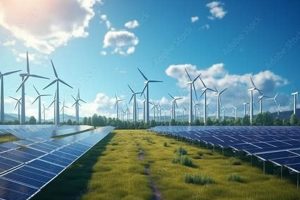
Various sources of power replenished naturally over relatively short periods offer alternatives to fossil fuels. These include solar, wind, hydro, geothermal, and biomass energy. For example, photovoltaic panels convert sunlight into electricity, while wind turbines harness kinetic energy from moving air. Each technology operates on distinct principles and possesses unique characteristics regarding availability, scalability, and environmental impact.
Sustainable power generation offers significant advantages, contributing to reduced greenhouse gas emissions, decreased reliance on finite resources, and enhanced energy security. The historical development of these technologies reflects increasing awareness of environmental concerns and the pursuit of energy independence. Early hydropower projects paved the way for more advanced technologies like concentrated solar power and offshore wind farms, driving innovation and creating new economic opportunities.
This exploration delves into the specific advantages and disadvantages of each sustainable energy source, examining their current applications and future potential. Further discussion will encompass the economic, environmental, and geopolitical factors influencing their adoption and integration into existing energy infrastructures.
Tips for Utilizing Diverse Sustainable Energy Sources
Effective integration of various sustainable energy technologies requires careful consideration of several factors. The following tips offer guidance for maximizing the benefits of these resources.
Tip 1: Conduct a Thorough Resource Assessment: Evaluate the availability and potential of various sustainable energy sources specific to a given location. Wind resources are stronger in coastal regions and open plains, while solar energy is more abundant in areas with high solar irradiance. Geothermal resources are concentrated in geologically active areas.
Tip 2: Consider Hybrid Systems: Combining different sustainable energy technologies can create more reliable and resilient power generation. A hybrid system might integrate solar panels with wind turbines, supplementing solar power during periods of low sunlight with wind energy.
Tip 3: Prioritize Energy Efficiency: Reducing energy consumption through efficiency measures decreases the overall demand for power generation, making it easier to integrate sustainable energy sources effectively. Improving building insulation and using energy-efficient appliances are examples of such measures.
Tip 4: Invest in Energy Storage: Storing excess energy generated during peak production periods allows for consistent power supply when resources are less available. Battery storage technologies, pumped hydro storage, and thermal energy storage are viable options.
Tip 5: Account for Environmental Impacts: While generally environmentally friendly, sustainable energy technologies can still have environmental impacts. Careful siting of wind turbines is crucial to minimize impacts on wildlife, while solar farms require significant land use.
Tip 6: Engage with Policy and Regulations: Understanding local, regional, and national policies regarding sustainable energy development can facilitate project implementation and access to incentives. These policies may include tax credits, renewable portfolio standards, and net metering programs.
Tip 7: Foster Community Engagement: Successful implementation of sustainable energy projects often benefits from community support. Engaging with local stakeholders, addressing concerns, and providing information can foster understanding and acceptance.
Strategic implementation of these tips can contribute to a more sustainable and resilient energy future, maximizing the benefits of diverse renewable resources.
By adopting these approaches, the transition to a cleaner and more secure energy landscape can be accelerated.
1. Resource Availability

Resource availability plays a crucial role in determining the viability and effectiveness of different renewable energy technologies. The geographical distribution of resources like sunlight, wind, water, and geothermal heat significantly influences which technologies are most suitable for a particular location. For example, regions with high solar irradiance are ideal for solar photovoltaic and concentrated solar power plants, while areas with consistent strong winds are well-suited for wind farms. Hydropower projects require access to substantial water resources, typically rivers or reservoirs, and geothermal power plants are dependent on geologically active areas with accessible heat sources. The uneven distribution of these resources necessitates careful assessment and planning to maximize the potential of renewable energy development.
The intermittent nature of some renewable resources further underscores the importance of resource availability assessments. Solar power generation fluctuates with cloud cover and time of day, while wind power output varies with wind speed. Understanding these fluctuations is essential for integrating these resources into the electricity grid and ensuring a reliable power supply. This often involves combining different renewable energy technologies to complement each other, such as pairing solar with wind power, or incorporating energy storage solutions to mitigate intermittency challenges. Accurate resource mapping and forecasting are therefore critical for optimizing the deployment and operation of renewable energy systems.
Strategic resource assessment and management are fundamental to the successful implementation of diverse renewable energy strategies. By understanding the specific resource availability characteristics of a given location, it becomes possible to select the most appropriate technologies and design systems that effectively harness the available renewable potential. This targeted approach maximizes the benefits of renewable energy, contributing to a more sustainable and secure energy future. Addressing resource constraints through technological innovation and integrated energy planning remains a key challenge and opportunity in the ongoing transition to a cleaner energy landscape.
2. Technological Maturity

Technological maturity significantly influences the effectiveness and widespread adoption of various renewable energy sources. The developmental stage of a given technology impacts its efficiency, reliability, cost-effectiveness, and overall feasibility. Understanding these factors is crucial for assessing the current and future potential of different renewable energy options.
- Efficiency and Performance:
Mature technologies generally exhibit higher efficiency in converting renewable resources into usable energy. For example, advancements in photovoltaic cell technology have led to significant increases in the efficiency of solar panels, allowing them to generate more electricity from the same amount of sunlight. Similarly, improvements in wind turbine design have enhanced energy capture, leading to greater power output. This increased efficiency translates to greater cost-effectiveness and reduces the land area required for energy generation.
- Reliability and Durability:
Technological maturity also affects the reliability and durability of renewable energy systems. More mature technologies tend to have longer lifespans and require less maintenance, reducing operational costs and downtime. For instance, advancements in materials science and manufacturing processes have improved the durability of wind turbine blades and solar panel components, making them more resistant to wear and tear from environmental factors. This enhanced reliability increases investor confidence and facilitates wider adoption.
- Cost of Deployment and Operation:
As technologies mature, economies of scale and manufacturing advancements typically lead to reduced production costs. This is evident in the declining costs of solar photovoltaic modules over the past decade, making solar power increasingly competitive with conventional energy sources. Lower deployment costs, coupled with reduced operational and maintenance expenses, improve the economic viability of renewable energy projects and accelerate their integration into energy markets.
- Grid Integration and Storage Solutions:
The ability to seamlessly integrate renewable energy into existing power grids is crucial for their widespread adoption. Technological maturity plays a key role in developing advanced grid management systems and energy storage solutions that address the intermittency challenges associated with some renewable sources like solar and wind power. Smart grids, battery storage technologies, and pumped hydro storage are examples of advancements that facilitate the efficient and reliable integration of renewable energy into the electricity grid.
The varying levels of technological maturity across different renewable energy sources influence their current market competitiveness and future potential. While some technologies, like solar and wind power, have reached a high level of maturity and are experiencing rapid growth, others, such as wave and tidal energy, are still in earlier stages of development. Continued research and development efforts are essential for advancing the technological maturity of all renewable energy sources, unlocking their full potential and accelerating the transition to a sustainable energy future. By focusing on improving efficiency, reliability, and cost-effectiveness, while also addressing grid integration challenges, technological advancements will drive the widespread adoption of renewable energy and contribute to a cleaner and more secure energy landscape.
3. Environmental Impact

Assessing the environmental impact of various renewable energy sources is crucial for sustainable development. While renewable energy offers a cleaner alternative to fossil fuels, it’s essential to recognize and mitigate potential ecological consequences associated with different technologies. Understanding these impacts allows for informed decision-making and responsible implementation of renewable energy projects.
- Land Use and Habitat Alteration
Renewable energy infrastructure, such as solar farms and wind turbines, can require significant land areas. This land use can lead to habitat alteration and fragmentation, potentially impacting wildlife populations and ecosystem dynamics. For instance, large-scale solar farms can alter desert ecosystems, while wind farms can pose risks to birds and bats. Minimizing land use impacts through careful site selection, habitat restoration, and wildlife-friendly design is essential for responsible renewable energy development.
- Water Consumption and Quality
Certain renewable energy technologies, like hydropower and concentrated solar power, require substantial water resources for operation. Hydropower dams can alter river flows and aquatic ecosystems, affecting fish migration and water quality. Concentrated solar power plants utilize water for cooling, which can strain water resources in arid regions. Evaluating water availability and implementing water-efficient technologies are crucial for minimizing the water footprint of renewable energy projects.
- Emissions and Waste Generation
While renewable energy sources generally produce fewer greenhouse gas emissions than fossil fuels, some emissions and waste can still occur during the manufacturing, transportation, installation, and decommissioning of renewable energy infrastructure. For example, the production of solar panels involves the use of certain chemicals and materials that can have environmental impacts. Proper waste management and recycling programs are essential for minimizing the environmental footprint of renewable energy technologies throughout their lifecycle.
- Visual and Noise Impacts
Wind turbines and solar farms can have visual and noise impacts on surrounding landscapes and communities. The visual presence of wind turbines can be perceived as aesthetically disruptive, while noise generated by turbine blades can be a concern for nearby residents. Careful siting and design considerations, along with community engagement and consultation, can help mitigate these impacts and ensure the social acceptance of renewable energy projects.
A comprehensive understanding of the environmental impacts associated with different renewable energy technologies is essential for maximizing their benefits while minimizing potential ecological consequences. By carefully evaluating these impacts and implementing mitigation strategies, the transition to a sustainable energy future can be achieved responsibly, ensuring both environmental protection and energy security. Furthermore, ongoing research and development efforts focused on minimizing environmental impacts and maximizing the efficiency of renewable energy technologies will be crucial for achieving long-term sustainability goals.
4. Economic Viability

Economic viability is a critical factor influencing the adoption and deployment of different renewable energy technologies. The cost-competitiveness of renewable energy sources compared to conventional fossil fuels plays a significant role in energy investment decisions and policy formulation. Several factors influence the economic viability of renewable energy projects, including capital costs, operating and maintenance expenses, fuel costs (if any), financing options, and government incentives.
The initial capital costs of renewable energy projects can be substantial, particularly for large-scale installations like wind farms and solar power plants. However, technological advancements and economies of scale have driven down the costs of renewable energy technologies significantly in recent years, making them increasingly competitive with fossil fuels. Furthermore, renewable energy sources have negligible fuel costs compared to fossil fuel-based power generation, offering long-term cost savings and price stability. Government policies, such as tax credits, subsidies, and renewable portfolio standards, can further enhance the economic attractiveness of renewable energy investments.
Real-world examples illustrate the growing economic viability of different renewable energy sources. In many regions, solar and wind power are now cost-competitive with or even cheaper than electricity generated from fossil fuels. The increasing affordability of renewable energy has led to a surge in investments in these technologies globally, driving further cost reductions and market expansion. The declining costs of battery storage technologies also enhance the economic viability of intermittent renewable sources like solar and wind by enabling better grid integration and dispatchability.
Understanding the economic viability of different renewable energy technologies is essential for informed decision-making by governments, businesses, and individuals. Economic considerations influence policy decisions related to energy subsidies, carbon pricing, and renewable energy targets. For businesses, the economic viability of renewable energy projects is a key factor in investment decisions and corporate sustainability strategies. Individuals are also increasingly considering the economic benefits of rooftop solar installations and other renewable energy options. The practical significance of this understanding lies in its potential to accelerate the transition to a more sustainable and affordable energy future. By promoting policies and market mechanisms that support the economic viability of renewable energy, governments can create a level playing field for clean energy technologies and drive innovation. This, in turn, will lead to greater deployment of renewable energy, reduced greenhouse gas emissions, and increased energy security.
5. Scalability Potential
Scalability potential is a crucial factor in evaluating the long-term viability and impact of different renewable energy sources. It refers to the ability of a given technology to be expanded rapidly and efficiently to meet growing energy demands. This capacity is essential for transitioning away from fossil fuels and achieving a sustainable energy future. Various factors influence scalability, including resource availability, technological maturity, manufacturing capacity, infrastructure requirements, and economic viability. A clear understanding of these factors is essential for effective energy planning and policy development. Renewable energy technologies exhibit varying degrees of scalability. Solar and wind power, for instance, demonstrate high scalability due to their modular design and relatively rapid deployment timelines. Manufacturing capacity for solar panels and wind turbines can be scaled up relatively quickly to meet increasing demand. Furthermore, these technologies can be deployed in a distributed manner, reducing reliance on large centralized power plants and transmission infrastructure. Hydropower, on the other hand, faces scalability limitations due to geographical constraints and environmental considerations. Large-scale hydropower projects often require significant infrastructure development, including dam construction and reservoir creation, which can have substantial environmental and social impacts. Geothermal energy also faces scalability challenges related to resource availability and geological suitability. While geothermal resources are abundant in certain regions, they are not universally accessible, limiting their potential for widespread deployment.
The scalability of different renewable energy sources has significant implications for achieving global climate goals and ensuring energy security. Technologies with high scalability potential, such as solar and wind power, are expected to play a dominant role in the future energy mix. Their ability to be deployed rapidly and cost-effectively makes them ideal for meeting increasing energy demands while reducing greenhouse gas emissions. However, the scalability challenges associated with other renewable energy sources, such as hydropower and geothermal, highlight the need for continued research and development efforts to improve their efficiency, reduce costs, and minimize environmental impacts. A diversified portfolio of renewable energy technologies, each tailored to specific regional resource availability and energy needs, is essential for maximizing the benefits of sustainable energy. Hybrid systems, combining different renewable energy technologies and incorporating energy storage solutions, offer promising pathways for increasing scalability and grid reliability.
In summary, scalability potential is a critical consideration in evaluating the effectiveness and long-term viability of various renewable energy sources. Solar and wind power exhibit high scalability potential due to their modularity, rapid deployment capabilities, and declining costs. Addressing the scalability limitations of other renewable energy technologies requires ongoing research and development, as well as strategic integration of different sources to create diversified and resilient energy systems. Understanding and addressing the scalability challenges and opportunities associated with different renewable energy technologies will be crucial for achieving a sustainable and secure energy future.
Frequently Asked Questions about Diverse Renewable Energy Sources
This section addresses common inquiries regarding the variety of renewable energy technologies, aiming to provide clear and concise information.
Question 1: What are the primary distinctions between various renewable energy technologies?
Key differences lie in resource requirements (sunlight, wind, water, geothermal heat), energy conversion processes (photovoltaic effect, wind turbine mechanics, hydroelectric generation), and environmental impacts (land use, water consumption, emissions).
Question 2: How does resource intermittency affect the reliability of renewable energy?
Intermittency, the fluctuating nature of resources like solar and wind, can be addressed through energy storage solutions (batteries, pumped hydro), grid management strategies (smart grids, demand-side management), and diversification of renewable energy sources.
Question 3: What are the economic implications of transitioning to a renewable energy-based system?
Economic implications include job creation in the renewable energy sector, reduced reliance on volatile fossil fuel markets, long-term cost savings through stable energy prices, and potential economic growth spurred by technological innovation.
Question 4: How do the environmental impacts of different renewable energy sources compare?
While all renewable energy sources offer environmental advantages over fossil fuels, their impacts vary. Hydropower can affect aquatic ecosystems, wind turbines can pose risks to birds, and solar farms require significant land use. Life-cycle assessments help evaluate and minimize these impacts.
Question 5: What role does government policy play in promoting renewable energy adoption?
Government policies, such as tax incentives, renewable portfolio standards, carbon pricing mechanisms, and research funding, significantly influence the development and deployment of renewable energy technologies. Supportive policies create favorable market conditions and accelerate the transition to a sustainable energy future.
Question 6: What are the key challenges and opportunities associated with integrating diverse renewable energy sources into existing power grids?
Challenges include managing intermittency, upgrading grid infrastructure to accommodate decentralized generation, and ensuring grid stability. Opportunities include enhanced grid resilience, reduced transmission losses, and improved energy access in remote areas.
Understanding the nuances of different renewable energy technologies is essential for informed decision-making and effective implementation of sustainable energy strategies.
The following sections will delve deeper into specific renewable energy technologies, exploring their individual characteristics, advantages, and challenges.
Diverse Renewable Energy Sources
Exploration of varied renewable energy technologies reveals a complex landscape of opportunities and challenges. Resource availability, technological maturity, environmental impacts, economic viability, and scalability potential differ significantly across various options, from solar and wind power to hydropower, geothermal, and biomass energy. Understanding these nuances is crucial for effective energy planning and policy development. No single solution fits all; rather, a diversified portfolio of renewable energy technologies, tailored to specific regional contexts and energy needs, offers the most promising pathway to a sustainable energy future.
The transition to a renewable energy-powered world requires continued innovation, strategic investment, and supportive policies. Addressing the technical, economic, and environmental challenges associated with each renewable energy source remains paramount. Ultimately, the successful integration of diverse renewable energy technologies holds the key to mitigating climate change, enhancing energy security, and fostering a more sustainable and prosperous future for all.