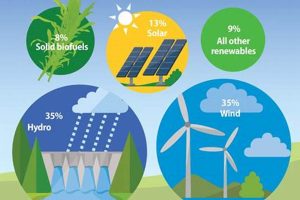
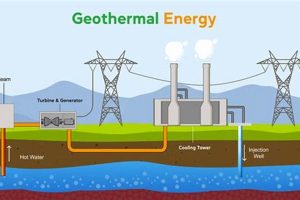
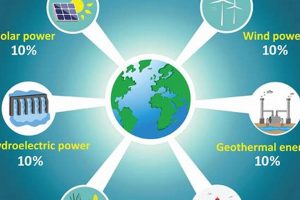
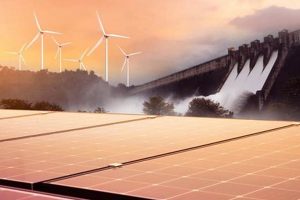
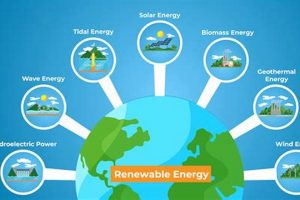
The term signifies energy derived from natural processes that are replenished at a rate equal to or faster than they are consumed. This implies an effectively inexhaustible supply, ensuring long-term availability. Examples include solar power harnessed from the sun, wind energy captured by turbines, geothermal energy extracted from the Earth’s heat, hydroelectric power generated by flowing water, and biomass energy derived from organic matter.
Harnessing these energy resources is crucial for mitigating climate change, reducing reliance on finite fossil fuels, and enhancing energy security. Historically, societies have utilized sources like wind and water power for centuries, but advancements in technology have enabled more efficient and widespread utilization of a broader range of these options. Employing these sustainable alternatives minimizes greenhouse gas emissions, improves air quality, and fosters a more resilient energy infrastructure.
Subsequent sections will delve into the specific characteristics, applications, and economic considerations associated with individual types of power generated from these sustainable inputs, providing a detailed analysis of their potential contributions to a global energy transition.
Guidance on Utilizing Renewable Power Effectively
The following recommendations aim to provide practical advice for maximizing the benefits of harnessing the energy generated from continuously replenished natural processes. Careful consideration of these points is crucial for successful implementation and long-term sustainability.
Tip 1: Prioritize Resource Assessment: Before investing in any renewable energy technology, conduct a thorough assessment of the available resources. For example, evaluate solar irradiance levels for solar panel installations or wind speed patterns for wind turbine projects. This ensures optimal placement and performance.
Tip 2: Optimize System Design for Local Conditions: Tailor system designs to the specific geographical and environmental conditions. Solar panel angles and orientation, for instance, should be adjusted based on latitude to maximize sunlight capture. Similarly, wind turbine placement should consider prevailing wind directions and potential obstructions.
Tip 3: Integrate Energy Storage Solutions: Implement energy storage solutions, such as batteries, to address the intermittent nature of some renewable energy sources. This allows for a consistent and reliable power supply, even when the sun isn’t shining or the wind isn’t blowing.
Tip 4: Implement Smart Grid Technologies: Incorporate smart grid technologies to enhance grid stability and efficiency. Smart grids enable real-time monitoring, automated control, and two-way communication between power generators and consumers, facilitating better management of renewable energy integration.
Tip 5: Emphasize Energy Efficiency Measures: Complement renewable energy adoption with energy efficiency improvements. Reducing overall energy consumption minimizes the demand placed on renewable sources, maximizing their impact and reducing costs. Example includes upgrading insulation in buildings or using energy-efficient appliances.
Tip 6: Explore Hybrid Systems: Consider hybrid systems that combine multiple renewable energy sources to improve reliability and reduce dependence on a single resource. A hybrid system might combine solar and wind power with battery storage to provide a more consistent power supply.
Tip 7: Secure Government Incentives and Support: Leverage available government incentives, subsidies, and tax credits to reduce the initial investment costs associated with renewable energy projects. Research and understand the specific programs available in your region.
Adhering to these guidelines enhances the effectiveness and long-term viability of initiatives focused on energy derived from sustainable and replenishable resources, contributing to a cleaner and more secure energy future.
The next section will analyze the economic implications and challenges associated with transitioning to a sustainable energy system.
1. Sustainability
Sustainability is intrinsically linked to the concept of energy derived from naturally replenishing sources. The very definition of these sources implies an enduring availability, differentiating them from finite fossil fuels. The causality is straightforward: reliance on energy from sustainable sources directly leads to a reduction in resource depletion and environmental degradation, thus fostering a more sustainable energy system. This principle underpins the core value proposition. Without a focus on sustainability, any energy source, including theoretically renewable ones, can become problematic if exploited irresponsibly, exceeding the Earth’s capacity to regenerate or absorb waste products.
A compelling example of the practical significance of this understanding is evident in the biomass industry. While biomass is technically renewable, unsustainable forestry practices or the use of food crops for fuel production can negate the benefits, leading to deforestation, food shortages, and increased greenhouse gas emissions. Conversely, sustainably managed forests and the utilization of agricultural waste for energy generation exemplify a sustainable application. This demonstrates that the implementation must adhere to principles that ensure environmental integrity and social equity for genuine sustainability.
In conclusion, sustainability is not merely an ancillary benefit; it is a fundamental component of using naturally replenished energy. It mandates a holistic approach that considers environmental, social, and economic factors to ensure that the long-term viability of both the energy source and the ecosystems that support it are preserved. Ignoring this interconnection undermines the very premise of a transition to a more secure and environmentally responsible energy future.
2. Replenishment Rate

The replenishment rate of a resource is a defining characteristic of what constitutes energy obtained from natural processes that restore themselves. It dictates whether a source can be accurately classified as sustainably available. The practical consequence of this parameter determines the longevity and reliability of the power source. If the rate of energy extraction surpasses the natural recovery rate, the resource, regardless of origin, transitions toward depletion, negating its designation as continuously supplied. Therefore, the replenishment rate directly influences the long-term potential of each type to function as a dependable and sustainable power option.
For instance, geothermal energy extraction from underground reservoirs must be carefully managed. If the rate of heat removal exceeds the natural geothermal recharge, the reservoir temperature will decline, leading to reduced power output and potentially rendering the resource economically unviable. Similarly, hydroelectric power generation relies on consistent rainfall and river flow. Changes in climate patterns affecting precipitation can significantly reduce river flow, decreasing the power generation capacity. The efficient management of forest resources for biomass energy is crucial. Deforestation outpaces the rate of forest regrowth, which results in habitat loss, soil erosion, and increased carbon emissions. Sustainable forestry practices, which balance harvesting with reforestation efforts, is required to ensure long-term energy generation.
In conclusion, understanding and carefully managing the replenishment rate are essential for the effective deployment and long-term viability of electricity from naturally replenishing sources. It is an inherent component of the definition and directly impacts sustainability, economic feasibility, and environmental impact. Monitoring, assessment, and adaptive management strategies are imperative to align extraction with regeneration to ensure that these resources remain truly continuously accessible for future generations.
3. Environmental Impact

The environmental impact associated with energy production is a critical consideration when evaluating the merits of different energy sources. In the context of sustainable energy derived from naturally replenishing systems, this impact must be comprehensively assessed to determine the true viability and desirability of these options compared to conventional fossil fuels.
- Greenhouse Gas Emissions
Though inherently cleaner than fossil fuels, some renewable technologies are not entirely devoid of greenhouse gas emissions. For example, the manufacturing and transportation of solar panels, wind turbines, and biomass facilities all contribute to emissions. Hydropower dams can lead to methane emissions from decaying organic matter in reservoirs. A full lifecycle analysis is crucial to quantify these emissions and ensure that the net impact is substantially lower than fossil fuel alternatives.
- Land Use
Large-scale wind and solar farms can require significant land areas, potentially leading to habitat loss and ecosystem disruption. The placement of these facilities must be carefully planned to minimize impact on sensitive ecosystems and agricultural land. Biomass energy production can also exert pressure on land use, especially if dedicated crops are grown for fuel instead of using waste products. Sustainable land management practices are essential to mitigate these negative effects.
- Water Usage
Concentrated solar power plants and geothermal facilities can consume significant amounts of water for cooling purposes, particularly in arid regions. This can place stress on local water resources and impact aquatic ecosystems. Hydroelectric dams also alter river flow patterns, affecting downstream ecosystems and potentially displacing communities. Closed-loop cooling systems and careful water management strategies can minimize water consumption and reduce environmental harm.
- Material Extraction and Waste Management
The production of sustainable energy technologies requires the extraction of raw materials, such as rare earth elements for wind turbines and silicon for solar panels. Mining these materials can have significant environmental consequences, including habitat destruction, water pollution, and soil erosion. Furthermore, the end-of-life disposal of renewable energy equipment, such as solar panels and wind turbine blades, poses a waste management challenge. Recycling and responsible disposal practices are crucial to minimizing these impacts.
In conclusion, while offering substantial environmental advantages over fossil fuels, all forms of electricity from replenishing resources necessitate careful environmental management throughout their entire lifecycle. The net environmental benefits are maximized by considering and mitigating the potential negative impacts associated with each technology, ensuring that the pursuit of a sustainable energy future does not inadvertently create new environmental problems.
4. Resource Diversity

Resource diversity, in the context of electricity produced from naturally replenished sources, refers to the utilization of a wide range of energy resourcessolar, wind, hydro, geothermal, and biomassto meet energy demands. This diversification is a crucial component of a resilient and reliable energy system. Reliance on a single energy source, even if continuously replenished, exposes a system to vulnerabilities stemming from weather patterns, geographical limitations, technological failures, or fluctuating resource availability. Diversifying the sources reduces these risks and enhances energy security.
The cause-and-effect relationship is apparent: a lack of resource diversity in energy systems can lead to supply disruptions and price volatility, while a diversified approach enhances stability and resilience. For example, a region heavily reliant on hydropower may face significant energy shortages during periods of drought. Similarly, an area solely dependent on wind power will experience fluctuations in energy supply corresponding to wind patterns. Conversely, regions that integrate solar, wind, and geothermal resources, often coupled with energy storage, demonstrate greater stability and are less susceptible to localized environmental variations. Germany’s Energiewende, though facing challenges, exemplifies an effort to diversify energy sources, combining wind, solar, and biomass to reduce dependence on nuclear and fossil fuels.
The practical significance of understanding resource diversity lies in its ability to inform strategic energy planning. By assessing the available continuously supplied energy resources within a specific region and developing a balanced energy portfolio, policymakers and energy providers can create more robust and sustainable energy systems. Challenges remain, including the need for improved grid infrastructure to integrate intermittent sources and the development of cost-effective energy storage solutions. However, the benefits of a diversified approachenhanced energy security, reduced environmental impact, and greater economic stabilityare compelling, underscoring resource diversity as a fundamental element of a sustainable energy future.
5. Energy Security
Energy security, defined as the uninterrupted availability of energy sources at an affordable price, is intrinsically linked to the utilization of energy derived from naturally replenishing resources. Dependence on geographically concentrated fossil fuels introduces vulnerabilities stemming from geopolitical instability, price fluctuations, and supply chain disruptions. The adoption of solar, wind, hydro, geothermal, and biomass reduces this reliance, promoting greater energy independence and mitigating the risks associated with global energy markets. A diversified domestic energy portfolio, incorporating abundant local renewable resources, serves as a buffer against external shocks and contributes to a more stable and predictable energy supply.
The implementation of distributed renewable energy systems, such as rooftop solar and community wind projects, further enhances energy security by decentralizing energy production. This reduces reliance on centralized power plants and transmission infrastructure, making the energy system more resilient to natural disasters, cyberattacks, and other potential disruptions. Countries and regions that have heavily invested in domestic sustainable energy infrastructure, like Denmark with wind power and Iceland with geothermal energy, demonstrate enhanced energy security and reduced vulnerability to external energy market volatility. Investment in energy storage technologies alongside electricity from sustainable sources is also vital as it can greatly increase energy security.
In conclusion, the transition to energy generated from perpetually renewed sources is a strategic imperative for enhancing energy security. By diversifying energy sources, decentralizing energy production, and promoting domestic energy independence, sustainable resources contribute to a more resilient, stable, and affordable energy future. While challenges related to grid integration, intermittency, and storage remain, the long-term benefits of increased energy security outweigh the costs, making the development and deployment of continuously supplied energy a critical element of national and global energy strategies.
Frequently Asked Questions Regarding Renewable Energy Sources
This section addresses common inquiries and misconceptions concerning the definition, application, and implications of energy derived from sources naturally replenished.
Question 1: What precisely constitutes a ‘renewable energy source’?
The term signifies energy derived from natural processes that are replenished at a rate equal to or faster than their rate of consumption. This includes, but is not limited to, solar, wind, hydro, geothermal, and biomass energy.
Question 2: Are all renewable energy sources equally environmentally benign?
While generally less impactful than fossil fuels, individual energy derived from sustainable systems technologies carries varying environmental consequences. These can include land use requirements, water consumption, and material extraction impacts. A comprehensive lifecycle assessment is necessary to determine the overall environmental footprint.
Question 3: Is energy derived from these sources truly a reliable energy solution given their intermittent nature?
The intermittency of some continuously supplied energy sources, particularly solar and wind, presents challenges to grid stability. However, the integration of energy storage solutions, smart grid technologies, and geographically dispersed renewable energy projects can mitigate these challenges and enhance grid reliability.
Question 4: Can a transition to power from replenishing natural origins be accomplished affordably?
The initial capital costs of renewable energy projects can be substantial. However, declining technology costs, coupled with government incentives and the avoidance of fuel costs, are making many continuously supplied energy technologies increasingly cost-competitive with fossil fuels over the long term.
Question 5: What role does energy efficiency play in a renewable energy transition?
Energy efficiency is a crucial complement to energy produced from sustainable systems. Reducing overall energy demand lowers the amount of renewable energy capacity required, thereby reducing costs and minimizing environmental impacts.
Question 6: How can policymakers effectively promote energy production through naturally replenished routes?
Effective policy instruments include feed-in tariffs, renewable portfolio standards, tax incentives, and investments in research and development. These policies create a supportive environment for renewable energy deployment and accelerate the transition to a sustainable energy system.
In conclusion, comprehending the nuances of power generated from consistently restoring resources is vital for informed decision-making. A multifaceted approach, incorporating technological advancements, policy support, and a commitment to sustainability, is required to realize the full potential of energy from these sources.
The following section will explore the future outlook and potential innovations within the area.
Conclusion
The foregoing analysis has explored the multifaceted nature of the concept in question. Defining this as energy derived from naturally replenished systems, the discussion has highlighted the critical factors of sustainability, replenishment rate, environmental impact, resource diversity, and energy security. A clear understanding of these elements is paramount for effective energy planning and policy implementation.
The transition to power derived from sustainable means represents a necessary, though complex, undertaking. Continued research, technological innovation, and strategic investment are essential to overcome existing challenges and fully realize the potential of these systems to contribute to a secure and sustainable energy future. The choices made today will determine the long-term trajectory of global energy systems and the overall health of the planet.