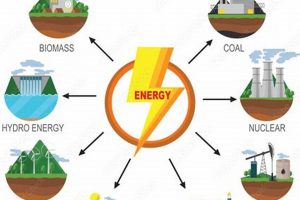
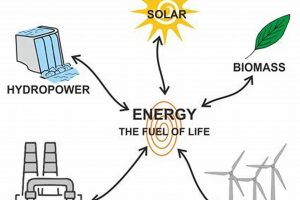
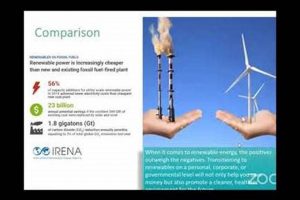
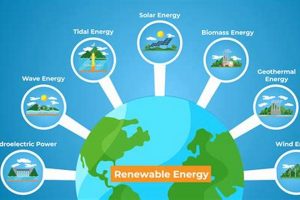
The fraction of total energy derived from resources that are naturally replenished, such as solar, wind, hydro, geothermal, and biomass, is a critical metric for evaluating the sustainability of an energy system. This proportion represents the degree to which a society is relying on resources that have a limited environmental impact and can be sustained over the long term. For example, if a country consumes 1000 terawatt-hours of energy annually and 300 terawatt-hours are produced by renewable sources, then the proportion is 30%.
A higher proportion signifies a reduced dependence on fossil fuels, thereby mitigating greenhouse gas emissions and lessening the environmental consequences associated with resource extraction, transportation, and combustion. Historically, this proportion has been relatively low due to the dominance of fossil fuels in established energy infrastructures. However, growing concerns about climate change and advancements in renewable energy technologies are driving an increase in the adoption and deployment of these sources. This shift offers benefits that include energy security, economic diversification, and improved air quality.
Subsequent sections will delve into the diverse types of renewable energy technologies contributing to this proportion, analyze the factors influencing its growth, and discuss its implications for future energy policies and environmental sustainability. Detailed analysis of specific renewable technologies, regulatory frameworks, and economic considerations are explored in more detail later in the document.
Strategies to Increase the Proportion of Energy from Renewable Sources
Achieving a substantial increase in the fraction of energy derived from renewable resources requires a multifaceted approach, incorporating technological advancements, policy interventions, and market mechanisms. Focused implementation of the following strategies can drive the transition towards a more sustainable energy future.
Tip 1: Invest in Research and Development: Focused investment in research and development (R&D) is critical for technological advancement and reducing costs. This includes funding research into more efficient solar cells, improved wind turbine designs, advanced energy storage solutions, and innovative geothermal technologies. Governmental support for basic and applied research can accelerate the development and deployment of emerging renewable energy technologies.
Tip 2: Implement Supportive Policies: Policies such as feed-in tariffs, renewable portfolio standards (RPS), and tax incentives create a stable and predictable market environment for renewable energy projects. Feed-in tariffs guarantee a fixed price for electricity generated from renewable sources, while RPS mandate that a certain percentage of electricity must come from renewable sources. Tax incentives can lower the initial investment costs of renewable energy projects, making them more financially viable.
Tip 3: Streamline Permitting Processes: Lengthy and complex permitting processes can significantly delay renewable energy projects. Governments should streamline permitting processes to reduce administrative burdens and accelerate project deployment. This includes establishing clear and consistent guidelines, reducing bureaucratic delays, and fostering collaboration between government agencies and project developers.
Tip 4: Modernize Grid Infrastructure: Integrating variable renewable energy sources like solar and wind requires a modernized grid infrastructure capable of handling intermittent power flows. This includes investments in smart grid technologies, advanced transmission lines, and energy storage solutions. Smart grids enable real-time monitoring and control of electricity flow, while advanced transmission lines can transport electricity from remote renewable energy generation sites to population centers. Energy storage solutions, such as batteries and pumped hydro storage, can store excess renewable energy for later use.
Tip 5: Promote Public Awareness and Education: Raising public awareness about the benefits of renewable energy can foster greater acceptance and support for renewable energy projects. Educational programs, outreach campaigns, and community engagement initiatives can help inform the public about the environmental and economic advantages of renewable energy. This includes highlighting the reduction in greenhouse gas emissions, the creation of green jobs, and the enhancement of energy security.
Tip 6: Foster International Collaboration: Collaboration among countries is crucial for sharing best practices, developing common standards, and accelerating the global transition to renewable energy. International partnerships can facilitate the transfer of technology, expertise, and financial resources to developing countries. This includes collaborative research projects, joint ventures, and technical assistance programs.
Tip 7: Develop Energy Storage Solutions: Energy storage technologies are essential for addressing the intermittency of some renewable sources. Investment in battery storage, pumped hydro, and other storage methods can help ensure a reliable energy supply even when the sun isn’t shining or the wind isn’t blowing.
Successful implementation of these strategies will not only increase the proportion of energy from renewable sources but also contribute to a more sustainable, resilient, and equitable energy future.
The following sections will delve deeper into the specific challenges and opportunities associated with transitioning to a predominantly renewable energy system.
1. Investment

Financial allocation towards renewable energy technologies and infrastructure represents a critical determinant of the proportion of energy derived from these sources. The magnitude and strategic direction of investment flows directly impact the pace at which renewable energy capacity can be deployed and integrated into the energy grid.
- Research and Development Funding
Investment in research and development (R&D) is essential for improving the efficiency, reducing the cost, and expanding the application of renewable energy technologies. For example, increased funding for solar cell research has led to significant improvements in efficiency and cost reductions, making solar power more competitive with fossil fuels. Public and private sector investment in R&D drives innovation and accelerates the deployment of new renewable energy solutions.
- Project Development and Deployment
Capital investment in renewable energy projects, such as wind farms, solar power plants, and geothermal facilities, is crucial for expanding renewable energy capacity. This includes financing the construction of new facilities, upgrading existing infrastructure, and installing energy storage systems. For instance, large-scale investment in offshore wind projects in Europe has significantly increased the proportion of electricity generated from wind power. The availability of project finance is a key enabler of renewable energy deployment.
- Manufacturing and Supply Chain Development
Investment in manufacturing facilities and supply chains for renewable energy technologies supports domestic production and reduces reliance on foreign suppliers. This includes investments in factories that produce solar panels, wind turbines, and battery storage systems. For example, government incentives to support domestic manufacturing of renewable energy equipment can stimulate economic growth and create jobs while also increasing the proportion of energy from renewable sources.
- Grid Modernization and Infrastructure Upgrades
Significant investment is needed to modernize the electrical grid and integrate variable renewable energy sources. This includes upgrading transmission lines, deploying smart grid technologies, and investing in energy storage solutions. A modern and flexible grid is essential for accommodating the intermittent nature of solar and wind power, ensuring a reliable and stable electricity supply. For example, investment in smart grid technologies can optimize the distribution of renewable energy and reduce transmission losses.
The strategic deployment of capital across these four areas R&D, project development, manufacturing, and grid modernization is instrumental in increasing the fraction of energy from renewable sources. Efficient allocation of investment, guided by clear policy objectives and market signals, will accelerate the transition towards a sustainable and low-carbon energy future, and significantly increase the contribution of renewables to the overall energy mix.
2. Policy

Governmental policies play a pivotal role in shaping the energy landscape and directly influencing the percentage of energy derived from renewable sources. These policies can create incentives, establish regulatory frameworks, and drive investments that accelerate the adoption and integration of renewable energy technologies.
- Renewable Portfolio Standards (RPS)
RPS mandates require that a certain percentage of electricity sold by utilities comes from renewable sources. These standards provide a clear target for renewable energy deployment and incentivize utilities to invest in renewable energy projects. States with RPS policies have generally seen a significant increase in the proportion of electricity generated from renewable sources. For example, California’s RPS has driven substantial investment in solar and wind energy, contributing to a cleaner energy mix. Failure to meet RPS targets often incurs financial penalties, ensuring compliance and continuous progress.
- Feed-in Tariffs (FITs)
FITs guarantee a fixed price for electricity generated from renewable sources, providing a stable revenue stream for renewable energy producers. This policy reduces investment risk and encourages the development of renewable energy projects, especially by smaller-scale producers. Germany’s FIT program has been instrumental in fostering the growth of its solar and wind energy industries. By offering long-term contracts at predetermined rates, FITs create a predictable economic environment for renewable energy investors.
- Tax Incentives and Subsidies
Tax incentives, such as investment tax credits (ITCs) and production tax credits (PTCs), reduce the initial cost of renewable energy projects, making them more financially attractive. Subsidies can also lower the operating costs of renewable energy facilities. These financial incentives encourage investment in renewable energy technologies and make them more competitive with fossil fuels. The U.S. federal government has used ITCs and PTCs to promote the development of solar and wind energy projects across the country. These incentives level the playing field and encourage a transition towards cleaner energy sources.
- Carbon Pricing Mechanisms
Carbon pricing mechanisms, such as carbon taxes and cap-and-trade systems, place a price on carbon emissions, making fossil fuels more expensive and renewable energy sources more competitive. These policies create a market incentive for reducing carbon emissions and transitioning to cleaner energy sources. The European Union’s Emissions Trading System (EU ETS) is an example of a cap-and-trade system that aims to reduce greenhouse gas emissions across the EU. By internalizing the environmental costs of carbon emissions, carbon pricing mechanisms encourage investment in renewable energy technologies and promote energy efficiency.
The strategic implementation of these policies, either individually or in combination, has a substantial impact on the fraction of energy derived from renewable sources. Policy consistency, long-term planning, and adaptive mechanisms are essential for maximizing the effectiveness of these measures and driving a sustainable transition to a cleaner energy future. The ultimate goal is to create an environment where renewable energy can thrive, contributing significantly to reducing carbon emissions and securing a sustainable energy supply.
3. Technology

Technological advancements directly dictate the efficiency, cost-effectiveness, and reliability of renewable energy systems, thereby exerting a profound influence on the percentage of energy derived from these sources. Innovation in areas such as solar photovoltaics, wind turbine design, energy storage, and smart grid technologies is critical for increasing the competitiveness of renewables against traditional fossil fuels. For instance, the development of more efficient solar cells, such as perovskite cells, has the potential to significantly increase the power output of solar installations, thus driving down the cost per kilowatt-hour and increasing the viability of solar as a primary energy source. Similarly, advances in wind turbine technology, including larger rotor diameters and taller tower heights, enable turbines to capture more wind energy, thereby increasing the energy output of wind farms.
Beyond the generation of renewable energy, technological solutions are also essential for addressing the challenges associated with intermittency and grid integration. Energy storage technologies, such as lithium-ion batteries and pumped hydro storage, enable the storage of excess renewable energy for later use, thereby ensuring a more stable and reliable electricity supply. Smart grid technologies, including advanced sensors, communication networks, and control systems, facilitate the efficient distribution of renewable energy and enable real-time monitoring and management of the electricity grid. The deployment of these technologies is essential for accommodating the variable output of solar and wind power and ensuring a seamless integration into the existing energy infrastructure. One example is the implementation of advanced metering infrastructure (AMI) in many countries, which allows for better management of energy consumption and supports the integration of distributed renewable energy sources.
In summary, technological innovation is an indispensable driver of the transition to a higher percentage of energy from renewable sources. Continuous investment in research and development, coupled with the deployment of advanced technologies, is crucial for overcoming the technical and economic barriers that currently limit the widespread adoption of renewables. The future of sustainable energy systems hinges on ongoing technological advancements that improve the performance, reduce the cost, and enhance the reliability of renewable energy solutions.
4. Infrastructure
The degree to which a region or nation relies on renewable energy is fundamentally intertwined with the sophistication and adaptability of its energy infrastructure. Pre-existing infrastructure often catered to centralized fossil fuel power plants, posing significant challenges to the integration of distributed and variable renewable energy sources like solar and wind. Upgrading transmission lines, substations, and distribution networks is crucial to efficiently transport electricity from renewable generation sites, often located in remote areas, to population centers. Inadequate infrastructure can lead to curtailment of renewable energy generation, where excess power is wasted because it cannot be transmitted or stored. This directly limits the potential proportion of energy from renewable sources in the overall energy mix.
Modernizing infrastructure also encompasses the deployment of smart grid technologies that enable real-time monitoring, control, and optimization of the electricity grid. These technologies facilitate the seamless integration of variable renewable energy sources by providing better forecasting, grid stability management, and demand response capabilities. Energy storage solutions, such as batteries and pumped hydro storage, are another essential component of renewable energy infrastructure. These storage systems can store excess renewable energy generated during periods of high production and release it during periods of low production, thereby mitigating intermittency and ensuring a more reliable electricity supply. For example, the expansion of high-voltage direct current (HVDC) transmission lines in Europe has facilitated the transport of wind power from offshore wind farms in the North Sea to demand centers in central and southern Europe, significantly increasing the utilization of wind energy.
In conclusion, robust and adaptable energy infrastructure is a prerequisite for achieving a high proportion of energy from renewable sources. Investment in transmission upgrades, smart grid technologies, and energy storage solutions is essential to overcome the technical challenges associated with integrating variable renewable energy sources and ensuring a reliable and sustainable electricity supply. Overcoming these infrastructural barriers is a key step in transitioning towards a cleaner and more resilient energy future, enhancing energy security, and mitigating the impacts of climate change.
5. Awareness

Public understanding and acceptance of renewable energy technologies are pivotal factors influencing the trajectory of the energy sector and the proportion of energy derived from sustainable sources. Increased consciousness regarding the benefits, challenges, and implications of renewable energy adoption can translate into tangible support for policies, investments, and behavioral changes that drive the transition towards a cleaner energy future.
- Knowledge of Environmental Benefits
Broad dissemination of information regarding the reduced carbon footprint and minimal environmental impact of renewable energy sources can foster a greater sense of urgency and responsibility among consumers and policymakers. For example, highlighting the contribution of solar and wind power to mitigating air pollution and reducing greenhouse gas emissions can encourage support for policies promoting their deployment. Conversely, insufficient awareness of these benefits can lead to apathy or even resistance towards renewable energy initiatives.
- Understanding of Economic Opportunities
Heightened awareness of the job creation potential, economic diversification, and reduced energy dependence associated with renewable energy industries can generate broader support for investment in these sectors. For example, communicating the growth of the solar panel manufacturing industry and the employment opportunities it creates can incentivize communities to embrace renewable energy projects. Lack of awareness regarding these economic opportunities can impede the adoption of renewable energy, particularly in regions heavily reliant on traditional fossil fuel industries.
- Addressing Misconceptions and Concerns
Proactive efforts to address common misconceptions and concerns regarding the reliability, cost, and land use requirements of renewable energy technologies are essential for building public trust and confidence. For example, dispelling myths about the intermittency of solar and wind power by highlighting the role of energy storage and smart grid technologies can alleviate concerns and encourage wider acceptance. Failure to address these misconceptions can result in public opposition to renewable energy projects and impede their development.
- Promoting Behavioral Changes
Educational campaigns that promote energy conservation and sustainable consumption patterns can contribute to a reduction in overall energy demand, thereby facilitating a greater proportion of renewable energy in the total energy mix. Encouraging energy-efficient practices in homes and businesses, such as using energy-efficient appliances and adopting smart thermostats, can reduce energy consumption and lower carbon emissions. Without such behavioral changes, increased renewable energy production may simply offset increases in overall energy demand, limiting its impact on the overall proportion of renewable energy.
The multifaceted nature of public awareness underscores its critical role in shaping the future of energy production and consumption. Effective communication strategies, targeted educational initiatives, and transparent public engagement are essential for fostering a supportive environment for renewable energy development and achieving a sustainable energy future. Increased awareness acts as a catalyst, influencing policy decisions, investment strategies, and individual behaviors, all of which contribute to increasing the fraction of energy from renewable sources.
6. Collaboration

Effective collaboration across various sectors and at multiple levels is a fundamental enabler for increasing the fraction of energy derived from renewable sources. The transition to a sustainable energy system necessitates coordinated efforts encompassing governmental bodies, private enterprises, research institutions, and international organizations.
- International Technology Transfer and Standardization
Collaborative agreements between nations can facilitate the transfer of advanced renewable energy technologies and best practices to developing countries. Standardizing technical specifications and certification processes for renewable energy equipment enables seamless integration across borders and promotes market expansion. For instance, joint research projects between universities in developed and developing nations can accelerate the development and deployment of appropriate and affordable renewable energy solutions. Furthermore, harmonized standards reduce trade barriers and streamline the global supply chain for renewable energy components.
- Public-Private Partnerships for Infrastructure Development
Collaborative partnerships between government entities and private companies are crucial for mobilizing the significant capital investments required for renewable energy infrastructure. Public-private partnerships (PPPs) can leverage the expertise and financial resources of the private sector while mitigating risks through government guarantees and long-term contracts. Examples include joint ventures for constructing large-scale wind farms, solar power plants, and smart grid infrastructure. Such collaborations enable the efficient deployment of renewable energy technologies and facilitate the integration of these sources into the existing grid.
- Cross-Sectoral Coordination for Policy Alignment
Effective policy alignment across different sectors, such as energy, transportation, and agriculture, is essential for creating a supportive environment for renewable energy development. This requires collaboration between government agencies, industry stakeholders, and environmental organizations to ensure that policies are consistent, mutually reinforcing, and aligned with broader sustainability goals. For example, integrating renewable energy targets into transportation planning and promoting the use of electric vehicles can significantly increase the demand for renewable electricity. Coordinated policy frameworks create a more stable and predictable regulatory environment, encouraging long-term investment in renewable energy.
- Community Engagement and Stakeholder Dialogue
Engaging local communities and fostering dialogue with stakeholders are vital for ensuring the social acceptance and successful implementation of renewable energy projects. Collaboration with community groups, indigenous populations, and other stakeholders can address concerns regarding environmental impacts, land use, and economic benefits. Community ownership models, where local residents have a direct stake in renewable energy projects, can foster a sense of ownership and support. Open and transparent communication builds trust and ensures that renewable energy projects are aligned with community values and priorities.
These collaborative approaches underscore the importance of coordinated action in achieving a sustainable energy transition. By fostering partnerships, sharing knowledge, and aligning policies, stakeholders can collectively overcome the barriers to renewable energy deployment and accelerate the shift towards a cleaner and more resilient energy future, ultimately driving an increase in the overall proportion of energy from renewable sources.
Frequently Asked Questions Regarding the Proportion of Energy Derived from Renewable Sources
This section addresses common inquiries concerning the fraction of energy originating from renewable sources, providing concise and factual answers.
Question 1: What constitutes a renewable energy source, and how is it differentiated from non-renewable sources?
Renewable energy sources are defined as those that are naturally replenished on a human timescale, such as solar, wind, hydro, geothermal, and biomass. Non-renewable sources, such as fossil fuels (coal, oil, and natural gas) and nuclear fuels, are finite resources that are depleted through extraction and use.
Question 2: Why is increasing the percentage of energy from renewable sources considered important?
Increasing this metric is vital for mitigating greenhouse gas emissions, reducing reliance on finite fossil fuel reserves, enhancing energy security, promoting economic diversification, and minimizing environmental degradation associated with conventional energy production.
Question 3: What are the primary barriers hindering a more rapid increase in the proportion of energy from renewable sources?
The main obstacles include the intermittency of some renewable sources, the high upfront capital costs of certain renewable energy technologies, the need for grid modernization to accommodate variable renewable energy inputs, and, in some cases, insufficient policy support and regulatory frameworks.
Question 4: How do government policies typically influence the adoption and deployment of renewable energy technologies?
Government policies, such as renewable portfolio standards (RPS), feed-in tariffs (FITs), tax incentives, and carbon pricing mechanisms, can create a supportive market environment for renewable energy investments and accelerate their deployment. These policies often provide financial incentives, regulatory certainty, and market access for renewable energy producers.
Question 5: What role does technological innovation play in improving the viability and competitiveness of renewable energy sources?
Technological innovation drives down the costs, enhances the efficiency, and improves the reliability of renewable energy technologies, making them more competitive with conventional energy sources. Advancements in solar cell efficiency, wind turbine design, energy storage systems, and smart grid technologies are crucial for the widespread adoption of renewables.
Question 6: How can individuals and communities contribute to increasing the percentage of energy from renewable sources?
Individuals and communities can contribute by adopting energy conservation measures, investing in renewable energy systems (e.g., rooftop solar), supporting policies that promote renewable energy, and advocating for sustainable energy practices within their communities.
The proportion of energy derived from renewable sources is a key indicator of progress towards a sustainable energy future. Addressing the barriers to renewable energy adoption and fostering a supportive policy environment are essential for achieving a cleaner, more resilient, and more equitable energy system.
Next sections will examine case studies.
Percentage of Energy from Renewable Sources
This exploration has detailed the multifaceted nature of the “percentage of energy from renewable sources,” underscoring its dependence on investment strategies, policy frameworks, technological advancements, infrastructural developments, public awareness, and collaborative efforts. The proportion of energy derived from renewable sources is not merely a statistic; it represents a tangible measure of a society’s commitment to environmental stewardship and long-term energy security. The analysis reveals that a concerted, integrated approach is essential to overcoming existing barriers and realizing the full potential of renewable energy technologies.
Elevating the “percentage of energy from renewable sources” necessitates a sustained and unwavering commitment from governments, industries, and individuals alike. The pursuit of a higher proportion of renewable energy represents not just an environmental imperative but also an economic opportunity and a pathway to a more resilient and equitable future. Continued progress in this domain is crucial for mitigating climate change, ensuring energy security, and fostering a sustainable global economy. The time for decisive action is now, with future generations dependent upon the choices made today.