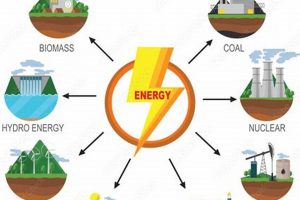
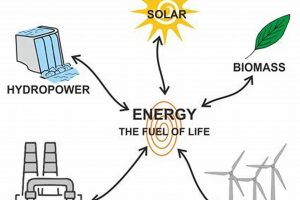
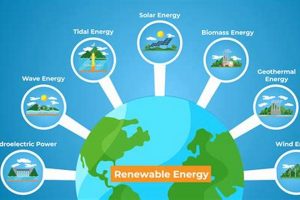
Harnessing power from naturally replenishing resources offers a sustainable alternative to traditional fossil fuels. These resources, unlike finite reserves, are continuously replenished by natural processes, ensuring their long-term availability. Examples include solar radiation, wind currents, geothermal heat, flowing water, and biomass.
Adopting power generation methods based on naturally replenishing resources is crucial for mitigating climate change, reducing reliance on dwindling fossil fuel reserves, and promoting energy independence. Historically, societies have utilized some of these sources, such as wind and water, for basic mechanical tasks. However, advancements in technology have enabled the large-scale extraction and conversion of these resources into electricity and other forms of usable power, making them viable replacements for conventional energy production.
The following sections will examine five distinct methods of obtaining power from resources that replenish over time. These methods are increasingly vital components of a diversified and sustainable energy portfolio.
Harnessing Resources that Replenish
Effectively utilizing methods for obtaining power from resources that replenish over time requires careful planning and execution. The following considerations are essential for maximizing the benefits and minimizing the challenges associated with these approaches.
Tip 1: Invest in Comprehensive Resource Assessments: Prior to implementing any project, thoroughly assess the availability and variability of the resource in the specific location. Solar irradiance data, wind speed patterns, hydrological surveys, geothermal gradient measurements, and biomass sustainability studies are crucial for accurate project planning.
Tip 2: Prioritize Energy Storage Solutions: Many sources that replenish over time, such as solar and wind, are intermittent. Integrating energy storage technologies, such as batteries, pumped hydro, or thermal storage, is essential for ensuring a reliable and consistent power supply.
Tip 3: Optimize Grid Integration Strategies: Integrating sources that replenish over time into existing power grids requires advanced control systems and smart grid technologies. Consider strategies such as demand response, distributed generation, and real-time pricing to manage variability and enhance grid stability.
Tip 4: Promote Technological Innovation: Continuous research and development are vital for improving the efficiency, reducing the cost, and expanding the applications of technologies that harness power from resources that replenish over time. Support initiatives that foster innovation in areas such as advanced materials, energy storage, and grid integration.
Tip 5: Establish Supportive Policy Frameworks: Governments play a critical role in accelerating the adoption of methods for obtaining power from resources that replenish over time. Implement policies such as feed-in tariffs, tax incentives, carbon pricing, and renewable energy mandates to create a favorable investment climate.
Tip 6: Engage Local Communities: Successful implementation requires engaging local communities and addressing their concerns. Conduct thorough environmental impact assessments, ensure equitable distribution of benefits, and provide opportunities for local participation in project planning and management.
The strategic application of these considerations will contribute to a more sustainable and resilient energy future. As technology advances and costs decline, resources that replenish over time will play an increasingly prominent role in meeting global energy demand.
The subsequent conclusion will summarize the key advantages and future prospects of this important field.
1. Solar Photovoltaic Conversion

Solar photovoltaic conversion represents a significant method within the domain of energy sources that naturally replenish. Its direct conversion of sunlight into electricity offers a sustainable alternative to traditional fossil fuels, aligning with efforts to reduce carbon emissions and enhance energy security.
- Direct Energy Conversion
Solar photovoltaic conversion utilizes semiconductor materials to directly transform photons from sunlight into electrical current. This process eliminates the need for intermediate thermal cycles, resulting in a relatively efficient and clean energy production method. For example, solar panels installed on residential rooftops convert sunlight into electricity, powering homes and reducing reliance on grid electricity.
- Scalability and Versatility
Photovoltaic systems exhibit scalability, ranging from small-scale residential installations to large utility-scale power plants. This adaptability allows for deployment in diverse geographic locations and energy demand scenarios. A solar farm spanning several acres, for instance, can generate electricity for thousands of homes, while portable solar chargers can power small electronic devices.
- Environmental Benefits
Compared to fossil fuel-based electricity generation, photovoltaic conversion produces minimal greenhouse gas emissions during operation. The life cycle environmental impact, including manufacturing and disposal, is generally lower, making it a environmentally responsible option. A large-scale shift towards solar energy reduces air pollution and mitigates the impacts of climate change.
- Technological Advancements
Ongoing research and development efforts are focused on improving the efficiency, durability, and cost-effectiveness of photovoltaic technologies. Emerging innovations, such as perovskite solar cells and bifacial panels, hold the potential to further enhance performance and reduce the levelized cost of energy. Improvements in energy storage and grid integration technologies are also vital for maximizing the utilization of solar generated electricity.
Solar photovoltaic conversion, with its direct energy conversion, scalability, environmental benefits, and ongoing technological advancements, plays a crucial role in meeting the demand for sustainable energy. As technology continues to advance and costs decline, solar photovoltaic conversion is poised to become an increasingly important source of energy. This is important because it makes energy cleaner.
2. Wind turbine technology

Wind turbine technology constitutes a fundamental pillar within the framework of renewable energy sources. The relationship is causal: wind turbines convert the kinetic energy of wind into electricity, directly contributing to the pool of power generated from replenishing sources. Its importance stems from the ability to harness a readily available and inexhaustible natural resource, reducing dependence on fossil fuels and mitigating greenhouse gas emissions. For example, large-scale wind farms located in the American Midwest and off the coasts of Europe generate significant amounts of electricity, powering homes and industries while displacing coal-fired power plants. This understanding has practical significance for policymakers, energy companies, and communities seeking to transition to a cleaner and more sustainable energy system.
Beyond electricity generation, wind turbine technology fosters innovation in related fields such as materials science, aerodynamics, and grid management. Modern wind turbines incorporate advanced composite materials, sophisticated control systems, and optimized blade designs to maximize energy capture and minimize noise. Furthermore, the integration of wind power into existing electricity grids necessitates the development of smart grid technologies and energy storage solutions to address the intermittent nature of wind resources. Denmark, for instance, has invested heavily in grid infrastructure and energy storage to accommodate high levels of wind power penetration, demonstrating the feasibility of integrating large-scale wind energy into a national grid.
In summary, wind turbine technology plays a critical role in realizing the potential of power generated from replenishing sources. Its ability to convert wind energy into electricity, coupled with its continuous technological advancements and potential for grid integration, makes it a vital component of a sustainable energy future. While challenges remain, such as intermittency and visual impact, ongoing research and development efforts are aimed at addressing these issues and further enhancing the efficiency and reliability of wind turbine technology. This concerted effort strengthens the transition towards cleaner energy solutions.
3. Hydroelectric power generation

Hydroelectric power generation stands as a mature and widely utilized method of obtaining energy from naturally replenishing sources. Its fundamental principle involves harnessing the potential energy of water stored at higher elevations to drive turbines and generate electricity. This process makes it a key component in global efforts to reduce reliance on fossil fuels and transition towards a cleaner energy portfolio.
- Reservoir-Based Generation
Reservoir-based hydroelectric facilities create large artificial lakes through dam construction. The stored water is released to flow through turbines, producing electricity. The Hoover Dam in the United States exemplifies this approach, providing power to millions while also enabling water management for irrigation and flood control. However, this method can also have significant environmental impacts, including habitat disruption and altered river flow patterns.
- Run-of-River Systems
Run-of-river hydroelectric systems divert a portion of a river’s flow through turbines without creating a large reservoir. This approach typically has a smaller environmental footprint compared to reservoir-based systems, but it also generates less electricity and is more dependent on seasonal river flow. Examples include small-scale installations on mountain streams that supply power to local communities.
- Pumped Storage Hydropower
Pumped storage hydropower plants use electricity to pump water from a lower reservoir to an upper reservoir during periods of low demand. This stored water is then released to generate electricity during periods of high demand. These facilities act as large-scale energy storage systems, enhancing grid stability and enabling the integration of intermittent renewable energy sources. Examples can be found in mountainous regions where elevation differences facilitate efficient water pumping and storage.
- Environmental Considerations
While hydroelectric power generation produces minimal greenhouse gas emissions during operation, the construction and operation of hydroelectric facilities can have substantial environmental impacts. These impacts include altered river ecosystems, displacement of communities, and potential methane emissions from reservoirs. Sustainable development practices and careful site selection are essential for minimizing these negative consequences. Efforts are made to mitigate these impacts through fish passages, flow management, and dam removal.
Hydroelectric power generation offers a proven and scalable solution for generating electricity from a continuously replenishing source. While environmental considerations must be carefully addressed, hydroelectric power remains an important component of a diversified and sustainable energy future. Its versatility, from large-scale reservoir-based systems to smaller run-of-river installations, allows for adaptation to various geographic and hydrological conditions. Furthermore, its role in grid stabilization through pumped storage hydropower enhances the value of intermittent energy solutions, making it an integral component of strategies for decarbonizing energy systems.
4. Geothermal energy utilization

Geothermal energy utilization, the extraction of heat from the Earth’s interior, constitutes a significant method of harnessing sources that replenish naturally. This process enables the generation of electricity or the direct provision of heat for various applications. Its inclusion within the category of naturally replenishing sources stems from the continuous heat flow emanating from the Earth’s core, a process sustained by radioactive decay and residual heat from the planet’s formation. For example, Iceland, situated on a geologically active zone, generates a substantial portion of its electricity and heat from geothermal resources, reducing its reliance on imported fossil fuels. This demonstrates the potential for geothermal energy to serve as a reliable and indigenous source of power.
The practical applications of geothermal energy utilization extend beyond electricity generation. Geothermal heat pumps can provide efficient heating and cooling for residential and commercial buildings, utilizing the relatively constant temperature of the Earth’s shallow subsurface. Geothermal resources are also employed in industrial processes, aquaculture, and agriculture, providing sustainable heating for greenhouses and fish farms. Furthermore, geothermal energy can be utilized in district heating systems, supplying hot water to entire communities. These diverse applications highlight the versatility of geothermal energy and its potential to contribute to a more sustainable and diversified energy system. The Geysers geothermal field in California is one of the largest producers of geothermal electricity, capable of powering a significant portion of the state.
In conclusion, geothermal energy utilization represents a valuable method within the scope of energy obtained from sources that replenish over time. Its continuous heat flow, diverse applications, and potential for indigenous resource development make it a vital component of a diversified and sustainable energy future. While challenges remain, such as the site-specific nature of geothermal resources and the potential for environmental impacts, ongoing technological advancements and responsible resource management practices are enhancing the viability and sustainability of geothermal energy utilization. This concerted effort will strengthen the transition towards cleaner, indigenous energy solutions that reduce dependency on dwindling fossil fuels.
5. Biomass conversion methods

Biomass conversion methods form a crucial link in the chain of renewable sources of energy. These methods encompass the processes by which organic matter, derived from recently living organisms, is transformed into usable energy forms. As organic material is continuously replenished through natural processes, biomass conversion represents a sustainable alternative to fossil fuels. This is important, as these methods directly contribute to the diversity of energy sources classified as naturally replenishing, thus increasing the resilience and sustainability of the energy system.
Biomass can be converted through various pathways, each with its own advantages and disadvantages. Combustion involves burning biomass directly to generate heat, which can then be used for electricity production or heating purposes. Examples include wood-burning power plants and the use of agricultural residues for cooking in developing countries. Gasification converts biomass into a combustible gas mixture, which can be used in gas turbines or internal combustion engines. Pyrolysis heats biomass in the absence of oxygen to produce bio-oil, biochar, and syngas. Anaerobic digestion utilizes microorganisms to break down biomass in the absence of oxygen, producing biogas, a mixture of methane and carbon dioxide. This diversity of conversion methods allows for the utilization of a wide range of biomass feedstocks and adaptation to varying energy needs.
While biomass conversion offers a renewable energy pathway, challenges exist regarding sustainability and environmental impact. Sustainable harvesting practices are crucial to ensure that biomass removal does not deplete soil nutrients, harm biodiversity, or contribute to deforestation. Emissions from combustion processes can release pollutants such as particulate matter and nitrogen oxides, requiring the implementation of advanced emission control technologies. Furthermore, the land-use implications of biomass production must be carefully considered to avoid competition with food production and negative impacts on ecosystems. Addressing these challenges through sustainable management practices and technological advancements is essential for realizing the full potential of biomass conversion as a renewable energy solution.
6. Resource availability assessment
Resource availability assessment is a foundational element for the effective deployment of the sources from which it’s possible to extract naturally replenishing power. The feasibility and economic viability of projects that use methods to obtain power from naturally replenishing resources are intrinsically linked to the accurate quantification and characterization of resources. For example, before investing in a solar farm, developers must conduct a thorough assessment of solar irradiance levels at the site, considering factors such as cloud cover, seasonal variations, and geographical location. Similarly, the placement of wind turbines necessitates detailed wind resource maps that account for wind speed, direction, and turbulence patterns. Ignoring this connection can result in underperforming assets and financial losses.
Beyond financial implications, a comprehensive resource availability assessment informs the selection of the most appropriate technology and deployment strategy. For hydroelectric projects, hydrological studies are crucial for determining the water flow rate, reservoir capacity, and potential environmental impacts. Geothermal projects require geological surveys to assess the subsurface temperature gradients, permeability, and chemical composition of geothermal fluids. Biomass projects necessitate analysis of feedstock availability, transportation logistics, and land-use considerations. Inadequate assessments can lead to the selection of unsuitable technologies or unsustainable resource management practices. For instance, constructing a large hydroelectric dam without a thorough understanding of the long-term hydrological cycle can result in reduced power generation during periods of drought.
In conclusion, resource availability assessment is not merely a preliminary step, but an integrated component of successful implementation for methods of obtaining power from resources that replenish over time. Accurate data and rigorous analysis are vital for optimizing project design, minimizing environmental impacts, and ensuring long-term sustainability. Continued advancements in resource assessment techniques, such as remote sensing, data analytics, and predictive modeling, are essential for unlocking the full potential of methods of obtaining power from resources that replenish over time and accelerating the transition to a sustainable energy future. Ignoring the critical importance of resource availability assessment increases the risk of project failure and undermines the overall goals of transitioning to sources that replenish.
7. Energy storage solutions

Energy storage solutions are an indispensable component for maximizing the efficacy of naturally replenishing energy sources. Due to the intermittent nature of some naturally replenishing energy generators, such as solar and wind power, storage technologies are critical for ensuring a reliable and consistent energy supply. Without effective storage, fluctuations in resource availability can lead to grid instability and limited utilization of naturally replenishing resources. For instance, large-scale battery storage systems paired with solar farms enable the delivery of solar power even during periods of low sunlight or at night. This allows power grids to accommodate a larger percentage of electricity generated from naturally replenishing energy sources, reducing the need for dispatchable fossil fuel-based power plants.
The selection of appropriate energy storage solutions is dependent on the specific characteristics of the energy source, grid requirements, and economic considerations. Battery storage, including lithium-ion and flow batteries, offers rapid response times and high energy density, making it suitable for short-duration storage applications. Pumped hydro storage, involving the pumping of water to a higher elevation reservoir and subsequent release to generate electricity, provides large-scale, long-duration storage capacity. Compressed air energy storage (CAES) stores energy by compressing air into underground caverns, releasing it to drive turbines when needed. Thermal energy storage utilizes heat or cold storage mediums to store energy for heating or cooling applications. The deployment of these diverse energy storage technologies enables grid operators to manage the variability of naturally replenishing resources, enhancing grid stability and facilitating greater penetration of naturally replenishing energy sources.
Energy storage solutions are not merely an add-on, but an enabler of a sustainable and resilient energy future. By decoupling energy generation from energy demand, storage technologies address the inherent limitations of intermittent sources. The economic viability of storage technologies is continuously improving, driven by advancements in battery technology and declining costs. Supportive policies, such as tax incentives and grid integration standards, are accelerating the deployment of energy storage projects. As the proportion of naturally replenishing energy in the electricity grid increases, the importance of energy storage solutions will only continue to grow. These solutions are critical for maintaining grid stability, ensuring energy security, and facilitating the transition to a low-carbon energy system.
Frequently Asked Questions
This section addresses common inquiries regarding energy sources that naturally replenish.
Question 1: Are energy sources that naturally replenish entirely without environmental impact?
No, while generally cleaner than fossil fuels, these sources are not entirely impact-free. Hydroelectric dams can alter river ecosystems, biomass combustion can release air pollutants, and the manufacturing of solar panels and wind turbines involves resource extraction and energy consumption.
Question 2: How does the intermittency of some naturally replenishing energy sources affect grid reliability?
The variability of solar and wind resources requires grid operators to employ forecasting techniques, energy storage solutions, and demand-side management strategies to maintain grid stability. Diversifying the energy mix and strengthening grid infrastructure are also important.
Question 3: What role do government policies play in the deployment of energy sources that naturally replenish?
Government policies, such as feed-in tariffs, tax incentives, renewable energy mandates, and carbon pricing, can create a supportive investment climate, driving innovation, reducing costs, and accelerating the adoption of these sources.
Question 4: Can energy sources that naturally replenish meet the world’s growing energy demand?
While challenges remain, studies suggest that a combination of energy efficiency measures and aggressive deployment of various naturally replenishing energy technologies can indeed meet a significant portion of global energy demand, contributing to climate change mitigation.
Question 5: How does energy storage contribute to the viability of naturally replenishing energy sources?
Energy storage technologies, such as batteries, pumped hydro, and thermal storage, decouple energy generation from energy demand, allowing for the storage of excess energy generated during periods of high resource availability and its subsequent release during periods of low resource availability.
Question 6: What are some of the emerging technologies in the field of naturally replenishing energy sources?
Emerging technologies include advanced solar cell materials, offshore wind turbines, enhanced geothermal systems, algae-based biofuels, and smart grid technologies that enhance the integration of naturally replenishing energy sources.
Addressing these questions is crucial for the successful transition to a sustainable energy future.
The following section provides a summary and conclusion.
Conclusion
This exploration of five distinct methods of obtaining power from resources that replenish over time has illuminated the diverse potential of these sustainable alternatives. From solar photovoltaic conversion to biomass conversion methods, each approach offers unique advantages and challenges, necessitating careful consideration of resource availability, environmental impact, and technological advancements. Furthermore, the discussion of resource availability assessment and energy storage solutions underscores the importance of a holistic approach to the implementation of naturally replenishing power systems.
The ongoing transition towards a sustainable energy future requires a concerted effort to overcome the technological, economic, and policy-related barriers to the widespread adoption of naturally replenishing energy sources. Continued investment in research and development, supportive government policies, and informed public discourse are essential for realizing the full potential of these resources and mitigating the risks associated with climate change. The future demands a commitment to innovation and a proactive approach to shaping a resilient and environmentally responsible energy landscape.