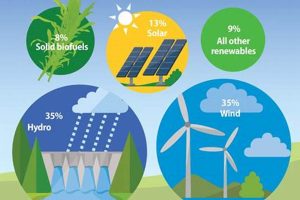
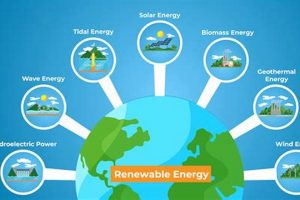
Harnessing the power of moving water to generate electricity is a long-established practice. This process relies on the continuous water cycle, where water evaporates, forms clouds, precipitates as rain or snow, and flows back to the oceans. A typical setup involves constructing a dam to create a reservoir. The stored water is then released through turbines, which spin to generate electricity.
Its significance lies in providing a consistent and reliable power supply, especially in regions with abundant water resources. Historically, water power has been utilized for centuries, initially for milling grains and later for generating electricity. This method contributes to energy independence and reduces reliance on fossil fuels, mitigating greenhouse gas emissions and fostering a more sustainable energy future.
The following sections will explore the specific criteria that determine whether this method fits the definition of a sustainable and continuously available energy form, alongside its environmental impacts and long-term viability as a source of power.
Expert Guidance on Evaluating Water-Based Power Generation
This section provides crucial insights for assessing the environmental and economic viability of water-based power systems.
Tip 1: Conduct a Comprehensive Environmental Impact Assessment: Prior to construction, meticulously evaluate the potential effects on aquatic ecosystems, including fish migration, water quality, and sediment transport. Mitigation strategies should be incorporated to minimize ecological disruption.
Tip 2: Analyze Long-Term Water Availability: Assess projected changes in precipitation patterns and river flows due to climate change. Ensure that sufficient water resources will be available to maintain power generation capacity throughout the facility’s lifespan.
Tip 3: Consider the Reservoir’s Methane Emissions: Decomposing organic matter in reservoirs can release methane, a potent greenhouse gas. Implement strategies to reduce organic loading and monitor methane emissions regularly.
Tip 4: Evaluate the Social Impacts on Local Communities: Displacement of communities due to reservoir creation must be avoided or minimized. Compensation and resettlement plans should be equitable and sustainable.
Tip 5: Implement Modern Turbine Technology: Employ advanced turbine designs that are fish-friendly and maximize energy conversion efficiency, reducing environmental impact and optimizing power output.
Tip 6: Assess the Economic Feasibility Over the Long Term: Conduct a thorough cost-benefit analysis, considering construction costs, operational expenses, and potential revenue generation, ensuring economic sustainability throughout the project’s life cycle.
Tip 7: Monitor Sedimentation Rates: Sediment buildup in reservoirs reduces storage capacity and can impact turbine performance. Implement sediment management strategies, such as dredging or sediment bypass, to maintain operational efficiency.
Adhering to these guidelines will facilitate a comprehensive and informed evaluation, enhancing the sustainability and responsible development of water-based power projects.
These tips contribute to informed decision-making regarding the role of water-based power in a sustainable energy future.
1. Water cycle dependent

The dependence of hydroelectric power on the water cycle forms the foundation of its potential classification as a renewable energy source. The continuous circulation of water, driven by solar energy, provides the kinetic energy harnessed for electricity generation. This reliance necessitates a thorough examination of the water cycle’s stability and its impact on the long-term viability of hydroelectric power.
- Precipitation Patterns and River Flow
Sufficient and consistent rainfall and snowfall are crucial for maintaining river flow, which directly affects the amount of water available for electricity generation. Changes in precipitation patterns due to climate change can significantly impact hydroelectric power output. For instance, prolonged droughts can lead to reduced reservoir levels and decreased power generation capacity, challenging the notion of continuous renewability.
- Evaporation and Water Loss
Reservoirs created for hydroelectric dams experience significant water loss through evaporation, particularly in arid climates. This loss reduces the amount of water available for power generation and can affect downstream water availability for other uses, such as agriculture and drinking water. Mitigation strategies to reduce evaporation, such as reservoir shading, are essential for maximizing the efficiency and sustainability of hydroelectric power.
- Snowmelt Contribution
In many regions, snowmelt is a primary source of water for rivers and reservoirs. Fluctuations in snowpack due to climate change can lead to unpredictable river flow patterns, affecting the reliability of hydroelectric power. Understanding and predicting snowmelt patterns are crucial for managing water resources and ensuring a stable power supply.
- Inter-annual Variability
The water cycle exhibits significant variability from year to year, leading to periods of both high and low water availability. Hydroelectric power plants must be designed and operated to accommodate these fluctuations, ensuring a reliable power supply even during dry years. This requires careful planning and water management strategies to optimize water usage and minimize disruptions to power generation.
The intimate relationship between hydroelectricity and the water cycle underscores the importance of considering the water cycle’s stability and predictability when evaluating its renewable credentials. While the water cycle itself is a renewable process, anthropogenic climate change is altering precipitation patterns, snowmelt dynamics, and evaporation rates, thereby introducing uncertainties into the equation and raising questions about the long-term sustainability of hydroelectric power in various regions.
2. Dam construction impacts

The construction of dams for hydroelectric power generation introduces multifaceted environmental and social consequences, influencing the evaluation of the technology as a renewable energy source. While harnessing water’s energy is inherently renewable, the associated construction can compromise the long-term sustainability and ecological integrity of the project.
- River Ecosystem Disruption
Dam construction invariably alters riverine ecosystems. The impoundment of water behind dams transforms free-flowing rivers into reservoirs, inundating terrestrial habitats and disrupting aquatic environments. Alterations to water temperature, flow regimes, and sediment transport patterns affect native flora and fauna, potentially leading to biodiversity loss. This disruption raises questions regarding the ecological footprint of hydroelectric projects and their alignment with renewable energy principles that emphasize environmental preservation.
- Fish Migration Obstruction
Dams impede the natural migration patterns of fish species, particularly anadromous fish like salmon and steelhead that migrate upstream to spawn. The presence of a dam can block access to critical spawning habitats, leading to population declines. Fish ladders and other mitigation measures can partially alleviate this issue, but their effectiveness varies depending on the species and the dam’s design. The impact on fish populations is a significant consideration when assessing the environmental cost and renewability of hydroelectric power.
- Sedimentation and Erosion
Dams trap sediment that would normally flow downstream, leading to sediment accumulation in the reservoir and sediment starvation downstream. This can result in erosion of riverbanks and deltas, loss of fertile land, and reduced water quality. The altered sediment dynamics can also impact the structure and function of downstream ecosystems. The long-term consequences of sedimentation and erosion must be factored into the overall environmental evaluation of hydroelectric power.
- Greenhouse Gas Emissions
While hydroelectric power is often considered a low-carbon energy source, reservoirs can release greenhouse gases, particularly methane, from the decomposition of organic matter. The amount of methane emitted depends on the reservoir’s characteristics, such as its depth, temperature, and the amount of organic matter present. In some cases, reservoir emissions can be significant, offsetting some of the benefits of reduced fossil fuel consumption. The greenhouse gas footprint of hydroelectric projects needs careful consideration when evaluating their climate impact and renewability.
The impacts associated with dam construction necessitate a comprehensive assessment of the trade-offs between renewable energy generation and environmental preservation. While hydroelectric power offers a renewable energy source, the ecological consequences of dam construction can challenge its overall sustainability and raise critical questions about its classification as a truly environmentally benign energy solution. Mitigation strategies and careful site selection are crucial for minimizing these impacts and ensuring that hydroelectric power contributes to a sustainable energy future.
3. Sedimentation effects
Sedimentation, the accumulation of silt, sand, and other particles in reservoirs behind hydroelectric dams, presents a significant challenge to the long-term viability and, consequently, the renewability of hydroelectric power. Dams disrupt the natural flow of rivers, causing suspended sediment to settle out and accumulate in the reservoir. This process reduces the reservoir’s storage capacity, diminishing its ability to regulate water flow and generate electricity. As the reservoir fills with sediment, the effective head, or height difference between the water surface and the turbine intake, decreases, leading to a reduction in power generation capacity. For example, the Sanmenxia Dam on the Yellow River in China experienced rapid sedimentation, severely limiting its power generation and irrigation capabilities within a few years of operation. The practical significance of understanding sedimentation lies in its direct impact on the lifespan and operational efficiency of hydroelectric facilities.
The impact of sedimentation extends beyond power generation. The trapped sediment deprives downstream ecosystems of essential nutrients and can lead to erosion of riverbeds and coastlines. Downstream agricultural lands that rely on sediment-rich floodwaters for fertilization can also suffer. Mitigation strategies, such as sediment flushing or bypass channels, can help to manage sedimentation, but these measures are often costly and can have their own environmental consequences. Sediment flushing, for instance, can release large volumes of sediment downstream, impacting water quality and aquatic life. Furthermore, the construction of new dams to replace those rendered ineffective by sedimentation poses additional environmental risks and costs, undermining the concept of hydroelectric power as a perpetually renewable resource. The Roseires Dam on the Blue Nile in Sudan provides a case illustrating the challenges of sediment management in large river systems.
In conclusion, while the water cycle itself is a renewable process, the finite lifespan of reservoirs due to sedimentation raises concerns about the sustainability of hydroelectric power. Sedimentation’s impacts on power generation, downstream ecosystems, and the economic costs of mitigation necessitate a comprehensive approach to dam design, operation, and long-term planning. Addressing the challenges posed by sedimentation is critical for ensuring that hydroelectric power can truly be considered a renewable energy source with a minimal environmental footprint and a sustained capacity for electricity generation.
4. Methane Emission Potential

The capacity of hydroelectric reservoirs to emit methane, a potent greenhouse gas, introduces a complex consideration when evaluating the classification of hydroelectric power as a renewable energy source. Although hydroelectricity produces minimal direct emissions during operation, the creation of reservoirs can lead to the decomposition of submerged organic matter, generating methane that is released into the atmosphere. This potential for greenhouse gas emissions complicates the assessment of the overall environmental impact and renewability of hydroelectric power.
- Decomposition of Organic Matter
The inundation of vegetation and soils during reservoir creation provides a substantial source of organic carbon that, under anaerobic conditions, is broken down by microorganisms, producing methane. Factors influencing methane production include the amount of organic matter, water temperature, and nutrient availability. For example, in tropical reservoirs with high levels of organic matter, methane emissions can be significant, potentially offsetting some of the benefits of reduced fossil fuel consumption. This process raises questions about the long-term climate impact of hydroelectric reservoirs and their true sustainability.
- Ebullition, Diffusion, and Turbine Release
Methane is released from reservoirs through several pathways, including ebullition (bubbling from sediments), diffusion across the water surface, and degassing through turbines. Ebullition can be sporadic and highly localized, while diffusion is a more continuous process. Turbine release occurs when methane-rich water passes through the turbines, leading to degassing. The relative importance of these pathways varies depending on reservoir characteristics and operating conditions. Understanding these release mechanisms is crucial for accurately quantifying methane emissions and developing effective mitigation strategies.
- Reservoir Age and Location
Methane emissions from reservoirs tend to be highest in the initial years after impoundment, as the readily available organic matter decomposes. Over time, emissions may decline as the easily degradable organic matter is consumed. However, emissions can persist for decades, particularly in reservoirs that continue to receive organic inputs from the surrounding watershed. Location also plays a significant role, with tropical reservoirs generally exhibiting higher emissions due to warmer temperatures and greater organic productivity. For example, a study of reservoirs in the Amazon basin found significantly higher methane emissions compared to those in temperate regions.
- Mitigation Strategies
Various strategies can be employed to mitigate methane emissions from hydroelectric reservoirs. These include removing vegetation prior to impoundment, managing water levels to minimize anaerobic conditions, and aerating the water to promote aerobic decomposition. In some cases, capturing methane for energy production may be feasible. The effectiveness of these strategies depends on site-specific conditions and requires careful planning and implementation. Research and development efforts are ongoing to identify and refine mitigation techniques to minimize the greenhouse gas footprint of hydroelectric power.
The methane emission potential of hydroelectric reservoirs necessitates a comprehensive assessment of their environmental impact. While hydroelectric power offers a renewable energy source, the greenhouse gas emissions associated with reservoir creation can compromise its overall sustainability. Mitigation strategies and careful site selection are crucial for minimizing these emissions and ensuring that hydroelectric power contributes to a genuinely low-carbon energy future. A complete evaluation requires considering the trade-offs between renewable energy generation and the potential for greenhouse gas emissions to determine the true environmental value of hydroelectric power.
5. Long-term water availability

The sustainability of hydroelectric power, and thus its classification as a renewable energy source, is inextricably linked to the assurance of sustained water resources over extended periods. Without consistent access to sufficient water, hydroelectric facilities cannot maintain their power generation capacity, undermining their long-term viability and renewable designation.
- Climate Change Impacts on Precipitation Patterns
Shifting global climate patterns directly influence precipitation rates, potentially leading to prolonged droughts or altered seasonal rainfall distributions. These changes can significantly reduce river flows and reservoir levels, curtailing hydroelectric power generation. For example, reduced snowpack in mountainous regions can diminish spring runoff, affecting hydroelectric facilities downstream. The implications include decreased energy output and potential disruptions to power grids dependent on hydroelectric sources. Assessment of projected climate change impacts is thus essential for determining the long-term stability of hydroelectric power as a renewable option.
- Water Resource Competition and Allocation
Hydroelectric power generation often competes with other water uses, such as agriculture, municipal water supply, and industrial processes. Increasing demand for water in these sectors, particularly in arid and semi-arid regions, can lead to conflicts over water allocation and reduced availability for hydroelectric power. Effective water management policies that balance competing needs are crucial for ensuring the sustained operation of hydroelectric facilities. Neglecting this factor can compromise the long-term sustainability of hydroelectric power, particularly in water-stressed regions.
- Deforestation and Watershed Degradation
Deforestation and watershed degradation can alter hydrological cycles, leading to increased runoff variability and reduced water infiltration into groundwater reserves. This can result in more frequent and severe floods during wet periods and lower river flows during dry periods, affecting the reliability of hydroelectric power generation. Sustainable watershed management practices, including reforestation and soil conservation, are essential for maintaining stable water supplies for hydroelectric facilities. The interconnection between land use practices and water availability must be considered when assessing the long-term sustainability of hydroelectric power.
- Glacier Melt and Runoff Dynamics
Many hydroelectric facilities rely on glacier melt as a significant source of water, particularly in mountainous regions. However, glaciers are rapidly shrinking due to climate change, leading to a temporary increase in runoff followed by a long-term decline as glaciers disappear. This poses a significant threat to the sustainability of hydroelectric power in these regions, as reduced glacier melt will lead to lower river flows and decreased power generation capacity. The long-term outlook for hydroelectric power in glacier-fed river systems is thus uncertain, necessitating careful planning and adaptation strategies.
- Ecosystem Needs: Environmental Flows
Maintaining the health of river ecosystems requires setting aside sufficient water for environmental flows. These flows are essential for sustaining aquatic life, maintaining water quality, and preserving riparian habitats. Allocating too much water to hydroelectric power can harm these ecosystems, potentially undermining the long-term sustainability of the resource. Balancing the needs of hydroelectric power generation with the ecological requirements of river systems is a critical aspect of sustainable water management. Studies show that failure to maintain environmental flows results in severe ecosystem degradation.
The long-term availability of water constitutes a fundamental constraint on the viability of hydroelectric power as a renewable energy source. Climate change, competing water demands, watershed degradation, and glacier melt all pose significant challenges to ensuring sustained water supplies for hydroelectric facilities. Effective water management policies, sustainable land use practices, and careful consideration of ecosystem needs are essential for mitigating these challenges and ensuring that hydroelectric power can contribute to a sustainable energy future. Ignoring these factors could compromise the long-term renewability and environmental benefits associated with hydroelectric power generation.
6. Ecosystem disruption risk

The potential for ecosystem disruption constitutes a significant factor in evaluating whether water-based electricity generation aligns with the principles of renewable energy. Construction and operation of such facilities, particularly large-scale dams, can fundamentally alter riverine environments, impacting aquatic and terrestrial ecosystems. Changes in water flow, temperature, sediment transport, and nutrient cycling can adversely affect native species, disrupt food webs, and lead to habitat loss. For instance, the construction of the Three Gorges Dam on the Yangtze River in China resulted in significant habitat fragmentation, displacement of human populations, and altered downstream ecosystems. The classification of water-based electricity generation as “renewable” necessitates careful consideration of these potential ecological consequences.
Managing ecosystem disruption involves comprehensive environmental impact assessments, the implementation of mitigation measures, and ongoing monitoring. Fish passage facilities, such as fish ladders, can help mitigate the impact on migratory fish populations, but their effectiveness varies depending on the species and dam design. Maintaining minimum environmental flows downstream of dams is crucial for preserving aquatic habitats and water quality. Careful selection of dam sites, avoiding areas of high biodiversity or ecological sensitivity, is also essential. The Glen Canyon Dam on the Colorado River provides an example where modified dam operations, including controlled releases of water, have been implemented to mitigate some of the downstream ecological impacts. Integrating ecological considerations into the planning and operation of water-based electricity generation facilities is paramount for minimizing ecosystem disruption.
In conclusion, the risk of ecosystem disruption poses a considerable challenge to the claim that water-based electricity generation is inherently renewable. While the energy source (water flow) is renewable, the infrastructure required to harness that energy can have lasting and detrimental effects on the environment. A comprehensive approach that integrates ecological stewardship with energy production is crucial for realizing the potential of water-based electricity generation as a truly sustainable and environmentally responsible energy solution. Ignoring these risks undermines the credibility of this energy source as a viable component of a renewable energy future.
Frequently Asked Questions
This section addresses common inquiries regarding the classification of water-based electricity generation as a renewable energy source. The responses provided aim to clarify the complexities and nuances associated with this topic.
Question 1: Is water-based electricity generation unequivocally considered renewable?
The designation of water-based electricity generation as renewable is nuanced. While the water cycle itself is a renewable process, the sustainability of specific hydroelectric projects depends on various factors, including dam construction impacts, long-term water availability, and ecosystem disruption.
Question 2: What are the primary environmental concerns associated with large-scale water-based electricity generation?
Major environmental concerns encompass the alteration of riverine ecosystems, obstruction of fish migration, sedimentation impacts, and the potential for greenhouse gas emissions from reservoirs. These factors can compromise the overall sustainability of hydroelectric projects.
Question 3: How does climate change affect the reliability of water-based electricity generation?
Climate change poses a threat to the reliability of water-based electricity generation by altering precipitation patterns, increasing the risk of droughts, and affecting snowmelt dynamics. These changes can reduce water availability and power generation capacity.
Question 4: Can the negative environmental impacts of water-based electricity generation be effectively mitigated?
Various mitigation strategies can be employed to reduce the negative impacts of water-based electricity generation, including fish passage facilities, environmental flow management, and reservoir management techniques. However, the effectiveness of these measures varies depending on the specific project and environmental conditions.
Question 5: Does the size of a water-based electricity generation facility influence its sustainability?
The size of a water-based electricity generation facility can significantly influence its sustainability. Large-scale dam projects typically have more substantial environmental and social impacts compared to smaller, run-of-river projects. Run-of-river projects, which do not involve large reservoirs, generally have a lower environmental footprint.
Question 6: What are the key factors to consider when evaluating the sustainability of a specific water-based electricity generation project?
Key factors to consider include a comprehensive environmental impact assessment, long-term water availability projections, mitigation strategies for environmental impacts, and the social and economic consequences for local communities. A holistic assessment is essential for determining the overall sustainability of the project.
In summary, while water-based electricity generation harnesses a renewable resource, its sustainability depends on careful planning, responsible operation, and a thorough understanding of the potential environmental and social consequences. A balanced approach that prioritizes both energy production and environmental stewardship is crucial.
The subsequent section will explore the future prospects and ongoing developments related to water-based electricity generation technology and policy.
Hydroelectricity
The preceding analysis has explored the multifaceted nature of hydroelectricity’s designation as a renewable energy source. While harnessing the power of flowing water aligns with the fundamental principle of utilizing a naturally replenishing resource, the comprehensive evaluation reveals critical considerations that temper an unqualified endorsement. Dam construction, potential ecosystem disruption, sedimentation, methane emissions, and the imperative of ensuring long-term water availability all contribute to the complexity of this assessment. The inherent renewability of the water cycle contrasts with the potential for significant and lasting environmental impacts associated with hydroelectric infrastructure.
Therefore, a responsible and informed approach to hydroelectric development necessitates a rigorous evaluation of project-specific circumstances. This includes integrating comprehensive environmental impact assessments, implementing robust mitigation strategies, and prioritizing sustainable water management practices. The future of hydroelectric power as a truly renewable energy source hinges on a commitment to minimizing its environmental footprint and maximizing its long-term ecological and social benefits. Only through such diligence can this technology contribute effectively to a sustainable energy future.