Harnessing power from natural resources like sunlight, wind, water, and geothermal heat offers numerous applications across residential, commercial, and industrial sectors. Examples include generating electricity with photovoltaic panels or wind turbines, heating homes with geothermal systems, and powering transportation with biofuels.
Transitioning to these sustainable practices offers significant advantages, including reduced reliance on finite fossil fuels, mitigation of greenhouse gas emissions and their associated climate change impacts, and enhanced energy security through diversified supply. Historically, reliance on renewable sources was commonplace; however, the advent of readily accessible fossil fuels shifted energy paradigms. The current focus signifies a return to these sustainable foundations, augmented by technological advancements enabling efficient and widespread implementation.
Exploring specific technologies and applications will further illustrate the potential and versatility of these resources. Discussions on solar energy, wind power, hydropower, geothermal energy, and bioenergy will follow, providing a deeper understanding of their unique characteristics, benefits, and challenges.
Practical Applications of Renewable Energy
Implementing sustainable energy solutions can be achieved through various practical approaches. The following tips provide guidance for incorporating renewable resources into diverse settings.
Tip 1: Optimize Building Design for Passive Solar Heating and Cooling: Structures can be designed to maximize sunlight exposure in winter and minimize it in summer, reducing reliance on conventional heating and cooling systems.
Tip 2: Install Rooftop Solar Photovoltaic (PV) Panels: Generating electricity on-site reduces reliance on grid-supplied power and potentially offers cost savings through net metering programs.
Tip 3: Explore Community Solar Initiatives: Participating in shared solar projects provides access to renewable energy for those without suitable rooftop space or individual installation capabilities.
Tip 4: Consider Geothermal Heat Pumps: These systems utilize stable underground temperatures for efficient heating and cooling, significantly reducing energy consumption.
Tip 5: Investigate Wind Energy Options: Small-scale wind turbines can supplement energy needs in suitable locations, while larger installations contribute to regional power generation.
Tip 6: Support Sustainable Transportation: Utilizing biofuels, electric vehicles charged with renewable energy, and efficient public transport networks contribute to decarbonizing the transportation sector.
Tip 7: Advocate for Policy Changes: Supporting policies that incentivize renewable energy adoption and promote sustainable practices accelerates the transition towards a cleaner energy future.
By adopting these measures, individuals, communities, and industries can contribute to a more sustainable energy landscape and mitigate the environmental impact of conventional energy sources.
Ultimately, integrating renewable energy sources offers a pathway towards a more resilient and environmentally responsible future.
1. Electricity generation

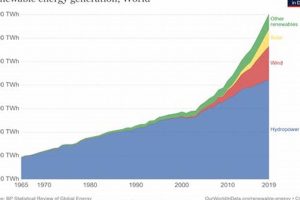
Electricity generation represents a crucial component within the broader context of renewable energy utilization. Harnessing renewable resources to produce electricity offers a sustainable alternative to conventional fossil fuel-based generation, mitigating greenhouse gas emissions and reducing reliance on finite resources. The fundamental principle involves converting natural energy sourcessuch as solar radiation, wind, and water flowinto electrical power. Photovoltaic cells directly convert sunlight into electricity, while wind turbines capture kinetic energy from wind to drive generators. Hydroelectric dams utilize the potential energy of water stored at elevation to generate electricity. These processes exemplify the direct link between renewable energy sources and electricity production.
The practical significance of this connection is evident in the growing global adoption of renewable energy technologies for electricity generation. Large-scale solar farms and wind farms contribute significantly to national grids, while distributed generation systems, like rooftop solar panels, empower individuals and communities to generate their own electricity. Examples include the increasing capacity of offshore wind farms in Europe, the rapid growth of solar photovoltaic installations in Asia, and the continued reliance on hydropower in regions with abundant water resources. These real-world applications demonstrate the viability and scalability of renewable energy for electricity generation, driving the transition towards a more sustainable energy landscape.
Integrating renewable energy sources into electricity grids presents both opportunities and challenges. Intermittency, the fluctuating nature of solar and wind power, necessitates grid management strategies and energy storage solutions to ensure reliable power supply. Further technological advancements and policy frameworks are essential to optimize grid integration and maximize the benefits of renewable electricity generation. Ultimately, the shift towards renewable-based electricity production represents a fundamental step in achieving global sustainability goals and mitigating the environmental impacts of conventional energy systems.
2. Transportation

Decarbonizing the transportation sector, a significant contributor to greenhouse gas emissions, is crucial for achieving sustainable energy goals. Integrating renewable energy sources offers viable pathways for reducing the environmental impact of transportation systems.
- Biofuels
Utilizing biomass-derived fuels, such as ethanol and biodiesel, offers a renewable alternative to conventional gasoline and diesel. While offering immediate reductions in emissions, biofuel production requires careful consideration of land use and resource management to ensure sustainability.
- Electric Vehicles (EVs)
EVs powered by electricity generated from renewable sources offer a zero-tailpipe-emission transportation solution. Widespread EV adoption requires further development of charging infrastructure and battery technologies, alongside increased renewable electricity generation capacity.
- Hydrogen Fuel Cells
Hydrogen produced from renewable sources can power fuel cell vehicles, emitting only water vapor. Challenges remain in developing efficient and cost-effective hydrogen production and storage infrastructure.
- Sustainable Public Transportation
Electrifying public transportation systems, such as buses and trains, through renewable energy integration significantly reduces urban emissions and promotes sustainable mobility. This requires investment in infrastructure upgrades and efficient operational strategies.
Transitioning to renewable energy-powered transportation systems necessitates a multifaceted approach encompassing technological advancements, policy support, and infrastructure development. The integration of biofuels, electric vehicles, hydrogen fuel cells, and sustainable public transportation contributes significantly to reducing emissions and achieving a more sustainable transportation future.
3. Heating and Cooling

Heating and cooling represent significant energy demands in residential, commercial, and industrial sectors. Transitioning to renewable energy sources for these applications offers substantial potential for reducing reliance on fossil fuels and mitigating greenhouse gas emissions. Integrating sustainable practices into heating and cooling systems is crucial for achieving comprehensive energy sustainability.
- Solar Thermal Systems
Solar thermal collectors capture solar radiation to heat water or air for domestic and commercial use. These systems reduce reliance on conventional water heaters and furnaces, lowering energy consumption and associated emissions. Examples include solar water heaters for residential hot water and solar air heaters for space heating in commercial buildings. The widespread adoption of solar thermal technologies contributes significantly to decarbonizing heating systems.
- Geothermal Heat Pumps
Geothermal heat pumps utilize the stable temperature of the earth to provide efficient heating and cooling. These systems exchange heat with the ground, reducing reliance on electricity or fossil fuels. Ground-source heat pumps are commonly used for residential and commercial applications, while larger systems can provide heating and cooling for entire districts. Geothermal heat pump technology offers a sustainable and efficient solution for year-round climate control.
- Biomass Heating
Biomass heating systems utilize organic matter, such as wood pellets or agricultural residues, as a renewable fuel source. These systems can replace conventional furnaces and boilers, reducing reliance on fossil fuels. Biomass heating is particularly relevant in rural areas with access to sustainable biomass resources. Careful management of biomass sourcing and combustion processes is essential to ensure environmental sustainability.
- Passive Heating and Cooling Strategies
Passive design strategies optimize building orientation, insulation, and ventilation to minimize heating and cooling needs. These strategies reduce reliance on active heating and cooling systems, lowering energy consumption and associated emissions. Examples include building orientation to maximize solar gain in winter and minimize it in summer, natural ventilation strategies for cooling, and high-performance insulation to reduce heat loss or gain. Integrating passive design principles into building construction and renovation contributes significantly to energy efficiency and sustainability.
Integrating renewable energy sources into heating and cooling systems offers a pathway towards decarbonizing buildings and reducing reliance on fossil fuels. The combined implementation of solar thermal, geothermal, biomass, and passive strategies significantly contributes to achieving comprehensive energy sustainability and mitigating the environmental impact of conventional heating and cooling technologies.
4. Industrial processes

Industrial processes, often energy-intensive, represent a significant area for integrating renewable energy solutions. Transitioning from fossil fuel-based energy to renewable sources offers substantial potential for reducing industrial emissions and promoting sustainable manufacturing practices. This shift necessitates exploring various facets of renewable energy integration within industrial settings.
- Electrification with Renewable Energy
Replacing fossil fuel-powered equipment with electrically powered alternatives, utilizing renewable electricity, significantly reduces emissions. Examples include electrifying industrial heating systems with electric arc furnaces or induction heating, and powering industrial machinery with electric motors instead of combustion engines. This transition requires investment in infrastructure upgrades and efficient electric equipment.
- Bioenergy for Process Heat and Steam
Utilizing biomass, such as wood residues or agricultural byproducts, as a renewable fuel source for generating process heat and steam offers a sustainable alternative to fossil fuels. This approach requires careful sourcing and management of biomass resources to ensure environmental sustainability and avoid deforestation or other negative ecological impacts. Examples include using biomass boilers in the pulp and paper industry or for district heating systems.
- Solar Thermal for Industrial Processes
Concentrated solar thermal systems can provide high-temperature heat for various industrial applications, including materials processing, chemical production, and food processing. Integrating solar thermal technologies reduces reliance on fossil fuels and lowers emissions. Examples include using solar thermal for drying processes in the agricultural sector or for preheating materials in manufacturing.
- Green Hydrogen for Industrial Feedstock
Hydrogen produced from renewable sources, often termed “green hydrogen,” can replace fossil-based hydrogen as a feedstock in various industrial processes, including ammonia production and refining. This transition reduces reliance on fossil fuels and lowers emissions. Challenges remain in scaling up green hydrogen production and developing efficient storage and transportation infrastructure.
Integrating renewable energy into industrial processes represents a crucial step towards decarbonizing industry and achieving sustainable manufacturing practices. The combined implementation of electrification with renewable electricity, bioenergy, solar thermal, and green hydrogen technologies offers a pathway towards a more environmentally responsible and sustainable industrial sector.
5. Grid integration

Grid integration is essential for maximizing the utilization of renewable energy sources. The inherent intermittency of renewable generation, particularly solar and wind power, necessitates sophisticated integration strategies to ensure grid stability and reliability. Effective grid integration involves balancing fluctuating renewable energy supply with demand, managing voltage and frequency variations, and ensuring seamless power flow. This requires advanced forecasting technologies, grid management systems, and energy storage solutions.
Real-world examples illustrate the practical significance of grid integration. In regions with high penetration of wind power, like Denmark, grid operators utilize sophisticated forecasting models and demand-response programs to balance supply and demand. Similarly, the integration of large-scale solar farms in California requires advanced grid management systems to address the intermittent nature of solar generation. Energy storage technologies, such as pumped hydro storage and battery storage, play a crucial role in smoothing out fluctuations and ensuring grid stability. Furthermore, smart grids, incorporating advanced communication and control technologies, enable dynamic management of distributed renewable energy resources and optimize grid performance.
Addressing the challenges of grid integration is crucial for realizing the full potential of renewable energy. Developing advanced forecasting and control systems, expanding energy storage capacity, and modernizing grid infrastructure are essential steps. Furthermore, policy frameworks and market mechanisms that incentivize grid flexibility and support renewable energy integration are vital for accelerating the transition to a sustainable energy future. Effective grid integration enables greater reliance on renewable sources, reduces greenhouse gas emissions, and enhances energy security.
6. Energy storage

Energy storage is inextricably linked to the effective utilization of renewable energy sources. The intermittent nature of renewable generation, particularly solar and wind power, creates a fundamental challenge: aligning energy supply with demand. Energy storage technologies address this challenge by capturing excess energy generated during periods of high renewable production and releasing it during periods of low production or peak demand. This capability fundamentally transforms the reliability and dispatchability of renewable energy, enabling its greater integration into electricity grids and broader adoption across various sectors.
The practical significance of this connection is evident in several real-world applications. Pumped hydro storage, a mature technology, utilizes excess electricity to pump water uphill to a reservoir, storing potential energy. When demand increases, the water is released downhill, driving turbines to generate electricity. Battery storage systems, rapidly declining in cost and increasing in capacity, offer a flexible and scalable solution for storing renewable energy. These systems can be deployed at various scales, from residential rooftop solar installations to large-scale grid-connected facilities. Other storage technologies, such as compressed air energy storage and thermal energy storage, further expand the range of options for managing renewable energy intermittency.
Addressing the challenges associated with energy storage is crucial for maximizing the benefits of renewable energy. Continued research and development are essential for improving the efficiency, cost-effectiveness, and lifecycle performance of storage technologies. Furthermore, policy frameworks and market mechanisms that recognize the value of energy storage and incentivize its deployment are crucial for accelerating the transition to a sustainable energy future. Effective energy storage solutions unlock the full potential of renewable energy sources, enabling a reliable, resilient, and decarbonized energy system.
Frequently Asked Questions about Renewable Energy
This section addresses common inquiries regarding the utilization of renewable energy sources, offering concise and informative responses to clarify potential uncertainties and misconceptions.
Question 1: What are the primary barriers to wider adoption of renewable energy technologies?
Several factors influence the pace of renewable energy adoption. These include upfront costs of installation, intermittency of certain resources like solar and wind, grid integration challenges, and public perception and acceptance.
Question 2: How does renewable energy contribute to energy independence and security?
Utilizing domestically available renewable resources reduces reliance on imported fossil fuels, enhancing energy independence and security. Diversifying energy sources through renewables strengthens resilience against price volatility and supply disruptions.
Question 3: Are renewable energy sources truly sustainable over their entire lifecycle?
Lifecycle assessments consider the environmental impacts of resource extraction, manufacturing, operation, and decommissioning of renewable energy technologies. While generally less impactful than fossil fuels, considerations regarding material sourcing and end-of-life management remain important for ensuring true sustainability.
Question 4: Can renewable energy sources reliably meet global energy demands?
Technological advancements, grid modernization, and energy storage solutions continue to improve the reliability and dispatchability of renewable energy. Combined implementation of diverse renewable sources and strategic grid management can effectively meet growing energy demands.
Question 5: What are the economic implications of transitioning to a renewable energy-based economy?
Transitioning to renewable energy creates new economic opportunities in manufacturing, installation, maintenance, and research. Furthermore, it reduces reliance on volatile fossil fuel markets, promoting long-term economic stability. While initial investments are required, the long-term economic benefits are substantial.
Question 6: How can individuals contribute to the growth of renewable energy?
Individuals can support renewable energy through various actions, such as installing rooftop solar panels, investing in community solar projects, choosing electric vehicles, adopting energy-efficient practices, and advocating for policies that promote renewable energy development.
Understanding the benefits and addressing the challenges associated with renewable energy are crucial for informed decision-making and widespread adoption. Continued technological advancements and supportive policies will further accelerate the transition towards a sustainable energy future.
Further exploration of specific renewable energy technologies and their applications will provide a more comprehensive understanding of their unique contributions and potential.
Conclusion
Exploration of diverse applications, ranging from electricity generation and transportation to heating, cooling, and industrial processes, reveals the transformative potential of renewable energy resources. Successful integration hinges on addressing key challenges, including intermittency, grid management, and energy storage. Technological advancements, coupled with supportive policy frameworks, are essential for realizing the full potential of these resources.
Transitioning to renewable energy systems represents not merely a technological shift, but a fundamental step towards a sustainable future. Decarbonizing energy production and consumption mitigates the environmental impacts associated with conventional energy sources, enhancing energy security and fostering a more resilient and equitable energy landscape. Continued investment in research, development, and deployment of renewable energy technologies is paramount for achieving a sustainable and prosperous future.