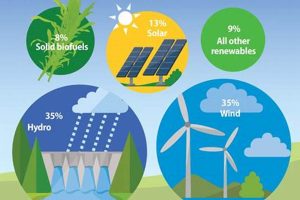
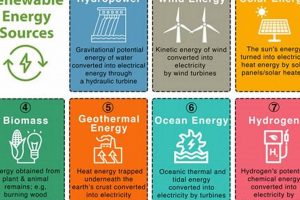
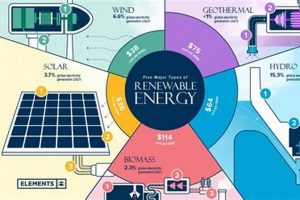
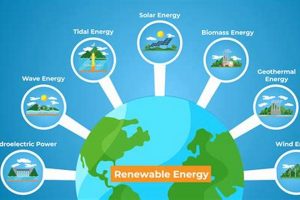
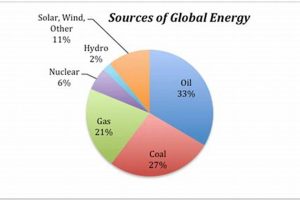
Hydroelectric power currently represents the dominant form of renewable electricity generation globally. It harnesses the energy of flowing water to turn turbines connected to generators, producing electricity. Large-scale dams and reservoirs are typical examples, but smaller, run-of-river systems also contribute to the overall output.
Its widespread adoption is due to several factors, including its established technology, cost-effectiveness in certain locations, and its potential for providing reliable baseload power. Historically, hydropower has played a critical role in industrial development and grid stabilization, often offering the first large-scale renewable energy solutions in many regions.
Subsequent sections will delve into the geographical distribution of hydroelectric power, its environmental considerations, and the ongoing advancements in its technologies and management practices.
Optimizing Hydroelectric Power Generation
Maximizing the efficiency and sustainability of electricity generated from flowing water requires careful planning and implementation. The following tips offer insight into optimizing various aspects of hydroelectric facilities.
Tip 1: Site Selection: Prioritize locations with consistent and predictable water flow. Comprehensive hydrological studies are essential to accurately assess long-term resource availability, mitigating risks associated with drought or flood conditions.
Tip 2: Environmental Impact Assessments: Conduct thorough assessments to minimize ecological disruption. Implement fish passage technologies, manage sediment accumulation, and address potential impacts on water quality and downstream ecosystems.
Tip 3: Modernization of Existing Infrastructure: Upgrade aging turbines and generators to enhance efficiency and increase electricity output. Incorporate advanced control systems for optimized water management and grid integration.
Tip 4: Reservoir Management: Optimize reservoir operations to balance electricity generation with other water uses, such as irrigation, flood control, and navigation. Consider seasonal variations and long-term climate change impacts.
Tip 5: Small-Scale Hydro Development: Explore opportunities for developing run-of-river hydroelectric projects. These smaller facilities can provide decentralized electricity generation with reduced environmental footprints compared to large dams.
Tip 6: Monitoring and Maintenance: Establish robust monitoring programs to track performance, detect potential issues, and ensure the long-term reliability of hydroelectric facilities. Regular maintenance is crucial for preventing equipment failures and maximizing lifespan.
Effective hydroelectric power generation demands an integrated approach that balances electricity production with environmental stewardship and responsible resource management. By implementing these strategies, it is possible to enhance the sustainability and effectiveness of power derived from water.
The article will now proceed to examine the challenges and opportunities facing the global hydroelectric sector.
1. Hydrological cycle

The hydrological cycle is intrinsically linked to electricity generation from flowing water, underpinning the sustainability of this energy source. It provides the continuous supply of water necessary for electricity production and dictates the long-term viability of related infrastructure.
- Precipitation Patterns
Precipitation, in the form of rain and snow, serves as the primary input to the hydrological cycle, replenishing rivers and reservoirs. Consistent and predictable precipitation patterns are critical for maintaining adequate water levels necessary for continuous electricity generation. Alterations in these patterns, due to climate change or regional variations, can significantly impact the output and reliability of power generated from water.
- Runoff and Streamflow
Runoff from precipitation feeds into streams and rivers, providing the water flow that drives hydroelectric turbines. The volume and timing of runoff are essential considerations in the design and operation of facilities, influencing the amount of electricity that can be generated. Effective management of streamflow is necessary to balance electricity production with other water uses, such as irrigation and ecosystem preservation.
- Evaporation and Transpiration
Evaporation and transpiration, while essential components of the water cycle, can also impact the availability of water for electricity generation. High evaporation rates from reservoirs can reduce water levels, affecting the capacity. Understanding and managing these processes are crucial for optimizing water resource utilization and minimizing losses.
- Water Storage and Reservoirs
Water storage in natural lakes and artificial reservoirs plays a critical role in regulating water supply for electricity generation. Reservoirs provide a buffer against seasonal variations in precipitation and runoff, allowing for a more consistent and reliable electricity output. Effective reservoir management is essential for balancing electricity production with flood control, water supply, and environmental considerations.
The continuous movement of water within the hydrological cycle directly influences the availability and reliability. Efficient management and understanding of these dynamics are essential for the long-term sustainability of facilities and their contribution to the global energy supply.
2. Dam infrastructure

Dam infrastructure serves as an integral component of hydroelectric power systems, representing a substantial investment and engineering feat. These structures impound water, creating reservoirs that enable the controlled release of water to drive turbines and generate electricity. The effectiveness of the infrastructure directly influences the electricity production capacity of a hydroelectric facility. For example, the Three Gorges Dam in China, one of the world’s largest hydroelectric projects, demonstrates the scale and capability of modern dam infrastructure to provide significant amounts of renewable electricity.
Moreover, dam infrastructure encompasses more than just the dam itself. It includes spillways, intake structures, penstocks, and powerhouses, each critical to the operation and efficiency of the hydroelectric system. The design and construction of these components must account for geological conditions, water flow patterns, and potential environmental impacts. Proper maintenance and upgrades are essential to ensure the long-term reliability and safety of the infrastructure, preventing failures that could lead to catastrophic consequences. The Itaipu Dam, a joint project between Brazil and Paraguay, exemplifies the importance of well-maintained infrastructure for sustained electricity production.
In summary, dam infrastructure is fundamental to harnessing the potential of hydroelectric power. Its design, construction, and maintenance directly impact the electricity generation capacity and the long-term viability of the system. Addressing challenges related to environmental impact, sediment management, and aging infrastructure is essential to ensure that electricity derived from water continues to play a significant role in the global energy landscape.
3. Electricity generation

Hydroelectric power, currently the most utilized form of renewable energy globally, directly centers on the principle of electricity generation. Water’s kinetic energy transforms into mechanical energy as it flows through turbines. These turbines rotate generators, producing electrical energy. The efficiency of this conversion is critical in determining the output of a hydroelectric facility. A prime example is the Grand Coulee Dam in the United States, which generates substantial electricity by harnessing the Columbia River’s flow. Without the process of electricity generation, the stored potential energy of water remains untapped for practical use. Hence, electricity generation represents the functional core of hydroelectric power, converting a natural resource into a usable energy form.
The scale of electricity generation from hydroelectric sources varies widely, influenced by factors such as dam size, water availability, and turbine technology. Large-scale hydroelectric projects often provide baseload power, offering a consistent electricity supply. Small-scale hydroelectric systems, on the other hand, can serve remote communities or industrial facilities. Advancements in turbine technology, such as variable-speed turbines, improve the efficiency of electricity generation over a wider range of water flow conditions. Understanding these variations and technological improvements is essential for optimizing electricity generation and expanding the application of hydroelectric power in diverse settings. Norway, with its abundant water resources and advanced hydroelectric technology, serves as an exemplar in maximizing electricity generation from water.
Electricity generation is an indispensable component of hydroelectric power, linking water resources to energy production. Optimizing this process involves continuous technological innovation, efficient resource management, and consideration of environmental factors. By understanding and improving electricity generation, the sustained contribution of hydroelectric power to global energy needs can be ensured. As energy demands increase and the need for renewable sources becomes more urgent, the role of efficient electricity generation from water is likely to intensify.
4. Environmental impact

Hydroelectric power, the globally dominant renewable energy source, exhibits a complex interplay with the environment. Construction of dams and reservoirs, necessary for this technology, invariably leads to significant alterations in river ecosystems. These alterations can include habitat loss, altered water flow patterns, and impeded fish migration, impacting biodiversity and ecological integrity. The creation of reservoirs often results in the submersion of terrestrial habitats, contributing to greenhouse gas emissions through the decomposition of organic matter. For example, the construction of the Belo Monte Dam in Brazil led to widespread deforestation and displacement of indigenous communities, underscoring the far-reaching consequences of hydroelectric development.
Mitigating the adverse environmental effects requires careful planning and implementation of environmental management strategies. Fish passages, minimum flow requirements, and sediment management are crucial for minimizing ecological disruption. In some cases, dam removal can restore river ecosystems, although this option is often controversial due to the loss of electricity generation capacity and water storage. Environmental impact assessments are essential for identifying potential risks and implementing mitigation measures during the planning and operation of projects. For instance, the implementation of fish ladders at the Bonneville Dam on the Columbia River has helped to improve salmon migration, demonstrating the potential for mitigating the environmental impact of dam infrastructure.
Environmental impact stands as a critical component in the evaluation and sustainability of power generated from flowing water. Balancing electricity generation with ecological preservation requires a holistic approach, integrating environmental considerations into all stages of hydroelectric development. Ongoing research and technological advancements are essential for developing more sustainable facilities that minimize environmental disruption and contribute to a cleaner, more resilient energy future. The challenge lies in harnessing the benefits of hydroelectric power while minimizing its ecological footprint and ensuring the long-term health of river ecosystems.
5. Geographical distribution
The global distribution of hydroelectric power facilities correlates directly with the availability of suitable water resources and topographical features. Mountainous regions with high precipitation levels and steep river gradients, such as the Himalayas, the Andes, and the Alps, exhibit a high concentration of electricity generation. Scandinavian countries, including Norway and Sweden, benefit from abundant water resources and glacial landscapes, resulting in significant hydroelectric capacity. Conversely, arid and semi-arid regions typically have limited or no presence of electricity produced using water due to insufficient water supply. The uneven distribution of this renewable energy source highlights the dependency of its deployment on specific geographical conditions. For example, China possesses substantial electricity generation capacity due to the extensive river networks and mountainous terrain in its western regions, while many African countries, despite having large rivers, face challenges in developing hydroelectric infrastructure due to financial and technical limitations.
The geographical distribution also influences the design and operation of projects. High-head projects, common in mountainous areas, utilize the potential energy of water falling from significant heights, requiring smaller dams and reservoirs. Low-head projects, typical in flatter regions, rely on larger volumes of water and necessitate broader dams. Furthermore, the accessibility of locations influences project development. Remote regions may face challenges in constructing and maintaining facilities, increasing costs and logistical complexities. The Itaipu Dam, located on the Parana River between Brazil and Paraguay, exemplifies a large-scale project requiring extensive international cooperation due to its transboundary location and impact on multiple stakeholders.
Understanding the geographical distribution of power from water is crucial for energy planning and policy development. It enables the identification of regions with high potential for further development, as well as regions where alternative energy sources may be more suitable. Addressing the challenges associated with remote locations, environmental concerns, and transboundary water management is essential for maximizing the contribution of electricity generation while ensuring sustainable resource utilization. This understanding underscores the importance of considering geographical factors in the broader context of global energy transition and sustainable development goals.
6. Economic viability

The enduring prevalence of hydroelectric power is intrinsically linked to its economic viability, particularly in regions with suitable geographic conditions. Initial capital investment for large-scale infrastructure, such as dams and powerhouses, is significant. However, operational costs are relatively low due to the absence of fuel expenses. This results in a competitive levelized cost of electricity (LCOE) compared to fossil fuel alternatives, especially when considering the long lifespan of hydroelectric facilities. The Three Gorges Dam in China, despite its massive construction cost, is projected to provide electricity at a cost lower than many coal-fired power plants over its operational lifespan. Thus, economic viability functions as a primary driver for the continued development and utilization of electricity production from flowing water, making it the most prevalent renewable energy source.
Furthermore, electricity generated from water contributes to regional economic development by providing a stable and affordable electricity supply. This facilitates industrial growth, improves living standards, and supports rural electrification initiatives. In Norway, hydroelectric power has been a cornerstone of the nation’s economy for decades, enabling energy-intensive industries and providing a competitive advantage in global markets. Additionally, revenue generated from electricity sales can offset the initial investment costs and provide a source of income for local communities. However, externalities, such as environmental damage and social displacement, must be factored into the economic analysis to ensure a comprehensive assessment of project viability. Failing to account for these factors can lead to inaccurate cost-benefit analyses and unsustainable development practices.
In summary, the economic viability of hydroelectric power, characterized by low operating costs and a competitive LCOE, underpins its global dominance as the most common renewable energy source. While initial capital investments are substantial, the long-term economic benefits, including stable electricity supply and regional development, make it an attractive option in regions with suitable resources. Moving forward, a comprehensive economic analysis that integrates environmental and social costs is essential for ensuring sustainable project development and maximizing the contribution of electricity production from water to a low-carbon energy future.
7. Grid integration

Grid integration represents a critical challenge and opportunity for electricity generated from flowing water, impacting its ability to reliably contribute to global energy supplies.
- Variability Management
The intermittent nature of some hydroelectric resources, particularly run-of-river systems, necessitates advanced grid management techniques to balance electricity supply with demand. Implementing forecasting models for water availability and integrating energy storage solutions, such as pumped hydro storage, can mitigate variability and ensure grid stability. Hydro-Qubec’s grid management system in Canada serves as an example, utilizing sophisticated forecasting and storage technologies to integrate variable hydroelectric generation effectively.
- Transmission Infrastructure
The geographical location of hydroelectric facilities often requires extensive transmission infrastructure to deliver electricity to population centers. Investments in high-voltage transmission lines and grid modernization are essential for minimizing transmission losses and maximizing the utilization of electricity production. The construction of long-distance transmission lines from hydroelectric plants in the Brazilian Amazon to major cities demonstrates the challenges and opportunities associated with transmitting electricity across vast distances.
- Grid Flexibility
Hydroelectric facilities with reservoirs offer valuable grid flexibility, enabling them to respond rapidly to changes in electricity demand. The ability to quickly adjust electricity output allows operators to balance fluctuations in other renewable energy sources, such as solar and wind power. The operation of the Dinorwig pumped-storage plant in Wales provides a clear example of how hydroelectric resources can provide ancillary services to maintain grid stability and reliability.
- Regulatory Frameworks
Effective grid integration requires supportive regulatory frameworks that facilitate the connection of hydroelectric facilities to the electricity grid and promote fair compensation for electricity generated. Standardized interconnection procedures and market mechanisms that value the flexibility and reliability of hydroelectric power are crucial for incentivizing investment and maximizing its contribution to the energy mix. The regulatory environment in Germany, which prioritizes renewable energy integration, has spurred innovation and investment in grid technologies that support the reliable delivery of electricity generated from water.
Addressing the challenges of grid integration is paramount for ensuring the continued relevance and competitiveness of electricity production. By implementing advanced grid management techniques, investing in transmission infrastructure, and establishing supportive regulatory frameworks, the full potential of this power source can be realized, contributing to a more sustainable and reliable energy system.
Frequently Asked Questions
The following section addresses common queries concerning hydroelectric power, the world’s most prevalent renewable energy source. It seeks to clarify misunderstandings and provide objective information.
Question 1: Is electricity from flowing water truly renewable?
Yes, hydroelectric power is considered renewable due to its reliance on the natural water cycle. However, the sustainability of hydroelectric facilities depends on responsible resource management and minimal environmental disruption.
Question 2: What are the primary environmental concerns associated with hydroelectric dams?
Key environmental concerns include habitat destruction, altered river flow, impeded fish migration, and potential greenhouse gas emissions from reservoir decomposition. Mitigation strategies are essential to minimize these impacts.
Question 3: How does hydroelectric power compare to other renewable energy sources in terms of reliability?
Hydroelectric power, particularly from facilities with reservoirs, offers a higher degree of reliability compared to intermittent sources like solar and wind. Its ability to store water enables on-demand electricity generation.
Question 4: What factors determine the economic viability of hydroelectric projects?
The economic viability depends on factors such as initial construction costs, water availability, transmission infrastructure, and government policies. A favorable combination of these factors is essential for a successful project.
Question 5: How can existing hydroelectric facilities be modernized to improve efficiency and sustainability?
Modernization strategies include upgrading turbines and generators, implementing advanced control systems, improving fish passage, and optimizing reservoir management.
Question 6: Can electricity generated from water contribute to reducing greenhouse gas emissions?
Yes, power derived from water produces minimal greenhouse gas emissions during operation compared to fossil fuel-based electricity generation. It can play a significant role in mitigating climate change.
In conclusion, hydroelectric power offers numerous benefits as a renewable energy source, but careful consideration of environmental and economic factors is crucial for sustainable development.
The subsequent section will explore future trends and innovations in hydroelectric technology.
Conclusion
This article has explored various facets of hydroelectric power, the most common renewable energy source in the world. It has examined its reliance on the hydrological cycle, the function of dam infrastructure, and the processes involved in electricity generation. Critical considerations of environmental impact, geographical distribution, and economic viability have been addressed, alongside the challenges of grid integration. Frequently asked questions were answered to provide a comprehensive understanding of this established technology.
As global energy demands continue to rise and the imperative to transition towards sustainable energy sources intensifies, a balanced and informed approach to hydroelectric power development is essential. Continuous innovation, responsible resource management, and a commitment to minimizing environmental consequences are crucial for ensuring that this prevalent renewable energy source contributes effectively to a cleaner and more secure energy future.