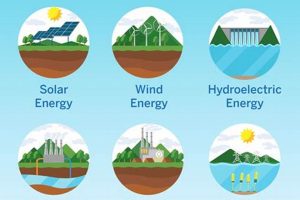
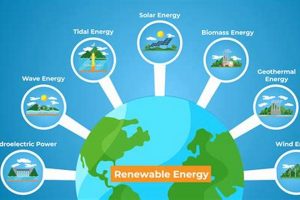
Harnessing power from naturally replenishing reservoirs offers a sustainable alternative to traditional energy production. These methods derive energy from processes that are constantly renewed, mitigating depletion concerns. Examples include capturing energy from moving air, utilizing the sun’s radiation, and tapping into the earth’s internal heat.
The adoption of these energy options presents numerous advantages, ranging from reduced greenhouse gas emissions to enhanced energy security. Historically, reliance on finite resources has led to environmental degradation and geopolitical instability. Shifting toward sustainable options promises a cleaner environment, stable energy prices, and long-term resource availability.
The subsequent sections delve into specific instances of these sustainable power generation techniques, exploring their underlying mechanisms, current applications, and potential for future development.
Practical Guidance for Sustainable Energy Adoption
The following recommendations are presented to facilitate a deeper understanding and effective implementation of sustainable power generation strategies.
Tip 1: Prioritize Lifecycle Assessments. A comprehensive lifecycle assessment evaluates the environmental impact of an energy technology from resource extraction to disposal, ensuring genuinely sustainable choices.
Tip 2: Optimize Energy Storage Solutions. Integrating energy storage mechanisms, such as batteries or pumped hydro, is crucial for addressing the intermittent nature of some sustainable power sources.
Tip 3: Support Grid Modernization Initiatives. Upgrading existing electrical grids to accommodate distributed generation and two-way energy flow is essential for widespread adoption.
Tip 4: Invest in Research and Development. Continued investment in technological advancements is necessary to improve the efficiency, reliability, and affordability of sustainable power generation.
Tip 5: Implement Supportive Policy Frameworks. Governments should establish clear and consistent policies, including incentives and regulations, to encourage the deployment of sustainable infrastructure.
Tip 6: Foster Public Awareness and Education. Raising public awareness about the benefits of transitioning toward sustainable energy systems can promote widespread acceptance and support.
Tip 7: Emphasize Community Engagement. Engaging local communities in the planning and implementation phases of energy projects can foster a sense of ownership and ensure alignment with local needs and priorities.
Adhering to these suggestions will contribute to a more effective and sustainable energy transition, yielding long-term environmental and economic benefits.
The subsequent section will conclude the article, summarizing key insights and highlighting potential future directions in the field of sustainable energy.
1. Solar radiation capture

Solar radiation capture represents a pivotal component within the framework of sustainable energy solutions. Its capacity to harness sunlight for electricity generation, heating, and other applications places it as a cornerstone in the transition away from fossil fuels. The following details outline essential facets of solar radiation capture.
- Photovoltaic Conversion Efficiency
Photovoltaic (PV) cells directly convert sunlight into electricity through the photovoltaic effect. Efficiency, measured as the percentage of sunlight converted, is a crucial performance metric. Silicon-based cells, the most prevalent, typically exhibit efficiencies between 15% and 22%. Research efforts focus on enhancing efficiency through novel materials and cell designs, such as perovskites and multi-junction cells. Higher efficiency directly translates to greater electricity output for a given area, reducing land use requirements.
- Solar Thermal Energy Applications
Solar thermal technologies concentrate solar energy to heat a fluid, typically water or oil. This heated fluid can then be used to drive turbines for electricity generation, or directly for heating purposes in industrial processes or district heating systems. Concentrated solar power (CSP) plants use mirrors to focus sunlight onto a receiver, while solar water heaters directly absorb solar radiation to heat water. Solar thermal applications offer a viable alternative to fossil fuels for both electricity and heat generation, reducing carbon emissions and reliance on finite resources.
- Integration with Energy Storage
Solar radiation capture inherently exhibits intermittency due to daily and seasonal variations in sunlight availability. Integrating energy storage solutions is crucial to ensure a reliable and continuous electricity supply. Battery storage systems, pumped hydro storage, and thermal energy storage can store excess energy generated during peak sunlight hours for use during periods of low sunlight. Energy storage technologies play a vital role in mitigating the intermittency challenge, enhancing the overall stability and reliability of solar energy systems.
- Geographical and Climatic Considerations
The effectiveness of solar radiation capture is significantly influenced by geographical location and climatic conditions. Regions with high solar irradiance, such as deserts and equatorial areas, offer the greatest potential for solar energy generation. Cloud cover, atmospheric conditions, and seasonal variations can impact the amount of sunlight reaching the surface, affecting energy output. Site-specific assessments are essential to determine the optimal placement and design of solar energy systems, considering local climate patterns and sunlight availability.
These facets of solar radiation capture illustrate its multifaceted role within the broader context of “5 renewable sources.” Further advancements in efficiency, storage, and adaptation to varying geographical conditions will solidify its position as a fundamental pillar of a sustainable energy future.
2. Wind kinetic energy

Wind kinetic energy, as a component within the set of “5 renewable sources,” harnesses the power of moving air to generate electricity. Its significance arises from its potential to contribute substantially to global energy needs while minimizing environmental impact. Wind energy deployment requires careful consideration of various interconnected factors.
- Turbine Technology and Efficiency
Wind turbines convert kinetic energy into mechanical energy, which is then transformed into electrical energy. Turbine efficiency, measured by the power coefficient, dictates the proportion of wind energy captured. Modern horizontal-axis turbines are the dominant design, offering high efficiency and scalability. Advancements in blade design, materials, and control systems are continually enhancing turbine performance. Optimal turbine selection is critical for maximizing energy production at a given site.
- Site Selection and Resource Assessment
Wind resource assessment is essential for determining the suitability of a location for wind energy development. Wind speed and direction data, gathered through anemometers and meteorological models, are used to estimate the potential energy yield. Offshore sites, with their consistent and high wind speeds, offer significant advantages over onshore locations. Careful site selection, considering factors such as wind resource, proximity to transmission lines, and environmental constraints, is crucial for project viability.
- Grid Integration and Stability
Integrating wind energy into the electrical grid presents challenges due to the intermittent nature of wind resources. Wind power fluctuations can impact grid stability and require sophisticated control systems and forecasting techniques. Implementing advanced grid management strategies, such as energy storage solutions and smart grids, is essential for accommodating high penetrations of wind energy. Grid integration costs and complexities are important considerations in the economic assessment of wind energy projects.
- Environmental and Social Impacts
Wind energy development can have environmental and social impacts that require careful mitigation. Potential impacts include avian and bat mortality, noise pollution, visual intrusion, and land use conflicts. Conducting thorough environmental impact assessments, implementing appropriate mitigation measures, and engaging with local communities are essential for responsible wind energy development. Sustainable wind energy deployment requires balancing energy production with environmental protection and social considerations.
These factors illustrate the interconnected nature of wind energy within the broader context of “5 renewable sources.” Successful integration of wind power into the global energy mix relies on technological advancements, strategic site selection, grid modernization, and responsible environmental stewardship. Continued research and innovation are critical for unlocking the full potential of wind energy as a sustainable energy source.
3. Hydroelectric potential

Hydroelectric potential represents a significant contributor within the scope of renewable energy options. Its capacity to convert the energy of flowing water into electricity offers a well-established and scalable method for power generation. The realization of hydroelectric power involves careful consideration of numerous factors.
- Dam Infrastructure and Reservoir Management
Dam construction is integral to harnessing hydroelectric potential. Dams create reservoirs, allowing for controlled water release to drive turbines. Effective reservoir management is crucial to balance power generation with ecological concerns, including sediment transport, water quality, and fish migration. Dam safety is of paramount importance to prevent catastrophic failures and ensure public safety. The design and operation of dams must consider long-term sustainability and environmental impact.
- Turbine Technology and Efficiency
Turbine technology dictates the efficiency of energy conversion from water flow to electricity. Various turbine designs, such as Francis, Kaplan, and Pelton turbines, are selected based on site-specific conditions, including head and flow rate. Advancements in turbine materials, blade design, and control systems are continually improving efficiency. Optimized turbine selection and maintenance are crucial for maximizing power output and minimizing operational costs.
- Environmental Impact and Mitigation
Hydroelectric projects can have significant environmental impacts, including habitat alteration, river fragmentation, and greenhouse gas emissions from reservoirs. Careful environmental impact assessments are essential to identify and mitigate potential adverse effects. Mitigation measures include fish passages, minimum flow requirements, and reservoir management strategies to minimize methane emissions. Balancing power generation with environmental protection is a critical challenge in hydroelectric development.
- Run-of-River Systems
Run-of-river hydroelectric systems divert a portion of a river’s flow through a power plant, minimizing or eliminating reservoir creation. These systems typically have a lower environmental impact compared to conventional dam projects. However, their power output is dependent on the natural flow of the river, making them more susceptible to seasonal variations. Run-of-river systems offer a viable alternative for harnessing hydroelectric potential while minimizing environmental disruption.
These aspects of hydroelectric potential demonstrate its role within the spectrum of renewable energy. Effective implementation requires a holistic approach, balancing power generation with ecological preservation and social considerations. Technological innovation and responsible environmental stewardship are essential for maximizing the benefits of hydroelectric power while minimizing its impacts.
4. Geothermal heat extraction

Geothermal heat extraction constitutes a significant element among renewable energy resources. Its capacity to tap into the Earth’s internal heat provides a consistent and reliable energy source, distinct from solar or wind fluctuations. The process necessitates an understanding of geological formations, engineering techniques, and environmental considerations.
- Geothermal Power Plant Technologies
Geothermal power plants utilize various technologies to convert underground heat into electricity. Dry steam plants use steam directly from geothermal reservoirs to power turbines. Flash steam plants convert high-pressure hot water into steam, which then drives turbines. Binary cycle plants use a secondary fluid with a lower boiling point, allowing for electricity generation from lower-temperature geothermal resources. The selection of technology depends on reservoir characteristics and economic feasibility.
- Enhanced Geothermal Systems (EGS)
Enhanced Geothermal Systems (EGS) are engineered reservoirs created in hot, dry rocks to access geothermal energy in locations lacking natural permeability. EGS involves fracturing the rock to create pathways for water circulation. Water is then injected into the fractured rock, heated by the surrounding hot rock, and extracted as steam for electricity generation. EGS expands the geographical potential of geothermal energy, enabling access to previously untapped resources.
- Direct Use Applications
Geothermal heat can be directly used for various applications without electricity generation. These direct use applications include district heating, greenhouse heating, aquaculture, industrial processes, and snow melting. Direct use applications often provide a more efficient and cost-effective utilization of geothermal resources compared to electricity generation. Geothermal heat pumps also utilize shallow ground temperatures for residential heating and cooling, enhancing energy efficiency.
- Environmental Considerations and Sustainability
Geothermal energy is generally considered a clean energy source, but it does have potential environmental impacts. Geothermal power plants can release small amounts of greenhouse gases, such as carbon dioxide and hydrogen sulfide. Sustainable reservoir management is crucial to prevent depletion and ensure long-term viability. Induced seismicity, caused by fluid injection, is a concern associated with EGS. Careful monitoring and mitigation strategies are necessary to minimize environmental risks and ensure the sustainable development of geothermal resources.
These aspects underscore the intricate relationship between accessing geothermal energy and the overall context of renewable resources. The sustained viability of geothermal extraction as a power source depends on technological sophistication and comprehensive environmental stewardship.
5. Biomass conversion methods

Biomass conversion methods constitute a critical link within the array of renewable energy sources, transforming organic matter into usable energy forms. These methods offer a pathway to reduce reliance on fossil fuels while managing waste streams and potentially sequestering carbon. Understanding the diverse conversion processes and their implications is essential for realizing the full potential of biomass as a sustainable energy resource.
- Combustion and Co-firing
Combustion involves burning biomass directly to produce heat for electricity generation or heating applications. Co-firing entails adding biomass to coal-fired power plants, reducing greenhouse gas emissions. Examples include dedicated biomass power plants utilizing wood chips or agricultural residues and co-firing biomass in existing coal facilities. While relatively simple, combustion can result in air pollution if not properly controlled with emission control technologies. Combustion and co-firing present a near-term solution for integrating biomass into existing energy infrastructure.
- Gasification
Gasification converts biomass into a gaseous fuel called syngas, consisting primarily of hydrogen and carbon monoxide. Syngas can be used to generate electricity in gas turbines, produce transportation fuels, or synthesize chemicals. Examples include integrated gasification combined cycle (IGCC) power plants utilizing biomass and producing hydrogen for fuel cells. Gasification offers higher efficiencies compared to combustion and enables the production of a wider range of energy products. The technology necessitates precise process control and syngas cleanup to ensure efficient and environmentally sound operation.
- Pyrolysis
Pyrolysis involves heating biomass in the absence of oxygen to produce bio-oil, biochar, and gases. Bio-oil can be upgraded into transportation fuels, while biochar can be used as a soil amendment or carbon sequestration agent. Examples include fast pyrolysis plants producing bio-oil for blending with petroleum fuels and slow pyrolysis units generating biochar for agricultural applications. Pyrolysis offers flexibility in terms of product outputs and feedstock utilization. However, bio-oil upgrading requires further processing to meet fuel specifications.
- Anaerobic Digestion
Anaerobic digestion utilizes microorganisms to break down biomass in the absence of oxygen, producing biogas consisting primarily of methane and carbon dioxide. Biogas can be used to generate electricity, heat, or upgraded to renewable natural gas. Examples include agricultural digesters utilizing animal manure, wastewater treatment plants capturing biogas from sewage sludge, and landfill gas recovery systems collecting methane from decomposing waste. Anaerobic digestion offers a pathway to manage organic waste while producing a valuable energy resource. Digestate, the solid residue, can be used as a fertilizer.
The effective deployment of biomass conversion methods requires a nuanced understanding of feedstock availability, conversion technology efficiency, and environmental impacts. Selecting the appropriate conversion process for a given biomass resource and end-use application is crucial for maximizing energy output and minimizing environmental footprint. Continued research and development are essential to improve the efficiency and cost-effectiveness of biomass conversion technologies, ensuring their contribution to a sustainable energy future. The successful integration of biomass conversion within the broader framework of renewable energy systems necessitates a holistic approach that considers economic, environmental, and social factors.
6. Sustainability implications
The sustainability implications associated with renewable energy resources extend beyond simple carbon footprint reduction. True sustainability encompasses environmental, economic, and social dimensions, requiring a thorough assessment of the long-term consequences of energy choices.
- Life Cycle Assessment and Resource Depletion
While renewable sources offer a cleaner alternative to fossil fuels, their production and deployment still involve resource extraction and manufacturing processes. A comprehensive life cycle assessment (LCA) is critical to evaluate the environmental impact of renewable energy technologies from cradle to grave. Resource depletion, energy consumption during manufacturing, and waste disposal must be carefully considered. For instance, the mining of rare earth elements for solar panel production and the disposal of wind turbine blades present sustainability challenges requiring innovative solutions. Addressing these concerns is essential for ensuring the long-term viability of renewable energy.
- Land Use and Biodiversity Impacts
Large-scale deployment of renewable energy infrastructure, such as solar farms and wind farms, can require significant land areas. This can lead to habitat loss, ecosystem fragmentation, and displacement of agricultural land. Proper site selection and mitigation measures are crucial to minimize these impacts. For example, integrating solar panels into existing infrastructure, such as rooftops and brownfield sites, can reduce land use conflicts. Careful consideration of biodiversity impacts and implementation of ecological restoration efforts are necessary for sustainable renewable energy deployment.
- Water Resource Management
Certain renewable energy technologies, such as hydroelectric power and geothermal energy, can have significant impacts on water resources. Dam construction can alter river flows, affecting aquatic ecosystems and downstream water availability. Geothermal power plants may consume water for cooling and reinjection, potentially impacting groundwater resources. Sustainable water management practices are essential to minimize these impacts. Implementing closed-loop cooling systems and optimizing reservoir management can help ensure the responsible utilization of water resources in renewable energy production.
- Social Equity and Community Engagement
The transition to renewable energy should prioritize social equity and community engagement. Renewable energy projects can create local jobs and economic opportunities, but they can also lead to displacement and disruption of traditional livelihoods. Engaging local communities in the planning and decision-making processes is crucial to ensure that renewable energy projects benefit all stakeholders. Addressing issues such as energy affordability and access, particularly for vulnerable populations, is essential for achieving a just and sustainable energy transition.
These sustainability implications highlight the need for a holistic and integrated approach to renewable energy deployment. While “5 renewable sources” offer significant advantages over fossil fuels, their long-term sustainability depends on careful consideration of environmental, economic, and social factors. Continuous innovation, responsible resource management, and inclusive decision-making are essential for realizing a truly sustainable energy future.
Frequently Asked Questions Regarding Renewable Energy Sources
The following questions address common inquiries and misconceptions about diverse options for sustainable power generation.
Question 1: What defines a resource as “renewable” in the context of energy production?
A renewable resource is characterized by its ability to replenish naturally within a human timescale. Energy derived from such resources, like solar radiation, wind, or geothermal heat, experiences continuous regeneration, mitigating depletion risks.
Question 2: Are there inherent environmental impacts associated with harnessing energy from “5 renewable sources”?
While generally cleaner than fossil fuels, these sources are not entirely without environmental consequences. Examples include habitat disruption from wind farms, altered river ecosystems due to hydroelectric dams, and potential land use issues associated with large-scale solar installations. Mitigation strategies are crucial.
Question 3: How does the intermittency of solar and wind energy affect grid reliability?
The variable nature of solar and wind necessitates advanced grid management techniques. Energy storage solutions, improved forecasting, and smart grid technologies play essential roles in maintaining grid stability when relying on these intermittent sources.
Question 4: What is the current cost-effectiveness of “5 renewable sources” compared to traditional fossil fuels?
The cost-effectiveness varies by technology and location. Solar and wind have become increasingly competitive, reaching cost parity or even surpassing fossil fuels in some regions. However, factors such as grid integration costs and the need for energy storage can influence overall economics.
Question 5: Can “5 renewable sources” realistically meet global energy demands in the future?
Multiple studies indicate that a transition to predominantly renewable energy is technically feasible. However, achieving this requires substantial investments in infrastructure, policy support, and continued technological innovation. Diversification across different renewable energy sources is also vital.
Question 6: What role do government policies play in promoting the adoption of “5 renewable sources”?
Supportive government policies, including subsidies, tax incentives, renewable energy mandates, and carbon pricing mechanisms, are crucial for accelerating the transition to a sustainable energy system. Policies that create a level playing field and incentivize renewable energy deployment are essential for long-term success.
The widespread adoption of these methods represents a significant opportunity to mitigate climate change and enhance energy security, though challenges remain.
The subsequent section will conclude this exploration, summarizing critical insights and future avenues in the field.
Conclusion
This examination has presented a comprehensive overview of key sustainable energy methodologies. Solar radiation, wind power, hydroelectric generation, geothermal extraction, and biomass conversion represent viable alternatives to traditional fossil fuel reliance. Each method possesses unique attributes, challenges, and environmental considerations that warrant careful evaluation. Their collective implementation offers a pathway toward reducing greenhouse gas emissions and enhancing energy independence.
The future of energy production hinges on a commitment to responsible resource management and sustained technological advancement. The transition to “5 renewable sources” demands strategic investments, supportive policy frameworks, and a collective understanding of the interconnected environmental, economic, and social implications. Continued research, rigorous environmental assessment, and community engagement are essential to ensure a sustainable and equitable energy future for generations to come. The time for decisive action is now.