Harnessing the Earth’s internal heat offers a consistent and sustainable power supply. This resource originates from the planet’s formation and radioactive decay, resulting in a substantial temperature gradient between the core and the surface. This heat can be extracted and utilized for diverse applications, including electricity generation and direct heating purposes. For instance, regions with high geothermal gradients, such as Iceland and parts of the western United States, capitalize on this resource to provide a significant portion of their energy needs.
The significance of utilizing this resource lies in its reliability and reduced environmental impact compared to fossil fuels. Unlike solar or wind power, it is not subject to diurnal or seasonal variations, providing a baseload power source. Historically, communities have recognized and employed this resource for heating and bathing for centuries. Modern technologies have allowed for expanding its application to generate electricity and provide district heating, contributing to energy security and reducing carbon emissions.
The subsequent sections will delve into the various methods of extracting and utilizing this resource, examining both established and emerging technologies. This will encompass discussions on hydrothermal resources, enhanced geothermal systems (EGS), and the direct use of geothermal heat for diverse applications. The analysis will also consider the environmental considerations, economic viability, and future potential of this increasingly important energy source.
Effective Geothermal Energy Utilization
The following points offer actionable guidance for stakeholders interested in the responsible and efficient deployment of geothermal resources.
Tip 1: Conduct Thorough Resource Assessment: Prior to any development, a comprehensive geological and geophysical assessment is crucial. This includes evaluating the reservoir’s temperature, permeability, and fluid composition to determine its suitability and long-term potential.
Tip 2: Prioritize Cascade Use Systems: Implement cascade systems where heat is utilized sequentially for different applications based on temperature requirements. For example, high-temperature fluids can generate electricity, followed by lower-temperature fluids being used for district heating or industrial processes.
Tip 3: Employ Advanced Drilling Techniques: Utilize advanced drilling techniques, such as directional drilling and hydraulic fracturing (where appropriate and environmentally sound), to enhance reservoir access and increase fluid flow rates. This can improve the overall efficiency and output of geothermal facilities.
Tip 4: Implement Closed-Loop Systems: Consider closed-loop systems, especially in areas with limited water resources or environmental sensitivities. These systems circulate a working fluid through the Earth, minimizing water consumption and the risk of induced seismicity.
Tip 5: Optimize Plant Efficiency: Regularly monitor and optimize plant performance to maximize electricity generation or heat output. This includes implementing advanced control systems, upgrading equipment, and addressing any operational inefficiencies.
Tip 6: Focus on Enhanced Geothermal Systems (EGS) Research and Development: Support research and development efforts for EGS technologies to unlock the potential of vast, previously inaccessible geothermal resources. This includes improving understanding of subsurface fracture networks and developing cost-effective drilling and stimulation techniques.
Tip 7: Ensure Sustainable Reservoir Management: Implement sustainable reservoir management practices to prevent over-exploitation and ensure the long-term viability of geothermal resources. This includes monitoring fluid levels, pressure, and temperature, and adjusting production rates as needed.
Adhering to these guidelines will promote the sustainable and efficient utilization of this resource, contributing to a cleaner energy future.
The subsequent section will explore challenges and future directions for this energy source.
1. Earth's Internal Heat

Earth’s internal heat serves as the fundamental energy source for geothermal power generation. This heat, originating from residual heat from the planet’s formation and ongoing radioactive decay in the Earth’s core and mantle, creates a temperature gradient between the Earth’s interior and its surface. This gradient is the driving force behind geothermal activity, manifesting as hot springs, geysers, and subsurface reservoirs of heated water and steam. Geothermal energy systems tap into these reservoirs or the heat directly to generate electricity or provide direct heating.
The practical significance of understanding this connection is evident in resource exploration and development. Geological surveys and geophysical techniques are employed to identify areas with high geothermal potential, focusing on regions with elevated heat flow and permeable subsurface formations. Enhanced Geothermal Systems (EGS) are designed to access heat in areas where natural permeability is low by creating artificial fractures in hot, dry rocks. Successful examples of utilizing Earth’s internal heat include the Geysers geothermal field in California, one of the world’s largest geothermal power plants, and the extensive district heating systems in Iceland, which rely almost entirely on geothermal resources.
In summary, Earth’s internal heat is the essential and non-depleting energy source underpinning geothermal power. While harnessing this resource presents technical challenges related to drilling, reservoir management, and environmental impact, its potential to provide a reliable, low-carbon energy supply remains substantial. Further research and technological advancements are crucial to expanding the utilization of Earth’s internal heat for a sustainable energy future.
2. Consistent Power Generation

Geothermal energy inherently offers a degree of consistent power generation unmatched by many other renewable sources. This consistency stems from its reliance on the Earth’s internal heat, a resource that remains relatively stable and unaffected by external factors such as weather patterns or daylight hours. Unlike solar and wind energy, which are intermittent and dependent on environmental conditions, geothermal power plants can operate continuously, providing a reliable baseload electricity supply. The cause-and-effect relationship is clear: the Earth’s stable heat source results in predictable and dependable energy output.
The importance of consistent power generation is pivotal to the overall viability of geothermal energy as a dependable renewable resource. Power grids require a stable and predictable supply to maintain grid stability and meet fluctuating demand. Geothermal energys capacity to deliver this stability makes it a valuable asset for integrating a higher percentage of renewable energy sources into the energy mix. Real-world examples illustrate this point. In Iceland, geothermal energy provides a substantial portion of the nation’s electricity, offering consistent power regardless of the season. Similarly, geothermal plants in areas like the Geysers in California contribute significantly to the regional power supply with high reliability. This practical significance underscores the role of geothermal in ensuring a stable electricity supply.
In summary, consistent power generation is a defining characteristic of geothermal energy and a critical factor in its potential as a sustainable energy solution. While challenges remain regarding resource exploration, development costs, and potential environmental impacts, the inherent stability of geothermal power makes it an attractive and increasingly important element in the transition towards a cleaner and more resilient energy future. Further research and technological advancements will continue to enhance its efficiency and expand its role in meeting global energy demands.
3. Reduced Carbon Footprint

The utilization of geothermal energy offers a compelling pathway toward a significantly reduced carbon footprint compared to traditional fossil fuel-based energy systems. Its position as a renewable resource, harnessing heat from within the Earth, translates directly into lower greenhouse gas emissions and a decreased contribution to climate change. This section explores the multifaceted impact of geothermal energy on minimizing environmental impact.
- Minimal Greenhouse Gas Emissions
Geothermal power plants emit significantly less greenhouse gases than coal, oil, or natural gas-fired power plants. Most emissions are limited to water vapor and trace amounts of carbon dioxide and other gases that exist naturally within the Earth. Studies indicate that geothermal energy releases less than 5% of the carbon dioxide emitted by coal-fired plants per kilowatt-hour of electricity generated. The practical implication is a substantial reduction in overall atmospheric pollutants, contributing to improved air quality and lessened climate change impact. This advantage is particularly crucial in areas heavily reliant on fossil fuels for electricity generation.
- Land Use Efficiency
Geothermal power plants typically require less land compared to other energy sources, including coal mines, large-scale hydroelectric dams, or extensive solar farms. The relatively compact footprint minimizes habitat disruption and land degradation. This land use efficiency is especially pertinent in regions with limited land availability or sensitive ecosystems. The reduced need for extensive infrastructure, such as pipelines or transmission lines, further lessens the environmental impact associated with energy production.
- Sustainable Resource Utilization
When managed responsibly, geothermal resources can provide a sustainable energy supply for decades, or even centuries. Sustainable reservoir management practices, including monitoring fluid levels, pressure, and temperature, are essential to prevent over-exploitation and ensure the long-term viability of geothermal resources. Unlike fossil fuels, which are finite and contribute to environmental degradation through extraction and combustion, geothermal energy is a renewable resource replenished by the Earth’s internal heat.
- Elimination of Fuel Extraction and Transportation
Geothermal energy eliminates the need for fuel extraction, transportation, and processing, all of which contribute significantly to carbon emissions and environmental damage. The entire life cycle carbon footprint of geothermal energy is substantially lower than that of fossil fuels, encompassing resource exploration, plant construction, operation, and decommissioning. The absence of fuel transportation reduces the risk of spills and other environmental hazards associated with transporting fossil fuels, further solidifying its environmental advantage.
The confluence of minimal greenhouse gas emissions, land use efficiency, sustainable resource utilization, and the elimination of fuel extraction and transportation underscores the vital role geothermal energy plays in reducing the global carbon footprint. Its ability to provide a reliable and environmentally sound alternative to fossil fuels positions it as a key component of a sustainable energy future and the transition to a low-carbon economy. The ongoing development of advanced geothermal technologies, such as Enhanced Geothermal Systems (EGS), further expands the potential for this resource to contribute to global decarbonization efforts.
4. Baseload Energy Supply

Baseload energy supply constitutes the continuous and reliable generation of electricity necessary to meet minimum demand levels on a power grid. In the context of renewable energy sources, the ability to provide baseload power is a critical factor determining the overall viability and integration potential of a given technology. Geothermal energy, by virtue of its inherent characteristics, stands out as a renewable resource capable of delivering baseload power consistently.
- Consistent Availability
Unlike intermittent renewable sources such as solar and wind, geothermal energy is not dependent on weather conditions or diurnal cycles. The Earth’s internal heat, the source of geothermal power, remains relatively constant, allowing geothermal power plants to operate continuously, 24 hours a day, 7 days a week. This constant availability ensures a stable electricity supply, crucial for maintaining grid stability and meeting the baseline energy needs of communities and industries. For instance, in Iceland, geothermal plants operate at high capacity factors, providing a consistent energy source that supports the nation’s electricity needs.
- Grid Stability and Reliability
The continuous and predictable nature of geothermal power contributes significantly to grid stability and reliability. By providing a consistent baseload supply, geothermal energy reduces the need for dispatchable generation sources, such as natural gas power plants, to compensate for fluctuations in demand or variations in the output of intermittent renewables. This capability enhances the overall robustness of the power grid, minimizing the risk of blackouts and ensuring a reliable electricity supply for consumers. Geothermal’s role in grid stabilization is evident in regions with high renewable energy penetration, where it complements intermittent sources by providing a steady foundation of power.
- Capacity Factor Advantages
Geothermal power plants boast high capacity factors compared to many other renewable energy technologies. Capacity factor refers to the ratio of actual electricity output over a period to the maximum possible output. Geothermal plants often achieve capacity factors of 70% or higher, indicating efficient and consistent operation. This high capacity factor translates to a greater utilization of the generating asset and a higher overall energy output, enhancing the economic viability and competitiveness of geothermal energy projects. Examples include the Geysers geothermal field in California, which has maintained high capacity factors for decades, demonstrating the long-term reliability and efficiency of geothermal power generation.
- Economic Competitiveness
The consistent baseload supply offered by geothermal energy can improve its economic competitiveness relative to other energy sources. While the initial capital costs of constructing geothermal power plants can be significant, the ongoing operational costs are relatively low due to the absence of fuel requirements. The high capacity factors and consistent energy output ensure a steady revenue stream, enhancing the financial attractiveness of geothermal projects. Moreover, the reduced need for backup generation and grid stabilization services further contributes to the overall economic benefits of geothermal energy, positioning it as a cost-effective baseload power option.
In conclusion, the inherent ability of geothermal energy to provide a consistent baseload energy supply distinguishes it as a valuable and reliable renewable energy source. Its constant availability, contributions to grid stability, high capacity factors, and economic competitiveness underscore its importance in the transition toward a more sustainable and resilient energy future. As global energy demand continues to rise and the need for decarbonization intensifies, geothermal energy’s role as a baseload renewable resource will become increasingly crucial in meeting energy needs while minimizing environmental impact.
5. Sustainable Resource Management
Sustainable resource management is fundamentally intertwined with the long-term viability of geothermal energy as a renewable energy source. The extraction of heat from the Earth’s subsurface, while inherently sustainable due to the planet’s continuous heat production, necessitates careful management practices to prevent resource depletion and minimize environmental impact. The cause-and-effect relationship is direct: irresponsible exploitation leads to reduced reservoir productivity and potential long-term damage, undermining the sustainability claims. Conversely, prudent management ensures the resource remains productive for generations. This includes monitoring fluid withdrawal rates, pressure levels, and temperature variations within the geothermal reservoir. The absence of these monitoring protocols can lead to reservoir drawdown, diminished steam production, and eventual abandonment of the resource, thus negating its renewable characteristics.
The importance of sustainable resource management extends to the mitigation of induced seismicity, a potential environmental consequence of geothermal operations. Fluid injection, a common practice in enhanced geothermal systems (EGS), can trigger seismic events if not carefully controlled. Proper reservoir modeling, seismic monitoring, and adherence to stringent injection protocols are crucial to minimizing the risk of induced earthquakes. In Iceland, for example, robust monitoring and regulation of geothermal operations have allowed the country to harness a significant portion of its electricity needs from geothermal resources while effectively managing the risks associated with induced seismicity. This illustrates the practical application of these principles. Additionally, reinjection of spent geothermal fluids into the reservoir is a key strategy for maintaining reservoir pressure, reducing water consumption, and minimizing surface discharge of potentially harmful elements. This practice enhances the sustainability of geothermal operations and helps to mitigate environmental concerns related to wastewater disposal.
In conclusion, sustainable resource management is an indispensable component of realizing the long-term potential of geothermal energy as a renewable energy source. Addressing the technical challenges associated with reservoir monitoring, fluid management, and induced seismicity is essential to ensure the responsible and sustainable exploitation of this valuable resource. The success stories from nations like Iceland, combined with ongoing research and technological advancements, highlight the importance of prioritizing sustainable practices to secure a reliable and environmentally sound geothermal energy future. Neglecting these principles risks undermining the resource’s viability and contributing to unintended environmental consequences, thereby compromising its position as a truly sustainable energy solution.
Frequently Asked Questions
The following questions address common inquiries and misconceptions surrounding the utilization of geothermal resources for energy production.
Question 1: What is the fundamental source of geothermal energy?
Geothermal energy originates primarily from two sources: residual heat from the Earth’s formation and heat generated by radioactive decay in the Earth’s core and mantle. This heat creates a temperature gradient between the Earth’s interior and surface, making it a viable energy source.
Question 2: Is geothermal energy truly renewable?
Geothermal energy is considered renewable because the Earth’s internal heat is continuously replenished through radioactive decay. However, sustainable reservoir management practices are essential to prevent localized resource depletion and ensure long-term viability.
Question 3: What are the primary environmental concerns associated with geothermal energy production?
The main environmental concerns include the potential for induced seismicity from fluid injection, the release of small amounts of greenhouse gases (primarily carbon dioxide) from geothermal reservoirs, and the disposal of geothermal fluids containing dissolved minerals. However, these impacts are generally lower than those associated with fossil fuel energy sources.
Question 4: How does geothermal energy contribute to baseload power supply?
Geothermal power plants can operate continuously, 24 hours a day, 7 days a week, providing a reliable baseload electricity supply that is not dependent on weather conditions or diurnal cycles, unlike solar or wind power.
Question 5: What are the different types of geothermal power plants?
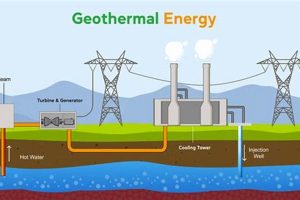
Common types include dry steam plants, flash steam plants, and binary cycle plants. Dry steam plants utilize steam directly from the reservoir, while flash steam plants convert hot water into steam. Binary cycle plants use a secondary fluid with a lower boiling point to generate electricity from lower-temperature geothermal resources.
Question 6: What role do Enhanced Geothermal Systems (EGS) play in expanding geothermal energy potential?
Enhanced Geothermal Systems (EGS) enable access to geothermal resources in areas where natural permeability is limited. By creating artificial fractures in hot, dry rocks, EGS expands the geographic availability of geothermal energy and unlocks previously inaccessible heat reserves.
In summary, geothermal energy presents a valuable alternative to fossil fuels, offering a consistent and relatively clean energy source. Responsible development and sustainable management are crucial to maximizing its potential and minimizing environmental impacts.
The following section will delve into the future prospects of geothermal energy, considering both technological advancements and policy considerations.
Geothermal Energy as a Renewable Energy Source
The preceding exploration has illuminated the multifaceted nature of geothermal energy and its potential as a sustainable alternative to traditional fossil fuels. Key aspects have been emphasized, including its origin in Earth’s internal heat, its consistent baseload power generation capabilities, its significantly reduced carbon footprint, and the imperative need for sustainable resource management practices to ensure long-term viability. The analysis has underscored the technological advancements driving progress in this field, particularly the expansion of Enhanced Geothermal Systems (EGS), and the importance of understanding and mitigating potential environmental impacts.
The transition to a low-carbon future necessitates a diverse portfolio of renewable energy sources. Geothermal energy, with its inherent reliability and environmental advantages, stands as a crucial component of this portfolio. Continued investment in research, development, and responsible deployment of geothermal technologies is essential to unlocking its full potential and ensuring a sustainable energy future for generations to come. Further evaluation of its economic viability and scalability across diverse geographic regions remains paramount to achieving widespread adoption and realizing its transformative impact on global energy systems.