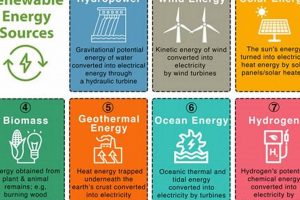
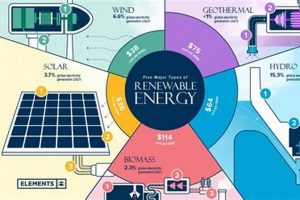
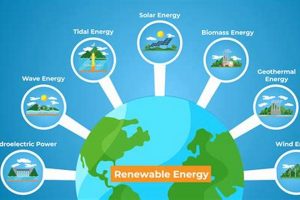
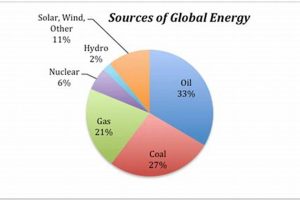
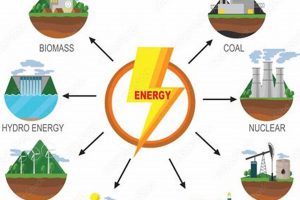
Energy derived from naturally replenishing processes is a cornerstone of sustainable power generation. These resources, unlike fossil fuels, are virtually inexhaustible on a human timescale. Solar power, harnessed through photovoltaic cells and concentrated solar thermal systems, exemplifies this type of energy production. Wind energy, captured by turbines, and hydropower, generated by the force of flowing water, are further illustrations of the concept.
The adoption of these sustainable energy options offers significant advantages. It mitigates greenhouse gas emissions, thereby reducing the impact on climate change. Furthermore, reliance on domestic resources enhances energy security and can stimulate economic growth by creating jobs in the renewable energy sector. Historically, harnessing natural forces for energy has been a practice dating back centuries, but modern technologies have dramatically improved the efficiency and scalability of these methods.
The following sections will delve into specific forms of sustainable energy, exploring their technological underpinnings, environmental impacts, and potential for widespread implementation. This will include a detailed examination of solar, wind, hydro, geothermal, and biomass energy, highlighting their strengths, limitations, and the evolving landscape of the renewable energy sector.
Optimizing the Integration of Sustainable Energy Options
The effective implementation of energy derived from renewable sources requires strategic planning and careful consideration of various factors.
Tip 1: Prioritize Resource Assessment: Conduct thorough site assessments to determine the availability and suitability of renewable resources. Solar irradiance data, wind speed measurements, and hydrological surveys are essential for informed decision-making.
Tip 2: Embrace Technological Diversification: Explore a range of technologies to optimize energy production. Combining solar photovoltaic (PV) with battery storage or wind power with pumped hydro storage can enhance grid stability and reliability.
Tip 3: Foster Community Engagement: Involve local communities in the planning and development process. Addressing concerns and incorporating local knowledge can increase acceptance and ensure project success.
Tip 4: Implement Supportive Policies: Advocate for policies that incentivize investment in the sector. Tax credits, feed-in tariffs, and renewable portfolio standards can accelerate the adoption of these technologies.
Tip 5: Invest in Grid Modernization: Upgrade existing grid infrastructure to accommodate variable renewable energy output. Smart grids, advanced metering, and energy storage solutions are critical for reliable integration.
Tip 6: Focus on Energy Efficiency: Reduce overall energy demand through energy efficiency measures. Improving building insulation, adopting efficient appliances, and promoting responsible energy consumption can significantly reduce the need for new energy generation.
Tip 7: Promote Research and Development: Support ongoing research and development efforts to improve the efficiency and reduce the costs. Innovation in areas such as advanced materials, energy storage, and grid management is essential for continued progress.
By adopting a comprehensive and strategic approach, communities, businesses, and governments can maximize the benefits of energy derived from sustainable sources, contributing to a cleaner, more sustainable energy future.
The subsequent sections will explore specific applications and case studies, further illustrating the potential and practical considerations associated with the integration of sustainable energy.
1. Sustainability

Sustainability and energy derived from renewable sources are inextricably linked. Sustainability, in this context, refers to the capacity to maintain a process indefinitely, avoiding depletion of resources or causing severe environmental harm. The reliance on fossil fuels, by contrast, is inherently unsustainable due to their finite nature and the detrimental effects of their combustion on the atmosphere and global climate. Examples of unsustainable practices include the over-extraction of coal, oil spills resulting from deep-sea drilling, and the cumulative impact of greenhouse gas emissions on global warming.
The value of energy derived from sustainable sources stems directly from its ability to meet present energy needs without compromising the ability of future generations to meet their own. Solar, wind, hydro, and geothermal resources are continuously replenished by natural processes, ensuring long-term availability. Furthermore, these energy technologies, when properly managed, have significantly lower environmental impacts compared to conventional fossil fuels. For example, wind farms generate electricity with minimal greenhouse gas emissions and land use impacts, while solar panels produce clean energy without air or water pollution. Biomass energy, when sourced from sustainably managed forests, offers a carbon-neutral alternative to fossil fuels.
In summary, the concept of sustainability is central to the discussion of energy derived from renewable sources. Choosing to prioritize renewable sources is the only path to ensure the availability of energy for future generations, while also mitigating the negative environmental impacts associated with conventional sources. Sustainable energy practices are thus not merely an environmentally friendly choice but a necessity for long-term economic and societal stability. Challenges remain in scaling up these technologies and integrating them into existing energy grids, but overcoming these challenges is crucial for achieving a sustainable energy future.
2. Resource Availability

The feasibility and scalability of energy derived from sustainable sources is fundamentally contingent on resource availability. The geographical distribution and intensity of these resources, such as sunlight, wind, water, and geothermal heat, exert a direct influence on the viability of specific sustainable energy technologies in various regions. For example, solar energy deployment is inherently linked to solar irradiance levels, with higher irradiance regions like deserts being more suitable for large-scale solar farms. Similarly, wind energy potential is closely tied to consistent and strong wind patterns, making coastal areas and elevated terrains prime locations for wind turbine installations. The presence of substantial and reliable hydro resources is essential for hydropower generation, which is why mountainous regions with abundant rainfall are often favored for hydroelectric projects.
The implications of resource availability extend beyond geographical considerations. Seasonal variations, climate change impacts, and competing resource demands can further complicate the equation. For instance, solar energy production is subject to diurnal and seasonal fluctuations, requiring energy storage solutions or grid integration strategies to maintain a consistent supply. Changes in precipitation patterns due to climate change can affect hydropower generation capacity, highlighting the need for adaptive water resource management. Competition for land use between agriculture, forestry, and sustainable energy projects necessitates careful planning and stakeholder engagement. Resource assessment, including detailed mapping and monitoring, becomes paramount to make informed decisions about sustainable energy investments.
In conclusion, the intricate relationship between resource availability and the successful deployment of sustainable energy technologies cannot be overstated. Understanding the geographical distribution, temporal variability, and potential constraints of renewable resources is essential for ensuring the long-term sustainability and reliability of the energy system. Effective resource management, technological innovation, and strategic planning are crucial for maximizing the potential of sustainable energy options and minimizing their environmental footprint. The transition to a sustainable energy future requires a comprehensive understanding of resource dynamics and a commitment to responsible resource utilization.
3. Technological Advancements

Technological advancements are pivotal in expanding the viability and efficiency of what are renewable energy sources. These advancements not only improve the performance of existing renewable energy technologies but also unlock new methods of harnessing clean energy. Without continuous innovation, the widespread adoption of renewable energy would remain limited.
- Increased Efficiency in Solar Photovoltaics
Ongoing research into materials science and nanotechnology has led to the development of solar panels with significantly higher energy conversion rates. Perovskite solar cells, for example, offer the potential to surpass the efficiency of traditional silicon-based panels at a lower cost. This means that more energy can be generated from a smaller surface area, reducing land use requirements and lowering the overall cost of solar energy.
- Advancements in Wind Turbine Design
Modern wind turbines are taller, have longer blades, and incorporate advanced aerodynamic designs, resulting in increased energy capture and improved performance in lower wind speed conditions. Floating offshore wind turbines, for instance, enable the harnessing of wind energy in deeper waters, where wind resources are more consistent and powerful. These technological improvements make wind energy more competitive with conventional energy sources.
- Energy Storage Solutions
The intermittent nature of solar and wind energy requires effective energy storage solutions to ensure a reliable power supply. Advancements in battery technology, such as lithium-ion and flow batteries, are improving energy storage capacity, charge/discharge rates, and lifespan. Furthermore, alternative storage methods like pumped hydro storage and compressed air energy storage are being developed to provide large-scale energy storage capabilities, facilitating the integration of renewable energy into the grid.
- Smart Grid Technologies
Smart grid technologies, including advanced sensors, communication networks, and control systems, are crucial for managing the complexities of integrating variable renewable energy sources into the grid. These technologies enable real-time monitoring of energy demand and supply, optimize energy flow, and enhance grid stability. Smart grids facilitate the integration of distributed renewable energy generation, such as rooftop solar, and improve the overall efficiency and reliability of the electricity grid.
In conclusion, technological advancements are a driving force behind the increasing competitiveness and widespread adoption of what are renewable energy sources. These advancements are not limited to improving existing technologies but also encompass the development of new materials, energy storage solutions, and grid management systems. Continued investment in research and development is essential to unlock the full potential of renewable energy and transition towards a sustainable energy future.
4. Environmental Impact

The environmental impact of energy generation is a critical consideration when evaluating energy sources. While energy derived from sustainable sources is often perceived as environmentally benign, a comprehensive assessment requires examination of both direct and indirect effects throughout their lifecycle.
- Land Use Considerations
The development of renewable energy infrastructure, such as solar farms and wind turbine arrays, necessitates land use. Large-scale solar installations can alter habitats, while wind farms may pose risks to avian species. Careful site selection, environmental impact assessments, and mitigation strategies are crucial to minimize ecological disruption. Examples include integrating solar installations into brownfield sites and implementing bird deterrent systems in wind farms.
- Water Consumption
Certain renewable energy technologies, particularly concentrated solar power and some biofuel production methods, can have significant water requirements. Water scarcity is an increasing concern in many regions, and the water footprint of energy production must be carefully managed. Dry-cooling systems for concentrated solar power plants and sustainable agricultural practices for biofuel feedstocks can reduce water consumption.
- Material Extraction and Manufacturing
The production of renewable energy technologies, such as solar panels and wind turbines, involves the extraction and processing of raw materials. Mining activities can have environmental consequences, including habitat destruction and water pollution. Sustainable sourcing of materials, recycling of components, and the development of less resource-intensive manufacturing processes are essential to minimize these impacts.
- Life Cycle Emissions
Although sustainable energy sources generate minimal greenhouse gas emissions during operation, emissions are associated with their manufacturing, transportation, and decommissioning. Life cycle assessments are used to quantify the overall carbon footprint of renewable energy technologies, enabling comparisons with conventional energy sources and identification of opportunities for reducing emissions. For instance, using recycled materials in solar panel production can significantly reduce their life cycle emissions.
Addressing these environmental considerations through responsible planning, technological innovation, and sustainable practices is essential to ensure that the deployment of energy derived from sustainable sources truly contributes to a cleaner and more sustainable energy future. Comparative analyses with fossil fuel-based energy systems consistently demonstrate that renewable energy, even when accounting for life cycle impacts, offers a significantly reduced environmental footprint, reinforcing their critical role in mitigating climate change and promoting ecological health.
5. Economic Feasibility

Economic feasibility is a central determinant in the widespread adoption of what are renewable energy sources. The initial high capital costs associated with constructing renewable energy infrastructure, such as solar farms and wind turbine installations, often present a significant barrier to entry. However, the long-term operational costs of these installations are typically lower than those of fossil fuel-based power plants, due to the absence of fuel expenses. Government subsidies, tax incentives, and feed-in tariffs can play a crucial role in offsetting these initial costs and making renewable energy projects economically viable. For example, Germany’s Energiewende policy, which provides financial support for renewable energy development, has led to a substantial increase in renewable energy capacity, demonstrating the impact of policy on economic feasibility.
Levelized Cost of Energy (LCOE) is a key metric used to assess the economic competitiveness of different energy sources. It calculates the total cost of building and operating a power plant over its lifetime, divided by the total electricity generated. As technology advances and manufacturing scales up, the LCOE of solar and wind energy has decreased dramatically, making them increasingly competitive with traditional energy sources. In many regions, renewable energy is now cheaper than new coal or natural gas power plants. Furthermore, renewable energy projects can create local jobs and stimulate economic growth in rural areas, providing additional economic benefits beyond electricity generation. For instance, the growth of the wind energy industry in the U.S. has created thousands of jobs in manufacturing, construction, and maintenance.
Ultimately, the economic feasibility of what are renewable energy sources depends on a combination of factors, including technology costs, government policies, and the cost of competing energy sources. As renewable energy technologies continue to improve and become more affordable, and as governments implement policies to promote their adoption, renewable energy is poised to play an increasingly important role in meeting global energy needs. Addressing the economic barriers to renewable energy deployment is essential for achieving a sustainable and decarbonized energy system. The practical significance of this understanding lies in informing investment decisions, policy development, and technological innovation to ensure that renewable energy becomes the economically preferred choice.
6. Energy Security

Energy security, defined as the uninterrupted availability of energy sources at an affordable price, is significantly influenced by the integration of energy derived from renewable sources. Reliance on geographically concentrated fossil fuels creates vulnerabilities to geopolitical instability, price volatility, and supply disruptions. Diversifying the energy mix with resources mitigates these risks, enhancing a nation’s energy independence and resilience. For instance, countries heavily dependent on imported natural gas can reduce their vulnerability to supply disruptions by investing in domestic wind and solar power generation. Similarly, nations with limited access to fossil fuel reserves can improve their energy security by harnessing locally available renewable resources like geothermal and biomass. The proliferation of distributed renewable energy generation, such as rooftop solar panels, further enhances energy security by decentralizing the energy supply and reducing reliance on centralized power plants.
The causal link between sustainable resources and energy security is evident in the long-term stability they offer. Unlike fossil fuels, which are subject to depletion and fluctuating global markets, sustainable sources are inherently replenishable. Investing in this infrastructure reduces exposure to volatile fuel prices and geopolitical risks, providing a stable and predictable energy supply. The implementation of policies that incentivize domestic renewable energy production can stimulate local economies, create jobs, and reduce reliance on foreign energy imports. A prime example is Denmark, which has significantly reduced its dependence on imported fossil fuels by investing heavily in wind energy, bolstering its energy security and stimulating its economy.
In summary, energy security is inextricably linked to the diversification of energy sources, with resources playing a pivotal role in mitigating risks associated with fossil fuel dependence. Investing in renewable energy infrastructure enhances energy independence, reduces exposure to price volatility, and promotes economic stability. The practical significance of this understanding lies in informing energy policy decisions, promoting sustainable energy development, and ensuring a reliable and affordable energy supply for future generations. While challenges remain in integrating variable renewable energy sources into the grid, the benefits of enhanced energy security outweigh the costs, making the transition to a sustainable energy future a strategic imperative.
7. Grid Integration

The seamless integration of what are renewable energy sources into existing electrical grids is a critical challenge in the transition towards a sustainable energy system. The variable and often intermittent nature of many renewable energy sources necessitates advanced grid management strategies and technological solutions to ensure grid stability and reliability. Effective grid integration is essential for maximizing the utilization of what are renewable energy sources and minimizing reliance on conventional fossil fuel-based power plants.
- Variability Management
Renewable energy sources like solar and wind are inherently variable, depending on weather conditions and time of day. Managing this variability requires sophisticated forecasting tools, flexible generation resources, and demand response programs to balance supply and demand in real-time. For example, accurate weather forecasting enables grid operators to anticipate fluctuations in solar and wind power output and adjust other generation sources accordingly. Demand response programs incentivize consumers to reduce their electricity consumption during peak demand periods, helping to smooth out demand curves and reduce the need for additional generation capacity.
- Grid Modernization
Integrating what are renewable energy sources often requires upgrading existing grid infrastructure to accommodate the bidirectional flow of electricity and enhance grid resilience. Smart grids, equipped with advanced sensors, communication networks, and control systems, enable real-time monitoring of grid conditions and automated responses to disruptions. Furthermore, investments in transmission infrastructure are necessary to transport renewable energy from remote locations, such as wind farms in rural areas, to urban centers with high electricity demand.
- Energy Storage Solutions
Energy storage technologies, such as batteries, pumped hydro storage, and compressed air energy storage, play a crucial role in mitigating the intermittency of what are renewable energy sources. Energy storage systems can store excess energy generated during periods of high renewable energy output and release it during periods of low output or high demand. For example, large-scale battery storage systems can provide grid stabilization services, such as frequency regulation and voltage support, enhancing grid reliability and enabling the integration of more renewable energy.
- Regulatory and Policy Frameworks
Supportive regulatory and policy frameworks are essential for promoting grid integration and removing barriers to the deployment of renewable energy. Feed-in tariffs, renewable portfolio standards, and net metering policies incentivize renewable energy development and provide a stable revenue stream for renewable energy generators. Furthermore, streamlined permitting processes and interconnection standards reduce administrative burdens and facilitate the connection of renewable energy projects to the grid.
Effective grid integration is not merely a technological challenge; it also requires careful planning, policy coordination, and stakeholder engagement. By addressing the technical, economic, and regulatory barriers to grid integration, societies can unlock the full potential of what are renewable energy sources and accelerate the transition towards a sustainable energy future. The interplay between variability management, grid modernization, energy storage solutions, and regulatory frameworks is central to ensuring that energy derived from sustainable sources can reliably and affordably power communities and industries worldwide.
Frequently Asked Questions Regarding Renewable Energy Sources
This section addresses common inquiries and clarifies prevalent misconceptions concerning energy derived from renewable sources, providing concise and factual responses.
Question 1: Are renewable energy sources truly inexhaustible?
The term “renewable” indicates that these resources replenish naturally on a human timescale. While practically inexhaustible, their availability can fluctuate due to weather patterns and other environmental factors.
Question 2: Do renewable energy sources have any negative environmental impacts?
While generally considered cleaner than fossil fuels, renewable energy sources can have localized environmental impacts. These include land use changes, potential harm to wildlife, and water consumption in certain processes. Comprehensive environmental impact assessments are crucial for mitigating these effects.
Question 3: Why are renewable energy sources not more widely adopted?
Barriers to widespread adoption include initial capital costs, intermittency challenges, grid integration issues, and regulatory hurdles. Overcoming these challenges requires technological advancements, supportive policies, and strategic planning.
Question 4: Are renewable energy sources reliable enough to replace fossil fuels entirely?
Achieving complete reliance on renewable energy requires a diversified energy mix, advanced energy storage solutions, and smart grid technologies. While intermittent sources like solar and wind pose challenges, technological advancements are steadily improving their reliability.
Question 5: Is renewable energy affordable for developing nations?
The cost of renewable energy technologies has decreased significantly in recent years, making them increasingly competitive with fossil fuels, even in developing nations. Decentralized renewable energy solutions can also provide access to electricity in remote areas where grid infrastructure is limited.
Question 6: What role does energy efficiency play in the transition to renewable energy?
Energy efficiency is crucial for reducing overall energy demand and minimizing the need for new energy generation capacity. Improving energy efficiency in buildings, transportation, and industry can significantly reduce energy consumption and accelerate the transition to a sustainable energy system.
In summary, sustainable energy offers significant environmental and economic benefits, but its widespread adoption requires overcoming technical, economic, and regulatory challenges. Ongoing research, technological innovation, and supportive policies are essential for unlocking the full potential of these sources.
The following section will delve into the future outlook for sustainable energy, exploring emerging trends and potential breakthroughs that may shape the energy landscape in the years to come.
Conclusion
This exploration of energy derived from sustainable sources has illuminated their multifaceted nature, underscoring both their potential and the challenges associated with their integration into the global energy landscape. The preceding analysis has considered resource availability, technological advancements, environmental impacts, economic feasibility, energy security implications, and grid integration requirements. These factors collectively determine the viability and scalability of each energy type, demanding careful evaluation in energy policy and investment decisions.
The transition to a future powered by energy derived from sustainable sources necessitates continued innovation, strategic policy implementation, and a comprehensive understanding of the interconnected factors that govern their effectiveness. Addressing the remaining barriers, such as intermittency and initial capital costs, is critical for realizing the full potential of these resources in mitigating climate change and ensuring a secure and sustainable energy future. The ongoing pursuit of efficient, reliable, and affordable sustainable energy solutions represents a fundamental imperative for global sustainability and long-term economic stability.