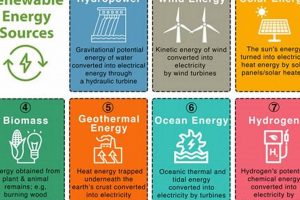
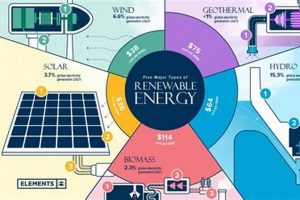
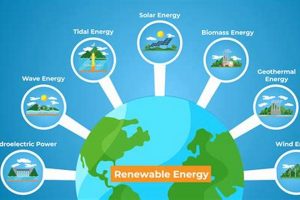
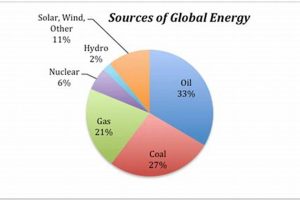
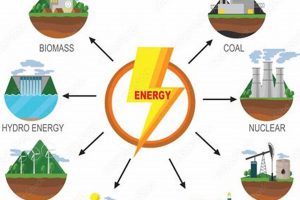
Powering civilization necessitates tapping into a multitude of resources found within the earth and beyond. These resources can be categorized by their renewability and underlying mechanisms. Examples include fossil fuels like coal and natural gas, the inexhaustible sun harnessed through solar panels, the kinetic power of wind converted by turbines, and the immense potential locked within nuclear materials. Water flowing through dams generates hydroelectricity, while geothermal vents release the earth’s internal heat for direct use or power generation.
The utilization of diverse power origins presents significant advantages, primarily enhancing energy security and mitigating the environmental impact associated with reliance on single, often polluting, options. Throughout history, societies have evolved their energy consumption, moving from wood to fossil fuels, and now increasingly toward cleaner alternatives. This transition is driven by both technological advancements and a growing awareness of the long-term consequences of unsustainable practices. Diversification also shields nations from price volatility and geopolitical risks tied to specific commodities.
The remainder of this article will explore the characteristics of renewable and non-renewable options, focusing on their operational principles, environmental considerations, and economic feasibility. It will also delve into the ongoing research and development efforts aimed at improving existing technologies and unlocking new, sustainable pathways to meet the world’s ever-growing demand for power. This includes considerations for energy storage and grid modernization.
Considerations for Optimizing Power Generation
Effective strategies for energy production and distribution require a nuanced understanding of resource availability, technological advancements, and environmental stewardship. The following points outline some key considerations:
Tip 1: Prioritize Resource Assessment. Conduct thorough evaluations of available resources, considering factors such as geographic location, seasonal variations, and potential yield. This facilitates informed decision-making regarding infrastructure investment and technology selection.
Tip 2: Embrace Technological Innovation. Continuously monitor and adopt advancements in energy conversion and storage. This includes exploring enhanced efficiency solar panels, advanced battery systems, and novel methods of geothermal extraction.
Tip 3: Invest in Grid Modernization. Upgrade existing power grids to accommodate intermittent sources and enhance transmission efficiency. Smart grid technologies enable real-time monitoring, demand response management, and improved reliability.
Tip 4: Promote Energy Storage Solutions. Implement large-scale storage systems, such as pumped hydro, compressed air energy storage, or advanced battery banks, to buffer fluctuations and ensure a stable power supply during periods of low resource availability.
Tip 5: Explore Distributed Generation. Decentralize power generation by integrating on-site systems like solar photovoltaic arrays, combined heat and power units, and microgrids. This enhances resilience and reduces transmission losses.
Tip 6: Implement Energy Efficiency Measures. Reduce overall demand through energy-efficient building designs, industrial processes, and consumer electronics. This minimizes the need for increased power generation capacity.
Tip 7: Adopt Life Cycle Assessment. Perform a comprehensive life cycle assessment for different technologies to evaluate their environmental impacts from raw material extraction to decommissioning. This enables informed choices for reducing the overall carbon footprint.
Strategic implementation of these recommendations fosters a more secure, sustainable, and efficient energy system, capable of meeting present needs without compromising the ability of future generations to meet their own.
The concluding sections of this article will explore long-term energy planning, regulatory frameworks, and the role of international cooperation in addressing global energy challenges.
1. Renewability Characteristics

Renewability fundamentally distinguishes different mechanisms for generating power. It describes the rate at which a resource replenishes relative to its consumption rate. Methods considered to have infinite regeneration potential, such as solar, wind, geothermal, and hydro, contrast sharply with sources like coal, natural gas, and uranium, which exist in finite quantities and are depleted over time. The impact of renewability extends to the long-term sustainability of power systems and the environment. A heavy reliance on finite resources leads to depletion, increased extraction costs, and greater environmental damage from mining and combustion. Conversely, utilizing regenerative sources reduces reliance on finite resources, lowers carbon emissions, and promotes long-term resource security. For instance, nations investing heavily in solar and wind infrastructure lessen their dependence on imported fossil fuels, achieving greater autonomy and a smaller carbon footprint.
The selection of one generation approach over another has significant implications for future energy policy. Renewable power sources, while presenting initial challenges in intermittency and infrastructure development, provide long-term stability and reduced environmental burden. The cost of solar and wind technologies has decreased dramatically in recent years, making them increasingly competitive with fossil fuels. Furthermore, energy storage technologies, such as batteries and pumped hydro, are addressing the intermittency challenges and enabling more reliable integration of renewables into the grid. Consider Germany’s Energiewende, a large-scale transition towards renewable energy. While the transition presents complexities, the long-term goal is a sustainable power sector with reduced greenhouse gas emissions.
In summary, renewability is a critical factor in assessing the overall sustainability and long-term viability of generating sources. The transition from depletable resources to renewable alternatives is essential for mitigating environmental impacts, ensuring energy security, and fostering a sustainable energy future. Addressing the intermittency and infrastructure challenges associated with regenerative approaches is paramount, and continued technological advancements in storage and grid management are key to unlocking their full potential. This shift requires strategic planning, policy support, and international collaboration to achieve a balanced and resilient power ecosystem.
2. Technological Maturity

Technological maturity, in the context of power generation, refers to the stage of development and refinement a particular technology has achieved. It influences the reliability, efficiency, scalability, and cost-effectiveness of utilizing mechanisms. Understanding the technological maturity associated with different approaches is critical for informed energy policy and infrastructure investment decisions. The level of technological maturity affects their deployment, integration into existing grids, and overall contribution to the power mix.
- Established Technologies: Fossil Fuel Plants
Technologies like coal, natural gas, and nuclear fission are considered mature. They have been deployed for decades, and their operational characteristics are well understood. Existing plants are reliable, and the infrastructure for fuel supply and distribution is well-established. However, mature technologies are not without challenges. Fossil fuel plants contribute significantly to greenhouse gas emissions, and nuclear power faces concerns about waste disposal and safety. Technological advancements continue to improve the efficiency of these plants, but the fundamental limitations remain.
- Advancing Technologies: Renewable Energy Sources
Solar photovoltaic (PV) and wind power are classified as advancing technologies. While the basic principles are well-established, ongoing research and development focus on improving efficiency, reducing costs, and enhancing grid integration. Innovations in solar cell materials, wind turbine design, and energy storage systems are driving down the levelized cost of electricity (LCOE) for these approaches. Intermittency remains a key challenge, requiring sophisticated grid management and energy storage solutions to ensure reliable power supply.
- Emerging Technologies: Geothermal and Advanced Nuclear
Enhanced geothermal systems (EGS) and advanced nuclear reactor designs represent emerging technologies. EGS seeks to extract heat from previously inaccessible geothermal resources, while advanced nuclear reactors offer potentially safer and more efficient nuclear fission. These technologies are still in the early stages of commercialization and require significant investment in research and development. Demonstrating their technical and economic viability is crucial for widespread adoption.
- Experimental Technologies: Fusion Power
Nuclear fusion represents an experimental means of producing power. While the theoretical potential of fusion is immense, the technological challenges are substantial. Achieving sustained fusion reactions requires extreme temperatures and pressures, and the development of materials capable of withstanding these conditions. Fusion power remains decades away from commercialization, but ongoing research efforts are pushing the boundaries of scientific and engineering knowledge.
The technological maturity of diverse approaches significantly impacts their role in the global energy mix. Mature technologies provide a stable baseline, while advancing and emerging technologies offer the potential for cleaner and more sustainable generation. Strategic investment in research and development is essential for advancing these technologies and unlocking their full potential. A balanced portfolio of generating mechanisms, reflecting the diverse levels of technological maturity, is necessary to ensure a secure, affordable, and environmentally responsible power future.
3. Environmental Impact

Power generation inherently involves environmental consequences, irrespective of the specific mechanism employed. Fossil fuel combustion, for instance, releases greenhouse gases, contributing to climate change and related phenomena such as sea-level rise and altered weather patterns. Coal-fired plants also emit particulate matter and sulfur dioxide, leading to respiratory illnesses and acid rain. Nuclear power, while emitting minimal greenhouse gases during operation, poses risks associated with radioactive waste disposal and potential accidents, requiring robust safety protocols and long-term storage solutions. Hydroelectric dams, although renewable, can disrupt aquatic ecosystems, alter river flow regimes, and lead to methane emissions from reservoir decomposition. The physical footprint of generating facilities, including wind farms and solar arrays, requires land use, potentially affecting habitats and biodiversity. The extraction and processing of raw materials, from uranium mining to lithium extraction for batteries, introduce further environmental burdens. Therefore, evaluating environmental impacts is an essential component of assessing the sustainability of power sources.
The environmental assessment of generating sources necessitates a life cycle approach, considering all stages from resource extraction to decommissioning. This includes evaluating carbon footprints, water usage, air pollution, land use changes, and impacts on biodiversity. Comparative life cycle assessments allow for informed decision-making, enabling the selection of generating options with minimized environmental consequences. For example, studies comparing the life cycle emissions of coal-fired power plants to those of solar photovoltaic systems consistently demonstrate the significantly lower environmental impact of solar power. Such analyses guide policy-makers and energy planners in promoting cleaner mechanisms and mitigating the adverse effects of existing infrastructure. Moreover, ongoing technological advancements aim to reduce the environmental footprint of even the most sustainable options. The development of more efficient solar cells, advanced battery technologies, and improved waste management practices contribute to minimizing the environmental burden of power generation.
In conclusion, understanding the environmental impact associated with different generating methods is critical for creating a sustainable power system. A comprehensive assessment should account for all life cycle stages, allowing for informed decision-making and the promotion of cleaner, more environmentally responsible approaches. Balancing energy needs with environmental protection requires a holistic perspective, integrating technological innovation, policy support, and public awareness. The pursuit of a sustainable power future necessitates continuous improvement in environmental performance across all segments of the generating sector, ensuring a cleaner and healthier planet for future generations.
4. Economic Viability

Economic viability represents a critical determinant in the selection and deployment of generating sources. The financial feasibility of a particular approach significantly impacts its ability to compete in the energy market, attract investment, and contribute to overall energy security. An understanding of cost components, market dynamics, and policy incentives is essential for evaluating the economic viability associated with different power generation strategies.
- Capital Costs and Infrastructure Investment
Capital costs represent the initial investment required to construct generating facilities, including equipment, land acquisition, and infrastructure development. These costs vary significantly depending on the mechanism. Nuclear power plants and large-scale hydroelectric dams involve substantial upfront capital expenditures, while solar and wind projects may have lower initial costs but require ongoing investments in grid integration and energy storage. High capital costs can act as a barrier to entry for certain approaches, particularly in developing nations with limited access to capital. Conversely, decreasing capital costs for renewable technologies, such as solar photovoltaics, have driven their increased competitiveness and adoption. Therefore, access to capital and favorable financing terms significantly influence the economic viability of power generation projects.
- Fuel Costs and Operational Expenses
Fuel costs constitute a significant component of the overall expenses associated with certain techniques, particularly those relying on fossil fuels or nuclear materials. Fluctuations in fuel prices can substantially impact the economic viability of these facilities, affecting their profitability and competitiveness in the market. The operational expenses, including maintenance, labor, and waste disposal, also contribute to the total cost of power generation. Renewable approaches, such as solar and wind, have minimal fuel costs, providing a hedge against price volatility. However, they may incur higher operational expenses related to equipment maintenance and grid management. Balancing fuel costs, operational expenses, and capital investments is crucial for optimizing the economic viability of different power generation portfolios.
- Levelized Cost of Energy (LCOE)
The Levelized Cost of Energy (LCOE) provides a standardized metric for comparing the economic viability of different generating sources. LCOE represents the average cost of generating one unit of electricity over the lifetime of a project, considering all costs, including capital, fuel, operation, and maintenance. This metric allows for an apples-to-apples comparison of various mechanisms, enabling informed investment decisions. Declining LCOE for renewable technologies, driven by technological advancements and economies of scale, has made them increasingly competitive with traditional fossil fuel plants. While LCOE is a useful tool, it does not capture all aspects of economic viability, such as grid integration costs and system reliability. Therefore, a comprehensive economic analysis should consider multiple factors beyond LCOE.
- Policy Incentives and Market Mechanisms
Government policies and market mechanisms play a crucial role in shaping the economic viability of techniques. Subsidies, tax credits, feed-in tariffs, and carbon pricing mechanisms can significantly influence the economic competitiveness. Feed-in tariffs, for example, guarantee a fixed price for electricity generated from renewable sources, providing revenue certainty for project developers. Carbon pricing mechanisms, such as carbon taxes or cap-and-trade systems, internalize the environmental costs of fossil fuel combustion, making renewable technologies more economically attractive. The removal of fossil fuel subsidies can also level the playing field, allowing renewable techniques to compete on a more equal basis. Policy support and market mechanisms are essential for creating a favorable investment climate and accelerating the deployment of sustainable methods.
Economic viability is a multifaceted concept that influences the selection and deployment of various generating sources. By understanding the interplay of capital costs, fuel expenses, LCOE, and policy incentives, informed decisions can be made to foster a power sector that is both economically competitive and environmentally sustainable. A balanced approach that considers both short-term affordability and long-term economic benefits is essential for ensuring energy security and driving the transition to a cleaner future.
5. Geopolitical Implications

The distribution and control of power resources are inherently intertwined with geopolitical dynamics, influencing international relations, security concerns, and economic power balances. The reliance on specific methods can create dependencies, both for exporting and importing nations, shaping alliances, conflicts, and trade agreements. Regions rich in fossil fuels, for instance, have historically wielded significant global influence, impacting energy security for dependent nations. Scarcity or abundance of resources can drive political instability, territorial disputes, and economic competition. The shift toward renewable alternatives is gradually reshaping these dynamics, as these resources are more geographically dispersed. The development and deployment of such methods carry their own geopolitical considerations, involving critical mineral supply chains and technological leadership.
Real-world examples illustrate the intricate relationship between power sources and geopolitics. The Organization of the Petroleum Exporting Countries (OPEC) exemplifies the influence of resource-rich nations in controlling oil supply and prices, significantly affecting the global economy and foreign policies of consuming countries. Russia’s control over natural gas pipelines to Europe demonstrates the strategic leverage that energy resources can provide. Conversely, nations heavily reliant on imported have experienced vulnerability to price shocks and supply disruptions, leading to diversification strategies and a push for energy independence. The scramble for lithium and cobalt, essential components of batteries for electric vehicles and energy storage systems, highlights the emerging geopolitical competition surrounding the transition to a cleaner, more sustainable power sector. Control over these critical mineral supply chains is becoming a key strategic imperative for nations seeking to secure their economic and technological future.
In conclusion, an understanding of the geopolitical implications associated with different techniques is crucial for navigating the complex landscape of international relations and energy security. The transition towards cleaner power sources is reshaping power dynamics, but new challenges related to resource dependencies and technological leadership are emerging. International cooperation, strategic partnerships, and diversification strategies are essential for mitigating risks and ensuring a stable and equitable energy future. Policymakers and energy planners must consider the geopolitical dimension to promote national interests, enhance global stability, and foster a sustainable energy transition.
Frequently Asked Questions
This section addresses common inquiries and clarifies potential misconceptions concerning diverse approaches to generating power. The information presented aims to provide a comprehensive understanding of the key considerations associated with each approach.
Question 1: What are the primary classifications of power generation resources?
Generating resources are primarily classified as either renewable or non-renewable. Renewable resources, such as solar, wind, hydro, and geothermal, are naturally replenished over a relatively short period. Non-renewable resources, including fossil fuels (coal, oil, and natural gas) and nuclear materials, are finite and cannot be replenished within a human timescale.
Question 2: How does the Levelized Cost of Energy (LCOE) assist in comparing power generation economics?
The Levelized Cost of Energy (LCOE) calculates the average cost of generating one unit of electricity over the lifetime of a generating asset. It accounts for capital costs, fuel costs, operational expenses, and decommissioning costs, providing a standardized metric for comparing the economic viability of diverse approaches.
Question 3: What are the main environmental concerns associated with fossil fuel-based mechanisms?
Fossil fuel combustion releases greenhouse gases, contributing to climate change. It also emits pollutants such as particulate matter, sulfur dioxide, and nitrogen oxides, which can cause respiratory problems and acid rain. Extraction processes, such as mining and drilling, can disrupt ecosystems and pollute water sources.
Question 4: What are the limitations of renewable approaches like solar and wind?
Solar and wind are intermittent, meaning their availability fluctuates depending on weather conditions. Grid integration poses challenges, requiring advanced grid management and energy storage solutions. The geographic suitability varies, and large-scale deployment requires significant land use.
Question 5: What are the concerns related to nuclear power?
Nuclear power generates radioactive waste, which requires safe, long-term storage. The risk of nuclear accidents, although low, poses significant environmental and health hazards. The construction of nuclear power plants is capital-intensive and requires stringent safety regulations.
Question 6: What role does energy storage play in a sustainable power system?
Energy storage addresses the intermittency of renewable generation, enabling a more reliable and stable supply. It allows for the capture and storage of excess electricity during periods of high generation and low demand, which can then be released during periods of low generation and high demand. A variety of storage technologies, including batteries, pumped hydro, and compressed air energy storage, are essential for enabling the large-scale integration of intermittent renewables into the power grid.
Understanding the multifaceted aspects of power generation, including resource types, economic considerations, environmental impacts, and technological limitations, is essential for informed decision-making. A balanced portfolio of generating approaches, coupled with advancements in energy storage and grid management, is needed to ensure a sustainable and secure power future.
The following sections will delve into future trends and innovations in the generating sector.
Conclusion
This exploration has underscored the critical importance of understanding the complex landscape of “various sources of energy.” From the fundamental distinctions between renewable and non-renewable resources to the intricate interplay of technological maturity, environmental impact, economic viability, and geopolitical implications, the multifaceted nature of generating power demands careful consideration. A singular reliance on any single mechanism introduces vulnerabilities, be they economic, environmental, or strategic. A diversified portfolio, judiciously selected and strategically deployed, offers the most resilient pathway to meet future power needs.
The choices made today regarding generating pathways will profoundly shape the world for generations to come. Continued investment in research and development, coupled with informed policy decisions, is essential to fostering a sustainable, secure, and equitable power future. The responsibility lies with governments, industries, and individuals to prioritize long-term sustainability over short-term gains, ensuring a stable and thriving planet for all.