![Guide to What Energy Resources Are Renewable [+Future] | Renewable Energy Solutions for a Sustainable Future | Clean & Green Power](data:image/svg+xml;base64,PHN2ZyB4bWxucz0iaHR0cDovL3d3dy53My5vcmcvMjAwMC9zdmciIHdpZHRoPSI0NzQiIGhlaWdodD0iNTEzIiB2aWV3Qm94PSIwIDAgNDc0IDUxMyI+PHJlY3Qgd2lkdGg9IjEwMCUiIGhlaWdodD0iMTAwJSIgc3R5bGU9ImZpbGw6I2NmZDRkYjtmaWxsLW9wYWNpdHk6IDAuMTsiLz48L3N2Zz4= "Energy") Energy Resources Are Renewable [+Future]" width="100%" style="margin-right: 8px;margin-bottom: 8px;" />
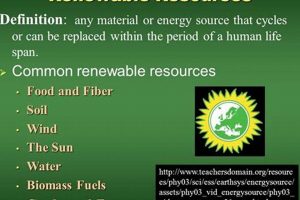
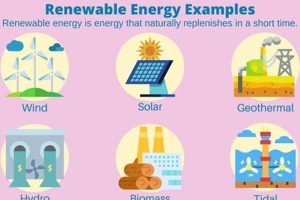
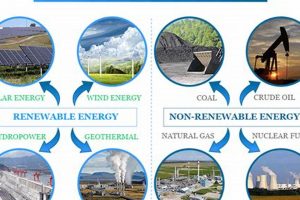
Energy Resources Are Renewable [+Future]" width="100%" style="margin-right: 8px;margin-bottom: 8px;" />Sources of power that replenish naturally over a human timescale are considered sustainable. These resources offer a viable alternative to finite supplies like fossil fuels. Examples include solar, wind, geothermal, and hydropower, all capable of continuous or near-continuous replenishment.
The utilization of sustainable power sources is vital for mitigating climate change and reducing reliance on diminishing reserves. The adoption of these methods offers a pathway towards energy independence and long-term environmental stability. Historically, humans have harnessed some of these sources for centuries, but technological advancements have significantly improved their efficiency and scalability.
The subsequent sections will delve into specific types of these sustainable power options, examining their mechanisms, advantages, disadvantages, and current global impact. Furthermore, the role of technological innovation and policy frameworks in promoting the wider adoption of these sustainable energy systems will be addressed.
Harnessing Sustainable Energy Sources
The following recommendations are intended to provide actionable strategies for understanding and utilizing sources that replenish naturally.
Tip 1: Understand the Resource Availability: Assess the geographical suitability of different options. Solar power is most effective in regions with high solar irradiance, while wind power thrives in areas with consistent wind patterns.
Tip 2: Evaluate Technological Advancements: Keep abreast of the latest developments in energy conversion technologies. Improvements in solar panel efficiency, wind turbine design, and geothermal energy extraction methods can significantly impact the economic viability of a project.
Tip 3: Analyze the Environmental Impact: While generally benign, each energy source has its own environmental footprint. Hydropower, for instance, can alter river ecosystems, while large-scale solar farms require significant land use.
Tip 4: Consider Energy Storage Solutions: The intermittent nature of some sources necessitates the implementation of storage systems. Batteries, pumped hydro storage, and thermal energy storage can help ensure a consistent power supply.
Tip 5: Investigate Government Incentives: Many governments offer financial incentives, tax credits, and subsidies to promote the adoption of these sources. Research available programs at the local, national, and international levels.
Tip 6: Promote Energy Efficiency: Reducing overall energy consumption can minimize the demand for new energy sources. Implement energy-efficient technologies and practices in homes, businesses, and industries.
Tip 7: Explore Hybrid Systems: Combining different energy sources can create a more reliable and resilient power supply. A hybrid system might combine solar power with wind power and battery storage.
By understanding resource availability, monitoring technological advancements, and carefully considering environmental impacts, a transition toward reliance on sustainable power sources becomes both practical and advantageous. Government incentives and a focus on energy efficiency can further accelerate this transition.
The subsequent analysis will discuss the long-term economic and social implications of transitioning to an energy economy based on sustainably replenished sources.
1. Replenishment Rate

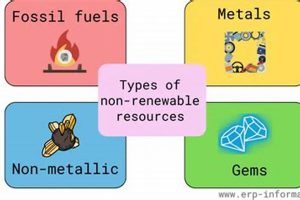
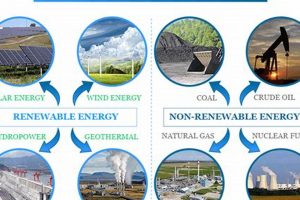
The replenishment rate directly determines whether an energy resource qualifies as sustainable. A high replenishment rate indicates the resource renews itself quickly enough to be considered virtually inexhaustible on a human timescale. This is a defining characteristic of renewable options. The sun’s energy, constantly bombarding the Earth, exemplifies a resource with a rapid replenishment rate, making solar power a premier example of sustainable energy. Conversely, fossil fuels have a negligible replenishment rate, requiring millions of years to form, thus categorizing them as non-sustainable. Understanding this rate is fundamental to differentiating between finite and sustainable sources.
The practical significance of the replenishment rate is evident in energy planning and policy. Resources with slow replenishment rates create long-term supply concerns and price volatility, as demand can outstrip supply. For instance, while biomass can be a renewable energy source, its sustainability depends on the harvesting rate. If biomass is harvested faster than it can regrow, it effectively becomes a non-sustainable resource. Therefore, sustainable forestry practices and careful resource management are crucial for maintaining a viable replenishment rate. Proper monitoring and implementation of safeguards are paramount to prevent depletion.
In summary, the replenishment rate is a critical metric for evaluating the long-term sustainability of any energy resource. A high rate ensures continuous availability, enabling a sustainable energy future. Policymakers, energy providers, and consumers must consider this parameter to make informed decisions about energy investments and consumption patterns. Managing replenishment rates effectively ensures that renewable sources remain viable and contribute to a secure and environmentally responsible energy system.
2. Resource Availability

The geographical distribution and abundance of naturally replenishing energy sources, referred to as resource availability, directly influence the practical implementation and economic viability of varied sustainable energy technologies. This availability dictates which energy extraction methods are feasible and determines the scale at which those methods can be employed.
- Geographic Location and Solar Irradiance
The intensity of solar radiation varies significantly by location. Regions near the equator receive more direct sunlight, making solar energy a more viable and efficient option than in higher latitudes. For example, the Sahara Desert possesses immense solar potential due to its consistent high irradiance, enabling large-scale photovoltaic (PV) projects. Conversely, locations with frequent cloud cover will find solar energy less reliable, requiring supplementary energy storage solutions or alternative sustainable sources.
- Wind Patterns and Topography
Consistent and strong wind patterns are necessary for effective wind energy generation. Mountain passes and coastal areas often experience higher wind speeds, making them ideal locations for wind farms. Topography plays a crucial role in influencing wind flow; for example, wind farms located on exposed ridges or in valleys can harness accelerated wind speeds. However, areas with calm winds offer limited wind energy potential, rendering wind power less suitable without advanced technologies like airborne wind turbines.
- Geothermal Gradients and Volcanic Activity
Geothermal energy extraction requires access to underground heat reservoirs. Regions with high geothermal gradients, often associated with volcanic activity or tectonic plate boundaries, are prime locations for geothermal power plants. Iceland, with its abundant geothermal resources due to its location on the Mid-Atlantic Ridge, demonstrates the viability of geothermal energy as a primary power source. In contrast, areas with low geothermal gradients require deeper drilling and more complex technologies to access geothermal energy, increasing costs and reducing economic feasibility.
- Hydrological Cycles and River Systems
Hydropower relies on the continuous flow of water in rivers and streams. Regions with significant rainfall and well-developed river systems are suitable for hydroelectric power generation. Norway, with its abundant rainfall and mountainous terrain, has historically relied heavily on hydropower. However, the construction of dams can have significant environmental impacts on river ecosystems, requiring careful planning and mitigation strategies. Arid regions with limited water resources offer less potential for hydropower, necessitating the exploration of alternative sustainable options.
In conclusion, resource availability is a critical determinant in the selection and implementation of renewable energy technologies. Understanding these constraints ensures that sustainable energy projects are strategically located and optimized for local conditions, maximizing their efficiency and minimizing environmental impacts. A comprehensive assessment of resource availability is thus indispensable for informed decision-making in the transition toward a sustainable energy future.
3. Technological Feasibility

The practical application of renewable energy resources is intrinsically linked to technological feasibility. Advances in technology directly influence the efficiency, cost-effectiveness, and scalability of harnessing solar, wind, geothermal, hydro, and biomass energy. A resource’s potential cannot be realized without the technological means to efficiently convert it into usable energy forms. The development of photovoltaic cells, for instance, was crucial in enabling the large-scale utilization of solar energy. Similarly, advancements in wind turbine design have significantly increased the energy output from wind farms. Technological progress, therefore, acts as a catalyst, transforming potential renewable energy sources into viable options.
Real-world examples demonstrate the pivotal role of technology. The improved efficiency of concentrated solar power (CSP) plants, through advancements in thermal storage and heat transfer, allows for continuous electricity generation even during periods of low sunlight. Furthermore, enhanced drilling techniques have unlocked previously inaccessible geothermal resources, expanding the geographic availability of geothermal energy. In the hydropower sector, the development of run-of-river hydroelectric systems minimizes environmental impact by reducing the need for large reservoirs. Technological limitations, conversely, can hinder the widespread adoption of certain renewable resources. Wave energy, for example, faces challenges in developing reliable and cost-effective wave energy converters capable of withstanding harsh marine environments.
In summary, technological feasibility is a critical component in determining the viability and accessibility of what energy resources are renewable. Continued investment in research and development is essential to overcome existing technological barriers, improve the efficiency of existing systems, and unlock the potential of emerging renewable energy technologies. The successful transition to a sustainable energy future depends on the ongoing development and deployment of innovative and cost-effective energy conversion technologies.
4. Environmental Impact
The pursuit of what energy resources are renewable is inextricably linked to considerations of environmental impact. The very essence of renewability is often perceived as inherently environmentally benign. However, a nuanced understanding reveals that every energy extraction and conversion process, even those relying on perpetual resources, has associated environmental consequences.
Solar energy, while deriving from a limitless source, necessitates significant land use for photovoltaic arrays, potentially leading to habitat disruption. Wind energy, similarly, may cause avian mortality and visual pollution in certain locations. Hydropower, a long-established technology, fundamentally alters river ecosystems, affecting aquatic species migration and sediment transport. Geothermal energy, while cleaner than fossil fuels, can release greenhouse gases and may induce seismic activity under specific geological conditions. Biomass energy production, if not managed sustainably, can result in deforestation, soil degradation, and increased carbon emissions. Consequently, evaluating and mitigating these environmental impacts is critical to ensuring the true sustainability of what energy resources are renewable.
A comprehensive life cycle assessment of any renewable energy technology is essential, considering not only the energy generated but also the environmental costs incurred during resource extraction, manufacturing, operation, and decommissioning. Responsible development of renewable energy infrastructure requires careful site selection, adherence to best practices for environmental protection, and continuous monitoring to minimize adverse effects. Ultimately, the goal is to harness the benefits of renewability while minimizing disruption to natural ecosystems, thus ensuring a truly sustainable energy future.
5. Economic Viability

The economic viability of what energy resources are renewable is a central factor in determining their widespread adoption and their potential to displace conventional fossil fuels. The cost-effectiveness of renewable energy technologies, relative to established energy sources, directly impacts investment decisions, policy support, and consumer acceptance.
- Levelized Cost of Energy (LCOE)
LCOE is a metric that quantifies the total cost of an energy project over its lifetime, divided by the total energy produced. It provides a standardized way to compare the economic competitiveness of different energy sources. Declining LCOE for solar and wind power, driven by technological advancements and economies of scale, has made them increasingly competitive with coal and natural gas. This reduction in LCOE is a key driver of the rapid growth of renewable energy deployment in many regions.
- Upfront Investment and Financing
Renewable energy projects often require significant upfront capital investment, even though their operating costs are relatively low. Securing financing for these projects, through private investment, government incentives, or international development banks, is essential for their realization. Government policies, such as tax credits, feed-in tariffs, and renewable portfolio standards, play a crucial role in attracting investment and mitigating financial risks associated with renewable energy projects.
- Grid Integration Costs
Integrating renewable energy sources into existing electricity grids can incur additional costs. The intermittent nature of solar and wind power necessitates investments in grid infrastructure, energy storage solutions, and demand-side management strategies to ensure grid stability and reliability. Smart grids and advanced forecasting technologies can help to mitigate these integration challenges and reduce associated costs. Failure to adequately address grid integration costs can hinder the economic competitiveness of renewable energy.
- Externalities and Social Costs
The economic viability of what energy resources are renewable should also consider externalities, such as environmental and health costs associated with fossil fuels. Burning fossil fuels generates air pollution, contributes to climate change, and imposes health costs on society. Renewable energy sources, with their lower environmental impact, can help to avoid these costs and contribute to broader societal benefits. Accounting for these externalities in energy pricing and policy decisions can further enhance the economic competitiveness of renewable energy.
The ongoing improvements in technology, coupled with supportive policies and a greater recognition of the external costs of fossil fuels, are steadily improving the economic viability of what energy resources are renewable. This trend is essential for achieving a sustainable energy transition and mitigating the adverse impacts of climate change.
6. Energy Security

Energy security, defined as the uninterrupted availability of energy sources at an affordable price, is intrinsically linked to what energy resources are renewable. Reliance on finite fossil fuels often exposes nations to price volatility, geopolitical risks, and supply disruptions. Diversifying the energy mix through the incorporation of sustainably replenished sources mitigates these vulnerabilities. A nation leveraging its own solar, wind, geothermal, or hydropower resources inherently reduces its dependence on external energy providers, thereby enhancing its energy security.
The transition to renewable energy sources presents several practical advantages for bolstering energy security. For example, countries with abundant solar resources can invest in photovoltaic technology to generate electricity locally, minimizing the impact of global oil market fluctuations. Similarly, nations with strong wind patterns can develop wind farms to provide a stable and predictable energy supply. Germany’s Energiewende policy, aimed at phasing out nuclear power and increasing reliance on renewable energy, illustrates a national strategy to enhance energy security by promoting domestic energy production from sustainably replenished resources. However, the intermittent nature of some renewable sources necessitates investment in energy storage solutions and smart grid technologies to ensure a reliable energy supply.
In summary, the integration of what energy resources are renewable serves as a cornerstone for achieving enhanced energy security. By diversifying the energy supply, reducing dependence on foreign energy sources, and promoting domestic energy production, nations can improve their resilience to energy market shocks and geopolitical instability. While challenges related to intermittency and grid integration remain, the long-term benefits of a renewable energy-based energy system for national energy security are substantial.
7. Scalability

Scalability, in the context of what energy resources are renewable, refers to the ability to increase energy production from a given source to meet growing demand without compromising its sustainability. It is a crucial component for any energy resource aiming to replace fossil fuels as the primary energy source. The scalability of a resource directly influences its potential to mitigate climate change and address global energy needs. Solar energy, for instance, possesses high scalability due to the vast availability of sunlight and continuous advancements in photovoltaic technology. Wind energy, similarly, can be scaled through the construction of larger wind farms and the development of offshore wind resources. Conversely, geothermal energy, while sustainable, is limited by geographically specific resource availability, thus impacting its overall scalability. Biomass energy’s scalability is contingent on sustainable harvesting practices to prevent deforestation and ensure carbon neutrality.
The impact of scalability is evident in the global energy landscape. Countries investing heavily in solar and wind infrastructure are demonstrating the feasibility of large-scale renewable energy deployment. China’s massive investment in solar photovoltaic capacity exemplifies a national strategy to enhance energy security and reduce reliance on coal. Denmark’s success in integrating wind energy into its grid system underscores the potential for renewable sources to provide a significant portion of a nation’s electricity supply. However, challenges remain in scaling up energy storage technologies to address the intermittency of solar and wind power. Innovations in battery storage, pumped hydro storage, and thermal energy storage are critical for enabling the reliable and scalable deployment of renewable energy resources.
In conclusion, scalability is a key determinant of the long-term viability and impact of what energy resources are renewable. Resources with high scalability offer the greatest potential to meet growing global energy demand while minimizing environmental impact. Overcoming the technological and economic barriers to scaling up renewable energy production and storage is essential for achieving a sustainable energy future.
Frequently Asked Questions
This section addresses common inquiries regarding energy resources that replenish naturally, clarifying their characteristics and limitations.
Question 1: Are all energy sources labeled ‘green’ truly sustainable?
The label ‘green’ does not automatically equate to sustainability. A comprehensive assessment of the entire lifecycle, including resource extraction, manufacturing, operation, and disposal, is necessary to determine true sustainability.
Question 2: How does energy storage influence the utility of intermittent renewable resources?
Energy storage technologies, such as batteries and pumped hydro, are crucial for mitigating the intermittency of solar and wind power. They enable a more consistent and reliable energy supply, increasing the practicality of these sources.
Question 3: What role do government policies play in promoting renewable energy adoption?
Government policies, including tax incentives, subsidies, and renewable portfolio standards, create a favorable environment for renewable energy investment and deployment, accelerating the transition away from fossil fuels.
Question 4: Can renewable energy resources realistically meet the world’s total energy demand?
While challenges remain, particularly in sectors like aviation and shipping, renewable energy resources possess the potential to meet a significant portion of global energy demand, provided technological advancements and supportive policies continue to develop.
Question 5: What are the primary barriers to wider adoption of renewable energy technologies?
The main barriers include high upfront costs, grid integration challenges, intermittency issues, and regulatory hurdles. Addressing these barriers requires continued innovation and strategic policy interventions.
Question 6: How does geographical location affect the viability of different renewable energy sources?
Geographical location profoundly impacts resource availability and, consequently, the viability of specific renewable technologies. Solar energy is more effective in sunny regions, while wind power thrives in areas with consistent winds.
The sustained viability of sustainable options requires continual evaluation of resource management strategies and technological innovation.
The subsequent section will delve into the existing and potential future role of renewable energy within the global energy mix.
Conclusion
The preceding discussion has illuminated the diverse array of energy sources that replenish naturally, examining their characteristics, benefits, and limitations. This exploration has considered factors such as replenishment rate, resource availability, technological feasibility, environmental impact, economic viability, energy security, and scalability. A comprehensive understanding of these elements is essential for making informed decisions about energy policy and investment.
The transition towards increased reliance on what energy resources are renewable presents both opportunities and challenges. Sustained innovation, strategic policy interventions, and a commitment to responsible resource management are crucial for realizing the full potential of these resources and ensuring a sustainable energy future for generations to come. Continued effort is needed to achieve a diversified, secure, and environmentally sound energy system.