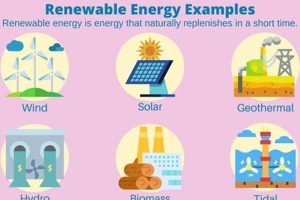
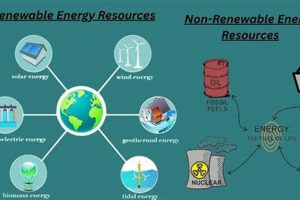
These are naturally replenished resources derived from sources that are essentially inexhaustible on a human timescale. Sunlight, wind, and geothermal heat serve as prime examples, constantly renewing themselves and offering a sustainable alternative to finite energy sources. Water, though plentiful, requires careful management to ensure its continued availability for both energy production and general use.
Their significance lies in reducing dependence on fossil fuels, thereby mitigating greenhouse gas emissions and combating climate change. Furthermore, they contribute to energy security by diversifying energy sources and decreasing reliance on volatile global markets. Historically, these resources have been harnessed for centuries, from windmills powering grain mills to waterwheels generating mechanical energy. Modern technologies enhance their efficiency and broaden their applications.
Understanding these fundamental concepts provides a strong foundation for exploring more complex topics, such as the specific technologies used to capture and convert these resources into usable energy, the economic considerations surrounding their implementation, and the policy frameworks that support their development and widespread adoption. The following sections will delve deeper into these aspects.
Practical Considerations for Utilizing Replenishable Energy Sources
Successful integration of these sustainable power sources requires careful planning and informed decision-making across various sectors.
Tip 1: Prioritize Energy Efficiency: Before investing in renewable technologies, reduce overall energy consumption through building insulation, efficient appliances, and optimized processes. This minimizes the size and cost of the renewable energy system needed.
Tip 2: Conduct a Thorough Site Assessment: Evaluate the potential of the location for different energy technologies. Solar radiation levels, wind speed patterns, and geothermal potential vary significantly and directly impact the effectiveness of each option.
Tip 3: Understand Grid Interconnection Requirements: Familiarize yourself with the regulations and technical standards for connecting a distributed generation system to the existing electrical grid. This includes net metering policies and interconnection agreements.
Tip 4: Explore Available Incentives and Funding Opportunities: Numerous government programs, tax credits, and grants are available to support the development and deployment of renewable energy projects. Research these opportunities to reduce upfront costs.
Tip 5: Choose Reputable and Experienced Installers: Select qualified professionals with a proven track record of successful installations. Proper installation is crucial for system performance, safety, and longevity.
Tip 6: Implement a Monitoring and Maintenance Plan: Regular monitoring and maintenance are essential for maximizing system performance and preventing costly repairs. This includes scheduled inspections and proactive maintenance activities.
These practical considerations underscore the importance of a comprehensive approach to renewable energy adoption. By focusing on efficiency, planning, and professional execution, stakeholders can maximize the environmental and economic benefits these sources offer.
The following concluding remarks will summarize the broader implications of these resources and their role in shaping a sustainable energy future.
1. Inexhaustible Source
The characteristic of being an inexhaustible source is fundamentally intertwined with the basic description of resources that are naturally replenished. This quality ensures their long-term availability and differentiates them from finite energy options.
- Continuous Replenishment
The inherent ability to renew continuously, whether through natural processes or cyclical patterns, defines an inexhaustible resource. Solar energy exemplifies this, as the sun’s radiation is a constant and virtually limitless input. This continual availability contrasts sharply with fossil fuels, which are depleted upon extraction.
- Scale of Human Consumption
Inexhaustibility is relative to human consumption rates. A resource may be technically finite but so abundant that it effectively functions as inexhaustible for the foreseeable future. Wind energy, though affected by weather patterns, offers a magnitude of potential energy far exceeding current global needs, making it practically inexhaustible.
- Environmental Impact Mitigation
Leveraging inexhaustible sources reduces dependence on resources that generate substantial environmental pollution and greenhouse gas emissions. Relying on the persistent energy of geothermal sources, for instance, minimizes the carbon footprint compared to burning coal or natural gas. The reduction in environmental impact directly supports long-term sustainability.
- Technological Advancement
Innovation in harnessing inexhaustible energy drives the development of more efficient and cost-effective technologies. Advances in solar panel efficiency and wind turbine design expand the capacity to capture and convert these resources, furthering their utilization and reinforcing their role as viable, enduring energy options.
The multifaceted nature of inexhaustibility, encompassing continual replenishment, scale of consumption, environmental benefit, and technological enhancement, collectively underpins the viability and sustainability of resources that are naturally replenished, ensuring their enduring contribution to energy systems and environmental well-being. These aspects highlight the significance of transitioning towards a greater reliance on these resources to secure a stable and environmentally responsible energy future.
2. Naturally Replenishing

The concept of resources being “naturally replenishing” forms the bedrock of their description as a simple and sustainable alternative to finite energy sources. It’s this inherent ability to regenerate within a reasonable timeframe that makes them a viable long-term solution.
- Rate of Renewal
The speed at which a resource replenishes dictates its sustainability. Solar energy, for example, is perpetually renewed by the sun, making it practically inexhaustible. Biomass, on the other hand, requires careful management to ensure harvesting rates do not exceed its regrowth potential, thus maintaining its naturally replenishing status. The balance between consumption and regeneration is crucial.
- Dependence on Natural Processes
These resources rely on natural Earth systems for their replenishment. Hydropower depends on the water cycle’s continuous evaporation, precipitation, and runoff. Wind energy is driven by atmospheric pressure differentials and solar heating of the Earth. Understanding and protecting these natural processes is vital for ensuring the continued availability of these energy sources.
- Impact of Human Activity
Human activities can significantly impact the ability of some resources to naturally replenish. Deforestation, pollution, and climate change can disrupt natural cycles and reduce the effectiveness of processes that contribute to their regeneration. Sustainable practices are necessary to mitigate these negative impacts and preserve the renewability of these resources.
- Technological Enhancement
Technology plays a role in maximizing the utilization of naturally replenishing resources. Efficient solar panels, advanced wind turbines, and sustainable biomass harvesting techniques enhance energy capture and minimize environmental impact. Technological advancements support and complement the natural processes of replenishment, improving resource sustainability.
The inherent capacity to naturally replenish, shaped by renewal rates, dependence on natural processes, the impact of human actions, and technological improvements, underscores the fundamental characteristics of resources. Protecting and enhancing these mechanisms is crucial for ensuring their long-term viability and their contribution to a secure and sustainable energy future.
3. Environmental Benefits

The environmental benefits constitute a cornerstone of the description of resources that are naturally replenished. These advantages directly stem from the inherent characteristics of these energy sources, fundamentally diverging from the environmental consequences associated with fossil fuels. Diminished air and water pollution represents a primary benefit. Unlike coal-fired power plants that release harmful pollutants into the atmosphere and waterways, solar, wind, and geothermal energy facilities produce minimal emissions during operation. This reduction in pollution leads to improved public health outcomes and reduced ecological damage. Reduced greenhouse gas emissions form another critical advantage. The combustion of fossil fuels releases substantial quantities of carbon dioxide, a major contributor to global warming. By transitioning to sustainable and naturally regenerating energy sources, society can significantly mitigate its carbon footprint and contribute to climate change mitigation efforts. This shift is paramount for preserving ecological balance and ensuring a stable climate future.
Furthermore, these options can significantly minimize water consumption in energy production. Conventional power plants often require substantial volumes of water for cooling purposes, placing strain on water resources. In contrast, many naturally replenishing energy technologies, such as wind and solar, utilize minimal water during operation. This advantage is particularly crucial in arid and semi-arid regions where water scarcity is a growing concern. However, the implementation of some technologies, such as hydroelectric, necessitates the alteration of natural waterways, which can have negative environmental repercussions if not managed responsibly. Mitigating habitat disruption represents an additional environmental benefit associated with their deployment. While the construction of any energy facility carries potential environmental impacts, sustainable energy sources often have a smaller land footprint and reduced habitat fragmentation compared to traditional energy infrastructure. Careful site selection and responsible development practices can further minimize these impacts, preserving biodiversity and ecological integrity.
In summary, environmental benefits serve as a key differentiating factor in the understanding of sustainable energy sources. These advantages span diminished pollution, reduced greenhouse gas emissions, water conservation, and habitat preservation. Recognition of these benefits underscores the importance of prioritizing the adoption of resources that are naturally replenished as part of a comprehensive strategy for environmental protection and long-term sustainability.
4. Energy Security

Energy security, defined as the uninterrupted availability of energy sources at an affordable price, is intrinsically linked to the expanded utilization of naturally replenished resources. Dependence on a diverse range of these energy options directly influences a nation’s ability to withstand supply disruptions and price volatility.
- Diversification of Energy Sources
Reliance on a single energy source, such as imported fossil fuels, exposes a nation to geopolitical risks and market fluctuations. Incorporating diverse options, including solar, wind, geothermal, and hydro power, mitigates this vulnerability. For example, a country with abundant solar resources can reduce its reliance on imported oil by investing in solar energy infrastructure.
- Reduced Dependence on Foreign Suppliers
Harnessing domestically available resources diminishes the need for energy imports, bolstering energy independence. Countries with significant wind energy potential can develop wind farms to meet their electricity needs, thereby reducing their dependence on foreign energy markets. This localized energy production strengthens national security.
- Enhanced Grid Resilience
Decentralized energy generation, often associated with sustainable technologies, can improve grid resilience. Distributed solar photovoltaic (PV) systems and microgrids can provide backup power during grid outages, enhancing energy security. This distributed approach minimizes the impact of localized disruptions on the overall energy supply.
- Mitigation of Price Volatility
Fossil fuel prices are subject to significant fluctuations due to geopolitical events and market speculation. These resources offer price stability due to the predictable nature of their supply. Long-term contracts for renewable energy projects can provide a hedge against fossil fuel price spikes, ensuring more stable energy costs for consumers and businesses.
These interconnected facets highlight the integral role of incorporating options that are naturally replenished into a comprehensive energy strategy. By diversifying energy sources, reducing foreign dependence, enhancing grid resilience, and mitigating price volatility, countries can significantly enhance their energy security and foster a more stable and sustainable energy future. The ability to harness domestic resources for power generation contributes significantly to national economic stability and resilience.
5. Sustainable Alternative

The designation of energy sources as a “sustainable alternative” is directly contingent upon their classification as replenishable. The characteristics of these sources, such as sunlight, wind, and geothermal heat, dictate their long-term viability and differentiate them from finite resources like fossil fuels. The ability to naturally regenerate ensures that these sources can meet current energy demands without compromising the ability of future generations to meet their own needs. This intergenerational equity is a core tenet of sustainability.
The practical significance of understanding this connection is evident in energy policy and investment decisions. For instance, government subsidies and incentives are often directed towards the development and deployment of sustainable energy technologies because they are viewed as a long-term solution to energy needs, contrasting with the finite lifespan and environmental consequences associated with fossil fuels. The growth of the solar and wind energy industries illustrates this principle, with decreasing costs and increasing efficiency making them increasingly competitive with traditional energy sources. The European Union’s commitment to renewable energy targets exemplifies a policy-driven approach based on the understanding that these are a sustainable alternative to fossil fuels, promoting energy security and reducing carbon emissions. Real-world examples include large-scale wind farms in Denmark and offshore wind installations across the UK, which substantially contribute to electricity generation and energy sustainability.
However, the transition to sustainable alternatives is not without its challenges. Intermittency, particularly with solar and wind energy, necessitates the development of energy storage solutions and smart grid technologies to ensure a consistent and reliable electricity supply. Land use considerations, especially for large-scale solar and wind projects, require careful planning and community engagement to minimize environmental and social impacts. Addressing these challenges is crucial for realizing the full potential of energy sources that are naturally replenished and ensuring that they can truly serve as a viable and equitable sustainable alternative for future energy needs. The understanding of this fundamental connection between natural replenishment and sustainability informs responsible planning and development to achieve a resilient and environmentally conscious energy system.
6. Reduced Emissions

The concept of “reduced emissions” is a direct consequence of utilizing resources that align with the basic description of being naturally replenished. These resources inherently displace conventional energy sources known for their significant environmental impact, setting the stage for a discussion on specific facets of emission reduction.
- Displacement of Fossil Fuels
The primary mechanism through which naturally replenished resources achieve emission reductions is the displacement of fossil fuels. Solar, wind, geothermal, and hydropower, for example, generate electricity without directly combusting organic matter, thereby avoiding the release of carbon dioxide, nitrogen oxides, sulfur dioxide, and particulate matter into the atmosphere. The substitution of a coal-fired power plant with a wind farm demonstrably lowers overall emissions.
- Lifecycle Emission Assessment
While naturally replenished resources themselves have low operational emissions, a comprehensive assessment must consider the entire lifecycle. This includes emissions associated with manufacturing, transportation, installation, and decommissioning of energy infrastructure. Even with these considerations, lifecycle emissions associated with solar panels and wind turbines are substantially lower than those of coal and natural gas power plants. Studies comparing lifecycle emissions demonstrate a clear advantage.
- Air Quality Improvement
Combustion-based energy sources contribute significantly to air pollution, leading to respiratory illnesses and other health problems. Naturally replenished resources, by avoiding combustion, contribute to improved air quality, particularly in urban areas. The reduction in particulate matter and smog formation has direct public health benefits, reducing healthcare costs and improving quality of life.
- Methane Emission Mitigation
The production and transportation of natural gas are often associated with methane leakage, a potent greenhouse gas. Increased reliance on naturally replenished resources reduces demand for natural gas and consequently mitigates methane emissions. This is particularly important as methane has a much higher global warming potential than carbon dioxide over a shorter timeframe. Decreasing the reliance on gas and investing in natural power like solar and wind can decrease methane emmisions into the atmosphere.
The multifaceted nature of emission reductions, encompassing fossil fuel displacement, lifecycle emission assessment, air quality improvement, and methane emission mitigation, collectively underscores the environmental benefits of relying on resources described as naturally replenished. These factors demonstrate their crucial role in addressing climate change and improving public health.
7. Long-Term Availability

The concept of long-term availability is fundamental to understanding the value and significance of resources described as naturally replenished. It underscores their viability as sustainable energy sources and distinguishes them from finite reserves that are subject to depletion. This section will explore key facets of long-term availability.
- Sustainability and Resource Management
Sustainability ensures that energy production does not deplete the natural resource base. Sustainable management practices, such as regulated water usage in hydropower and responsible biomass harvesting, are crucial for maintaining long-term availability. Overexploitation can compromise the ability of these resources to regenerate, undermining their sustainable nature. For example, deforestation at unsustainable rates reduces the long-term viability of biomass as an energy source.
- Resilience to Environmental Changes
Climate change and other environmental shifts can impact the availability of resources. Changes in precipitation patterns can affect hydropower generation, while altered wind patterns can influence wind energy production. Therefore, the long-term availability depends on the resilience of these resources to adapt to changing environmental conditions. Investment in climate-resilient infrastructure and diversified energy portfolios enhances the reliability of these sources.
- Technological Advancements
Technological innovations can extend the lifespan and improve the efficiency of harnessing resources. More efficient solar panels capture more energy from sunlight, and advanced energy storage systems address the intermittency challenges associated with wind and solar power. Continuous technological development enhances the long-term economic viability and availability of these resources.
- Geopolitical Stability and Resource Control
Unlike fossil fuels, which are often concentrated in specific geographic locations and subject to geopolitical tensions, resources are more widely distributed and domestically available in many regions. This reduces dependence on foreign energy suppliers and enhances energy security, contributing to the long-term stability and availability of energy supplies. Diversified resource management strategies decrease vulnerability to global market fluctuations and supply disruptions.
These interconnected aspects highlight the crucial role of long-term availability in characterizing resources that are described as naturally replenished. Sustainability, resilience to environmental change, technological advancement, and geopolitical stability collectively contribute to ensuring that these resources can reliably meet energy demands for generations to come. The strategic planning and responsible management are essential for harnessing these resources in a way that supports both energy security and environmental stewardship.
Frequently Asked Questions
This section addresses common inquiries related to the fundamental concept of energy sources that are naturally replenished. It aims to provide clarity and dispel misconceptions regarding their application and impact.
Question 1: Are sustainable energy sources always environmentally benign?
While these resources generally have a smaller environmental footprint than fossil fuels, their utilization can still have environmental impacts. Hydropower dams can alter river ecosystems, and large-scale solar farms can require significant land areas. Responsible planning and mitigation strategies are necessary to minimize these effects.
Question 2: Are they a reliable source of energy?
The reliability of these resources can vary depending on the specific technology and geographic location. Solar and wind power are intermittent, meaning their availability fluctuates depending on weather conditions. Geothermal and hydropower are more consistent but may be constrained by geological factors and water availability, respectively. Energy storage solutions and grid modernization are crucial for ensuring reliable energy supply.
Question 3: Are naturally replenished energy sources cost-competitive with fossil fuels?
The cost-competitiveness of these resources has improved dramatically in recent years. In many regions, solar and wind power are now cost-competitive with or even cheaper than fossil fuels, especially when considering external costs such as pollution and climate change. However, upfront capital costs can still be a barrier to widespread adoption.
Question 4: What is the role of government policy in promoting sustainable energy sources?
Government policies play a crucial role in creating a level playing field and incentivizing the deployment of energy options that are naturally replenished. Policies such as tax credits, feed-in tariffs, and renewable energy mandates can stimulate investment and accelerate the transition to a sustainable energy future.
Question 5: Can they meet all of humanity’s energy needs?
The potential to meet all energy needs depends on a combination of factors, including technological advancements, energy efficiency measures, and societal acceptance. While some scenarios project that a 100% renewable energy system is feasible, it requires significant investment, infrastructure development, and changes in energy consumption patterns.
Question 6: What are the biggest challenges to wider adoption of sustainable energy sources?
Several challenges hinder wider adoption, including intermittency, infrastructure limitations, permitting processes, and public acceptance. Addressing these challenges requires coordinated efforts from governments, industry, and individuals.
These FAQs highlight the complexities associated with sources that are naturally replenished. A nuanced understanding is crucial for making informed decisions and promoting their responsible deployment.
The subsequent section will provide a comprehensive conclusion, summarizing key points and reiterating the significance of prioritizing these resources.
Conclusion
This exploration of energy resources, characterized by their natural replenishment, reveals their fundamental role in reshaping global energy systems. The discussion encompasses their inexhaustible nature, environmental benefits, enhanced energy security, and long-term availability. These attributes underscore their potential as viable alternatives to conventional fossil fuels. Understanding the core principles governing these sources is crucial for effective resource management and policy development.
Continued investment in research, technological innovation, and supportive policy frameworks is essential to realize the full potential of sources that are naturally replenished. Prioritizing their integration into energy systems is not merely an environmental imperative but also a strategic necessity for achieving long-term energy security and economic stability. The future of energy production hinges on a commitment to these sustainable practices and a recognition of their enduring value.