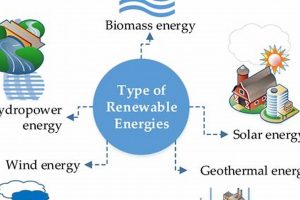
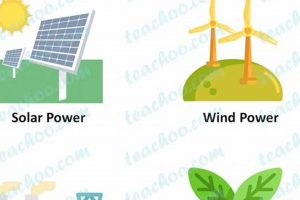
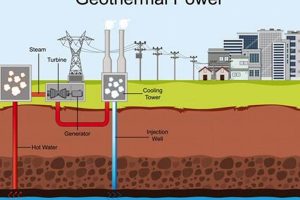
Sources of energy and materials replenished by natural processes at a rate comparable to or faster than their consumption are central to sustainable practices. These encompass solar radiation, wind, flowing water, geothermal heat, and biomass. For instance, energy derived from sunlight converted into electricity via photovoltaic cells represents a constantly renewing power source, unlike finite fossil fuels.
The utilization of these resources offers significant advantages, including reduced reliance on exhaustible sources and decreased greenhouse gas emissions, mitigating climate change. Historically, societies have relied on these for basic needs like heating with wood and harnessing wind power for sailing. Modern technologies amplify their potential, contributing to energy security and environmental preservation.
Understanding the characteristics, limitations, and technological advancements associated with these resources is crucial for informed decision-making in energy policy, infrastructure development, and individual consumption choices. Subsequent sections will delve into specific types, their applications, and the challenges associated with their widespread adoption.
Maximizing the Potential of Replenishable Natural Resources
Effective strategies are crucial to harness the full potential offered by energy and materials that regenerate naturally. The following guidelines promote responsible utilization and sustainable development within this context.
Tip 1: Prioritize Resource Diversification: Dependence on a single type of automatically replenished resource can create vulnerabilities. A diverse portfolio, incorporating solar, wind, geothermal, and biomass sources, enhances energy security and resilience.
Tip 2: Invest in Advanced Storage Technologies: The intermittent nature of some naturally replenished sources, such as solar and wind, necessitates robust energy storage solutions. Battery technology, pumped hydro storage, and thermal storage systems are critical for reliable power delivery.
Tip 3: Optimize Grid Infrastructure: Modernizing electricity grids to accommodate distributed generation from geographically dispersed automatically renewing energy sources is essential. Smart grids can balance supply and demand, reducing transmission losses and improving overall efficiency.
Tip 4: Implement Supportive Policy Frameworks: Government policies play a vital role in incentivizing investment in and adoption of sustainable energy solutions. Feed-in tariffs, tax credits, and renewable energy standards can accelerate the transition away from unsustainable options.
Tip 5: Promote Research and Development: Continuous innovation is necessary to improve the efficiency, cost-effectiveness, and environmental performance of sustainable technologies. Investing in research across various fields from advanced materials to smart grid management is paramount.
Tip 6: Foster Public Awareness and Education: Educating the public about the benefits and opportunities associated with sustainably managed energy and materials is critical for driving widespread adoption. Awareness campaigns can address misconceptions and promote informed decision-making.
Responsible management and technological advancements, coupled with supportive policies and public awareness, are key to unlocking the full potential of automatically renewing resources. This proactive approach is vital for a sustainable energy future.
The following sections will discuss specific resources and technologies in detail.
1. Sustainability

Sustainability forms the cornerstone of responsible resource management, particularly when considering energy and materials replenished by natural processes. It represents a systemic approach to ensuring that present needs are met without compromising the ability of future generations to meet their own requirements. This principle is intrinsically linked to the utilization of resources that are naturally replenished, as opposed to finite, exhaustible reserves.
- Long-Term Availability
The primary role of sustainability is to guarantee the continued provision of essential resources. In the context of automatically replenished energy and materials, this means managing utilization rates to align with regeneration rates. For example, sustainable forestry practices ensure that harvested timber is replaced through reforestation efforts, preventing deforestation and maintaining ecological balance. Overexploitation leads to resource depletion, undermining long-term availability and ecological stability.
- Environmental Stewardship
Sustainability necessitates minimizing the environmental impact associated with resource extraction and utilization. This encompasses reducing pollution, preserving biodiversity, and mitigating climate change. Reliance on naturally replenishing energy sources, such as solar and wind, significantly reduces greenhouse gas emissions compared to fossil fuels. Implementing responsible waste management practices and minimizing habitat disruption are crucial aspects of environmental stewardship in the context of naturally replenished resources.
- Economic Resilience
Sustainable resource management contributes to economic resilience by reducing dependence on volatile and finite resources. Diversifying energy sources with naturally replenishing options stabilizes energy prices and reduces vulnerability to geopolitical disruptions. Investing in sustainable infrastructure and technologies creates long-term economic opportunities and promotes innovation. For example, the development and deployment of renewable energy technologies spur job creation and stimulate economic growth in related industries.
- Social Equity
Sustainability promotes social equity by ensuring access to essential resources for all members of society, both present and future. This involves addressing issues such as energy poverty and promoting equitable distribution of benefits derived from resource utilization. Supporting community-based initiatives and empowering local stakeholders are essential for fostering social equity in the context of automatically renewed resources. For instance, rural electrification projects powered by renewable energy can improve access to electricity and enhance the quality of life in underserved communities.
These facets highlight the interconnectedness of sustainability and naturally replenishing energy and materials. A commitment to sustainable practices is essential for ensuring the long-term availability of these resources, minimizing environmental impact, promoting economic resilience, and fostering social equity. Embracing sustainable principles is paramount for creating a future where essential energy and materials are accessible to all, while preserving the integrity of the planet for generations to come. Further research and investment in sustainable technologies and practices are critical for achieving these goals.
2. Replenishment

Replenishment is the defining characteristic that distinguishes resources naturally renewed from finite, non-renewable counterparts. It dictates the potential for sustained utilization and underpins the long-term viability of naturally replenished resources as a source of energy and materials.
- Rate of Regeneration
The rate at which a resource is replenished directly influences its sustainability. Solar radiation, for example, is practically inexhaustible due to its continuous influx from the sun. Conversely, biomass replenishment, through forest regrowth or agricultural practices, occurs at a finite rate, requiring careful management to prevent over-exploitation and depletion. The balance between extraction and regeneration determines the long-term availability of the resource.
- Natural Processes Involved
Replenishment relies on a variety of natural processes. Hydrological cycles replenish freshwater resources, while atmospheric processes drive wind patterns. Geothermal energy is continuously generated by the Earth’s internal heat. Understanding these processes is crucial for predicting resource availability and developing effective management strategies. Disruptions to these natural processes, such as deforestation affecting rainfall patterns, can negatively impact resource replenishment.
- Technological Augmentation
Technology can play a significant role in enhancing the replenishment or utilization of naturally renewable resources. Reforestation efforts accelerate biomass regeneration, while water management techniques can improve the efficiency of water resource utilization. Advanced energy storage technologies address the intermittency of solar and wind power, effectively increasing their availability and reliability. These interventions must be carefully considered to ensure they do not have unintended environmental consequences.
- Environmental Limits
Despite the potential for continuous replenishment, all natural resources face environmental limits. Excessive exploitation can strain ecosystems, leading to degradation and reduced replenishment rates. Over-extraction of groundwater can lead to aquifer depletion, while unsustainable agricultural practices can degrade soil quality, hindering biomass production. Recognizing and respecting these environmental limits is crucial for ensuring the long-term sustainability of naturally replenished resource utilization.
These facets of replenishment are fundamental to the responsible and sustainable utilization of naturally renewed resources. Understanding the rates of regeneration, the underlying natural processes, the potential for technological augmentation, and the inherent environmental limits is essential for maximizing the benefits of these resources while minimizing potential adverse effects. A holistic approach, considering all these aspects, is vital for ensuring the long-term availability and responsible management of natural renewable resources.
3. Environmental Impact
The interaction between automatically replenished resources and the environment is a critical consideration in evaluating their overall sustainability. While generally perceived as environmentally benign compared to fossil fuels, these resources are not without impact. The extraction, processing, and utilization of automatically replenished energy and materials inevitably alter ecosystems, albeit to varying degrees. Understanding these effects is paramount for optimizing resource management and mitigating potential harm. For example, large-scale hydroelectric projects, while generating renewable electricity, can significantly alter river ecosystems, impacting fish migration patterns and downstream water availability. Similarly, wind farms can pose a threat to bird and bat populations, necessitating careful site selection and mitigation strategies.
The adoption of natural renewable resource technologies often requires significant land use. Solar farms and wind farms occupy substantial areas, potentially displacing agricultural land or natural habitats. Biomass energy, while utilizing organic matter, can contribute to deforestation if not sustainably managed. The manufacturing of components for renewable energy systems, such as solar panels and wind turbines, also involves resource extraction and energy consumption, leading to emissions and waste generation. A comprehensive life cycle assessment, considering all stages from resource extraction to disposal, is essential for accurately evaluating the environmental footprint of each automatically replenished resource technology. Mitigation strategies, such as responsible land-use planning, habitat restoration, and circular economy approaches to manufacturing, are crucial for minimizing these impacts.
In conclusion, while natural renewable resources offer a pathway towards a more sustainable future, a thorough understanding of their environmental impacts is crucial for responsible implementation. A balanced approach, considering both the benefits of these resources and the potential consequences of their utilization, is necessary for minimizing negative effects and maximizing their contribution to environmental protection. Continuous research and development of more efficient and less impactful technologies are essential for ensuring the long-term sustainability of naturally replenished resource utilization.
4. Energy Security
The integration of sources that are naturally renewed into the energy mix directly impacts national and global energy security. Traditional reliance on geographically concentrated fossil fuels creates vulnerabilities related to price volatility, geopolitical instability, and supply disruptions. Diversifying energy sources with domestically available automatically replenished alternatives reduces dependence on external suppliers and mitigates these risks. A nation leveraging solar, wind, geothermal, and biomass resources enhances its energy independence, insulating itself from fluctuations in global fossil fuel markets. For example, countries with abundant solar resources can decrease their reliance on imported oil and gas by investing in solar power infrastructure.
Automatically replenished energy sources can also improve the resilience of energy systems. Distributed generation, such as rooftop solar panels and community wind farms, reduces the strain on centralized power plants and transmission grids. This decentralized approach enhances the ability of the energy system to withstand disruptions caused by natural disasters, cyberattacks, or infrastructure failures. Germany’s Energiewende, a transition toward renewable energy, illustrates this concept. The decentralized nature of renewable energy production has contributed to a more robust and reliable energy supply. Furthermore, investments in energy storage technologies can address the intermittent nature of some automatically replenished energy sources, providing a buffer against supply fluctuations and enhancing grid stability.
Ultimately, incorporating sources that are naturally renewed into the energy supply is a crucial step towards achieving long-term energy security. It diversifies energy sources, reduces dependence on volatile global markets, enhances the resilience of energy systems, and promotes economic growth. While challenges remain regarding infrastructure development, technological advancements, and policy frameworks, the strategic importance of naturally replenished resources for energy security cannot be overstated. Overcoming these challenges will require sustained investment, innovative solutions, and international cooperation.
5. Economic Viability

Economic viability serves as a pivotal determinant in the widespread adoption of resources naturally replenished as alternatives to traditional energy sources. The initial capital investment associated with infrastructure, such as solar farms and wind turbines, often presents a significant barrier. Cost competitiveness hinges on factors including technological advancements, economies of scale, government incentives, and the fluctuating prices of fossil fuels. Without demonstrable economic advantages or parity, market penetration of these resources remains limited, regardless of their environmental benefits. For instance, the growth of the solar industry has been directly correlated with decreasing panel costs and increasing efficiency, making it a more economically attractive option for both residential and commercial consumers. Conversely, geothermal energy projects, while environmentally sound, may face economic challenges due to high upfront drilling costs and the geographical specificity of suitable sites.
The long-term operational costs of sustainable energy projects frequently offer a compelling economic argument. Unlike fossil fuel power plants, which require continuous fuel inputs subject to price fluctuations, solar, wind, and hydro facilities have minimal fuel costs. This inherent stability provides a hedge against rising fossil fuel prices and enhances long-term economic predictability. Furthermore, the creation of local jobs in manufacturing, installation, and maintenance associated with sustainable energy industries stimulates economic growth in communities and regions. Policy frameworks, such as feed-in tariffs and tax credits, play a crucial role in enhancing the economic viability of these resources by providing financial incentives and ensuring a stable revenue stream for project developers. Germany’s feed-in tariff policy, for instance, has spurred significant investment in renewable energy, creating jobs and driving technological innovation.
In summary, economic viability is not merely a desirable attribute but an essential precondition for the widespread deployment of sources replenished over time. Overcoming the economic challenges associated with these resources requires a multifaceted approach encompassing technological innovation, supportive policy frameworks, and long-term investment strategies. The ultimate success of the transition to a sustainable energy future depends on the ability to demonstrate the economic benefits and competitiveness of these resources relative to conventional alternatives. The practical significance lies in making informed investments decisions and policy decisions to achieve a clean energy goals.
Frequently Asked Questions
The following section addresses common inquiries regarding resources that are naturally renewed.
Question 1: Are all automatically replenished energy sources entirely free of environmental impact?
No, the utilization of these energy sources carries environmental consequences. Land usage for solar and wind farms, habitat disruption, and the manufacturing processes of renewable energy technologies all contribute to environmental impact, albeit typically less than fossil fuels.
Question 2: How does energy storage relate to resources that are naturally renewed?
Energy storage is crucial for addressing the intermittent nature of solar and wind power. Battery technologies, pumped hydro, and thermal storage systems enable the reliable dispatch of electricity generated from these variable sources, enhancing their practicality.
Question 3: What role does government policy play in promoting the adoption of automatically replenished energy?
Government policies, such as feed-in tariffs, tax credits, and renewable energy standards, incentivize investment in naturally replenished energy technologies, creating a stable market and driving down costs.
Question 4: How can the economic viability of naturally replenished energy resources be improved?
Technological advancements, economies of scale, and government incentives contribute to improving the economic viability of these energy resources. Decreasing capital costs and increasing efficiency are key factors.
Question 5: Are sources that are naturally renewed only relevant for electricity generation?
No, these resources have applications beyond electricity generation. Solar thermal technologies can provide heating and cooling, while biomass can be used for transportation fuels and the production of bio-based materials.
Question 6: What are the main limitations associated with the widespread adoption of automatically replenished energy sources?
Limitations include intermittency, land usage requirements, high upfront costs, and the need for infrastructure upgrades to accommodate distributed generation.
Understanding the nuances of renewable energy is paramount to responsible adoption and policymaking.
Conclusion
The preceding exploration of natural renewable resources underscores their importance as cornerstones of sustainable energy and materials management. Key attributes encompass long-term availability, environmental stewardship, economic resilience, and social equity. Harnessing sources replenished naturally is not merely an ecological imperative, but also a strategic necessity for energy security and economic stability. Factors such as replenishment rates, environmental limits, and the potential for technological augmentation require careful consideration to maximize benefits and minimize adverse effects.
Continued research, development, and responsible implementation of policies are essential for realizing the full potential of these resources. The trajectory of sustainable practices hinges on informed decision-making, innovative solutions, and a commitment to balancing environmental protection with economic progress. The transition towards greater reliance on natural renewable resources is not a singular event, but a continuous process demanding vigilance, adaptability, and collaborative effort on a global scale.