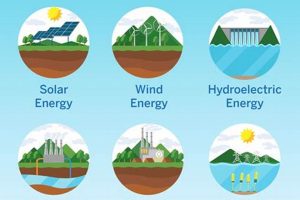
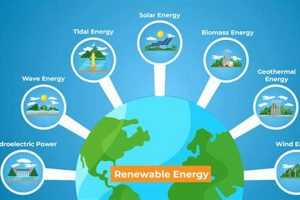
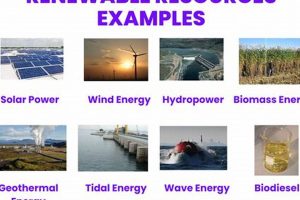
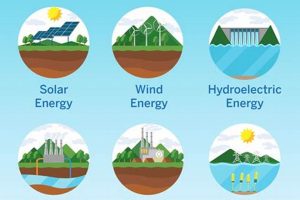
The integration of sustainable power sources signifies a pivotal shift in energy strategies. This process involves adopting alternatives to fossil fuels, such as solar, wind, hydro, geothermal, and biomass, to generate electricity and power various sectors. For example, constructing a solar farm or implementing wind turbine arrays exemplifies this commitment.
Such a transition holds immense importance, offering several advantages. It reduces reliance on finite fossil fuel reserves, mitigates greenhouse gas emissions responsible for climate change, and promotes energy independence. Historically, these methods were often limited by technology and cost. However, advancements in engineering and manufacturing have significantly decreased expenses and increased efficiency, making renewable options increasingly competitive and viable.
Therefore, subsequent sections will delve into the specific technological advancements driving the adoption of clean energy, the economic implications of this shift, and the policy frameworks necessary to support a sustainable energy future.
Guiding Principles for Fostering Sustainable Energy Uptake
The following outlines essential strategies designed to facilitate the broader acceptance and utilization of environmentally conscious power generation methodologies.
Tip 1: Develop Robust Policy Frameworks: Establishing clear, long-term governmental policies, including incentives, subsidies, and carbon pricing mechanisms, attracts investment and encourages widespread deployment. These frameworks should address regulatory barriers and streamline permitting processes.
Tip 2: Invest in Research and Development: Allocating resources to advance technologies related to sustainable energy generation, storage, and distribution is crucial. This includes improving the efficiency of solar cells, enhancing battery storage capacity, and developing smart grid infrastructure.
Tip 3: Enhance Public Awareness and Education: Disseminating accurate information about the benefits and feasibility of environmentally friendly energy options combats misinformation and fosters public support. Educational campaigns can highlight the environmental and economic advantages.
Tip 4: Modernize Grid Infrastructure: Adapting existing power grids to accommodate intermittent sources such as solar and wind requires significant upgrades. This includes deploying smart grid technologies, improving transmission capacity, and implementing advanced forecasting systems.
Tip 5: Promote Energy Efficiency Measures: Reducing overall energy demand through conservation and efficiency programs lowers the required capacity from all sources, easing the transition. This can involve implementing stricter building codes, promoting energy-efficient appliances, and encouraging industrial process optimization.
Tip 6: Foster International Collaboration: Sharing best practices, technologies, and expertise across national borders accelerates global progress. Collaborative research projects and technology transfer initiatives are essential.
These actions, collectively, pave the way for a future where energy production aligns with environmental stewardship. Prioritizing these strategies is essential for creating a lasting sustainable energy ecosystem.
The subsequent sections will analyze the specific challenges associated with large-scale adoption and propose mitigation strategies to overcome these hurdles.
1. Policy and Regulation

Governmental frameworks exert a defining influence on the adoption of environmentally sound energy alternatives. Clear, consistent, and well-designed mandates directly affect investment decisions, technological development, and the pace of transition towards a sustainable energy future.
- Incentive Structures
Subsidies, tax credits, and feed-in tariffs are powerful mechanisms that encourage the development and deployment of environmentally conscious energy projects. For example, production tax credits for wind energy projects have significantly stimulated growth in the wind power sector. The absence of such incentives can stifle innovation and investment, slowing the move towards sustainable power generation.
- Regulatory Standards
Mandates such as renewable portfolio standards (RPS) require utilities to source a specified percentage of their electricity from eligible sources. These mandates create guaranteed demand for renewable energy, driving investment and technological advancement. Stringent emission standards for fossil fuel-based power plants further incentivize the transition.
- Permitting Processes
Streamlined and transparent permitting procedures are essential for the timely development of environmentally conscious energy projects. Lengthy and complex permitting can increase project costs and create uncertainty, deterring investment. Clear guidelines and efficient approval processes are crucial for enabling deployment at scale.
- Carbon Pricing Mechanisms
Carbon taxes and cap-and-trade systems place a price on carbon emissions, internalizing the environmental costs of fossil fuels. This incentivizes the adoption of lower-carbon alternatives and promotes energy efficiency. A well-designed carbon pricing mechanism can drive significant reductions in greenhouse gas emissions from the energy sector.
Effective policies foster a supportive environment for the growth of environmentally sound energy options, whereas poorly designed or inconsistent regulations can create barriers. Policies should be carefully crafted to address market failures, encourage innovation, and promote a level playing field for all energy sources. The effectiveness of these frameworks ultimately determines the speed and success of the transition.
2. Technological Advancement

The expansion of sustainable energy sources is inextricably linked to progressions in technological capabilities. Advancements directly impact efficiency, cost-effectiveness, and overall viability, thereby serving as a primary catalyst for their integration. Improved solar cell efficiencies, for example, directly translate to greater power output from a given area, reducing land use requirements and lowering the cost per kilowatt-hour. Similarly, advancements in wind turbine design, such as taller towers and longer blades, enable energy capture in previously inaccessible or marginally productive wind resource areas. This symbiotic relationship ensures that the more sophisticated and efficient renewable energy technologies become, the more economically and practically feasible their widespread deployment.
Further examples include the development of advanced battery storage systems. These systems mitigate the intermittent nature of solar and wind power, allowing for the storage of excess energy generated during peak production times for use during periods of low sunlight or wind. Smart grid technologies also play a crucial role, enabling real-time monitoring and control of power flow, which improves grid stability and allows for the seamless integration of distributed sources. Geothermal power has benefited from advancements in drilling techniques, enabling access to deeper, hotter resources, increasing power output and geographical applicability. High-voltage direct current (HVDC) transmission technology is vital for transmitting sustainable energy over long distances with minimal losses, which is crucial for connecting remote resources to urban centers.
In summary, continuous enhancement of sustainable energy technologies is paramount. Addressing existing limitations, such as intermittency and cost, requires ongoing investments in research and development. This includes improving materials, designing more efficient systems, and developing innovative approaches to power generation and storage. The continued pursuit of these advancements is essential for realizing the full potential of sustainable energy sources and ensuring a sustainable energy future.
3. Economic Feasibility

The economic viability of sustainable energy technologies dictates the extent and pace of their adoption. Without competitive cost structures and demonstrable long-term economic benefits, widespread transition to these resources remains constrained, irrespective of their environmental advantages.
- Levelized Cost of Energy (LCOE)
LCOE serves as a critical metric, representing the total cost of an energy-generating asset divided by the total amount of energy it produces over its lifespan. Declining LCOE for solar and wind power has rendered them increasingly competitive with traditional fossil fuel-based generation in many regions. For instance, large-scale solar projects in sun-rich areas now often undercut the cost of new coal-fired power plants, fueling their adoption. The sustained reduction in LCOE is therefore crucial for driving further expansion.
- Investment and Financing
Large-scale deployment requires substantial upfront investment. The availability of accessible and affordable financing mechanisms, such as green bonds, public-private partnerships, and international development funds, is essential. For instance, government-backed loan guarantees can mitigate risk for private investors, encouraging investment in capital-intensive sustainable energy projects. The cost of capital and access to diverse funding sources fundamentally shape economic feasibility.
- Grid Integration Costs
Integrating intermittent sustainable energy sources, like solar and wind, into existing electricity grids can incur significant costs related to grid upgrades, transmission infrastructure, and energy storage solutions. These costs must be factored into the overall economic assessment. For example, investments in smart grid technologies and energy storage capacity can enhance grid flexibility and reduce the integration costs associated with variable generation. Efficient grid integration strategies directly influence economic competitiveness.
- Job Creation and Economic Development
The sustainable energy sector presents opportunities for job creation and economic development. Manufacturing, installation, maintenance, and research associated with these technologies can stimulate local economies. For example, regions that have invested heavily in wind turbine manufacturing have experienced significant economic growth. Quantifying these benefits is vital for justifying investments and garnering public support. Positive economic spillover effects enhance the overall economic viability and societal acceptance.
Collectively, these facets underscore that economic feasibility is not solely about the initial cost of sustainable energy technologies but rather encompasses a broader evaluation of lifecycle costs, financing options, grid integration requirements, and associated economic benefits. Policy decisions and technological advancements profoundly influence these factors, highlighting the interconnectedness of all aspects related to sustainable energy adoption.
4. Grid Modernization

The successful integration of environmentally conscious energy sources hinges significantly on upgrading existing electrical grids. Traditional power grids, designed for unidirectional power flow from large, centralized fossil fuel plants, are ill-equipped to handle the bidirectional, intermittent nature of sources like solar and wind. Consequently, the adoption of sustainable energy methods necessitates a fundamental shift in grid architecture and operation. This involves deploying advanced technologies that enhance grid flexibility, reliability, and responsiveness. Without such modifications, the full potential of environmentally sound energy cannot be realized, and the overall stability of the power system may be compromised. For example, the inability of a grid to handle a sudden surge in solar power during a sunny day can lead to voltage fluctuations and potential blackouts.
Grid modernization encompasses a range of improvements, including the deployment of smart grid technologies, advanced metering infrastructure, and enhanced transmission capacity. Smart grids enable real-time monitoring and control of power flow, allowing grid operators to efficiently manage variable generation from renewable sources. Advanced metering infrastructure provides granular data on energy consumption patterns, facilitating demand response programs that can shift electricity usage to off-peak hours, thereby reducing strain on the grid. Moreover, expanding transmission capacity allows for the transport of sustainable energy from resource-rich areas to population centers. A practical example is the development of high-voltage direct current (HVDC) transmission lines, which can efficiently transmit electricity over long distances with minimal losses. Another is energy storage solutions, like large-scale batteries, which are utilized to store excess power generated from renewable sources and dispatch it when demand exceeds supply, smoothing out intermittency.
In summary, grid modernization is not merely an ancillary component but a prerequisite for the seamless and reliable integration of environmentally conscious energy. Failing to invest in these upgrades will severely limit the adoption potential and overall effectiveness. The intertwined relationship between grid infrastructure and sustainable energy underscores the imperative for holistic energy planning that considers both generation and distribution. This coordinated approach is essential for achieving a sustainable and resilient energy future.
5. Public Acceptance

Widespread adoption of environmentally sound energy technologies hinges critically on public support and approval. Even the most technologically advanced and economically feasible solutions will falter without sufficient societal backing. Public sentiment, shaped by perceptions, beliefs, and understanding, directly influences policy decisions, investment strategies, and the overall pace of the transition.
- Perceived Environmental Impacts
Public opinion is strongly influenced by the perceived environmental advantages and disadvantages of different energy sources. Positive perceptions of reduced emissions, cleaner air, and protection of natural resources can foster support for environmentally sound energy. Conversely, concerns about visual impacts (e.g., wind farms), noise pollution, or land use changes can generate opposition. Addressing these concerns through transparent communication, careful site selection, and mitigation measures is essential. For example, offshore wind farms may face less resistance due to their lower visibility from land. Successful adoption relies on demonstrating a net positive environmental impact.
- Economic Considerations
The perceived economic benefits and costs significantly shape public acceptance. If sustainable energy is seen as increasing energy prices or negatively impacting local economies, opposition is likely to arise. Conversely, if it is perceived as creating jobs, attracting investment, and reducing reliance on imported fuels, public support tends to increase. Highlighting the economic benefits of the environmentally friendly energy industry, such as job creation in manufacturing and installation, can sway public opinion. Furthermore, clearly communicating the long-term cost savings associated with these energy source, such as reduced healthcare costs due to improved air quality, can be persuasive.
- Trust in Information Sources
Public trust in the sources of information about environmentally conscious energy strongly influences their acceptance. If the public distrusts government agencies, energy companies, or advocacy groups providing information, they are less likely to support the transition. Building trust through transparent communication, independent verification of facts, and engagement with local communities is crucial. For example, public forums where experts can address concerns and answer questions can help build trust and allay fears. Establishing credibility of information is essential for fostering informed decision-making and promoting acceptance.
- Community Engagement and Participation
Actively involving communities in the decision-making process related to environmentally sound energy projects can significantly increase public acceptance. Allowing communities to have a voice in project design, location, and benefits sharing fosters a sense of ownership and reduces opposition. For example, offering local residents opportunities to invest in renewable energy projects or providing direct benefits, such as reduced energy bills, can generate strong support. Meaningful engagement fosters a sense of fairness and shared benefit, enhancing the likelihood of successful deployment.
The interplay of these factors highlights that public acceptance is not simply a passive response but an active and dynamic process shaped by perceptions, economics, trust, and engagement. Successfully integrating environmentally sound energy technologies necessitates a proactive approach that addresses public concerns, communicates benefits effectively, and fosters a sense of shared purpose. Overlooking public sentiment can lead to delays, increased costs, and even project cancellations, underscoring the fundamental importance of cultivating widespread societal support.
6. Environmental Impact

The environmental consequences of energy production are a central driver in the expansion of environmentally sound alternatives. While the objective is to reduce adverse effects, a comprehensive analysis of the environmental implications associated with these alternatives is necessary to ensure genuine progress.
- Greenhouse Gas Emissions Reduction
Environmentally conscious energy sources, such as solar, wind, and hydropower, significantly reduce greenhouse gas emissions compared to fossil fuels. This reduction mitigates the effects of climate change, lowering the risks associated with global warming. For example, replacing coal-fired power plants with large-scale solar farms can drastically decrease carbon dioxide emissions, contributing to international climate goals. However, the manufacturing processes of these technologies also possess an emission footprint that must be carefully managed.
- Air and Water Quality Improvement
The transition to cleaner energy sources positively impacts air and water quality. The combustion of fossil fuels releases pollutants such as sulfur dioxide, nitrogen oxides, and particulate matter, contributing to respiratory illnesses and acid rain. By contrast, renewable energy facilities produce minimal air and water pollution during operation. For example, shifting towards wind power reduces the emission of harmful air pollutants, improving public health outcomes. Yet, the construction and disposal phases can present localized pollution concerns that need vigilant management.
- Land Use Considerations
Environmentally sound energy projects often require substantial land areas, raising concerns about habitat disruption and ecosystem impacts. Large-scale solar farms, wind farms, and hydropower reservoirs can alter landscapes, impacting local biodiversity. Careful site selection, impact assessments, and mitigation measures are crucial for minimizing these effects. For example, implementing habitat restoration projects around renewable energy facilities can partially offset habitat loss. Sustainable land use planning is vital for ensuring environmentally responsible deployment.
- Resource Depletion and Waste Management
While environmentally conscious alternatives reduce reliance on fossil fuels, they still require raw materials for manufacturing, such as rare earth elements, and generate waste at the end of their operational life. Responsible sourcing of materials, efficient recycling processes, and proper waste management practices are essential for minimizing environmental impacts. For instance, developing closed-loop recycling systems for solar panels can reduce the demand for raw materials and minimize landfill waste. Sustainable lifecycle management is critical for ensuring that renewable energy systems are truly environmentally sound.
- Impacts on Wildlife
Environmentally sound energy facilities can present risks to wildlife, such as bird and bat fatalities at wind farms or habitat disruption for aquatic species at hydroelectric facilities. Careful site selection, implementation of mitigation strategies (e.g., bird diverters on wind turbines), and ongoing monitoring are crucial for minimizing these impacts. Ensuring biodiversity preservation is essential when implementing environmentally sound energy infrastructure.
The multifaceted environmental impacts associated with environmentally sound energy sources necessitate a holistic and comprehensive approach. While offering significant advantages over fossil fuels, these technologies are not without their environmental challenges. By carefully evaluating and mitigating these impacts, the transition to a sustainable energy future can genuinely deliver improved environmental outcomes.
Frequently Asked Questions Regarding the Adoption of Renewable Energy Resources
The following addresses common inquiries and concerns surrounding the integration of environmentally friendly energy technologies, providing factual information to foster a more informed understanding of this critical transition.
Question 1: What are the primary economic barriers hindering the introduction of renewable energy resources on a large scale?
Initial capital costs for infrastructure development, intermittency challenges requiring storage solutions, and the need for grid modernization represent substantial economic hurdles. Furthermore, existing fossil fuel subsidies and established market structures can create an uneven playing field.
Question 2: How does the intermittency of solar and wind energy affect grid stability and reliability?
The fluctuating nature of solar and wind generation can introduce instability into the electrical grid. Balancing supply and demand becomes more complex, potentially leading to voltage fluctuations, frequency deviations, and the risk of power outages. Advanced forecasting, energy storage solutions, and smart grid technologies are necessary to mitigate these challenges.
Question 3: What role do government policies play in accelerating the adoption of renewable energy resources?
Government policies, including tax credits, feed-in tariffs, renewable portfolio standards, and carbon pricing mechanisms, can significantly incentivize the development and deployment of clean energy technologies. Supportive regulatory frameworks can create a stable investment environment, driving innovation and market growth.
Question 4: What are the primary environmental impacts associated with the introduction of renewable energy resources?
While generally cleaner than fossil fuels, renewable energy projects can have localized environmental effects. Large-scale solar and wind farms may require significant land areas, potentially impacting habitats and ecosystems. Hydroelectric dams can alter river flows and affect aquatic life. Careful site selection, impact assessments, and mitigation strategies are essential to minimize adverse consequences.
Question 5: How does public perception influence the successful introduction of renewable energy resources?
Public acceptance is critical for widespread adoption. Concerns about visual impacts, noise pollution, or potential economic disadvantages can lead to opposition. Transparent communication, community engagement, and addressing public concerns are essential for building support and ensuring project success.
Question 6: What technological advancements are most crucial for enhancing the performance and cost-effectiveness of renewable energy resources?
Advancements in energy storage technologies, such as batteries and pumped hydro, are vital for addressing intermittency. Improvements in solar cell efficiency, wind turbine design, and smart grid infrastructure will further reduce costs and improve performance. Continued investment in research and development is essential for driving innovation.
The integration of sustainable energy represents a complex endeavor requiring careful consideration of economic, environmental, social, and technological factors. Informed decision-making and proactive management are essential for ensuring a successful transition.
The subsequent section will analyze case studies of successful renewable energy implementation, highlighting key strategies and lessons learned.
Concluding Remarks on the Adoption of Sustainable Energy
This exploration has outlined the multifaceted considerations inherent in the introduction of renewable energy resources. Key factors include the establishment of robust policy frameworks, the continuous pursuit of technological advancements, the achievement of economic feasibility, the modernization of grid infrastructure, the cultivation of public acceptance, and the diligent assessment and mitigation of environmental impacts. Each of these elements exerts a significant influence on the successful integration of these sustainable energy technologies.
The widespread deployment of environmentally conscious energy options necessitates a concerted and sustained effort from governments, industries, and individuals. Addressing the challenges associated with intermittency, upfront costs, and grid integration remains paramount. A commitment to innovation, strategic planning, and informed decision-making is essential to realize the full potential of sustainable energy and secure a more environmentally responsible energy future. The ongoing trajectory of climate change underscores the urgency of this endeavor.