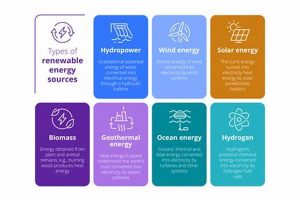
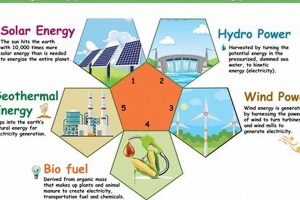
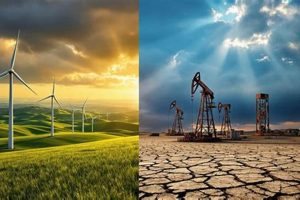
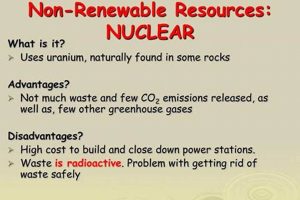
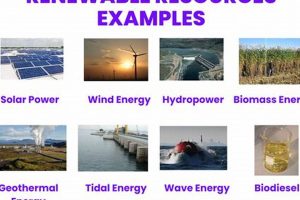
Energy sources are broadly categorized based on their ability to be replenished within a human lifespan. Sources that regenerate naturally, such as solar, wind, and geothermal energy, are in contrast to those with finite reserves. Depletable reserves, including fossil fuels like coal, oil, and natural gas, along with nuclear fuels such as uranium, represent the latter category. Distinguishing between these types of resources is fundamental to understanding energy sustainability.
The significance of understanding resource categorization lies in its implications for environmental impact and long-term energy security. Reliance on finite sources contributes to greenhouse gas emissions and resource depletion, whereas the development and utilization of regenerative options offer pathways toward reduced carbon footprints and sustainable energy independence. Historically, societal progress has been intricately linked to the availability and accessibility of energy; current imperatives emphasize a transition toward practices that ensure enduring access without compromising environmental integrity.
The following sections will delve deeper into specific illustrations of both regenerative and finite energy sources, examining their characteristics, applications, and impacts. Further, these sections will explore the challenges and opportunities associated with transitioning to a more sustainable energy landscape.
Resource Management Guidance
Effective resource management requires a clear understanding of resource classification. The following guidance aims to promote responsible resource utilization and sustainable practices.
Tip 1: Understand Resource Lifecycles: Differentiate between regenerative and finite resources based on their replenishment rates. Recognize that finite resources are depleted with use, while regenerative options are naturally replenished.
Tip 2: Prioritize Regenerative Options: Whenever feasible, opt for sources that minimize environmental impact and offer long-term availability. Solar, wind, hydro, and geothermal energy sources represent sustainable alternatives to finite resources.
Tip 3: Implement Conservation Strategies: Reduce overall energy consumption through efficiency improvements and behavioral changes. Lowering demand can extend the lifespan of finite resources and reduce the need for extensive regenerative resource development.
Tip 4: Invest in Infrastructure Development: Support the development of infrastructure that facilitates the efficient distribution and storage of regenerative energy. This includes grid modernization, energy storage technologies, and smart grid solutions.
Tip 5: Promote Research and Innovation: Encourage ongoing research into new and improved regenerative technologies. This investment can lead to more efficient, cost-effective, and widely applicable regenerative solutions.
Tip 6: Consider Environmental Impact Assessments: Fully assess the environmental consequences associated with extraction, processing, and utilization of any resource. Implement appropriate mitigation strategies to minimize potential harm.
Effective management strategies offer long-term sustainability and reduce environmental impact. By carefully considering the properties of different source types, stakeholders can work toward a more sustainable energy future.
The subsequent sections will further discuss the implementation of these strategies.
1. Sustainability Differences

The fundamental distinction between regenerative and finite sources lies in sustainability. Regenerative sources, such as solar, wind, hydro, and geothermal, are characterized by their capacity for natural replenishment within a human lifespan. This inherent renewability means that their utilization does not inherently deplete the resource base, making them sustainable over extended periods. In contrast, finite resources, exemplified by fossil fuels (coal, oil, and natural gas) and nuclear fuels (uranium), exist in fixed quantities. Their extraction and consumption inevitably lead to depletion, rendering them unsustainable in the long term. The differential in sustainability is a direct consequence of the resource’s ability, or lack thereof, to regenerate on a timescale relevant to human societies.
Sustainability differences manifest in several critical ways. Environmentally, the reliance on finite resources results in greenhouse gas emissions, contributing to climate change, and can cause habitat destruction through extraction processes. Regenerative resources, however, generally have lower emissions and reduced environmental footprints. Economically, while finite resources may initially be more cost-effective to extract and process, their price is subject to volatility and eventual exhaustion. Regenerative resources may require larger upfront investments but offer stable, long-term costs and energy independence. Societally, the transition to regenerative sources enhances energy security and reduces dependence on finite resources concentrated in specific geographic locations. For example, Germany’s investment in solar and wind power demonstrates a national strategy to enhance energy independence and reduce carbon emissions, contrasting sharply with nations heavily reliant on imported fossil fuels.
In summation, the contrast in sustainability represents a decisive factor in evaluating and selecting energy resources. The shift toward regenerative sources is not merely an environmental imperative but also an economic and societal necessity. Understanding these sustainability differences provides a crucial framework for policymakers, businesses, and individuals to make informed decisions that promote long-term energy security and environmental stewardship. The challenge lies in overcoming existing infrastructure dependencies and fostering technological advancements to fully realize the potential of regenerative alternatives.
2. Resource Replenishment Rates

Resource replenishment rates fundamentally differentiate regenerative and finite energy sources. Regenerative sources, exemplified by solar, wind, and hydro power, possess rapid replenishment rates, essentially renewing themselves within a human lifespan or continuously available. Solar energy, driven by continuous solar radiation, and wind energy, sustained by atmospheric circulation, are effectively inexhaustible on human timescales. Hydropower, dependent on the water cycle, maintains its resource base through precipitation and runoff. Finite sources, such as fossil fuels and nuclear fuels, exhibit extremely slow or non-existent replenishment rates. Fossil fuels, formed over millions of years from decomposed organic matter, cannot be renewed at a rate commensurate with human consumption. Uranium, a nuclear fuel, exists in finite quantities and is not actively replenished naturally. Disparities in replenishment rates dictate the sustainability and long-term viability of respective energy sources.
The practical significance of understanding replenishment rates extends to energy policy and investment decisions. Policymakers utilize this knowledge to incentivize the development of regenerative energy infrastructure through subsidies and mandates, promoting long-term sustainability and energy security. Investors consider replenishment rates when allocating capital to energy projects, favoring regenerative sources for their sustained availability and reduced risk of resource depletion. The depletion of finite resources impacts resource economics, as demand increases the extraction costs. For example, declining oil reserves drive up prices due to higher extraction costs from less accessible deposits. Conversely, improved technologies driving down the cost of solar energy make it increasingly competitive. This understanding is used when modelling resource planning, supply and demand.
Recognizing the importance of resource replenishment rates is crucial for energy management. The shift toward regenerative resources mitigates environmental impact, reduces reliance on finite sources concentrated in specific regions, and promotes energy independence. Understanding differences in replenishment rates is vital for making informed choices about energy consumption and resource allocation. For example, energy grid operators must account for the intermittency of regenerative sources like solar and wind, by using energy storage or by drawing from other power resources to maintain a continuous electricity supply. The adoption of practices aimed at achieving a more sustainable and secure energy future demands awareness of the fundamental characteristics of each resource.
3. Environmental Impact Variances

The assessment of energy resources requires a comprehensive evaluation of their environmental consequences. Varying effects on ecosystems, air and water quality, and overall climate stability are evident across different resource types, necessitating a detailed examination of environmental impact variances.
- Greenhouse Gas Emissions
Combustion of fossil fuels, a defining characteristic of finite resources, releases significant quantities of greenhouse gases, including carbon dioxide, methane, and nitrous oxide. These emissions contribute to global warming, climate change, and associated environmental disturbances. Regenerative resources, such as solar and wind power, exhibit minimal greenhouse gas emissions during operation, offering a reduced climate impact. For example, coal-fired power plants release substantially more greenhouse gases per kilowatt-hour of electricity generated than wind turbines or solar panels.
- Land Use Impacts
Energy resource utilization carries land-use implications, albeit with varying degrees of intensity. Large-scale hydropower projects can inundate extensive areas, altering ecosystems and displacing human populations. Fossil fuel extraction, including mining and drilling operations, can result in habitat destruction, soil erosion, and water contamination. Conversely, regenerative resources, while requiring land for infrastructure development, often allow for dual land-use opportunities, such as agriculture or grazing alongside solar farms. The overall land footprint and associated ecological disruption varies significantly depending on the specific resource and implementation approach.
- Water Resource Effects
Water resources are integral to energy production, and their utilization can lead to depletion and pollution. Conventional power plants, including coal and nuclear facilities, require large volumes of water for cooling purposes, potentially impacting aquatic ecosystems. Hydraulic fracturing, a technique used to extract natural gas, can contaminate groundwater and strain water supplies. Regenerative resources, such as wind and solar power, exhibit lower water consumption rates, minimizing their impact on water resource availability and quality. The implementation of closed-loop cooling systems can further reduce water use in thermal power plants.
- Waste Generation and Disposal
Energy production processes generate waste products that require proper disposal to prevent environmental contamination. Nuclear power plants produce radioactive waste that must be stored for extended periods, posing long-term environmental and safety challenges. Fossil fuel combustion generates ash and other solid wastes that can contaminate soil and water resources. Regenerative resources, with minimal or no fuel requirements, produce significantly less waste, reducing the burden on waste management infrastructure. The lifecycle assessment of energy resources must consider the environmental implications of waste generation and disposal.
In conclusion, environmental impact variances highlight the substantial differences in ecological consequences associated with different energy resource options. A shift toward regenerative resources offers a pathway toward mitigating greenhouse gas emissions, reducing land-use impacts, conserving water resources, and minimizing waste generation. The effective integration of regenerative resources requires informed decision-making that considers environmental impacts, economic factors, and societal needs to promote energy sustainability. Quantifying and internalizing the costs associated with these environmental consequences are essential for guiding policy and investment decisions toward energy solutions that promote ecological health and long-term well-being.
4. Energy Security Implications

Energy security, defined as the uninterrupted availability of energy sources at an affordable price, is inextricably linked to the composition of a nation’s energy portfolio, particularly the balance between regenerative and finite energy resources. Dependence on specific source types can significantly affect a country’s vulnerability to supply disruptions, price volatility, and geopolitical instability.
- Diversification of Energy Sources
A diversified energy mix, incorporating both regenerative and finite resources, can enhance energy security by reducing reliance on any single source. For instance, countries heavily dependent on imported fossil fuels are vulnerable to supply disruptions caused by geopolitical events or infrastructure failures. Integrating regenerative sources like solar, wind, and hydro power diversifies the supply base, enhancing resilience. Germany, for example, has invested in regenerative technologies to reduce dependence on Russian natural gas.
- Geopolitical Influence and Resource Control
Finite resources, such as oil and natural gas, are concentrated in specific geographic regions, granting significant geopolitical influence to producing nations. This concentration can create dependencies for consuming nations and expose them to political leverage. In contrast, regenerative resources are distributed more evenly across the globe, diminishing the potential for geopolitical control. Iceland, abundant in geothermal resources, has leveraged this to ensure energy security and attract energy-intensive industries.
- Price Volatility and Market Stability
The prices of finite resources are subject to significant volatility due to factors such as supply and demand imbalances, geopolitical events, and speculative trading. This volatility can destabilize economies and affect consumer costs. Regenerative resources, with minimal fuel costs and stable operational expenses, offer greater price stability. Long-term power purchase agreements for regenerative energy projects provide predictable energy costs, insulating consumers from market fluctuations.
- Infrastructure Resilience and System Reliability
Energy infrastructure, including pipelines, power plants, and transmission lines, is vulnerable to disruptions caused by natural disasters, cyberattacks, and equipment failures. Distributing energy generation through decentralized regenerative resources can enhance infrastructure resilience. Distributed solar photovoltaic systems, for example, can continue to supply power even if parts of the grid are damaged. Investing in robust and redundant energy infrastructure is vital to ensuring a reliable energy supply.
The selection of resources directly impacts a nation’s stability. Countries integrating regenerative sources into their energy mix enhance their energy security by diversifying supply, reducing geopolitical vulnerabilities, stabilizing prices, and improving infrastructure resilience. Addressing energy security necessitates a strategic transition towards sustainable sources alongside the prudent management of resources to mitigate risks and ensure long-term availability.
5. Economic Viability Comparisons

Economic viability comparisons represent a critical dimension in evaluating resource options, directly influencing decisions concerning energy infrastructure investment, policy formulation, and consumer adoption. A thorough assessment necessitates considering the entire lifecycle cost, encompassing capital expenditures, operating expenses, fuel costs (if applicable), decommissioning expenses, and environmental externalities. Finite energy sources, such as fossil fuels, often exhibit lower upfront capital costs compared to regenerative alternatives. However, the lifecycle costs can escalate due to fluctuating fuel prices, carbon emission penalties, and environmental remediation expenses. Regenerative sources, while typically requiring higher initial investments, offer predictable long-term operating costs, reduced environmental impact, and potentially enhanced energy security. The levelized cost of energy (LCOE) serves as a key metric for comparing the economic competitiveness of different energy technologies over their operational lifespan. For example, a recent analysis might reveal that the LCOE of new solar photovoltaic installations is competitive with or lower than that of new coal-fired power plants, particularly when factoring in carbon pricing mechanisms.
The economic viability of resources is also significantly affected by government policies, technological advancements, and market conditions. Subsidies, tax incentives, and carbon pricing mechanisms can alter the relative economic attractiveness of specific energy sources. Technological innovations, such as advancements in solar panel efficiency and energy storage technologies, can drive down the cost of regenerative energy and improve its grid integration capabilities. Market demand for sustainable energy solutions also plays a role, as consumers and businesses increasingly prioritize energy options with lower environmental footprints. Real-world examples illustrate these dynamics. The rapid growth of wind power in Denmark has been facilitated by supportive government policies, technological advancements, and strong public acceptance. Similarly, the proliferation of solar photovoltaic systems in California has been driven by state-level mandates, declining equipment costs, and increasing consumer awareness of the environmental benefits.
In summary, economic viability comparisons are fundamental to informed decision-making regarding resource deployment. A comprehensive assessment must consider lifecycle costs, environmental externalities, and the influence of government policies, technological advancements, and market conditions. The transition to a sustainable energy system will necessitate addressing the economic challenges associated with integrating regenerative resources, while also accounting for the long-term economic benefits of reduced environmental impact, enhanced energy security, and technological innovation. Overcoming economic barriers and leveraging opportunities will accelerate the adoption of resources and facilitate a more sustainable energy future.
6. Technological Advancement Influences

Technological advancement exerts a profound influence on the accessibility, efficiency, and environmental impact associated with both regenerative and finite energy resources. Innovations across extraction, conversion, and utilization technologies redefine the economic and operational landscapes of resources, altering their relative advantages and disadvantages.
- Extraction and Exploration Efficiency
Advanced drilling techniques, seismic imaging, and enhanced recovery methods increase the yield of finite resources such as oil and natural gas. Deepwater drilling and hydraulic fracturing (“fracking”) exemplify how technology can access previously unreachable reserves. However, these advancements also raise environmental concerns, including habitat destruction, water contamination, and induced seismicity. Improved mapping techniques, meanwhile, can identify resources that might have gone unnoticed using older means.
- Conversion and Storage Technologies
Technological progress in energy conversion processes directly impacts the efficiency and cost-effectiveness of both resource categories. Combined-cycle gas turbine power plants and supercritical coal-fired power plants represent incremental improvements in the efficiency of fossil fuel utilization. Advancements in solar photovoltaic technology, including the development of higher-efficiency solar cells and improved manufacturing processes, have significantly reduced the cost of solar energy. Similarly, energy storage technologies, such as lithium-ion batteries and pumped hydro storage, enhance the reliability and grid integration capabilities of regenerative sources.
- Grid Modernization and Smart Grids
The integration of regenerative energy sources into existing power grids presents unique challenges due to their intermittent nature and distributed generation patterns. Smart grid technologies, including advanced metering infrastructure, grid automation systems, and demand response programs, enhance grid stability, improve energy management, and enable the seamless integration of both regenerative and finite resources. Smart grids also facilitate the bidirectional flow of electricity, allowing consumers to generate and sell excess energy back to the grid.
- Carbon Capture and Storage (CCS)
Carbon capture and storage technologies offer a potential pathway to mitigate greenhouse gas emissions from fossil fuel-fired power plants and industrial facilities. CCS involves capturing carbon dioxide emissions, transporting them to suitable storage sites, and injecting them into underground geological formations. While CCS technology is still under development, it represents a significant effort to reduce the environmental impact of finite resources. However, the high cost and technical challenges associated with CCS have limited its widespread deployment.
These advancements collectively reshape the resource landscape. While some technologies extend the accessibility and efficiency of finite resources, innovations in energy conversion, storage, and grid management bolster the competitiveness and reliability of regenerative sources. The interplay between technological progress and policy decisions ultimately determines the trajectory of resource utilization and the transition toward a sustainable energy future. Continued innovation across all resource categories will be vital for achieving energy security, economic prosperity, and environmental stewardship. By promoting progress, we also facilitate greater efficiency and wider adoption.
7. Policy and Regulation Effects
Government policies and regulations significantly shape the development, deployment, and utilization of diverse energy sources. These interventions create frameworks that influence investment decisions, market dynamics, and environmental outcomes for both regenerative and finite energy resources. Effective and well-designed policies are crucial for steering the energy sector toward sustainability and security.
- Subsidies and Incentives
Financial incentives, such as tax credits, feed-in tariffs, and renewable energy certificates, can stimulate investment in regenerative energy technologies. Conversely, subsidies for fossil fuel production can distort market signals, making finite resources artificially cheaper and hindering the competitiveness of sustainable alternatives. For example, Germany’s feed-in tariff policy spurred the growth of solar and wind power by guaranteeing a fixed price for electricity generated from resources. The removal of fossil fuel subsidies, a policy advocated by international organizations, seeks to level the playing field and promote a transition to cleaner energy sources.
- Environmental Regulations
Environmental regulations, including emission standards, carbon taxes, and mandates for resource usage, directly impact the cost and viability of different energy sources. Stricter emission standards for power plants increase the operational costs of fossil fuel facilities, potentially incentivizing the adoption of renewable technologies. Carbon pricing mechanisms, such as carbon taxes or cap-and-trade systems, internalize the environmental costs of fossil fuel combustion, making regenerative resources more economically attractive. The European Union’s Emissions Trading System (ETS) exemplifies a cap-and-trade system designed to reduce greenhouse gas emissions from various sectors, including energy production.
- Renewable Energy Standards (RES)
Renewable energy standards, or renewable portfolio standards (RPS), mandate that a certain percentage of a utility’s electricity supply must come from renewable sources. These mandates create a guaranteed market for regenerative energy and drive investment in technologies. California’s RPS, which requires utilities to source a significant portion of their electricity from renewable sources, has spurred the development of large-scale solar and wind projects. Similar standards exist in numerous countries and states, each tailored to regional resource availability and energy policy objectives.
- Land Use and Permitting Regulations
Land use and permitting regulations can facilitate or hinder the deployment of energy projects. Streamlined permitting processes and clear land-use policies can accelerate the development of energy facilities, reducing project costs and timelines. Conversely, restrictive zoning regulations and lengthy permitting procedures can impede the deployment of both regenerative and finite resources. Carefully designed land use policies are essential for balancing energy development with environmental protection and community interests. For instance, regulations governing the siting of wind turbines near residential areas aim to minimize noise and visual impacts.
Government policies and regulations play a pivotal role in shaping the energy landscape, influencing the relative competitiveness of different energy resources and driving progress toward sustainability goals. The effectiveness of these interventions hinges on their design, implementation, and enforcement. Well-crafted policies that promote innovation, incentivize resource consumption, and address environmental externalities can accelerate the transition to a cleaner, more secure, and sustainable energy future. These are critical to understand and manage for the betterment of society.
Frequently Asked Questions
This section addresses common inquiries regarding the categorization of energy sources, providing clarity on the distinction between regenerative and finite options.
Question 1: What distinguishes regenerative resources from finite resources?
The primary difference lies in their replenishment rates. Regenerative resources, such as solar, wind, and hydropower, are naturally replenished within a human lifespan. Finite resources, including fossil fuels and nuclear fuels, exist in fixed quantities and are depleted with use.
Question 2: Why is understanding the classification of energy resources important?
Resource classification is critical for informing energy policy, investment decisions, and environmental sustainability efforts. Understanding the long-term availability and environmental impact of each source type is essential for achieving energy security and minimizing ecological damage.
Question 3: How do regenerative resources contribute to energy security?
Regenerative sources enhance energy security by diversifying the energy supply, reducing reliance on finite sources concentrated in specific geographic regions, and providing greater price stability.
Question 4: What are the major environmental concerns associated with finite resources?
Finite resources, particularly fossil fuels, contribute significantly to greenhouse gas emissions, air and water pollution, and habitat destruction. The extraction, processing, and combustion of these resources can have severe environmental consequences.
Question 5: How does technological advancement influence the utilization of energy resources?
Technological advancements affect the accessibility, efficiency, and environmental impact of both regenerative and finite energy resources. Innovations can improve extraction techniques for finite sources and enhance the performance and affordability of regenerative technologies.
Question 6: What role do government policies play in shaping the energy landscape?
Government policies, including subsidies, environmental regulations, and renewable energy standards, significantly influence the development, deployment, and utilization of different energy sources. Policies can incentivize the adoption of regenerative technologies and discourage reliance on finite resources.
In summary, discerning the characteristics of each type is fundamental to responsible resource management. The future requires an educated approach to the management of existing resources.
The following section will delve deeper into specific case studies.
Renewable Non Renewable Resources Examples
The examination of energy resource types, specifically renewable non renewable resources examples, reveals fundamental differences in their sustainability, environmental impact, and economic implications. The sustainable classification relies on its inherent capacity for natural replenishment, unlike finite options which inevitably deplete with use. The dichotomy impacts energy policy, and long-term resource management.
A transition towards practices aimed at ensuring long-term accessibility without compromising environmental integrity is crucial. Recognizing and addressing the challenges and opportunities associated with this shift is paramount. Continued research, policy advancements, and conscious consumer choices are essential for fostering a sustainable energy future. This collective effort must prioritize the responsible utilization of all resources to promote ecological health and long-term societal well-being.