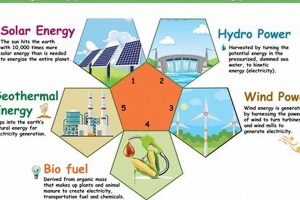
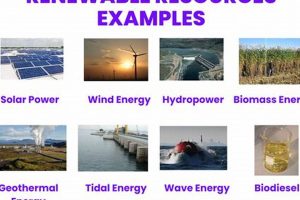
Harnessing power from naturally replenishing sources offers a sustainable alternative to traditional fossil fuels. These sources are characterized by their ability to regenerate within a human timescale, mitigating depletion concerns. Examples include sunlight, wind, geothermal heat, and biomass, each offering unique mechanisms for electricity generation and heating.
The adoption of these energy alternatives presents numerous advantages. Diminished reliance on finite resources enhances energy security. Reduced greenhouse gas emissions mitigate climate change impacts and improve air quality. Investment in these sectors stimulates economic growth, creating jobs in manufacturing, installation, and maintenance. Historically, technological advancements and growing environmental awareness have driven the increased utilization of these methods.
Further discussion will explore the practical applications, technological advancements, and economic viability of specific approaches to capturing power from the environment. These include sources from the sun, wind, flowing water, the Earth’s internal heat, and organic matter.
Tips for Understanding Sustainable Energy Options
Gaining a solid understanding of the diverse options available is crucial for making informed decisions about energy consumption and investment. Below are actionable tips to enhance comprehension of this vital field.
Tip 1: Familiarize Yourself with Solar Photovoltaics: Investigate the principles of converting sunlight directly into electricity. Understand the differences between monocrystalline and polycrystalline panels, considering efficiency, cost, and suitability for various applications.
Tip 2: Analyze Wind Turbine Technology: Explore the mechanics of wind energy capture and conversion. Differentiate between horizontal and vertical axis turbines, noting their respective advantages and limitations in diverse wind conditions.
Tip 3: Investigate Hydropower Generation Methods: Examine the varying scales of hydroelectric power, from large dams to small-scale run-of-river systems. Assess the environmental impacts and benefits associated with each type.
Tip 4: Study Geothermal Energy Extraction: Learn about the different types of geothermal resources, including hydrothermal, enhanced geothermal systems, and ground-source heat pumps. Evaluate their potential for heating, cooling, and electricity generation.
Tip 5: Research Biomass Conversion Techniques: Investigate the various methods for converting organic matter into energy, such as direct combustion, gasification, and anaerobic digestion. Consider the sustainability aspects of different biomass feedstocks.
Tip 6: Understand Energy Storage Solutions: Delve into the crucial role of energy storage in integrating variable sources like solar and wind into the grid. Explore technologies such as batteries, pumped hydro, and compressed air energy storage.
By following these tips, individuals and organizations can develop a robust knowledge base, enabling them to navigate the complexities of the energy landscape and make informed choices that support a more sustainable future.
The subsequent section will delve into the economic and environmental considerations associated with these alternative energy sources.
1. Solar Irradiance Analysis

Solar irradiance analysis is a fundamental process in assessing the feasibility and optimizing the performance of solar energy projects, a key component of diverse energy alternatives. By quantifying the amount of solar radiation available at a specific location, accurate predictions of energy generation can be made, informing critical decisions related to system design, investment, and grid integration.
- Site Suitability Determination
Detailed solar irradiance analysis allows for precise evaluation of location-specific solar resources. This analysis considers factors such as latitude, longitude, cloud cover patterns, and shading from surrounding objects. Accurate determination of solar potential is critical for making informed decisions on siting large-scale photovoltaic plants or smaller, distributed generation installations.
- Photovoltaic System Design Optimization
Solar irradiance data is used to model photovoltaic system performance under varying weather conditions. This data enables optimization of panel tilt angles and orientations to maximize energy capture throughout the year. Furthermore, it helps in selecting appropriate panel technologies and inverter sizes to achieve optimal efficiency and energy yield. The analysis supports precise energy production forecasting.
- Energy Production Forecasting and Grid Integration
Accurate forecasting of energy output from solar installations is essential for managing grid stability and reliability. Solar irradiance data is integrated into weather forecasting models to predict short-term and long-term energy generation. These forecasts enable grid operators to schedule resources efficiently, manage fluctuations in supply, and ensure the seamless integration of solar energy into the electricity grid.
- Performance Monitoring and System Maintenance
Continuous monitoring of solar irradiance levels provides a baseline for evaluating the actual performance of installed systems. Deviations from expected energy output can be identified, enabling timely detection of potential problems such as panel degradation, shading issues, or inverter malfunctions. This proactive approach allows for efficient maintenance and ensures sustained optimal operation of the solar facility.
In summary, solar irradiance analysis is an indispensable tool in the deployment and management of solar energy resources. Its accuracy directly influences the economic viability and reliability of solar energy projects, highlighting its critical role in advancing sustainable energy solutions within a broader energy portfolio.
2. Wind Potential Assessment

Wind potential assessment is a critical component in the effective utilization of wind energy. The process involves evaluating wind speed, direction, frequency, and turbulence at a specific location to determine its suitability for wind turbine deployment. Accurate wind resource assessment is essential for optimizing turbine placement, predicting energy output, and ensuring the economic viability of wind energy projects. Poorly assessed wind resources can lead to underperforming turbines, reduced energy generation, and ultimately, project failure. For instance, a wind farm built in an area with overestimated wind speeds will not meet projected output targets, impacting return on investment.
The assessment employs a variety of tools and techniques, including meteorological towers equipped with anemometers and wind vanes, remote sensing technologies like LiDAR (Light Detection and Ranging) and SODAR (Sonic Detection and Ranging), and computational fluid dynamics (CFD) modeling. Data collected over a period of at least one year, often longer, provides a representative picture of the annual wind resource. This information informs decisions on turbine selection, spacing, and hub height. Furthermore, the assessment identifies potential challenges such as terrain obstructions, wake effects from existing turbines, and environmental considerations like bird migration patterns. Proper wind potential assessment not only maximizes energy production but also minimizes environmental impact.
In conclusion, comprehensive wind potential assessment is indispensable for harnessing wind power effectively. It informs crucial decisions related to project planning, turbine selection, and resource management. Failing to conduct a thorough assessment risks underperformance, economic losses, and environmental harm. By integrating advanced technologies and best practices, wind potential assessment contributes significantly to the reliable and sustainable integration of wind energy into the global energy supply, a key objective in transitioning to clean energy.
3. Hydroelectric capacity estimation

Accurate hydroelectric capacity estimation is integral to the effective development and management of hydropower as a renewable energy source. This estimation process involves determining the potential energy that can be generated from a hydroelectric facility, considering factors such as river flow, head (the height difference between the water surface and the turbine), and turbine efficiency. Underestimating capacity can lead to insufficient energy output, impacting grid stability and project economics. Conversely, overestimation can result in wasted resources and infrastructure investments that do not yield expected returns. For example, the Three Gorges Dam in China required precise capacity estimation to manage its massive energy output and ensure reliable electricity supply to millions.
Hydroelectric capacity estimation relies on hydrological data, engineering calculations, and environmental impact assessments. Hydrological data, including historical and projected river flow rates, is essential for determining the available water volume. Engineering calculations account for turbine design, head losses, and generator efficiency to convert water flow into electrical energy. Environmental impact assessments are critical to understanding the potential effects of hydropower projects on river ecosystems and downstream water availability. For instance, the Grand Coulee Dam on the Columbia River in the United States altered the river’s ecosystem, highlighting the need for comprehensive assessments prior to project implementation. Effective capacity estimation minimizes negative impacts while maximizing energy output.
In summary, precise hydroelectric capacity estimation is vital for ensuring the efficient and sustainable utilization of water resources for electricity generation. Accurate estimation supports informed investment decisions, reliable grid integration, and reduced environmental impacts. By integrating advanced hydrological modeling, engineering expertise, and environmental considerations, hydroelectric capacity estimation contributes significantly to the broader integration of renewable energy into global power systems, mitigating climate change and enhancing energy security.
4. Geothermal gradient mapping

Geothermal gradient mapping is an essential component in the assessment and utilization of geothermal energy, a key alternative to fossil fuels. This mapping process provides critical data for identifying areas where subsurface temperatures are high enough to economically generate electricity or provide direct heating.
- Resource Identification and Exploration
Geothermal gradient mapping allows for the identification of subsurface thermal anomalies indicating potential geothermal resources. This process involves measuring temperatures at various depths to create a detailed temperature profile of the Earth’s crust. Regions with high geothermal gradients are prioritized for further exploration, reducing the risks associated with drilling exploratory wells. An example is the mapping of the Geysers geothermal field in California, which revealed a significant subsurface heat reservoir that now supports one of the world’s largest geothermal power plants.
- Optimization of Well Placement and Depth
Geothermal gradient maps inform the strategic placement and depth of production wells. By understanding the distribution of heat, engineers can optimize well locations to maximize energy extraction. Proper well placement is crucial for achieving efficient and sustainable resource utilization. In Iceland, detailed geothermal gradient mapping guides the development of geothermal heating systems and power plants, ensuring efficient extraction of geothermal energy with minimal environmental impact.
- Assessment of Geothermal Potential for Different Applications
Geothermal gradient mapping helps assess the suitability of geothermal resources for various applications, including electricity generation, direct-use heating, and ground-source heat pumps. High-temperature gradients are suitable for power plants, while lower-temperature gradients are more appropriate for heating applications. Geothermal gradient maps in New Zealand guide decisions on whether to develop a high-temperature resource for electricity production or a lower-temperature resource for heating greenhouses and aquaculture facilities.
- Environmental Impact Assessment and Mitigation
Detailed geothermal gradient mapping contributes to environmental impact assessments by identifying potential subsurface geological features and fault lines. This information helps to mitigate risks associated with induced seismicity and groundwater contamination. For example, comprehensive mapping of geothermal gradients in the East African Rift Valley informs the sustainable development of geothermal resources, minimizing the environmental footprint of geothermal projects and promoting responsible resource management.
In summary, geothermal gradient mapping plays a vital role in the effective utilization of geothermal energy by enabling accurate resource assessment, optimized project planning, and sustainable development practices. The insights gained from these maps facilitate the efficient extraction of geothermal energy, supporting the broader integration of diverse alternative energy sources into the global energy mix and fostering a sustainable energy future.
5. Biomass feedstock availability
Biomass feedstock availability is a critical determinant in the viability and sustainability of bioenergy production within the framework of environmentally conscious power generation. Its presence directly influences the scale, economic feasibility, and environmental impact of bioenergy projects, and consequently, the contribution of biomass to the renewable energy mix.
- Sustainable Sourcing and Land Use
The sustainable sourcing of biomass feedstocks necessitates careful consideration of land use practices to prevent deforestation, soil degradation, and competition with food production. Dedicated energy crops, agricultural residues, and forestry byproducts represent potential feedstock sources. Life cycle assessments must evaluate the full environmental footprint, from cultivation to energy conversion, to ensure net carbon emission reductions. An example is the utilization of corn stover for ethanol production, which demands rigorous analysis to mitigate soil erosion and maintain soil health. Proper land management is essential.
- Feedstock Composition and Conversion Efficiency
The chemical composition of biomass feedstocks significantly affects the efficiency of energy conversion processes, such as combustion, gasification, and anaerobic digestion. Lignocellulosic biomass, composed of cellulose, hemicellulose, and lignin, requires pretreatment to enhance enzyme accessibility for efficient bioconversion. The energy density and moisture content of feedstocks influence the energy output and operational parameters of bioenergy facilities. Miscanthus, for instance, demonstrates high biomass yield and low ash content, making it a desirable feedstock for combustion and biofuel production.
- Transportation and Logistics
The transportation and logistics of biomass feedstocks from harvest or collection sites to conversion facilities represent a significant cost and logistical challenge. The dispersed nature of biomass resources necessitates efficient supply chain management, including harvesting, storage, transportation, and preprocessing. Densification technologies, such as pelletization and briquetting, can improve feedstock handling and reduce transportation costs. A well-organized supply chain is essential to minimize transportation distances and costs.
- Economic Viability and Market Dynamics
The economic viability of bioenergy projects is strongly influenced by the cost and availability of biomass feedstocks. Market fluctuations, government subsidies, and competition with other industries for resources can affect feedstock prices. Integrating biomass production with existing agricultural or forestry operations can enhance economic sustainability and resource utilization. Analyzing the economic dynamics of feedstock supply is key to determining the competitiveness of biomass relative to other renewable energy sources.
The complex interplay between biomass feedstock availability and various dimensions underscores the need for integrated approaches to ensure the sustainable and economically viable utilization of this renewable resource. Strategic sourcing, efficient conversion technologies, and comprehensive life cycle assessments are essential to maximizing biomass contribution to a sustainable energy future.
6. Grid integration challenges

Effective integration of alternative energy sources into existing electrical grids poses significant technical and economic challenges. These challenges stem from the intermittent nature of some resources and the geographical distribution of others, necessitating upgrades to transmission infrastructure and advanced grid management strategies. Addressing these hurdles is crucial to fully realizing the potential of renewable energy as a reliable power source.
- Variability and Intermittency Management
The inherent variability of solar and wind resources introduces instability into the grid. Solar power output fluctuates with cloud cover and daylight hours, while wind power varies with wind speed and atmospheric conditions. Grid operators must implement forecasting tools and flexible generation resources to balance these fluctuations. For example, California’s Independent System Operator (CAISO) uses advanced weather forecasting and dispatchable natural gas plants to manage the variability of its extensive solar and wind power generation.
- Transmission Infrastructure Upgrades
Many sites with high renewable energy potential, such as wind farms in remote areas or solar farms in deserts, are located far from major load centers. Connecting these resources to the grid requires significant investment in new transmission lines and upgrades to existing infrastructure. Germany’s “Energiewende” has faced challenges in expanding transmission capacity from the wind-rich north to the industrial south, leading to curtailment of renewable energy generation and increased costs.
- Grid Stability and Inertia
Conventional power plants provide inertia, which helps maintain grid stability by resisting sudden changes in frequency. Alternative energy sources, particularly solar and wind, typically lack this inertia. Integrating large amounts of these resources can reduce grid stability and increase the risk of frequency fluctuations and blackouts. Technologies such as synchronous condensers and grid-forming inverters can provide inertia to stabilize the grid. Countries like Denmark, with high penetration of wind power, have invested in these technologies to maintain grid stability.
- Energy Storage Solutions
Energy storage technologies, such as batteries, pumped hydro storage, and compressed air energy storage, play a crucial role in mitigating the intermittency of alternative energy sources and improving grid reliability. Energy storage allows excess renewable energy to be stored during periods of high generation and released during periods of low generation. California has mandated energy storage procurement targets to support the integration of its growing renewable energy portfolio, enhancing grid stability and reducing reliance on fossil fuel peaking plants.
Successfully overcoming these grid integration challenges is essential for maximizing the contribution of diverse energy options to a sustainable and resilient energy system. Addressing variability, upgrading infrastructure, enhancing stability, and deploying storage solutions are critical steps in ensuring that alternative energy sources can reliably power the future.
Frequently Asked Questions Regarding Sustainable Energy
The following questions address common inquiries and misconceptions concerning various methods of power generation that naturally replenish, providing a sustainable alternative to traditional fossil fuels.
Question 1: What constitutes a credible definition?
These sources are characterized by their ability to be naturally replenished within a human timescale, generally regarded as less than a century. This distinguishes them from finite resources such as fossil fuels, which require millions of years to form.
Question 2: What is the relative efficiency compared to traditional power sources?
Efficiency varies significantly depending on the specific technology and geographic location. While certain approaches, such as hydroelectric power, can achieve high efficiencies, others, like solar power, depend heavily on environmental conditions and technological advancements to optimize energy conversion.
Question 3: What are the primary environmental concerns associated with their deployment?
While generally considered environmentally benign, each source presents unique challenges. Solar installations can require significant land use, wind turbines may pose risks to avian populations, and hydroelectric dams can disrupt aquatic ecosystems. Careful planning and environmental impact assessments are crucial to mitigate these concerns.
Question 4: What is the role of governmental policies and incentives?
Governmental policies and incentives, such as tax credits, subsidies, and renewable portfolio standards, play a crucial role in promoting their adoption. These measures help level the playing field by addressing the initial cost disadvantages and encouraging investment in technological development and infrastructure.
Question 5: What are the current technological limitations hindering widespread adoption?
Technological limitations include energy storage capacity, grid integration challenges, and intermittency issues associated with solar and wind power. Ongoing research and development efforts are focused on improving energy storage technologies, enhancing grid infrastructure, and developing more predictable and reliable energy generation methods.
Question 6: What are the long-term economic implications of transitioning to these sources?
Transitioning to such power sources presents both challenges and opportunities. While the initial investment costs can be substantial, the long-term economic benefits include reduced reliance on volatile fossil fuel markets, creation of green jobs, and mitigation of climate change-related risks. A comprehensive economic analysis must consider both direct and indirect costs and benefits.
It is imperative to consider the multifaceted nature of different energy options, encompassing technological, environmental, economic, and policy dimensions. A nuanced understanding facilitates informed decision-making and promotes responsible energy planning.
The next section will summarize the key findings of this article, highlighting actionable strategies for promoting sustainable energy adoption and investment.
6 renewable energy resources
This exploration has detailed the diverse landscape of six naturally replenishing energy options, emphasizing the critical considerations for their effective implementation. From the intricacies of solar irradiance analysis to the challenges of grid integration, each facet demands careful assessment to maximize energy output and minimize environmental impact. Thorough understanding of wind potential, hydroelectric capacity, geothermal gradients, and biomass feedstock availability is paramount for informed investment and sustainable resource management.
The global imperative to mitigate climate change and ensure energy security necessitates a decisive shift towards these sustainable alternatives. Continued research, technological advancement, and strategic policy implementation are essential to overcome existing limitations and unlock the full potential of these resources. The future energy landscape depends on a committed, informed approach to harnessing the power of 6 renewable energy resources.