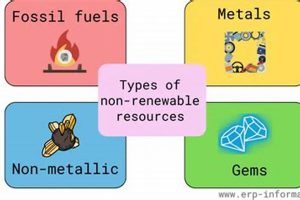
Fossil fuels represent a significant category within finite energy sources. These fuels, formed from the remains of ancient organisms over millions of years, include coal, petroleum (oil), and natural gas. Their extraction and combustion release stored energy, powering a substantial portion of the world’s industries, transportation, and electricity generation. A common illustration is the utilization of coal in power plants to produce steam, which drives turbines connected to generators, ultimately yielding electrical power.
The widespread use of these resources has underpinned industrial development and improved living standards globally. Their relatively high energy density and established infrastructure have made them economically attractive for many nations. Historically, they fueled the industrial revolution and enabled significant technological advancements. However, their finite nature and the environmental consequences associated with their extraction and combustion are prompting a shift towards more sustainable energy alternatives.
The following sections will delve into the specific characteristics of prominent finite energy resources, their environmental impacts, and the ongoing efforts to transition towards renewable energy sources. This shift necessitates exploring alternative energy technologies, improving energy efficiency, and implementing policies that promote sustainable energy practices.
Guidance Regarding Finite Energy Resource Management
Effective management and responsible utilization of finite energy sources are crucial to mitigate their environmental impact and ensure long-term energy security. The following guidance offers insights into minimizing the negative consequences associated with reliance on these resources.
Tip 1: Prioritize Energy Efficiency: Implement measures to reduce energy consumption across all sectors, including industry, transportation, and residential buildings. For example, utilizing energy-efficient appliances, improving building insulation, and optimizing industrial processes can significantly decrease the demand for finite energy resources.
Tip 2: Diversify Energy Sources: Reduce dependence on a single finite energy resource by exploring and integrating a variety of energy sources, including renewable options like solar, wind, and hydro power. Diversification enhances energy security and mitigates risks associated with supply disruptions or price fluctuations.
Tip 3: Invest in Carbon Capture and Storage (CCS) Technologies: Support the development and deployment of CCS technologies to capture carbon dioxide emissions from power plants and industrial facilities. This technology can prevent significant amounts of greenhouse gases from entering the atmosphere.
Tip 4: Promote Responsible Resource Extraction: Implement stringent environmental regulations and best practices to minimize the environmental impact of finite energy resource extraction. This includes minimizing habitat destruction, preventing water pollution, and reducing methane leakage from natural gas operations.
Tip 5: Implement Carbon Pricing Mechanisms: Consider implementing carbon taxes or cap-and-trade systems to internalize the environmental costs of finite energy resource consumption. These mechanisms incentivize businesses and individuals to reduce their carbon footprint.
Tip 6: Support Research and Development of Alternative Energy Technologies: Invest in research and development of advanced renewable energy technologies, energy storage solutions, and alternative fuels. This investment will pave the way for a more sustainable energy future.
Tip 7: Foster Public Awareness and Education: Educate the public about the importance of energy conservation, the environmental impacts of finite energy resource consumption, and the benefits of renewable energy. Informed citizens are more likely to support sustainable energy policies and practices.
Implementing these strategies will contribute to a more sustainable energy future by reducing reliance on finite energy resources, mitigating environmental impacts, and promoting the transition to cleaner energy alternatives. Adopting a proactive approach to energy management is crucial for safeguarding the environment and ensuring long-term energy security.
These guidelines provide a foundation for navigating the complexities of finite energy resource management. Subsequent discussions will focus on specific policy recommendations and technological advancements that can further accelerate the transition to a sustainable energy economy.
1. Fossil Fuel Dominance

The term “fossil fuel dominance” directly correlates with the definition of finite energy resources. It signifies the overarching influence of coal, oil, and natural gas in meeting global energy demands. This dominance arises from historical factors, technological advancements, and economic considerations that have favored the extraction and utilization of these finite resources. A direct consequence of this dominance is the continued reliance on combustion processes to generate electricity, power transportation, and fuel industrial activities. The sheer scale of infrastructure dedicated to fossil fuel extraction, processing, and distribution underscores this dependency. For instance, the global network of oil refineries, pipelines, and coal-fired power plants represents a multi-trillion-dollar investment, indicative of the established infrastructure that perpetuates fossil fuel use.
The sustained use of fossil fuels has profound implications for the environment and energy security. The emission of greenhouse gases, notably carbon dioxide, from combustion processes is a primary driver of climate change. This, in turn, necessitates exploring alternative energy sources and implementing mitigation strategies to reduce carbon emissions. Furthermore, the concentration of fossil fuel reserves in specific geographical regions creates geopolitical dependencies and potential vulnerabilities in the global energy supply chain. The fluctuating price of crude oil, often influenced by political instability or supply disruptions in oil-producing nations, exemplifies the risks associated with reliance on geographically concentrated resources.
In summary, “fossil fuel dominance” is an intrinsic characteristic of finite energy resource utilization. It is both a consequence of historical energy choices and a driver of current environmental and geopolitical challenges. Understanding this dominance is critical for developing strategies to transition towards a more sustainable and diversified energy future. Mitigation efforts, policies promoting renewable energy sources, and innovations in energy storage technologies are essential steps in reducing reliance on fossil fuels and addressing the associated risks.
2. Combustion Emissions

Combustion emissions are an unavoidable consequence of utilizing many finite energy resources. The process of burning these resources to generate power releases a variety of pollutants into the atmosphere, impacting air quality, climate, and public health. Understanding the composition and effects of these emissions is crucial for developing strategies to mitigate their impact.
- Greenhouse Gas Release
The burning of finite energy resources, particularly coal, oil, and natural gas, releases significant quantities of greenhouse gases, primarily carbon dioxide (CO2). These gases trap heat in the atmosphere, contributing to global warming and climate change. For example, coal-fired power plants are a major source of CO2 emissions globally, accelerating the rate of climate change and necessitating international efforts to reduce reliance on these resources.
- Air Pollutant Generation
In addition to greenhouse gases, combustion processes also produce various air pollutants, including particulate matter (PM), sulfur dioxide (SO2), and nitrogen oxides (NOx). These pollutants can cause respiratory problems, cardiovascular disease, and other health issues. Industrial facilities that burn coal or oil often release high concentrations of these pollutants, leading to air quality alerts and increased health risks in surrounding communities.
- Acid Rain Formation
Sulfur dioxide and nitrogen oxides released during combustion can react with water vapor in the atmosphere to form acid rain. Acid rain can damage ecosystems, acidify lakes and streams, and corrode buildings and infrastructure. The industrial regions that rely heavily on coal-fired power plants often experience significant acid rain deposition, impacting both the environment and the economy.
- Environmental Degradation
Combustion emissions contribute to a range of environmental problems beyond climate change and air pollution. The deposition of pollutants can contaminate soil and water resources, impacting plant and animal life. Furthermore, the extraction and transportation of finite energy resources can disrupt ecosystems and contribute to habitat loss. Oil spills from tankers or pipelines, for example, can devastate marine ecosystems and require extensive cleanup efforts.
The multifaceted nature of combustion emissions underscores the urgent need to transition towards cleaner energy alternatives. While the utilization of finite energy resources remains prevalent, strategies to mitigate emissions through improved combustion technologies, carbon capture and storage, and the adoption of renewable energy sources are crucial for minimizing the environmental and health impacts associated with their use. The development and deployment of sustainable energy solutions represent a vital step in addressing the challenges posed by combustion emissions.
3. Resource Depletion

The inherent characteristic of finite energy resources is their susceptibility to depletion. Unlike renewable sources that replenish naturally, finite resources, such as fossil fuels and uranium, exist in fixed quantities within the Earth’s crust. Extraction and consumption of these resources invariably lead to a reduction in their availability over time. This depletion poses significant challenges to long-term energy security and necessitates a transition towards sustainable alternatives. For example, the continuous extraction of crude oil from major oil fields worldwide is steadily diminishing proven reserves, leading to increased exploration costs and geopolitical tensions over access to remaining resources. Similarly, the mining of uranium for nuclear power generation is depleting high-grade ore deposits, requiring the development of more advanced extraction techniques or the utilization of lower-grade ores, which often entails higher environmental costs.
The consequences of depleting finite energy resources extend beyond mere scarcity. As reserves diminish, extraction becomes increasingly difficult and expensive, leading to higher energy prices and potential economic instability. This phenomenon is particularly evident in the case of unconventional oil and gas resources, such as shale oil and gas, which require complex and environmentally intensive extraction methods to access. Furthermore, the depletion of finite resources can exacerbate environmental problems. For instance, the extraction of coal through mountaintop removal mining can cause irreversible damage to ecosystems and water resources. Similarly, the deep-sea mining of minerals for nuclear fuel production can disrupt fragile marine environments and threaten biodiversity. These environmental and economic consequences underscore the importance of responsible resource management and the development of alternative energy technologies.
In summary, the concept of “resource depletion” is intrinsically linked to the understanding of finite energy resources. The continued reliance on these sources inevitably leads to their exhaustion, with significant economic, environmental, and social consequences. Recognizing the finite nature of these resources necessitates a strategic shift towards renewable energy technologies, improved energy efficiency, and sustainable resource management practices. This transition is essential to ensure long-term energy security and mitigate the adverse impacts associated with the depletion of finite energy resources.
4. Geopolitical Influence

The distribution of finite energy resources significantly shapes global political dynamics. Regions possessing substantial reserves of coal, oil, or natural gas often wield considerable influence in international affairs. This influence stems from the economic leverage afforded by energy exports and the strategic importance of securing energy supplies. For example, nations with vast oil reserves, such as those in the Middle East, have historically played a pivotal role in global economics and politics, impacting international relations and trade agreements. Control over these vital resources allows these countries to exert pressure on other nations dependent on their energy supplies. The Organization of the Petroleum Exporting Countries (OPEC) serves as a prime example of a group leveraging collective control over a finite resource to influence global prices and production levels. This inherent power dynamic underscores the strategic importance of these resources in shaping international relations.
Furthermore, access to finite energy resources can be a source of conflict and instability. Competition for control over reserves, particularly in regions with weak governance or existing territorial disputes, can escalate into armed conflicts. The historical instances of intervention in oil-rich regions to secure access to resources illustrate this point. Such interventions often destabilize local populations and exacerbate existing political tensions, creating long-term security challenges. Conversely, nations heavily reliant on imported finite energy resources may be vulnerable to supply disruptions or political pressure from exporting countries. This vulnerability necessitates diversifying energy sources and fostering strategic alliances to ensure energy security. For example, countries lacking substantial domestic reserves may invest in renewable energy technologies or pursue diplomatic initiatives to secure stable access to imported fossil fuels.
In conclusion, the nexus between finite energy resources and geopolitical influence is undeniable. The control, distribution, and access to these resources significantly impact international relations, trade agreements, and security dynamics. As finite reserves continue to deplete, the geopolitical implications are likely to intensify, underscoring the urgency of transitioning to more sustainable and equitable energy systems. Understanding this complex interplay is crucial for policymakers and stakeholders seeking to promote global stability and ensure long-term energy security in an increasingly interconnected world.
5. Infrastructure Dependency
Finite energy resource utilization is inextricably linked to substantial infrastructure investments. The extraction, processing, transportation, and distribution of these resources require complex and extensive systems. This dependency creates a significant barrier to transitioning toward renewable energy sources, as dismantling or repurposing this existing infrastructure presents considerable economic and logistical challenges. For instance, the global oil and gas industry relies on a vast network of pipelines, refineries, and storage facilities, representing trillions of dollars in sunk costs. Similarly, the coal industry depends on extensive rail networks, port facilities, and power plants designed specifically for coal combustion. These established systems create a momentum that favors the continued use of finite energy resources, even in the face of growing environmental concerns and the increasing competitiveness of renewable energy alternatives. The inertia of these existing infrastructures significantly impedes the pace of the energy transition.
The importance of this infrastructure dependency lies in its influence on energy policy and investment decisions. Policymakers often face pressure to maintain existing infrastructure and protect jobs associated with the finite energy resource sector. This can lead to subsidies or regulations that favor these resources over renewable alternatives, hindering the development of a more sustainable energy system. Furthermore, the long lifespan of energy infrastructure creates a lock-in effect, making it difficult to adapt to changing energy needs or technological advancements. For example, a coal-fired power plant, once built, is likely to operate for several decades, committing the region to continued coal consumption and emissions. The practical significance of understanding this dependency is that it highlights the need for proactive planning and investment in renewable energy infrastructure to gradually replace existing systems and avoid stranded assets. This includes developing new transmission lines, energy storage facilities, and distribution networks tailored to renewable energy sources.
In summary, the reliance on extensive infrastructure is a defining characteristic of finite energy resource utilization. This dependency creates significant barriers to transitioning towards a more sustainable energy future, influencing policy decisions, investment strategies, and the pace of technological innovation. Addressing this challenge requires a comprehensive approach that includes strategic investments in renewable energy infrastructure, policies that incentivize the decommissioning of obsolete finite energy resource infrastructure, and a clear roadmap for transitioning the workforce to new energy sectors. Recognizing the profound implications of infrastructure dependency is crucial for effectively navigating the energy transition and achieving long-term energy security.
Frequently Asked Questions
This section addresses common inquiries regarding finite energy resource examples, aiming to provide clarity and foster a comprehensive understanding of this critical energy sector.
Question 1: What precisely defines an energy resource as “finite”?
A finite energy resource is defined by its non-renewable nature. The quantity available is fixed and exhaustible, as formation processes require geological timescales far exceeding human lifespans. Once depleted, these resources cannot be replenished within a relevant timeframe.
Question 2: What are the most prevalent examples of finite energy resources currently in use?
The primary examples include fossil fuels (coal, petroleum, and natural gas) and nuclear fuels (primarily uranium). These resources constitute a substantial portion of global energy production despite increasing investment in renewable alternatives.
Question 3: What are the primary environmental ramifications associated with the utilization of finite energy resource examples?
Environmental consequences encompass greenhouse gas emissions contributing to climate change, air and water pollution from extraction and combustion, habitat destruction related to resource extraction activities, and potential risks associated with nuclear waste disposal.
Question 4: Are there strategies to mitigate the environmental impact of finite energy resource examples?
Mitigation strategies include improving energy efficiency, implementing carbon capture and storage technologies, promoting responsible resource extraction practices, and transitioning to alternative energy sources. These efforts aim to minimize negative consequences while finite resources remain in use.
Question 5: What is the projected timeline for the depletion of key finite energy resource examples?
Depletion timelines vary depending on consumption rates and technological advancements. While precise predictions are challenging, current estimates suggest that conventional oil and gas reserves could be substantially depleted within several decades, whereas coal reserves may last longer. Projections are subject to change based on economic, technological, and political factors.
Question 6: What roles can policy and technological innovation play in transitioning away from finite energy resource examples?
Policy interventions, such as carbon pricing mechanisms and renewable energy mandates, can incentivize a shift towards sustainable alternatives. Technological innovations, including advanced energy storage solutions and improved renewable energy technologies, are crucial for enabling a smooth transition and ensuring a reliable energy supply.
In summary, the FAQs clarify crucial aspects related to finite energy resource examples. Comprehending their limited nature, environmental impact, and potential mitigation strategies is vital for effective energy planning.
The subsequent sections will elaborate on specific finite energy resources, examining their characteristics, extraction methods, and contribution to the overall energy landscape.
Conclusion
The preceding analysis has elucidated various facets related to examples of finite energy resources. Their dominance in current energy systems, coupled with inherent issues of depletion, environmental impact, and geopolitical influence, underscores the urgency of transitioning to sustainable alternatives. The reliance on these resources is further complicated by infrastructure dependency, creating a significant impediment to rapid transformation. Understanding these challenges is crucial for formulating effective energy policies.
Continued reliance on examples of finite energy resources presents considerable long-term risks. A strategic commitment to research, development, and deployment of renewable energy technologies, coupled with responsible management of existing resources, is essential for ensuring energy security and mitigating the environmental consequences of current energy practices. The future hinges on proactive and informed decision-making to navigate this critical transition effectively.
![Guide to What Energy Resources Are Renewable [+Future] | Renewable Energy Solutions for a Sustainable Future | Clean & Green Power](https://pplrenewableenergy.com/wp-content/uploads/2026/03/th-516-300x200.jpg "Guide to What Energy Resources Are Renewable [+Future] Renewable Energy Solutions for a Sustainable Future | Clean & Green Power")