Fossil fuels, nuclear power, and other finite energy sources present a complex duality in the modern world. These resources, formed over geological timescales, have propelled industrial growth and societal advancement. However, their extraction, processing, and utilization carry significant environmental and societal consequences.
The historical prevalence of these resources stems from their high energy density and relative ease of extraction in the past. They facilitated rapid economic expansion, powering transportation, manufacturing, and electricity generation on a global scale. This reliance, however, has led to depletion of finite reserves and increasing concerns regarding pollution and climate change.
The following sections will explore the benefits derived from utilizing these established energy sources alongside a critical assessment of the associated environmental and economic drawbacks. A balanced understanding of both the positive and negative aspects is crucial for informed decision-making regarding energy policy and future energy solutions.
Considerations for Evaluating Finite Energy Options
Evaluating the role of finite energy options necessitates a comprehensive understanding of their multifaceted impacts. The following guidelines offer a framework for assessing their viability in diverse contexts.
Tip 1: Assess Energy Density and Availability: Quantify the energy output per unit mass or volume, and determine the geographic distribution and accessible reserves of the resource. This informs the potential scale of deployment and long-term supply security.
Tip 2: Analyze Economic Viability: Evaluate the costs associated with extraction, processing, transportation, and power generation. Consider market fluctuations, infrastructure requirements, and potential economic benefits, such as job creation.
Tip 3: Quantify Environmental Impact: Measure greenhouse gas emissions, air and water pollution, and habitat destruction resulting from the resource’s lifecycle. Implement mitigation strategies, such as carbon capture, to minimize ecological damage.
Tip 4: Evaluate Technological Advancements: Monitor developments in extraction techniques, power generation efficiency, and waste management to optimize resource utilization and reduce environmental footprint.
Tip 5: Examine Regulatory Frameworks: Analyze existing laws, regulations, and incentives that govern the resource’s development and use. Ensure compliance and promote sustainable practices through effective policy enforcement.
Tip 6: Evaluate Geopolitical Implications: Consider how the resource’s distribution impacts international relations, energy security, and potential for conflict. Diversification of energy sources can mitigate these risks.
Tip 7: Consider Long-Term Sustainability: Recognize the finite nature of these resources and prioritize investments in renewable alternatives to ensure a transition to a sustainable energy future.
Adopting these considerations facilitates a more informed and responsible approach to managing finite energy options. A comprehensive evaluation will guide policy decisions and investments, contributing to a more sustainable and secure energy future.
The subsequent sections will provide a conclusion to the exploration of finite energy resources.
1. High Energy Density

The elevated energy density inherent in fossil fuels and nuclear materials constitutes a primary driver behind their historical and ongoing prevalence in global energy production. This characteristic refers to the substantial amount of energy contained within a relatively small mass or volume of the resource. Consequently, non-renewable sources require less storage space and lower transportation costs compared to many renewable alternatives. This high energy concentration fueled the rapid industrialization of nations, allowing for the efficient operation of power plants, transportation networks, and manufacturing facilities.
However, the advantage of high energy density also contributes to significant disadvantages. The combustion of dense fossil fuels releases concentrated pollutants, including greenhouse gases, contributing to climate change and air quality degradation. Similarly, the energy released from nuclear fission, while immense, generates radioactive waste necessitating long-term storage solutions. The efficiency and power offered by high energy density have thus enabled widespread dependence on these fuels, delaying the necessary transition to sustainable alternatives. For example, the global reliance on petroleum for transportation is directly linked to its high energy density; yet, the environmental consequences of its extraction and combustion necessitate innovative solutions such as electric vehicles and alternative fuels.
In summary, the high energy density of non-renewable resources presents a double-edged sword. While it enabled rapid technological advancement and continues to support critical sectors, it simultaneously exacerbates environmental challenges and impedes the adoption of sustainable energy practices. Acknowledging this duality is crucial for formulating balanced energy policies that leverage existing infrastructure while prioritizing the development and deployment of cleaner, renewable energy technologies.
2. Established Infrastructure

The widespread presence of pre-existing infrastructure designed for non-renewable energy sources represents a significant factor influencing energy systems globally. This infrastructure encompasses extraction facilities, transportation networks, power plants, and distribution grids, all tailored for the processing and delivery of fossil fuels and nuclear power. Its presence presents both advantages and disadvantages in the context of transitioning to more sustainable energy solutions.
- Capital Investment and Inertia
The massive capital investment already sunk into these infrastructures creates a powerful inertia against change. Retooling or replacing existing power plants, pipelines, and refineries demands significant financial resources and technological adjustments. The sunk costs associated with these assets often incentivize continued reliance on non-renewable energy, even when cleaner alternatives become more economically competitive. Example: The extensive network of natural gas pipelines across North America represents a substantial investment, making a rapid transition away from natural gas challenging despite growing climate concerns.
- Job Creation and Economic Stability
The extraction, processing, and distribution of non-renewable energy resources support a significant number of jobs across various sectors. These industries contribute substantially to regional and national economies, providing employment opportunities and tax revenues. A rapid shift away from these industries can lead to economic disruption and job losses, necessitating careful planning and retraining programs. Example: Coal-mining regions often face significant economic hardship when coal-fired power plants are decommissioned, highlighting the need for diversification and investment in alternative industries.
- Grid Interconnection and Reliability
The existing electricity grid is largely designed to accommodate the output of large, centralized power plants, many of which rely on non-renewable energy sources. Integrating intermittent renewable energy sources, such as solar and wind, requires significant upgrades to the grid, including improved energy storage and transmission capabilities. While modernizing the grid offers long-term benefits, it also presents technical and financial challenges. Example: Germany’s “Energiewende” initiative to transition to renewable energy has faced challenges related to grid stability due to the variability of wind and solar power, requiring substantial investment in grid infrastructure and energy storage solutions.
- Supply Chain and Logistics
Established supply chains and logistical networks streamline the delivery of non-renewable energy resources, ensuring a reliable and consistent supply to consumers. These networks have been refined over decades, optimizing efficiency and minimizing costs. Transitioning to renewable energy sources requires the development of new supply chains and logistical infrastructure, which can be complex and time-consuming. Example: The global oil supply chain, encompassing tankers, pipelines, and refineries, ensures a continuous flow of petroleum products to meet global demand, a level of logistical efficiency that nascent renewable energy supply chains are still striving to achieve.
The presence of established infrastructure represents a complex factor in the transition away from non-renewable energy resources. While it offers short-term advantages in terms of cost, reliability, and employment, it also creates inertia and challenges the rapid adoption of sustainable energy alternatives. Overcoming these challenges requires strategic investments in grid modernization, retraining programs, and the development of new supply chains to support a transition to a cleaner energy future. Balancing the need for reliable energy supply with the imperative to reduce environmental impact necessitates a comprehensive and multifaceted approach.
3. Resource Depletion

The finite nature of non-renewable energy resources, intrinsically linked to the term under consideration, constitutes a fundamental disadvantage. Resource depletion refers to the exhaustion of reserves of fossil fuels (coal, oil, natural gas) and nuclear fuels (uranium) due to their extraction and consumption at rates exceeding their natural replenishment. This depletion poses a direct threat to long-term energy security and economic stability. The reliance on finite resources creates a dependency that is inherently unsustainable. The increased scarcity of these resources can drive up prices, leading to economic instability and disproportionately affecting vulnerable populations. For example, the peak oil theory suggests that global oil production will eventually reach a maximum and then decline, leading to increased scarcity and price volatility. This exemplifies the critical disadvantage of resource depletion in the context of energy security.
The consequences of resource depletion extend beyond mere scarcity and economic impact. The pursuit of dwindling resources often leads to environmentally damaging extraction practices, such as deep-sea drilling, fracking, and mountaintop removal mining. These practices can devastate ecosystems, contaminate water supplies, and contribute to habitat loss. The exploitation of unconventional fossil fuel reserves, like tar sands, requires energy-intensive processes that exacerbate greenhouse gas emissions, further undermining the environmental advantages often touted by proponents of certain non-renewable technologies. The environmental cost associated with obtaining the last accessible reserves further diminishes any purported advantage these resources might have.
In conclusion, resource depletion represents a critical disadvantage of non-renewable energy resources. It not only threatens long-term energy security and economic stability but also incentivizes environmentally destructive extraction practices. The finite nature of these resources necessitates a transition towards sustainable alternatives, mitigating the negative consequences of depletion and fostering a more resilient and environmentally responsible energy future. Failing to address the issue of resource depletion ultimately undermines any perceived advantage associated with the continued use of non-renewable energy sources.
4. Environmental Pollution

Environmental pollution is inextricably linked to the disadvantages associated with non-renewable energy resources. The extraction, processing, transportation, and combustion of fossil fuels (coal, oil, and natural gas) and the operation of nuclear power plants generate a range of pollutants that negatively impact air, water, and soil quality. These pollutants contribute to a multitude of environmental and health problems, thereby offsetting any perceived economic or energy security advantages associated with their use. The type and intensity of pollution vary depending on the specific resource and the technologies employed. For example, coal-fired power plants are significant emitters of particulate matter, sulfur dioxide, nitrogen oxides, and mercury, whereas oil refineries release volatile organic compounds and greenhouse gases. Nuclear power plants, while emitting negligible greenhouse gases during operation, pose the risk of radioactive contamination from accidents or improper waste disposal. The broad scope and severity of environmental pollution directly undermine the sustainability and long-term viability of relying on these finite energy resources.
The consequences of this pollution manifest in various forms. Acid rain, formed from sulfur dioxide and nitrogen oxides, damages ecosystems and infrastructure. Smog, a combination of pollutants and sunlight, reduces air quality and causes respiratory problems. Greenhouse gas emissions contribute to climate change, leading to rising sea levels, extreme weather events, and disruptions to agriculture. Water pollution from oil spills or mining runoff contaminates drinking water sources and harms aquatic life. Furthermore, the long-term health effects of exposure to these pollutants, including respiratory diseases, cardiovascular problems, and cancer, impose significant societal costs. The economic gains from utilizing non-renewable energy sources are, therefore, partially offset by the expenses associated with mitigating pollution and treating related health issues. The practical significance of understanding this connection lies in informing policy decisions that prioritize cleaner energy alternatives and stricter environmental regulations.
In conclusion, environmental pollution stands as a crucial disadvantage of non-renewable energy resources. The detrimental impacts on air, water, soil, and human health outweigh potential short-term economic benefits. Addressing this challenge requires a comprehensive approach that includes transitioning to renewable energy sources, implementing stricter pollution control measures, and investing in research and development of cleaner energy technologies. Acknowledging the full environmental costs associated with non-renewable energy is essential for making informed decisions that promote a sustainable and healthy future.
5. Economic Dependence
Economic dependence, a pivotal consideration, profoundly influences the advantages and disadvantages associated with non-renewable energy resources. Reliance on these resources can shape national economies, international relations, and technological innovation, creating both opportunities and vulnerabilities.
- Export Revenue and Resource-Rich Nations
Many nations heavily depend on the extraction and export of non-renewable resources, such as oil, gas, and coal, for a significant portion of their national income. This dependence can lead to economic instability if global prices fluctuate or if reserves are depleted. Example: Countries in the Middle East whose economies are heavily reliant on oil exports are vulnerable to price volatility in global oil markets. The advantage of immediate revenue is counterbalanced by the long-term risk of economic diversification failure.
- Import Dependence and Energy Security
Conversely, nations that lack domestic reserves of non-renewable resources become reliant on imports, creating vulnerabilities related to energy security. Geopolitical instability in exporting regions or disruptions to supply chains can significantly impact energy prices and availability, affecting overall economic stability. Example: European nations heavily reliant on Russian natural gas imports experienced energy security concerns amid geopolitical tensions. This highlights a disadvantage of relying on external sources of non-renewable resources.
- Technological Lock-In and Innovation
Established infrastructure and technological expertise centered around non-renewable energy can create a ‘lock-in’ effect, hindering investment in and adoption of renewable alternatives. This can stifle innovation in cleaner energy technologies and perpetuate reliance on finite resources. Example: Countries with extensive coal-fired power plants may be slow to invest in renewable energy infrastructure due to the existing investment in coal technology. This represents a disadvantage in terms of long-term technological advancement.
- Job Creation and Economic Transition
The non-renewable energy sector provides significant employment opportunities, particularly in extraction, processing, and transportation. However, a transition to renewable energy sources can lead to job losses in these sectors, requiring retraining programs and economic diversification initiatives to mitigate negative impacts. Example: Coal mining regions face job losses as coal-fired power plants are decommissioned, necessitating investment in alternative industries and retraining programs. The initial economic advantage of job creation can be offset by the challenges of economic transition.
In summary, economic dependence on non-renewable energy resources presents a complex set of advantages and disadvantages. While it can provide immediate economic benefits, it also creates vulnerabilities related to price volatility, energy security, technological stagnation, and economic transition. A comprehensive understanding of these factors is essential for formulating sustainable energy policies that promote economic stability and environmental responsibility.
6. Geopolitical Concerns

Geopolitical concerns are intrinsically linked to the advantages and disadvantages of finite energy resources. The uneven distribution of these resources globally creates power dynamics and dependencies that significantly influence international relations, national security strategies, and economic policies. Understanding these geopolitical dimensions is crucial for evaluating the overall impact of relying on non-renewable energy sources.
- Resource Nationalism and Sovereignty
Nations possessing significant reserves of non-renewable resources often assert sovereign control over their exploitation and export. This can lead to resource nationalism, where governments prioritize domestic interests over international cooperation, potentially disrupting global supply chains and creating tensions with importing countries. For example, disputes over oil and gas reserves in the South China Sea illustrate how control over energy resources can fuel territorial disputes and geopolitical rivalries. This exemplifies the geopolitical implications of resource control.
- Energy Security and Strategic Alliances
Countries dependent on imports of non-renewable resources often forge strategic alliances with exporting nations to ensure a stable and secure energy supply. These alliances can lead to complex geopolitical relationships, influencing foreign policy decisions and potentially creating dependencies that limit a nation’s autonomy. The relationship between the United States and Saudi Arabia, rooted in oil security, demonstrates how energy interests can shape long-term geopolitical alliances. This reflects the dependence that non-renewable resources can create.
- Conflict and Resource Scarcity
Competition for scarce non-renewable resources can exacerbate existing tensions and contribute to conflict. Regions with overlapping claims to oil or gas reserves are particularly vulnerable to disputes, potentially escalating into armed conflict. The conflict in the Niger Delta, driven in part by competition for oil resources, exemplifies how resource scarcity can fuel instability and violence. This underscores the destabilizing potential of non-renewable resource dependency.
- Energy Transition and Geopolitical Realignment
The global transition towards renewable energy sources has the potential to reshape geopolitical landscapes. As reliance on fossil fuels diminishes, the power and influence of resource-rich nations may decline, while countries that invest heavily in renewable energy technologies could gain geopolitical prominence. The shift away from fossil fuels necessitates a realignment of international power dynamics and a reassessment of existing alliances. For example, nations like China, investing heavily in renewable energy technologies, are positioned to become leaders in the new energy economy. This indicates the profound shifts that could occur as non-renewable resources become less crucial.
These facets highlight how geopolitical concerns are deeply intertwined with the advantages and disadvantages of non-renewable energy resources. Addressing these concerns requires fostering international cooperation, promoting energy diversification, and mitigating the risks associated with resource dependence. The move to renewable energy sources offers the potential to alleviate some of these geopolitical pressures, but careful management is needed to navigate the transition and ensure a more equitable and stable global energy landscape.
7. Climate Change Impact

The utilization of non-renewable energy resources, primarily fossil fuels, stands as a primary driver of anthropogenic climate change. The combustion of coal, oil, and natural gas releases substantial quantities of greenhouse gases, including carbon dioxide, methane, and nitrous oxide, into the atmosphere. These gases trap heat, leading to a gradual increase in global average temperatures and disrupting established climate patterns. The extent of this impact necessitates a careful evaluation of the associated advantages and disadvantages of relying on these energy sources. The immediate benefits of readily available and energy-dense fuels are increasingly overshadowed by the long-term consequences of a changing climate. For instance, the increased frequency and intensity of extreme weather events, such as hurricanes, floods, and droughts, are directly attributable to climate change. These events cause significant economic damage, displace populations, and strain resources, thereby diminishing the net benefits derived from the use of non-renewable energy.
The integration of climate change impact into the assessment of non-renewable energy resources fundamentally alters the calculus of cost and benefit. Traditional economic analyses often fail to adequately account for the external costs associated with greenhouse gas emissions, such as damage to ecosystems, public health impacts, and infrastructure degradation. A comprehensive analysis must incorporate these externalities to provide a realistic valuation of the true costs of relying on fossil fuels. Furthermore, the consideration of climate change necessitates a long-term perspective. While non-renewable energy may offer short-term economic advantages, the cumulative effects of greenhouse gas emissions pose a significant threat to future generations. The practical significance of this understanding lies in informing policy decisions that prioritize the development and deployment of renewable energy technologies, promote energy efficiency, and implement carbon pricing mechanisms to internalize the environmental costs of fossil fuels.
In summary, the climate change impact represents a critical disadvantage of non-renewable energy resources. The environmental and societal costs associated with greenhouse gas emissions far outweigh any short-term economic gains. Addressing this challenge requires a fundamental shift towards a more sustainable energy system. A comprehensive evaluation of energy options must integrate the long-term consequences of climate change to inform policy decisions that prioritize environmental sustainability and economic resilience. Ignoring the climate change impact when evaluating non-renewable energy resources is no longer a viable option, given the magnitude and urgency of the global climate crisis.
Frequently Asked Questions Regarding Finite Energy Options
This section addresses common inquiries and misconceptions surrounding the use of finite energy resources. The information provided aims to offer clarity and a comprehensive understanding of the subject.
Question 1: What constitutes a non-renewable energy resource?
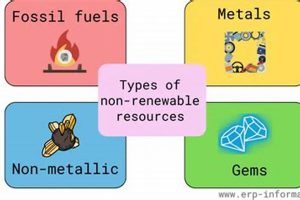
Non-renewable energy resources are finite in quantity; their rate of consumption surpasses their rate of natural replenishment. These primarily include fossil fuels (coal, oil, and natural gas) and nuclear fuels (uranium).
Question 2: What are the primary benefits associated with utilizing non-renewable energy resources?
Benefits include high energy density, which allows for efficient power generation and transportation, established infrastructure that facilitates immediate deployment, and historically lower upfront costs compared to some renewable alternatives.
Question 3: What are the most significant drawbacks to relying on non-renewable energy resources?
Major drawbacks include resource depletion, environmental pollution (air, water, and soil), contribution to climate change through greenhouse gas emissions, geopolitical instability arising from uneven resource distribution, and the potential for economic dependence.
Question 4: How does the extraction of non-renewable energy resources impact the environment?
Extraction methods, such as mining and drilling, can lead to habitat destruction, deforestation, soil erosion, water contamination, and air pollution. Accidental spills and leaks pose additional environmental risks.
Question 5: Can technological advancements mitigate the negative environmental impacts of using non-renewable energy resources?
Technological advancements, such as carbon capture and storage, improved combustion efficiency, and advanced pollution control systems, can reduce emissions and mitigate some environmental impacts. However, these technologies do not eliminate all negative effects and may introduce new challenges.
Question 6: What is the long-term outlook for non-renewable energy resources in the context of sustainable energy transitions?
Due to their finite nature and environmental consequences, the long-term outlook for non-renewable energy resources necessitates a gradual transition towards sustainable energy alternatives, including renewable energy sources and energy efficiency measures. Continued reliance on non-renewable resources is deemed unsustainable.
The key takeaway is that while these resources have historically propelled industrial development, their inherent limitations and environmental impacts demand a shift towards sustainable and renewable energy solutions.
The concluding section will synthesize the preceding information and offer a final assessment of the subject.
Comprehensive Assessment of Finite Energy Resources
This exploration of the advantages and disadvantages of non-renewable energy resources reveals a complex interplay of economic expediency and environmental consequences. While their high energy density and established infrastructure have facilitated industrial progress, the associated drawbacksresource depletion, environmental pollution, geopolitical instability, and contribution to climate changepresent significant challenges. A balanced perspective requires acknowledgement of both the short-term benefits and the long-term risks inherent in their continued utilization.
The imperative to transition towards sustainable energy solutions necessitates a deliberate and sustained effort. The future of energy security and environmental stewardship hinges on informed decision-making, strategic investments in renewable technologies, and a collective commitment to mitigating the adverse impacts associated with finite energy sources. Continued reliance, without comprehensive mitigation strategies, carries unacceptable risks for future generations.

![Guide to What Energy Resources Are Renewable [+Future] | Renewable Energy Solutions for a Sustainable Future | Clean & Green Power](https://pplrenewableenergy.com/wp-content/uploads/2026/03/th-516-300x200.jpg "Guide to What Energy Resources Are Renewable [+Future] Renewable Energy Solutions for a Sustainable Future | Clean & Green Power")