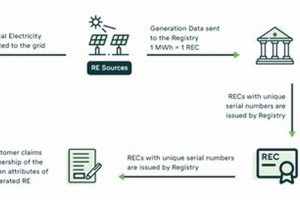
Organizations can support sustainable energy development by purchasing certificates representing one megawatt-hour (MWh) of electricity generated from renewable sources. This approach allows entities to mitigate their environmental impact even if they cannot directly source renewable energy for their operations. For instance, a company with substantial electricity demands located in an area without access to renewable energy infrastructure can still demonstrate a commitment to clean power through these purchases.
Investing in these instruments provides critical financial backing for renewable energy projects, driving further development and increasing the availability of clean power within the broader energy market. This mechanism enables entities to document reductions in greenhouse gas emissions and achieve sustainability goals, offering a powerful tool for corporate social responsibility initiatives and compliance with environmental regulations. Over time, this practice has become a key element of voluntary and compliance carbon offsetting markets, providing a flexible and verifiable way for organizations to address their environmental impact.
This article will delve deeper into the specific mechanisms involved in acquiring these certificates, explore various market considerations, and provide practical guidance for organizations seeking to integrate them into their sustainability strategies.
Successfully integrating renewable energy certificates (RECs) into an organizational sustainability strategy requires careful consideration of several key factors. The following tips provide guidance for effective and impactful REC purchases.
Tip 1: Additionality Matters. Ensure purchases support new renewable energy projects. Look for RECs tied to projects that would not have been built without the revenue stream generated from certificate sales. This ensures investments actively contribute to expanding renewable energy capacity.
Tip 2: Understand Certificate Types. Different markets and regulations define REC types uniquely. Familiarize yourself with the specific characteristics of RECs available in your region or intended project location to ensure compliance and relevance to sustainability targets.
Tip 3: Verify Credibility. Source RECs from reputable providers with transparent tracking systems. Look for third-party certification and validation to guarantee authenticity and avoid fraudulent certificates.
Tip 4: Consider Project-Specific Attributes. Some RECs carry additional attributes, such as renewable technology type or geographic location. Align these attributes with specific organizational sustainability goals for greater impact and stakeholder engagement.
Tip 5: Evaluate Contract Terms. Carefully review contract terms and conditions, including vintage, delivery timelines, and any associated fees. Ensure these terms align with organizational accounting and reporting requirements.
Tip 6: Plan Long-Term. Integrating REC purchases into a long-term sustainability strategy offers greater value. Establish clear objectives and targets for REC acquisitions to maximize environmental impact and cost-effectiveness.
Tip 7: Seek Expert Advice. The REC market can be complex. Consulting with experts specializing in renewable energy procurement and certificate trading can help organizations navigate the market effectively and make informed purchasing decisions.
By considering these tips, organizations can maximize the positive impact of REC investments and ensure they effectively contribute to a more sustainable energy future.
With these key elements in mind, the subsequent sections of this article will provide further insights into practical applications and advanced strategies for leveraging renewable energy certificates to achieve ambitious sustainability goals.
1. Certificate origin

Certificate origin plays a crucial role in the effective use of renewable energy certificates (RECs). Understanding the source of a REC provides critical information about the associated environmental and social impacts. The origin encompasses not only the geographic location of the renewable energy project but also details such as the technology used (wind, solar, hydro, etc.), the project’s age, and its operational characteristics. This information allows purchasers to align REC acquisitions with specific sustainability goals. For instance, an organization focused on promoting solar energy development would seek RECs originating from solar projects. Similarly, a company prioritizing local environmental impact might prioritize RECs generated within a specific region. Furthermore, understanding certificate origin enables organizations to evaluate the additionality of a renewable energy project. RECs from newer projects typically represent a greater contribution to new renewable energy capacity than those from older, established projects. This distinction is essential for purchasers seeking to maximize the impact of their REC investments.
Several practical applications underscore the significance of certificate origin. Companies committed to carbon neutrality often use RECs to offset their emissions. The credibility of these offsetting claims hinges on the transparency and verifiability of the REC origin. Additionally, certificate origin data enables the development of more granular and impactful reporting on renewable energy procurement. This allows organizations to demonstrate their commitment to specific renewable energy technologies and regions, enhancing stakeholder engagement and demonstrating corporate social responsibility. In supply chain contexts, understanding REC origin assists in verifying the sustainability claims of suppliers and ensuring alignment with broader corporate sustainability goals. For instance, a company sourcing components from a supplier claiming to use 100% renewable energy would benefit from verifying the origin of the RECs supporting that claim.
In conclusion, certificate origin serves as a foundational element in the REC market. Its careful consideration enables informed purchasing decisions, strengthens the integrity of sustainability claims, and promotes greater transparency in renewable energy procurement. Failing to adequately address certificate origin can undermine the effectiveness of REC purchases and diminish their overall value within a comprehensive sustainability strategy.
2. Market analysis
Market analysis plays a critical role in the effective procurement of renewable energy certificates (RECs). A thorough understanding of market dynamics enables organizations to make informed purchasing decisions, optimize cost-effectiveness, and maximize the impact of their investments. Key aspects of market analysis include evaluating supply and demand factors, assessing price fluctuations, and understanding regional variations in REC markets. Supply is influenced by factors such as renewable energy project development, policy incentives, and regulatory requirements. Demand is driven by corporate sustainability goals, voluntary carbon offsetting initiatives, and compliance obligations. The interplay of these forces determines REC pricing, which can vary significantly based on factors such as project type, location, and vintage.
For example, a company seeking to purchase wind RECs in a region with high wind energy production might find a more competitive market than a company seeking solar RECs in a region with limited solar development. Analyzing these market dynamics allows organizations to identify optimal purchasing strategies and negotiate favorable prices. Moreover, market analysis can reveal trends and anticipate future market shifts. Understanding these trends can inform long-term REC procurement strategies and enable organizations to hedge against price volatility. For instance, anticipating increased demand for RECs due to stricter environmental regulations can prompt proactive purchasing decisions, securing a supply of RECs at competitive prices before market prices escalate.
In conclusion, effective market analysis provides essential insights for navigating the complexities of the REC market. It empowers organizations to make strategic purchasing decisions, optimize costs, and ensure that REC investments align with broader sustainability objectives. Failure to conduct thorough market analysis can result in suboptimal purchasing decisions, exposing organizations to price risks and potentially diminishing the environmental impact of their REC acquisitions. Integrating robust market analysis into REC procurement processes strengthens an organization’s ability to effectively leverage RECs as a valuable tool in achieving its sustainability goals.
3. Compliance verification
Compliance verification forms a critical component of renewable energy certificate (REC) markets, ensuring integrity and accountability within the system. Verification processes confirm that RECs represent genuine renewable energy generation and prevent fraudulent activities, such as double counting or the sale of fictitious RECs. Robust verification mechanisms build market confidence and provide assurance to REC purchasers that their investments genuinely support renewable energy development.
- Tracking and Registry Systems
RECs are typically tracked and managed within electronic registries. These registries provide a transparent and auditable record of REC ownership and transactions, preventing double counting and ensuring each REC represents a unique megawatt-hour (MWh) of renewable energy generation. For example, prominent North American registries include APX and M-RETS. These systems play a vital role in maintaining the integrity of REC markets and enabling accurate tracking of renewable energy claims.
- Third-Party Auditing
Independent third-party audits further enhance compliance verification. Auditors verify the accuracy of renewable energy generation data and confirm adherence to relevant standards and protocols. This independent oversight adds an additional layer of accountability and strengthens the credibility of RECs. Organizations like Green-e Energy provide third-party certification for REC products, adding further assurance for purchasers.
- Regulatory Oversight
Governmental and regulatory bodies often play a role in overseeing REC markets. Regulatory frameworks can establish requirements for REC tracking, verification, and eligibility. This oversight can vary by jurisdiction and market, but generally contributes to ensuring market transparency and preventing fraudulent activities. For example, certain state Renewable Portfolio Standards (RPS) programs require specific tracking and verification practices for RECs used for compliance purposes.
- Contractual Agreements
Contractual agreements between REC buyers and sellers establish clear terms and conditions for REC transactions, including provisions related to compliance verification. These agreements can stipulate specific verification requirements and outline procedures for addressing discrepancies or disputes. Well-defined contracts protect both buyers and sellers and contribute to the overall integrity of REC transactions. For instance, contracts might specify the use of a particular registry or require specific documentation related to REC origin.
These facets of compliance verification collectively contribute to the credibility and effectiveness of REC markets. By ensuring the authenticity and integrity of RECs, these processes enable organizations to confidently invest in renewable energy development and achieve their sustainability objectives. Thorough compliance verification provides the necessary assurance that REC purchases translate into tangible environmental benefits and contribute to a cleaner energy future.
4. Strategic integration

Strategic integration of renewable energy certificate (REC) purchases is essential for maximizing their impact and aligning them with broader organizational sustainability objectives. Simply acquiring RECs without a clear strategy diminishes their effectiveness and can lead to missed opportunities for showcasing commitment to renewable energy. Strategic integration involves aligning REC purchases with corporate sustainability goals, integrating them into environmental reporting frameworks, and leveraging them to enhance stakeholder engagement.
- Alignment with Corporate Sustainability Goals
REC purchases should directly support specific, measurable, achievable, relevant, and time-bound (SMART) sustainability goals. For example, a company aiming to reduce its carbon footprint by 20% by 2030 can strategically purchase RECs to offset a portion of its emissions, contributing demonstrably toward that target. Without this alignment, REC purchases become isolated actions rather than integrated components of a holistic sustainability strategy.
- Integration into Environmental Reporting Frameworks
REC acquisitions should be seamlessly incorporated into existing environmental, social, and governance (ESG) reporting mechanisms. Frameworks like the Greenhouse Gas Protocol provide guidance on accounting for RECs within corporate emissions inventories. Accurate and transparent reporting enhances credibility and demonstrates accountability to stakeholders. Failing to integrate RECs into reporting frameworks can lead to inconsistencies and diminish the value of these investments in demonstrating environmental performance.
- Leveraging RECs for Stakeholder Engagement
RECs can be powerful tools for communicating a commitment to renewable energy with stakeholders. Organizations can highlight REC purchases in sustainability reports, website content, and marketing materials to demonstrate their commitment to clean energy. This transparency builds trust with investors, customers, and employees, enhancing brand reputation and attracting environmentally conscious consumers. Without effective communication, the value of REC investments in enhancing stakeholder engagement remains unrealized.
- Long-Term Procurement Strategies
Developing a long-term REC procurement strategy ensures consistent progress toward sustainability targets. This might involve establishing long-term contracts with REC providers, exploring options for bundled REC purchases, or investing in specific types of renewable energy projects. A long-term approach provides price stability, ensures a reliable supply of RECs, and demonstrates a sustained commitment to renewable energy. Ad-hoc REC purchases without a long-term vision can lead to inconsistent progress and missed opportunities for optimizing cost-effectiveness.
Strategic integration transforms REC purchases from isolated transactions into powerful instruments for driving meaningful progress toward sustainability objectives. By aligning REC acquisitions with corporate goals, integrating them into reporting frameworks, leveraging them for stakeholder engagement, and establishing long-term procurement strategies, organizations maximize the value of their REC investments and demonstrate a genuine commitment to a cleaner energy future.
5. Long-term planning

Long-term planning is essential for maximizing the effectiveness and value of renewable energy certificate (REC) investments. Organizations seeking to integrate RECs into their sustainability strategies benefit significantly from a forward-thinking approach that considers future energy needs, market trends, and evolving regulatory landscapes. A well-defined long-term plan provides a roadmap for consistent REC acquisitions, ensuring alignment with overarching sustainability goals and optimizing cost-effectiveness. Without a long-term perspective, REC purchases can become reactive and fragmented, potentially leading to missed opportunities and suboptimal outcomes. A proactive approach to REC procurement, informed by long-term planning, enhances an organization’s ability to manage risks, adapt to market changes, and secure a reliable supply of RECs at competitive prices.
For instance, a company with ambitious long-term renewable energy targets, such as achieving 100% renewable electricity by 2030, can develop a phased REC acquisition plan. This plan might involve gradually increasing REC purchases annually, aligning with projected electricity consumption growth and anticipated reductions in on-site renewable energy generation costs. Such a structured approach allows the company to secure a consistent supply of RECs, manage budgetary constraints, and demonstrate steady progress toward its stated goals. Alternatively, a company operating in a region with anticipated regulatory changes related to renewable energy could leverage long-term planning to anticipate future compliance obligations. By proactively securing RECs before demand increases due to new regulations, the company can mitigate price volatility and ensure compliance while minimizing financial exposure.
In summary, integrating long-term planning into REC procurement strategies is crucial for organizations seeking to maximize the benefits of these investments. A forward-thinking approach enables more effective alignment with corporate sustainability objectives, enhances cost-effectiveness, and facilitates adaptation to dynamic market conditions and regulatory requirements. The absence of long-term planning can expose organizations to price fluctuations, compliance risks, and missed opportunities to demonstrate leadership in renewable energy procurement. A well-defined long-term plan strengthens an organization’s ability to leverage RECs as a valuable tool for achieving its sustainability aspirations and contributing to a cleaner energy future.
Frequently Asked Questions
This section addresses common inquiries regarding the acquisition and utilization of instruments supporting renewable energy development.
Question 1: How do these instruments differ from on-site renewable energy generation?
While on-site generation directly powers operations with renewable sources, these instruments represent the environmental attributes of renewable energy generated elsewhere, enabling support for renewable energy development even without direct access to on-site resources.
Question 2: What is the environmental impact of purchasing these instruments?
Acquiring these instruments financially supports renewable energy projects, driving further development and increasing the proportion of clean energy within the electricity grid. This reduces reliance on fossil fuels and mitigates greenhouse gas emissions.
Question 3: How can the credibility of these instruments be ensured?
Third-party certification and robust tracking systems within established registries ensure the validity and prevent double-counting of these instruments, providing assurance of their environmental integrity.
Question 4: How can these instruments be integrated into corporate sustainability strategies?
These instruments can be strategically integrated into sustainability reporting frameworks, enabling organizations to demonstrate progress toward renewable energy targets and communicate their commitment to stakeholders.
Question 5: What are the key considerations for cost-effective acquisition?
Careful market analysis, understanding regional variations in pricing, and evaluating contract terms are essential for optimizing acquisition costs and ensuring alignment with budgetary constraints.
Question 6: What is the role of these instruments in achieving carbon neutrality goals?
These instruments can play a significant role in carbon neutrality strategies by offsetting emissions from operations that cannot be directly eliminated through efficiency measures or on-site renewable energy generation.
Understanding these key aspects enables informed decision-making and maximizes the impact of supporting renewable energy development.
The following sections will delve into more specific case studies and practical examples of incorporating these instruments into various organizational contexts.
Conclusion
Buying renewable energy certificates offers a powerful mechanism for organizations to support renewable energy development and mitigate environmental impact. This article has explored the multifaceted nature of these instruments, from their fundamental definition and market dynamics to their strategic integration within corporate sustainability frameworks. Key considerations such as certificate origin, market analysis, compliance verification, and long-term planning have been highlighted to provide a comprehensive understanding of effective REC procurement and utilization. The potential of these instruments to contribute to broader emissions reduction targets and enhance stakeholder engagement has been underscored.
The transition to a sustainable energy future requires collective action and innovative solutions. Buying renewable energy certificates provides a crucial pathway for organizations to participate actively in this transition, even in the absence of direct access to on-site renewable energy generation. As the demand for clean energy continues to grow, the strategic acquisition and utilization of these instruments will play an increasingly important role in shaping a more sustainable and resilient energy landscape. Organizations embracing this mechanism demonstrate a tangible commitment to environmental stewardship and contribute meaningfully to a cleaner energy future for all.