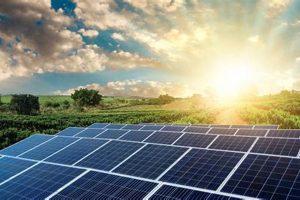
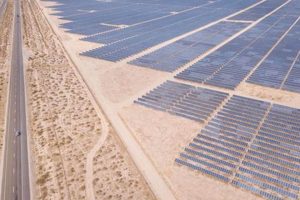
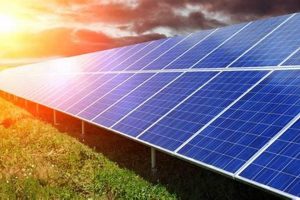
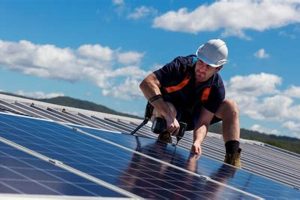
Harnessing the sun’s radiant energy offers a sustainable method for power generation. This approach involves converting sunlight into electricity or heat using various technologies, such as photovoltaic cells or solar thermal systems. These technologies directly capture the sun’s energy to produce a usable form of power, providing an alternative to traditional, finite resources.
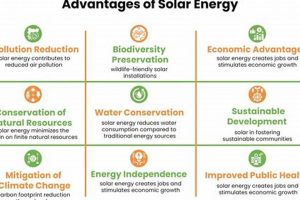
Utilizing the sun’s energy offers numerous advantages, including reduced reliance on fossil fuels, decreased greenhouse gas emissions, and long-term energy security. Historically, the initial applications were limited due to technological constraints and cost considerations. However, advancements have led to greater efficiency, affordability, and widespread adoption across diverse sectors, making it a vital element in mitigating climate change and fostering a sustainable energy future.
The following sections will delve into specific methods of capturing and converting sunlight, examining the economic and environmental impacts, and exploring future advancements in this rapidly evolving field of energy production.
Optimizing the Use of Solar Renewable Energy Sources
This section provides practical guidelines for maximizing the effectiveness of photovoltaic and solar thermal installations.
Tip 1: Conduct a Thorough Site Assessment: Prior to installation, analyze shading patterns, roof orientation, and local weather data to ensure optimal sunlight exposure. Accurate site assessments can significantly improve energy production.
Tip 2: Select High-Efficiency Components: Invest in solar panels and inverters with high conversion efficiencies to maximize energy output. Research reputable manufacturers and consider long-term performance guarantees.
Tip 3: Implement Effective Energy Storage Solutions: Integrate battery storage systems to capture excess energy generated during peak sunlight hours for use during periods of low sunlight or at night. This enhances energy independence and grid stability.
Tip 4: Optimize System Maintenance: Regularly inspect and clean solar panels to remove debris that can reduce sunlight absorption. Routine maintenance can maintain system performance and extend its lifespan.
Tip 5: Monitor Energy Production and Consumption: Utilize monitoring systems to track energy generation and usage patterns. This data enables identification of inefficiencies and optimization of energy consumption habits.
Tip 6: Explore Government Incentives and Rebates: Research and leverage available government incentives, tax credits, and rebate programs to reduce the initial investment costs of solar energy systems. These programs can significantly improve the financial viability of solar projects.
Tip 7: Consider Grid-Tied or Off-Grid Systems: Determine whether a grid-tied system (connected to the electricity grid) or an off-grid system (independent of the grid) best suits energy needs and financial goals. Each option has distinct advantages and disadvantages related to energy independence and cost.
Implementing these strategies can lead to greater energy independence, reduced energy costs, and a smaller environmental footprint. Careful planning and execution are essential for realizing the full potential of the suns energy.
The subsequent section will address the economic viability and long-term sustainability of solar infrastructure.
1. Solar Irradiance

Solar irradiance is a fundamental factor in determining the energy output of systems utilizing solar renewable energy sources. It quantifies the amount of solar power received per unit area and directly impacts the efficiency and viability of solar energy installations.
- Geographic Location and Seasonal Variation
Irradiance levels vary significantly based on geographic location and seasonal changes. Regions closer to the equator generally receive higher irradiance than those at higher latitudes. Seasonal shifts alter the angle of sunlight, influencing the intensity and duration of solar exposure. Understanding these variations is crucial for accurately estimating potential energy yield and designing effective solar energy systems.
- Atmospheric Conditions
Atmospheric conditions, including cloud cover, aerosols, and air pollution, significantly impact the amount of solar radiation reaching the Earth’s surface. Clouds absorb and scatter sunlight, reducing irradiance levels. Air pollution and aerosols also contribute to scattering and absorption, diminishing the intensity of solar radiation. Meteorological data is essential for evaluating long-term solar resource availability and predicting system performance.
- Panel Orientation and Tilt Angle
The orientation and tilt angle of solar panels directly influence the amount of solar irradiance captured. Optimal orientation typically involves facing panels towards the equator, maximizing exposure to sunlight throughout the year. Adjusting the tilt angle based on latitude and seasonal changes can further optimize energy capture. Fixed-tilt systems are common, but tracking systems that follow the sun’s movement can enhance energy production.
- Direct vs. Diffuse Irradiance
Total solar irradiance consists of two components: direct irradiance, which is the beam radiation directly from the sun, and diffuse irradiance, which is sunlight scattered by the atmosphere. Clear skies predominantly feature direct irradiance, while cloudy conditions increase the proportion of diffuse irradiance. Solar panels can utilize both direct and diffuse irradiance, though performance is generally higher with direct radiation.
These interrelated factors underscore the importance of carefully assessing solar irradiance when planning and implementing solar renewable energy projects. Accurate irradiance data and informed system design are essential for maximizing energy production and ensuring the economic viability of solar installations. A comprehensive understanding of these principles supports the broader adoption and integration of solar renewable energy sources into the global energy mix.
2. Photovoltaic Efficiency

Photovoltaic efficiency constitutes a critical determinant in the practical application and economic viability of solar renewable energy sources. This metric directly quantifies the effectiveness with which a solar cell converts sunlight into electricity, thereby influencing the overall energy output and cost-effectiveness of solar installations.
- Material Composition and Cell Design
The intrinsic efficiency of a photovoltaic cell is fundamentally linked to its material composition and design. Crystalline silicon, thin-film technologies (e.g., cadmium telluride, copper indium gallium selenide), and emerging materials like perovskites exhibit varying levels of efficiency due to their unique optoelectronic properties. Cell architecture, including surface texturing and anti-reflective coatings, further optimizes light absorption and carrier collection, influencing overall conversion efficiency. Advancements in material science and cell design are paramount for achieving higher efficiencies and reducing the cost per watt of solar energy.
- Operating Temperature and Environmental Factors
Photovoltaic efficiency is inversely related to operating temperature. As solar cells heat up, their voltage decreases, leading to a reduction in power output. Environmental factors, such as shading, dust accumulation, and humidity, can also degrade efficiency. Effective thermal management strategies, including cell cooling mechanisms and panel ventilation, are necessary to mitigate temperature-related losses. Regular maintenance and cleaning of solar panels are crucial for maintaining optimal performance and maximizing energy yield in real-world operating conditions.
- Spectral Response and Light Absorption
The spectral response of a photovoltaic cell defines its sensitivity to different wavelengths of sunlight. The ideal solar cell would absorb all wavelengths of the solar spectrum and convert them into electricity with high efficiency. However, in practice, solar cells exhibit varying degrees of absorption across the spectrum. Material selection and cell design influence the spectral response, dictating the amount of sunlight that can be effectively converted into electricity. Optimizing the spectral response through material engineering is essential for improving the overall efficiency of solar energy conversion.
- Fill Factor and Series Resistance
The fill factor (FF) is a parameter that describes the quality of a solar cell’s current-voltage (I-V) curve, representing the ratio of the maximum power output to the product of the open-circuit voltage and short-circuit current. A higher fill factor indicates a more efficient cell with minimal power loss due to internal resistance. Series resistance, stemming from contact resistance and material imperfections, can reduce the fill factor and overall efficiency. Minimizing series resistance through improved manufacturing processes and material selection is critical for enhancing the performance of photovoltaic cells.
Collectively, these facets highlight the complex interplay of factors influencing photovoltaic efficiency and its direct impact on the economic and environmental benefits of solar renewable energy sources. Continuous advancements in materials, cell design, and system optimization are essential for improving the efficiency and cost-effectiveness of solar energy, driving its broader adoption as a sustainable energy solution.
3. Energy Storage

The integration of energy storage technologies is paramount for maximizing the utility and reliability of solar renewable energy sources. Solar energy generation is inherently intermittent, dependent on sunlight availability, which fluctuates throughout the day and varies with weather conditions. Energy storage systems mitigate these fluctuations, providing a consistent and dispatchable power supply.
- Battery Energy Storage Systems (BESS)
BESS constitute a prevalent energy storage solution for solar applications. Lithium-ion batteries, lead-acid batteries, and flow batteries are commonly employed to store excess solar energy generated during peak sunlight hours. This stored energy can then be discharged during periods of low sunlight or at night, enabling continuous power supply and enhancing grid stability. Residential, commercial, and utility-scale solar installations frequently incorporate BESS to increase energy independence and reduce reliance on grid electricity. For example, large-scale solar farms often utilize lithium-ion battery arrays to provide ancillary services to the grid, such as frequency regulation and voltage support, improving overall grid resilience.
- Pumped Hydro Storage
Pumped hydro storage involves pumping water from a lower reservoir to a higher reservoir during periods of surplus solar energy generation and releasing it through turbines to generate electricity when demand exceeds supply. This mature technology provides large-scale energy storage capacity and is suitable for balancing the intermittency of solar energy at the grid level. Pumped hydro facilities act as giant batteries, efficiently storing and releasing energy on demand. The operational life and environmental impact must be assessed on a case-by-case basis.
- Thermal Energy Storage (TES)
TES systems store energy in the form of heat or cold, enabling the dispatch of thermal energy for heating, cooling, or power generation. Concentrated solar power (CSP) plants often integrate TES technologies, such as molten salt storage, to extend electricity generation beyond daylight hours. TES systems capture and store solar thermal energy, allowing for continuous operation of the power plant, even when sunlight is not directly available. This capability enhances the reliability and dispatchability of CSP plants, making them a more competitive alternative to conventional fossil fuel-based power generation.
- Hydrogen Energy Storage
Hydrogen energy storage involves using excess solar energy to produce hydrogen through electrolysis, which can then be stored and used later for various applications, including electricity generation via fuel cells or combustion in gas turbines. Hydrogen offers a versatile energy storage medium with high energy density and can be transported over long distances. This approach is under development and could be a means of storing energy to be used for powering Fuel cell vehicles and other applications.
Energy storage systems are integral to the widespread adoption and effective utilization of solar renewable energy sources. By mitigating the intermittency challenges associated with solar generation, energy storage technologies enhance grid stability, improve energy independence, and facilitate the integration of solar energy into the broader energy infrastructure. Continuous advancements in energy storage technologies are essential for realizing the full potential of solar energy as a reliable and sustainable energy source.
4. Grid Integration

Grid integration represents a critical interface between solar renewable energy sources and the existing electrical infrastructure. Effective integration facilitates the seamless incorporation of solar-generated electricity into the grid, ensuring a stable and reliable power supply. The increasing penetration of solar energy necessitates advanced grid management techniques to accommodate its variable output. Without adequate grid integration strategies, the inherent intermittency of solar power can destabilize the grid, leading to voltage fluctuations, frequency deviations, and potential system failures. A well-integrated grid can absorb surplus solar energy during peak production and efficiently distribute it to meet demand, enhancing overall system efficiency and reducing reliance on traditional fossil fuel-based power generation.
Several key technologies and strategies support effective grid integration of solar renewable energy sources. Advanced inverter technologies play a crucial role in converting direct current (DC) electricity generated by solar panels into alternating current (AC) electricity suitable for grid transmission. Smart grid technologies, including advanced metering infrastructure (AMI), real-time monitoring systems, and automated control systems, enable dynamic management of electricity flow, facilitating better prediction and response to fluctuations in solar power output. Energy storage solutions, such as battery storage systems and pumped hydro storage, provide a buffer against intermittency, allowing for the storage of excess solar energy during peak production and its release during periods of low sunlight or high demand. These solutions contribute to grid stability and reliability, supporting the integration of higher percentages of solar energy into the grid mix.
In conclusion, grid integration is an indispensable component of a sustainable energy future powered by solar renewable energy sources. Investment in grid modernization, advanced technologies, and supportive regulatory frameworks is essential to overcome the challenges associated with integrating variable solar energy into the existing power grid. Effective grid integration not only enhances the reliability and stability of the power system but also unlocks the full potential of solar energy, accelerating the transition towards a cleaner, more resilient, and sustainable energy future. Failure to address grid integration challenges will impede the deployment of solar energy and limit its contribution to global decarbonization efforts.
5. Cost Competitiveness

The economic viability of solar renewable energy sources is intrinsically linked to its cost competitiveness against traditional energy generation methods. A primary factor driving the increased adoption of solar power is the declining cost of photovoltaic (PV) modules and associated installation expenses. This decrease stems from technological advancements in manufacturing processes, economies of scale, and increased market competition. As a direct consequence, solar energy is becoming an increasingly attractive option for both residential and commercial consumers, as well as for large-scale utility projects. For instance, in many regions with high solar irradiance, the levelized cost of energy (LCOE) for solar power is now comparable to or even lower than that of fossil fuel-based power plants, particularly when considering the long-term costs associated with fuel procurement and environmental remediation. Governmental incentives, such as tax credits and feed-in tariffs, further enhance the cost competitiveness of solar energy, incentivizing investment and accelerating its deployment.
Further enhancing the competitive edge of solar is the reduction in operational expenses. Unlike traditional power plants, solar installations require minimal fuel inputs, eliminating the exposure to fluctuating fuel prices and supply chain vulnerabilities. Furthermore, the low maintenance requirements of PV systems contribute to lower lifecycle costs, bolstering their economic attractiveness. For example, large-scale solar farms demonstrate significant reductions in operational costs compared to coal-fired power plants, which necessitate constant fuel supply, complex maintenance procedures, and extensive environmental controls. The increasing affordability of energy storage solutions, such as battery systems, also plays a crucial role in improving the cost competitiveness of solar power by mitigating its intermittency and enabling continuous power delivery, enhancing its value proposition for grid operators and end-users alike.
Ultimately, the persistent improvement in cost competitiveness is pivotal for the sustained growth and mainstream adoption of solar renewable energy sources. While challenges remain, such as the variability of solar irradiance and the need for continued infrastructure investment, the trajectory towards lower costs and greater efficiency underscores the increasing economic viability of solar power as a critical component of the global energy mix. Ongoing research and development efforts focused on enhancing PV technology, reducing manufacturing costs, and optimizing grid integration are essential for further accelerating the progress of solar energy and ensuring its long-term competitiveness in the evolving energy landscape.
Frequently Asked Questions about Solar Renewable Energy Sources
This section addresses common inquiries regarding the capabilities, limitations, and overall impact of solar renewable energy.
Question 1: What is the typical lifespan of photovoltaic panels utilized in solar energy systems?
The operational lifespan of photovoltaic panels generally ranges from 25 to 30 years. Degradation occurs gradually, with power output typically decreasing by approximately 0.5% per year. After this period, panels still produce electricity, albeit at a reduced capacity. Reputable manufacturers often provide performance warranties guaranteeing a certain percentage of original output after 25 years.
Question 2: How does cloud cover affect the efficiency of solar energy generation?
Cloud cover significantly reduces the direct solar irradiance reaching photovoltaic panels, thus lowering energy production. However, solar panels can still generate electricity from diffuse irradiance, which is sunlight scattered by clouds and atmospheric particles. The degree of reduction varies depending on the thickness and density of the cloud cover, with heavy cloud cover resulting in a substantial decrease in energy output.
Question 3: What are the primary environmental concerns associated with the manufacturing and disposal of solar panels?
The manufacturing of solar panels involves the use of various materials, some of which pose environmental risks. These materials include silicon, heavy metals such as cadmium and lead (in certain thin-film panels), and rare earth elements. The manufacturing process also requires energy and water, contributing to a carbon footprint. Proper recycling and disposal methods are essential to mitigate environmental impacts and prevent the release of hazardous substances into the environment. Responsible end-of-life management of solar panels is a growing concern requiring attention.
Question 4: Can solar energy systems operate effectively in regions with limited sunlight hours?
Solar energy systems can operate in regions with limited sunlight hours, although energy production will be lower compared to sunnier regions. The effectiveness of solar installations in these areas depends on several factors, including the efficiency of the photovoltaic panels, the orientation and tilt angle of the panels, and the availability of energy storage solutions. The utilization of high-efficiency panels and optimized system design can maximize energy capture, even in regions with lower solar irradiance.
Question 5: What are the grid integration challenges associated with large-scale deployment of solar energy?
Large-scale deployment of solar energy presents several grid integration challenges. The intermittent nature of solar power can create voltage fluctuations and frequency variations on the grid, potentially destabilizing the system. Overcoming these challenges requires advanced grid management techniques, including smart grid technologies, energy storage solutions, and improved forecasting of solar power output. Furthermore, the existing grid infrastructure may require upgrades to accommodate the increased flow of electricity from distributed solar installations.
Question 6: What are the different types of solar renewable energy?
The main types of solar renewable energy are solar thermal, photovoltaics (PV), and concentrating solar power (CSP). Solar thermal technology captures the sun’s heat for direct use such as heating water or buildings, while PV converts sunlight directly into electricity. CSP plants utilize lenses or mirrors to focus sunlight onto a receiver, which heats a fluid to produce steam that drives a turbine and generates electricity.
These answers provide a foundational understanding of solar power.
Solar Renewable Energy Sources
This discourse has comprehensively explored the diverse facets of solar renewable energy sources, ranging from fundamental principles and optimization strategies to integration challenges and economic considerations. Examination of solar irradiance, photovoltaic efficiency, energy storage mechanisms, and grid integration techniques reveals the complex interplay of factors shaping the viability and sustainability of this energy sector. Furthermore, analysis of cost competitiveness underscores the progress achieved in making solar power an increasingly economically attractive alternative to conventional energy generation methods.
The ongoing development and strategic implementation of solar renewable energy sources remains crucial for achieving global sustainability goals and mitigating the impacts of climate change. Further research, policy support, and technological innovation are essential to fully realize the potential of solar energy as a reliable, cost-effective, and environmentally responsible energy source. A commitment to addressing existing challenges and pursuing continuous improvement will ultimately dictate the extent to which solar renewable energy sources contribute to a more sustainable future.