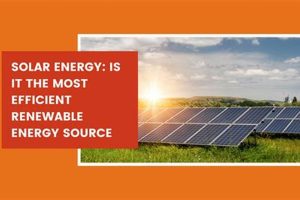
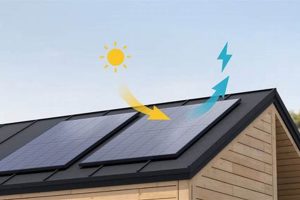
Harnessing power from the sun presents a compelling option within the renewable energy landscape. Its abundance, derived directly from a virtually inexhaustible source, contrasts with the resource constraints and geographical limitations inherent in other renewable sources. For example, geothermal energy is geographically restricted, while hydroelectric power relies on specific hydrological conditions and suitable dam locations.
The relative ease of deployment and scalability contribute to its prominence. Solar photovoltaic (PV) systems can be installed on rooftops, integrated into building materials, or deployed in large-scale solar farms, offering flexibility unmatched by many other renewables. Furthermore, advancements in solar technology have significantly reduced costs, making it increasingly competitive with fossil fuels and other renewable options. This increased affordability, coupled with declining maintenance requirements, accelerates its adoption. The environmental advantages extend beyond emissions reduction; unlike some biofuel production, solar energy generation typically avoids large-scale land use changes that impact ecosystems.
Examination of specific attributes such as energy density, resource availability, environmental impact, and technological maturity reveals key factors contributing to the increasing preference for solar energy solutions in meeting global energy demands. A detailed comparison of these factors across various renewable energy sources provides a framework for understanding the specific strengths and weaknesses associated with each technology, and highlights the considerations driving the prioritization of solar investments.
Optimizing Solar Energy Investments
Considering investments in solar energy requires careful assessment to maximize its potential benefits. Focusing on strategic implementation and long-term planning will yield the greatest return.
Tip 1: Conduct a Comprehensive Site Assessment. Before installation, thoroughly evaluate solar irradiance levels, shading factors, and roof orientation or land topography. This determines system sizing and energy generation capacity.
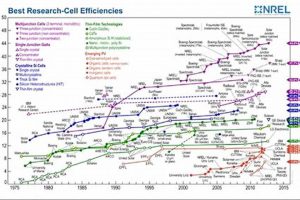
Tip 2: Prioritize High-Efficiency Solar Panels. Invest in panels with demonstrated high conversion efficiencies. While the initial cost may be greater, the increased energy output over the system’s lifespan reduces the levelized cost of energy.
Tip 3: Integrate Energy Storage Solutions. Combine solar installations with battery storage to mitigate the intermittency of solar power. This ensures a more reliable and consistent energy supply, especially during peak demand periods or nighttime.
Tip 4: Monitor System Performance Regularly. Implement a robust monitoring system to track energy production, identify performance anomalies, and ensure optimal system operation. This enables proactive maintenance and maximizes energy yield.
Tip 5: Explore Government Incentives and Rebates. Thoroughly investigate available local, state, and federal incentives, tax credits, and rebates designed to lower the upfront costs of solar energy systems. These incentives significantly improve the economic viability of solar investments.
Tip 6: Engage Qualified and Experienced Installers. Partner with reputable solar installers possessing the necessary certifications, experience, and track record. Professional installation guarantees adherence to safety standards and optimizes system performance.
Tip 7: Plan for Long-Term Maintenance. Factor in ongoing maintenance costs, including panel cleaning, inverter replacements, and other potential repairs. Establishing a maintenance plan helps ensure the system’s longevity and continued efficient operation.
Implementing these strategies will facilitate a more effective and economically sound adoption of solar energy technologies. Careful planning and execution are crucial for realizing the full benefits of solar power.
The future of energy production increasingly depends on efficient and reliable solutions. Solar energy, with its inherent advantages, plays a critical role in a sustainable energy future.
1. Abundant resource availability

The correlation between abundant resource availability and the advantageous position of solar energy within the renewable sector is direct and substantial. Solar irradiance, the energy emitted by the sun, represents a virtually inexhaustible resource available globally. This stands in contrast to other renewable sources that are geographically constrained. For example, geothermal energy relies on specific geological formations, limiting its potential to regions with geothermal activity. Hydropower depends on suitable rivers and topography, restricting its development to areas with adequate water resources and dam construction opportunities. Biomass, while renewable, is limited by land availability and the need for sustainable harvesting practices.
The widespread availability of solar radiation allows for the deployment of solar energy systems in diverse geographical locations, from arid deserts to urban environments. This universality enhances energy security by reducing dependence on centralized power plants and transmission infrastructure. Solar installations can be scaled to meet a variety of energy needs, from powering individual homes to contributing to national grids. Real-world examples include large-scale solar farms in desert regions, providing power to densely populated areas, and residential rooftop solar installations, enabling homeowners to generate their own electricity. This accessibility also fosters energy independence, particularly in remote or underserved communities that lack access to traditional grid infrastructure.
In summary, the abundant and globally distributed nature of solar resources forms a cornerstone of its superiority among renewable energy options. While challenges remain in optimizing energy storage and addressing intermittency, the sheer availability of solar irradiance ensures its continued prominence in the transition toward a sustainable energy future. Understanding this fundamental aspect is crucial for policymakers, investors, and consumers seeking to prioritize environmentally responsible and economically viable energy solutions.
2. Scalability and Modularity

The capacity for scalability and modularity is a distinct advantage offered by solar energy technology. This characteristic contributes significantly to the reasons for its preference over certain other renewable energy sources. Scalability, in this context, refers to the ability to expand solar energy installations from small, localized applications to large, utility-scale power plants. Modularity denotes the characteristic of solar energy systems to be constructed from independent, standardized components, allowing for flexible system design and incremental capacity additions. The cause-and-effect relationship is clear: the modular nature of solar panels enables scalable deployment.
The significance of scalability and modularity becomes apparent when compared to other renewable energy options. Hydroelectric power, for instance, often requires substantial upfront investment in large dam infrastructure and is geographically limited by suitable river systems. Geothermal energy is likewise restricted to regions with accessible geothermal resources. Wind energy, while scalable to some extent, faces challenges regarding land use and visual impact, potentially hindering large-scale deployment in densely populated areas. Solar energy, however, can be deployed on rooftops, integrated into building facades, or assembled into expansive solar farms, offering a versatility that is difficult to match. A real-world example includes the incremental expansion of solar installations in residential neighborhoods, where homeowners gradually add solar panels to their roofs, increasing their self-generation capacity over time. Another example is the development of large-scale solar farms in desert regions, contributing significantly to regional power grids.
Understanding the scalability and modularity of solar energy systems is crucial for informed decision-making in the energy sector. This attribute facilitates decentralized power generation, improves grid resilience, and promotes energy independence. While challenges remain in addressing intermittency and optimizing energy storage, the inherent flexibility of solar energy deployment makes it a highly adaptable and promising solution for meeting future energy demands. The ongoing advancements in solar technology and declining costs further enhance its appeal as a scalable and modular renewable energy option.
3. Decreasing technology costs

The declining cost of solar energy technologies is a pivotal factor contributing to its growing prominence among renewable energy sources. This cost reduction has a profound impact on economic feasibility and widespread adoption, shaping the competitive landscape of the energy sector.
- Panel Manufacturing Efficiencies
Technological advancements in solar panel manufacturing have significantly reduced production costs. Economies of scale, improved material utilization, and automated manufacturing processes have led to lower panel prices. These efficiencies have enabled solar energy to become more competitive with traditional fossil fuels and other renewable options, accelerating deployment and market penetration. This is exemplified by the rapid expansion of solar farms globally, often in regions where solar was previously deemed economically unviable.
- Inverter Technology Improvements
Solar inverters, which convert direct current (DC) electricity from solar panels into alternating current (AC) electricity usable in homes and businesses, have also seen significant cost reductions. Advances in inverter design, efficiency, and lifespan have lowered the overall cost of solar energy systems. Microinverters and power optimizers, which enhance energy harvesting and monitoring capabilities, are becoming increasingly affordable, further improving the economic attractiveness of solar energy. For example, the decreased cost of inverters makes residential solar installations more accessible to average homeowners.
- Installation and Soft Costs Reduction
Efforts to streamline installation processes, reduce permitting hurdles, and lower financing costs have contributed to the overall cost reduction of solar energy. Standardized installation practices, optimized supply chains, and innovative financing models, such as power purchase agreements (PPAs), have made solar energy more affordable and accessible. These “soft cost” reductions are crucial in making solar energy competitive, particularly in regions with high labor costs or complex regulatory environments. The simplification of permitting processes in many municipalities is directly correlated with increased solar adoption rates.
- Economies of Scale in Production
As the demand for solar energy increases, manufacturers benefit from economies of scale. Increased production volumes lead to lower per-unit costs, making solar energy more affordable. This virtuous cycle of increased demand, lower costs, and further adoption drives the growth of the solar energy market and enhances its competitiveness with other energy sources. For instance, large-scale solar panel manufacturing plants are able to produce panels at a fraction of the cost compared to smaller, less efficient facilities.
The ongoing trend of decreasing technology costs solidifies solar energy’s position as a leading renewable energy option. When combined with its other benefits, such as energy independence and environmental sustainability, the reduced cost makes solar energy an attractive and increasingly viable solution for meeting global energy demands and mitigating climate change.
4. Low environmental impact

Solar energy’s reduced environmental footprint constitutes a significant reason for its preference within the renewable energy sector. The generation of electricity from solar photovoltaic (PV) systems or concentrated solar power (CSP) plants produces minimal greenhouse gas emissions during operation. This contrasts sharply with fossil fuel-based power plants, which release substantial quantities of carbon dioxide, methane, and other pollutants contributing to climate change and air pollution. The decreased environmental impact associated with solar energy has a direct, positive effect on mitigating the harmful consequences of global warming and improving air quality. For instance, the replacement of a coal-fired power plant with a solar farm demonstrably reduces regional smog levels and carbon emissions.
However, the environmental impact assessment must extend beyond operational emissions. The manufacturing of solar panels involves resource extraction and energy-intensive processes. Nevertheless, lifecycle assessments consistently demonstrate that solar energy’s overall environmental impact remains lower than that of fossil fuels. Moreover, advancements in solar panel recycling technologies are mitigating concerns related to end-of-life waste management. Compared to other renewable sources, solar energy often requires less land disturbance than large-scale hydroelectric projects, which can flood extensive areas and disrupt ecosystems. Wind farms, while generally environmentally friendly, can pose risks to bird and bat populations, necessitating careful siting and mitigation strategies. Real-world examples of environmentally sensitive solar development include projects that incorporate habitat preservation measures and minimize land clearing.
In conclusion, the low environmental impact of solar energy, particularly in terms of greenhouse gas emissions and air pollution, is a critical advantage. While challenges remain in addressing the environmental aspects of manufacturing and waste management, ongoing technological advancements and responsible development practices are further minimizing these impacts. Solar energy’s superior environmental performance solidifies its position as a leading solution for a sustainable energy future and highlights the importance of prioritizing its deployment in national energy strategies. Further research and investment into sustainable manufacturing and recycling processes are essential to maximizing solar’s environmental benefits.
5. Versatile deployment options

Solar energy’s diverse deployment capabilities significantly contribute to its superiority among renewable energy sources. This versatility enables the technology to adapt to varying energy needs and geographical constraints, a characteristic not uniformly shared by other renewable alternatives. The capacity to integrate solar power generation into a range of environments, from individual residential rooftops to expansive utility-scale solar farms, provides unparalleled flexibility. The inherent modularity of solar photovoltaic (PV) systems allows for incremental scaling, catering to specific energy requirements and investment capacities. This adaptable nature provides a compelling advantage over other renewable energy resources that often require specific site conditions or substantial infrastructure investments.
Consider, for example, geothermal energy, which necessitates access to subsurface thermal resources, or hydroelectric power, dependent on suitable hydrological conditions and dam construction sites. Biomass energy relies on sustained agricultural production and efficient supply chains. Wind energy, while scalable, often encounters limitations due to land use concerns and proximity to populated areas. Solar energy, however, can be implemented in urban environments, rural areas, and even integrated into building materials. Rooftop solar installations empower homeowners to generate their electricity, reducing reliance on centralized grids. Large-scale solar farms can supply power to entire communities or contribute to regional energy grids. Floating solar farms can utilize bodies of water, minimizing land use impact. These diverse deployment scenarios showcase the inherent adaptability of solar energy, rendering it applicable across a wider spectrum of contexts.
The practical implication of solar energy’s versatile deployment options is profound. It allows for distributed generation, enhancing grid resilience and reducing transmission losses. It facilitates energy access in remote or underserved communities lacking grid infrastructure. It promotes energy independence and reduces reliance on fossil fuels. The ability to tailor solar installations to specific needs and environments ensures a broader applicability and accelerates the transition toward a sustainable energy future. While challenges remain in optimizing grid integration and addressing intermittency, the inherent flexibility of solar energy deployment makes it a vital component in the global shift towards renewable energy solutions.
6. Minimal maintenance needs
The correlation between minimal maintenance requirements and the advantages of solar energy stems from its relatively simple operating principle and the absence of numerous moving parts. Solar photovoltaic (PV) systems, once installed, necessitate significantly less ongoing maintenance compared to other renewable energy technologies. This reduction in maintenance translates to lower operational costs and increased system uptime, contributing directly to the economic viability and reliability of solar power. Other renewable energy sources, such as wind turbines, require regular inspections, lubrication, and component replacements due to mechanical wear and tear. Hydropower facilities demand continuous monitoring and maintenance of dams, turbines, and waterways. Biomass plants necessitate constant fuel supply, ash removal, and emissions control. In contrast, solar PV systems typically require only periodic cleaning to remove dust or debris and occasional inverter replacements, resulting in substantially lower maintenance burdens.
Consider a large-scale solar farm compared to a similarly sized wind farm. The solar farm’s maintenance regimen primarily involves vegetation control and panel cleaning, tasks that can be automated or performed relatively quickly. The wind farm, however, demands specialized technicians to climb turbines for inspections and repairs, which can be costly and time-consuming. This difference in maintenance needs has implications for the levelized cost of energy (LCOE), a metric used to compare the economic competitiveness of different energy sources. The lower maintenance costs associated with solar energy contribute to a lower LCOE, making it an increasingly attractive option for investors and consumers. The deployment of remote monitoring systems further reduces the need for on-site maintenance, allowing for proactive detection of potential issues and optimized system performance.
In summary, the minimal maintenance demands of solar energy systems are a key determinant in their overall value proposition. Lower operational costs, increased system availability, and reduced reliance on specialized technicians contribute to the economic and practical advantages of solar power. This factor, combined with decreasing technology costs and environmental benefits, positions solar energy as a leading contender in the transition toward a sustainable energy future. Continued innovation in remote monitoring and self-cleaning technologies will further reduce maintenance needs, enhancing the long-term viability and competitiveness of solar energy.
7. Global accessibility

Global accessibility represents a critical factor in the evaluation of renewable energy sources. Solar energy’s ubiquity, relative to other renewable options, directly influences its potential to address global energy demands. Solar irradiance, while varying in intensity across geographical regions, is fundamentally available worldwide. This contrasts with resources like geothermal energy, confined to geologically active areas, or hydroelectric power, dependent on specific hydrological and topographical conditions. The pervasive availability of solar radiation facilitates distributed generation and reduces dependence on extensive transmission infrastructure, an advantage particularly relevant for remote or developing regions. The implication is that regions lacking existing grid infrastructure can readily implement solar energy systems, promoting energy independence and economic development. For instance, solar-powered irrigation systems in arid regions of Africa exemplify this accessibility, enabling agricultural productivity in areas where traditional energy sources are scarce or nonexistent.
This widespread availability further reduces geopolitical dependencies associated with concentrated energy resources. Unlike fossil fuels, controlled by a limited number of nations, solar energy can be harnessed by any country with sufficient sunlight. This promotes energy security and reduces vulnerability to international market fluctuations or political instability. Furthermore, the modular nature of solar technology enables incremental deployment, allowing communities and nations to scale their solar energy capacity based on their specific needs and resources. A practical application is the implementation of off-grid solar home systems in rural areas, providing electricity for lighting, communication, and small businesses. This scalability contrasts with large-scale hydroelectric projects, which often require significant upfront investment and long construction timelines.
In summary, the global accessibility of solar energy is a significant advantage, fostering energy security, promoting economic development, and enabling decentralized power generation. While challenges remain in optimizing grid integration and addressing intermittency, the inherent ubiquity of solar radiation makes it a crucial component of a sustainable and equitable energy future. Continued innovation in solar technology and financing models will further enhance its accessibility, solidifying its position as a leading renewable energy solution worldwide. This intrinsic attribute reinforces the proposition that solar energy holds a preeminent position amongst diverse renewable resources.
Frequently Asked Questions
The following questions and answers address common inquiries regarding the comparative benefits of solar energy relative to other renewable energy sources. These responses aim to provide a factual and objective perspective.
Question 1: Is solar energy consistently more cost-effective than other renewable energy options?
The cost-effectiveness of solar energy varies depending on location, resource availability, and technological advancements. However, the decreasing cost of solar photovoltaic (PV) systems has made it increasingly competitive with other renewables and, in some cases, fossil fuels. Levelized Cost of Energy (LCOE) analyses should be conducted to determine the most economical option in a specific context.
Question 2: Does the intermittent nature of solar energy negate its advantages?
The intermittency of solar energy, due to cloud cover and nighttime, presents a challenge. However, energy storage solutions, such as batteries, and grid integration strategies are mitigating this issue. Furthermore, geographic diversification of solar installations can reduce overall variability.
Question 3: What are the primary environmental concerns associated with solar energy?
The environmental impacts of solar energy primarily stem from the manufacturing process, including resource extraction and energy consumption. However, lifecycle assessments consistently demonstrate that solar energy has a significantly lower environmental footprint than fossil fuels. Responsible manufacturing and recycling practices are crucial to further minimizing these impacts.
Question 4: Is solar energy universally applicable, regardless of geographic location?
While solar energy can be deployed globally, the intensity of solar irradiance varies by region. Areas with higher solar irradiance levels will generate more electricity per unit of installed capacity. However, even in regions with lower irradiance, solar energy can contribute to a diversified energy portfolio.
Question 5: How does solar energy contribute to energy independence and security?
Solar energy reduces reliance on centralized power plants and imported fuels, enhancing energy independence and security. Distributed solar generation, such as rooftop solar, empowers consumers to generate their own electricity, reducing vulnerability to grid disruptions and fuel price volatility.
Question 6: What are the future prospects for solar energy technology?
Ongoing research and development are focused on improving solar panel efficiency, reducing manufacturing costs, and enhancing energy storage capabilities. Emerging technologies, such as perovskite solar cells and advanced battery systems, hold the potential to further enhance the performance and economic viability of solar energy.
Understanding the nuances of solar energy’s strengths and weaknesses is critical for informed decision-making in the energy sector. A comprehensive assessment of all factors is necessary to determine the optimal mix of energy sources for a sustainable future.
The exploration of specific factors contributing to solar energy’s favorable position provides a nuanced understanding of its overall advantages.
Assessment of Solar Energy’s Superiority
This exploration has presented a comprehensive evaluation of the attributes that position solar energy as a leading renewable energy option. The analysis underscores the significance of abundant resource availability, scalability, declining technology costs, low environmental impact, versatile deployment options, minimal maintenance needs, and global accessibility. These factors, considered collectively, reveal solar energy’s potential to address global energy demands more effectively than many alternative renewable sources.
Moving forward, continued investment in solar technology, coupled with strategic policy implementation, is essential to fully realize its transformative potential. The pursuit of a sustainable energy future hinges on informed decisions and the prioritization of solutions that offer both environmental and economic benefits. Solar energy, by virtue of its inherent advantages, warrants serious consideration as a cornerstone of global energy strategies.