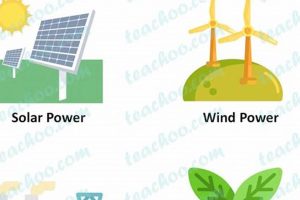
Electricity generation methods that rely on naturally fluctuating resources, such as sunlight and wind, are increasingly prevalent in modern power systems. These sources produce power intermittently, their output varying depending on weather conditions and time of day. Solar photovoltaic panels, which convert sunlight directly into electricity, and wind turbines, which harness kinetic energy from moving air, exemplify this type of energy production.
The expanding adoption of these intermittent generation methods is driven by a confluence of factors, including growing concerns about climate change and a desire to reduce reliance on fossil fuels. Decreasing costs and advancements in technology have also made these sources more economically viable. Historically, these energy sources played a marginal role, but policy incentives and technological innovation have elevated their importance in the energy mix.
Understanding the operational challenges associated with intermittency is paramount for maintaining grid stability. Furthermore, exploring solutions such as energy storage technologies and advanced forecasting models is crucial for maximizing the integration of these resources into the existing energy infrastructure. The following sections will delve into these topics in greater detail, examining both the obstacles and opportunities presented by these evolving power generation techniques.
Strategies for Integrating Intermittent Generation
Successfully incorporating power generation methods dependent on variable resources requires proactive planning and adaptation across various sectors of the energy system. The following strategies aim to facilitate greater utilization of these resources while maintaining grid reliability.
Tip 1: Enhance Forecasting Accuracy: Invest in sophisticated weather modeling and forecasting techniques. Improved predictions of solar irradiance and wind speeds allow grid operators to anticipate fluctuations in power output and proactively adjust dispatch schedules.
Tip 2: Implement Advanced Grid Management Systems: Deploy smart grid technologies capable of real-time monitoring and control. These systems can rapidly respond to changes in generation and demand, ensuring a stable and balanced electricity supply.
Tip 3: Diversify Geographic Deployment: Strategically locate generating facilities across a wide geographic area. This reduces the impact of localized weather patterns, as variations in one region can be offset by more favorable conditions elsewhere.
Tip 4: Develop Energy Storage Solutions: Invest in energy storage technologies, such as battery storage and pumped hydro storage. These systems can store excess energy generated during periods of high production and release it when generation is low, smoothing out the variability.
Tip 5: Strengthen Interregional Transmission Capacity: Enhance transmission infrastructure to facilitate the transfer of power between regions. This allows areas with surplus power to export it to areas with deficits, improving overall system efficiency and reliability.
Tip 6: Promote Demand Response Programs: Implement programs that incentivize consumers to adjust their electricity consumption based on grid conditions. This can help to balance supply and demand, reducing the need for peaking power plants.
Tip 7: Establish Clear Regulatory Frameworks: Develop transparent and predictable regulatory frameworks that encourage investment in renewable energy and facilitate their integration into the grid. This includes streamlining permitting processes and providing clear guidelines for interconnection.
Adopting these strategies can mitigate the challenges associated with intermittency and unlock the full potential of these resources. By prioritizing forecasting, grid modernization, storage, and interregional coordination, a more resilient and sustainable energy future can be achieved.
The subsequent section will address the economic considerations associated with the broader adoption of the renewable energy sector.
1. Intermittency

Intermittency, a fundamental characteristic of variable renewable energy sources, refers to the fluctuating and unpredictable nature of their power output. This characteristic arises directly from the dependence of these sources on naturally varying resources, such as solar irradiance and wind speed. For example, solar photovoltaic (PV) generation ceases entirely during nighttime hours and is significantly reduced during cloudy weather. Similarly, wind turbine output varies depending on wind speed, which can fluctuate dramatically over short periods. The inherent intermittency of these sources presents significant challenges for grid operators, who must constantly balance electricity supply and demand to maintain system stability. A power grid relying solely on intermittent sources would experience frequent blackouts without effective mitigation strategies.
The connection between intermittency and variable renewable energy sources is not merely correlational but causal. The variability of the resource causes the variability in electricity generation. This distinguishes these sources from dispatchable generation technologies, such as fossil fuel or nuclear power plants, which can adjust their output on demand. In practical terms, this means that integrating variable renewable energy sources requires forecasting capabilities, energy storage solutions, and flexible grid management strategies. For instance, accurate weather forecasting enables grid operators to anticipate fluctuations in solar and wind power output, allowing them to schedule the dispatch of other resources to compensate for these variations. Furthermore, energy storage technologies, such as batteries and pumped hydro, can store excess energy generated during periods of high production and release it when generation is low, effectively smoothing out the intermittency.
Understanding the practical significance of intermittency is paramount for policymakers, energy planners, and grid operators. Failure to address this characteristic can lead to grid instability, increased reliance on backup generation from fossil fuels, and ultimately, hinder the widespread adoption of variable renewable energy sources. Effectively managing intermittency requires a holistic approach that combines technological innovation, policy support, and market mechanisms. By recognizing the inherent challenges and investing in appropriate solutions, it is possible to integrate these sources into the power grid reliably and efficiently, paving the way for a more sustainable and decarbonized energy future.
2. Forecasting

The reliable integration of power generation methods dependent on intermittent resources is inextricably linked to forecasting accuracy. Effective prediction of solar irradiance and wind speeds allows for proactive management of power supply, mitigating the challenges posed by fluctuating output. Without precise forecasts, grid operators face significant difficulties in balancing electricity supply and demand, potentially leading to grid instability and increased reliance on conventional power sources. For instance, accurate forecasts enable the prediction of decreased solar output due to cloud cover, allowing operators to schedule alternative generation or activate energy storage systems to compensate.
Forecasting’s significance extends beyond short-term operational adjustments. Long-term forecasting plays a critical role in infrastructure planning and investment decisions. Accurate projections of power output help determine the necessary capacity of transmission lines and the required size of energy storage facilities. Furthermore, improved forecasting models facilitate the development of sophisticated market mechanisms that incentivize efficient use of resources. For example, day-ahead and hour-ahead markets rely on precise forecasts to optimize the dispatch of power and allocate resources effectively. Advanced forecasting techniques, incorporating machine learning and weather models, are constantly evolving to improve accuracy and reduce uncertainty.
In conclusion, forecasting is not merely an ancillary component but an essential element in the successful deployment of generation assets dependent on intermittent resources. Improved forecasting accuracy directly translates to enhanced grid stability, reduced costs, and increased utilization of renewable energy sources. Addressing the challenges associated with forecasting variability requires continuous investment in research and development, collaboration between meteorologists and energy experts, and the implementation of robust data infrastructure. The ability to predict future power output is crucial for realizing the full potential of renewable energy in a reliable and sustainable energy system.
3. Grid Integration

Grid integration, in the context of fluctuating power sources, refers to the processes and technologies required to incorporate electricity generated from these sources into the existing power grid while maintaining system stability and reliability. The connection between these generation types and grid integration is fundamental: the intermittent nature of the generation necessitates significant adaptations to traditional grid operation. A power grid designed primarily for dispatchable sources, such as coal or nuclear plants, requires substantial modification to accommodate the fluctuating output. The absence of effective grid integration strategies impedes the widespread adoption and effectiveness. For example, without adequate transmission capacity, electricity generated in a wind-rich region cannot be delivered to urban centers where demand is high, leading to curtailment and wasted energy.
Effective grid integration involves several key components. Enhanced transmission infrastructure, including high-voltage transmission lines, is crucial for transporting electricity over long distances. Advanced grid management systems, utilizing real-time data and sophisticated algorithms, are essential for balancing supply and demand. Energy storage technologies, such as batteries and pumped hydro, can store excess electricity generated during periods of high production and release it when generation is low. Furthermore, demand response programs, which incentivize consumers to adjust their electricity consumption based on grid conditions, can help to stabilize the grid and reduce the need for costly peaking power plants. Germany’s Energiewende, a transition to renewable energy, highlights both the opportunities and challenges of integration, necessitating substantial investment in grid upgrades and demand-side management programs to accommodate the growing share of wind and solar power.
In summary, grid integration is not merely a technical challenge but a critical enabler of a sustainable energy future. The successful integration of variable sources requires a holistic approach that encompasses infrastructure upgrades, technological innovation, and regulatory reform. Failing to address the challenges associated with grid integration will limit the potential of these sources to contribute to decarbonization efforts and maintain a reliable electricity supply. The practical significance of understanding this connection lies in the ability to develop effective strategies for managing the complexities and ensuring a stable and resilient energy system.
4. Energy Storage
Energy storage systems are a critical component in enabling the widespread adoption and reliable operation of generation technologies reliant on intermittent resources. The fundamental challenge presented by variable resources such as solar and wind is their fluctuating power output, dependent on weather conditions and time of day. Energy storage directly addresses this challenge by decoupling energy supply from energy demand. By storing excess energy generated during periods of high production and releasing it when production is low, storage systems smooth out the variability and ensure a more consistent power supply. For instance, a battery storage system paired with a solar farm can store excess solar energy generated during the day and dispatch it during evening peak demand hours, providing a more reliable and predictable source of electricity.
The importance of energy storage extends beyond simply smoothing out fluctuations. It also enhances grid stability, reduces transmission congestion, and allows for greater utilization of the existing grid infrastructure. For example, large-scale battery storage systems can provide grid services such as frequency regulation and voltage support, helping to maintain the stability of the electrical grid. Furthermore, energy storage can reduce the need for expensive upgrades to transmission lines by storing excess energy locally and dispatching it when and where it is needed. The Hornsdale Power Reserve in South Australia, a large-scale battery storage system connected to a wind farm, provides a real-world example of the benefits of energy storage. The system has significantly improved grid stability and reduced electricity prices in the region.
In summary, energy storage is not just an ancillary technology but an essential enabler of a future powered by variable generation technologies. The ability to store and dispatch electricity on demand is critical for addressing the intermittency challenges and ensuring a reliable and affordable electricity supply. As the penetration of these variable sources continues to increase, the importance of energy storage will only grow. Investment in energy storage technologies, coupled with supportive policies and market mechanisms, is crucial for realizing the full potential of variable electricity generation and transitioning to a cleaner and more sustainable energy system.
5. Policy Support

Governmental and regulatory intervention, termed “policy support,” plays a crucial role in the deployment and integration of variable generation methods. The intermittent nature of these resources presents economic and operational challenges that are not always adequately addressed by market forces alone. Policies such as feed-in tariffs, renewable portfolio standards, and tax credits are designed to incentivize investment in these sources, offsetting the higher upfront costs and mitigating the financial risks associated with their development. The absence of consistent and predictable policy frameworks can significantly impede the growth of this sector, as investors are hesitant to commit capital to projects with uncertain long-term profitability. For instance, the rapid expansion of the wind energy sector in Denmark can be directly attributed to supportive policies that guaranteed a fixed price for wind-generated electricity, fostering investor confidence and driving technological innovation. In contrast, countries with inconsistent or absent policy support have generally experienced slower growth in variable renewable energy capacity.
Beyond financial incentives, regulatory policies related to grid access, interconnection standards, and environmental regulations also profoundly impact the viability of variable generation. Streamlined permitting processes and transparent interconnection rules reduce the administrative burden and costs associated with connecting new projects to the electricity grid. Furthermore, policies that promote grid modernization and facilitate the integration of variable sources are essential for maintaining system reliability. For example, net metering policies, which allow consumers to receive credit for excess electricity generated by their solar panels, have spurred the growth of distributed generation and increased overall renewable energy capacity. The European Union’s Renewable Energy Directive, which establishes binding targets for renewable energy consumption across member states, serves as a broad policy framework that drives investment and innovation in variable generation technologies.
In conclusion, policy support is not merely a facilitative measure but a critical determinant of the success of variable generation. Well-designed policies can address market failures, stimulate investment, and create a level playing field for renewable energy sources. However, poorly designed or inconsistent policies can stifle innovation, create market distortions, and undermine investor confidence. Therefore, policymakers must carefully consider the economic, social, and environmental impacts of their decisions and strive to create a stable and predictable regulatory environment that supports the long-term growth and sustainability of variable generation technologies. Understanding the practical significance of policy support is essential for ensuring a transition to a cleaner and more resilient energy future.
Frequently Asked Questions About Generation from Intermittent Sources
The following questions address common concerns and misconceptions regarding the integration and utilization of power generation methods dependent on variable resources.
Question 1: What are the primary examples?
Solar photovoltaic (PV) systems and wind turbines are the predominant examples. Solar PV converts sunlight directly into electricity, while wind turbines convert the kinetic energy of wind into electrical power.
Question 2: How does intermittency affect grid stability?
The fluctuating power output presents challenges to maintaining a consistent balance between electricity supply and demand. Grid operators must employ advanced forecasting techniques and flexible resources to mitigate these fluctuations.
Question 3: Can energy storage address intermittency?
Yes, energy storage technologies, such as battery storage and pumped hydro storage, can store excess energy generated during periods of high production and release it when generation is low, smoothing out the variability.
Question 4: What role does geographic diversity play?
Strategically locating generation facilities across a wide geographic area reduces the impact of localized weather patterns. Variations in one region can be offset by more favorable conditions in another.
Question 5: How do supportive policies promote adoption?
Policies such as feed-in tariffs, renewable portfolio standards, and tax credits incentivize investment, offsetting higher upfront costs and mitigating financial risks.
Question 6: What are the long-term cost implications?
While initial investment costs can be substantial, the long-term benefits of these sources include reduced reliance on fossil fuels, decreased greenhouse gas emissions, and potentially lower electricity prices due to the absence of fuel costs.
Understanding these aspects is essential for stakeholders involved in energy planning, policy development, and technology innovation. A comprehensive approach is necessary to fully harness the potential of power generation dependent on intermittent resources.
The subsequent section will delve into future trends and emerging technologies related to these power sources.
Conclusion
This exposition has elucidated the multifaceted nature of variable renewable energy sources, encompassing their inherent intermittency, the critical role of forecasting, the complexities of grid integration, the essential contribution of energy storage, and the influential impact of policy support. The discourse underscores the interconnectedness of these elements in determining the successful deployment and reliable operation of these generation methods. The analysis highlights practical examples and ongoing advancements, providing a comprehensive overview of the current state and future potential of variable renewable energy sources.
Sustained investment in technological innovation, coupled with strategic policy implementation, is paramount for unlocking the full potential of variable renewable energy sources. The pursuit of a sustainable energy future necessitates a commitment to addressing the challenges associated with intermittency and fostering the integration of these sources into the existing energy infrastructure. Continued research, development, and deployment efforts will be crucial for ensuring a resilient, affordable, and environmentally responsible energy system, solidifying the indispensable role of variable renewable energy sources in the evolving global energy landscape.