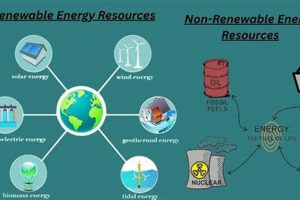
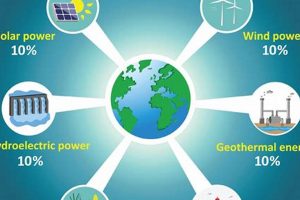
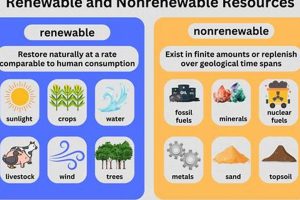
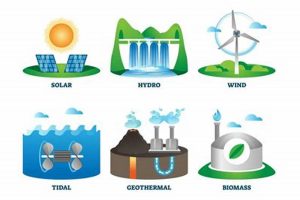
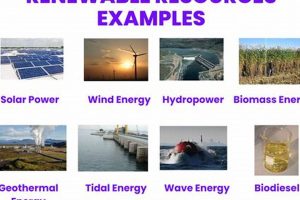
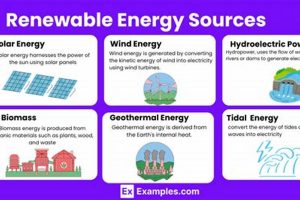
Sources of energy that are naturally replenished on a human timescale are critical for sustainable development. These sources derive from continuous or repetitive environmental processes, ensuring their availability for future generations. Sunlight, wind, flowing water, and geothermal heat exemplify this category. These differ significantly from finite reserves such as fossil fuels and minerals.
The utilization of these enduring supplies offers numerous advantages. They mitigate reliance on exhaustible and environmentally impactful options, thereby reducing carbon emissions and pollution. Historically, harnessing these plentiful assets has been crucial for societies, evolving from simple applications like windmills to sophisticated energy production technologies. Their sustained application contributes to energy independence and economic stability by fostering local resource utilization and decreasing vulnerability to global market fluctuations.
Subsequent sections will delve into specific types of these enduring assets, examining their application, technological advancements, and integration within current and future energy landscapes. This includes exploring strategies to maximize their efficiency, overcome associated challenges, and facilitate a transition toward a cleaner and more sustainable energy future.
Maximizing Enduring Energy Supplies
This section outlines key considerations for effectively leveraging energy sources that replenish naturally, promoting sustainable practices and minimizing environmental impact.
Tip 1: Prioritize Resource Diversification: Implement a multifaceted approach by integrating various enduring energy options such as solar, wind, and hydropower. This strategy reduces dependence on a single source and enhances system resilience against fluctuations in availability.
Tip 2: Invest in Energy Storage Solutions: Address the intermittent nature of some enduring resources (e.g., solar and wind) by deploying advanced energy storage systems. Battery technologies, pumped hydro storage, and thermal energy storage enhance grid stability and ensure a consistent power supply.
Tip 3: Optimize Grid Infrastructure: Upgrade existing transmission and distribution networks to accommodate the integration of dispersed generation facilities. Smart grid technologies, including advanced sensors and automated controls, facilitate efficient management and enhance reliability.
Tip 4: Promote Energy Efficiency: Reduce overall energy demand through implementing energy-efficient technologies and practices across all sectors. This includes upgrading building insulation, using energy-efficient appliances, and adopting smart building management systems.
Tip 5: Implement Supportive Policy Frameworks: Governments and regulatory bodies should establish clear and consistent policies that incentivize the development and deployment of enduring energy projects. These policies may include tax credits, feed-in tariffs, and mandates for the use of energy sources that replenish naturally.
Tip 6: Foster Public Awareness and Education: Increase public understanding of the benefits associated with enduring energy sources. Educational campaigns, community outreach programs, and accessible information resources encourage adoption and support for sustainable energy initiatives.
Tip 7: Support Research and Development: Continuously invest in research and development to improve the efficiency, cost-effectiveness, and reliability of enduring energy technologies. This includes exploring innovative solutions such as advanced materials, grid integration techniques, and energy storage systems.
Adopting these strategies enhances energy security, reduces environmental impact, and promotes economic growth. Implementing these recommendations will allow organizations and communities to secure a more sustainable future.
The following sections provide a more detailed examination of specific enduring energy technologies and their application in diverse contexts.
1. Sustainability

Sustainability, in the context of sources of energy that are naturally replenished, is not merely a desirable attribute but a foundational requirement. These assets, by definition, derive their value from their ability to regenerate continuously, ensuring long-term availability. This inherent characteristic directly addresses the core principle of sustainability: meeting present needs without compromising the ability of future generations to meet their own. The reliance on finite energy sources, such as fossil fuels, undermines sustainability by depleting resources and creating environmental burdens that future generations must bear. Sources of energy that are naturally replenished offer a contrasting approach, minimizing resource depletion and reducing long-term environmental impact.
The link between sources of energy that are naturally replenished and sustainability is exemplified in various sectors. Consider solar energy: Photovoltaic panels convert sunlight into electricity with minimal operational emissions, and solar resources are essentially inexhaustible. Wind energy, another illustration, harnesses the kinetic energy of wind to generate power; the consistent action of atmospheric systems ensures its continual availability. These examples underscore that sustainability in the energy sector necessitates a shift towards sources that naturally replenish.
In conclusion, the connection between sustainability and sources of energy that are naturally replenished is paramount. Sustained reliance on exhaustible resources inevitably leads to ecological imbalance and resource depletion. Therefore, integrating renewable sources into energy systems is imperative for achieving a genuinely sustainable energy future. Challenges remain, including intermittency and infrastructure requirements. However, the commitment to promoting sustainability drives technological innovation and policy development, paving the way for a future where energy needs are met without jeopardizing the well-being of the planet and its inhabitants.
2. Accessibility

Accessibility, in the context of enduring energy sources, transcends mere physical availability; it encompasses economic feasibility, geographic distribution, and technological readiness. These factors critically determine the extent to which a population can benefit from sources of energy that are naturally replenished. A resource may be geographically abundant, yet its effective utilization hinges on the presence of infrastructure for energy conversion, transmission, and storage. For instance, vast solar resources in desert regions are only accessible with substantial investment in photovoltaic technology and long-distance power transmission lines. Similarly, geothermal resources, while geographically concentrated, require advanced drilling and conversion technologies, limiting accessibility in areas with limited technological capacity.
Economic considerations further shape accessibility. High initial capital costs associated with enduring energy projects can be a barrier, especially in developing economies. While operational costs for many sources that are naturally replenished are relatively low, the upfront investment often necessitates government subsidies, private investment, or innovative financing mechanisms to render projects accessible. Feed-in tariffs, tax incentives, and power purchase agreements are examples of policy instruments that enhance economic accessibility by reducing financial risk and guaranteeing revenue streams. Successful integration of sources that are naturally replenished requires strategic planning to reduce implementation costs, making these assets accessible to communities and economies with constrained resources.
Ultimately, accessibility is a multifaceted challenge requiring a holistic approach. It is not sufficient to simply identify available resources; instead, the effective integration of sources that are naturally replenished hinges on parallel investments in infrastructure, technological development, and supportive policy frameworks. Enhancing accessibility not only democratizes energy access but also promotes energy independence and sustainable economic growth. Addressing accessibility barriers is thus a prerequisite for realizing the full potential of sources of energy that are naturally replenished and transitioning to a more sustainable energy future.
3. Technological Efficiency

Technological efficiency serves as a critical determinant of the viability and scalability of sources of energy that are naturally replenished. It represents the ratio of energy output to energy input within a given conversion process, directly impacting the economic competitiveness and environmental footprint of these sources. Higher technological efficiency translates to greater energy production per unit of resource consumed, yielding lower costs and reduced environmental impact. The evolution of photovoltaic cell technology, for instance, demonstrates this principle. Initial solar cell designs exhibited low efficiencies, limiting their practical application. Continuous advancements have increased energy conversion rates, making solar power a cost-effective alternative in numerous regions. This increased efficiency directly influences the adoption and economic sustainability of solar energy projects.
The interplay between technological efficiency and sources of energy that are naturally replenished extends to various sectors. Wind energy benefits from advancements in turbine design, materials science, and aerodynamic optimization, which maximize energy capture from wind currents. Hydropower gains from optimized turbine systems and dam management strategies that enhance electricity generation. Furthermore, improved energy storage technologies, such as advanced batteries and pumped hydro storage, address the inherent intermittency of solar and wind power, enabling a more consistent and reliable energy supply. In all cases, improvements in technological efficiency directly enable broader integration of sources of energy that are naturally replenished into existing energy grids, fostering a more sustainable energy mix.
In conclusion, technological efficiency is an essential parameter in the successful deployment of sources of energy that are naturally replenished. Continuous innovation and improvements in efficiency drive down costs, improve resource utilization, and promote broader adoption. Investing in research and development aimed at optimizing the efficiency of renewable energy technologies is crucial for realizing a sustainable and economically viable energy future. While challenges remain, the ongoing advancements in technological efficiency underscore the potential for sources of energy that are naturally replenished to play a central role in meeting global energy demands while mitigating climate change and resource depletion.
4. Economic Viability

Economic viability represents a critical determinant in the widespread adoption of sources of energy that are naturally replenished. The cost-effectiveness of these sources, relative to conventional fossil fuels, directly impacts their competitiveness and market penetration. Evaluating economic viability necessitates a comprehensive assessment encompassing capital investment, operational expenses, fuel costs (where applicable, such as in biomass), and potential revenue streams.
- Capital Costs and Amortization
The initial investment in renewable energy infrastructure, such as solar farms or wind turbine arrays, can be substantial. However, these capital costs are typically amortized over the project’s lifespan, which often extends for decades. As technology advances and manufacturing scales up, the capital costs associated with sources of energy that are naturally replenished are generally decreasing, enhancing their economic appeal. Government subsidies, tax incentives, and low-interest loans can further mitigate the initial financial burden, promoting broader deployment.
- Operational and Maintenance Costs
Sources of energy that are naturally replenished often exhibit lower operational and maintenance costs compared to conventional power plants. Solar and wind facilities, for example, do not require fuel inputs, reducing ongoing expenses and price volatility. Maintenance requirements typically involve routine inspections and component replacements, contributing to relatively stable operating costs. This long-term cost predictability enhances the economic attractiveness of sources of energy that are naturally replenished, particularly in volatile energy markets.
- Levelized Cost of Energy (LCOE)
The Levelized Cost of Energy (LCOE) serves as a crucial metric for comparing the economic competitiveness of different energy sources. LCOE incorporates all lifetime costs of an energy project, including capital, operational, and fuel expenses, and divides them by the total expected energy output. Declining LCOE values for sources of energy that are naturally replenished, such as solar and wind, indicate increasing economic viability. In numerous regions, the LCOE of renewable energy is now competitive with or lower than that of fossil fuels, driving market growth and facilitating energy transition.
- External Costs and Environmental Valuation
Traditional economic assessments often overlook the external costs associated with fossil fuel consumption, such as air pollution, greenhouse gas emissions, and public health impacts. Incorporating these external costs into economic models through mechanisms like carbon pricing or pollution taxes can significantly enhance the economic viability of sources of energy that are naturally replenished. Furthermore, quantifying the environmental benefits of sources that are naturally replenished, such as reduced carbon emissions and improved air quality, can provide a more comprehensive economic valuation that supports their deployment.
In conclusion, the economic viability of sources of energy that are naturally replenished is subject to technological advancements, policy support, and market conditions. As technology continues to improve and the external costs of fossil fuels are increasingly recognized, sources of energy that are naturally replenished are poised to become increasingly economically competitive, driving a transition towards a more sustainable and affordable energy future. Strategic deployment and continuous innovation remain vital to maximizing the economic benefits of sources of energy that are naturally replenished in diverse regional and global contexts.
5. Environmental Impact

The environmental impact associated with energy production and consumption is a critical factor driving the transition towards sources of energy that are naturally replenished. While often perceived as inherently benign, the deployment of these sources involves environmental considerations that warrant careful evaluation and mitigation. A comprehensive understanding of these impacts is crucial for informed decision-making and sustainable development.
- Land Use Considerations
The installation of solar farms, wind turbine arrays, and biomass plantations requires substantial land areas. This land use can result in habitat disruption, ecosystem fragmentation, and displacement of agricultural activities. Careful site selection, environmental impact assessments, and mitigation strategies are essential to minimize these negative effects. For instance, locating solar farms on brownfield sites or co-locating wind turbines with agricultural operations can reduce land-use conflicts and enhance ecosystem services.
- Resource Extraction and Manufacturing
The production of renewable energy technologies, such as solar panels and wind turbines, necessitates the extraction of raw materials, including rare earth elements and metals. Mining activities can lead to environmental degradation, water pollution, and habitat loss. Furthermore, the manufacturing processes themselves can consume significant energy and generate greenhouse gas emissions. Promoting sustainable sourcing practices, circular economy principles, and recycling initiatives can mitigate these impacts.
- Impacts on Wildlife
Wind turbines can pose a threat to avian and bat populations through collisions. Hydropower dams can alter river ecosystems, affecting fish migration and aquatic habitats. Careful siting, mitigation measures, and technology improvements are necessary to minimize these impacts on wildlife. Radar-based detection systems, bird diverters, and fish ladders are examples of strategies designed to reduce wildlife mortality and maintain ecological integrity.
- Water Consumption and Quality
Some sources of energy that are naturally replenished, such as concentrated solar power and geothermal plants, require significant amounts of water for cooling and operation. This water consumption can strain local water resources, particularly in arid regions. Furthermore, wastewater discharge from these facilities can potentially degrade water quality. Implementing water-efficient technologies, closed-loop cooling systems, and wastewater treatment processes can minimize these impacts and ensure sustainable water management.
Although sources of energy that are naturally replenished offer a substantially reduced environmental footprint compared to fossil fuels, a holistic understanding of their environmental implications is crucial for responsible deployment. Ongoing research, technological advancements, and robust regulatory frameworks are essential to mitigate potential negative impacts and ensure a sustainable energy transition. A life-cycle assessment approach, which considers all environmental impacts throughout the entire value chain, is instrumental for optimizing the environmental performance of sources of energy that are naturally replenished and promoting a sustainable energy future.
6. Resource Availability

Resource availability represents a primary factor influencing the feasibility and scalability of sources of energy that are naturally replenished. The geographical distribution, intensity, and temporal consistency of renewable resources dictate the potential for energy generation and the need for energy storage or transmission solutions.
- Geographic Distribution and Concentration
The global distribution of renewable resources is uneven. Solar irradiance, wind patterns, and geothermal activity exhibit regional variations, affecting the economic viability of specific renewable technologies. For instance, solar energy is more efficient in regions with high solar irradiance, while wind energy benefits from consistently strong wind patterns. This uneven distribution necessitates strategic resource assessment and localized technology deployment, optimizing energy production based on regional resource availability.
- Temporal Variability and Intermittency
Many renewable resources, such as solar and wind, exhibit temporal variability and intermittency, influenced by daily and seasonal cycles. Solar energy production fluctuates with daylight hours and weather conditions, while wind energy varies with wind speed and direction. This intermittency necessitates the integration of energy storage solutions or grid management strategies to ensure a reliable energy supply. Hybrid renewable energy systems, combining different renewable sources and storage, can mitigate the impacts of intermittency and enhance grid stability.
- Resource Quality and Intensity
The quality and intensity of renewable resources directly affect the efficiency of energy conversion. High solar irradiance, consistent wind speeds, and high geothermal gradients enhance the performance of renewable energy technologies. Resource assessments must quantify these parameters to accurately estimate energy production potential and optimize technology selection. Advanced forecasting techniques can improve the prediction of resource availability, enabling better grid management and energy dispatch decisions.
- Accessibility and Infrastructure Requirements
The accessibility of renewable resources is contingent upon infrastructure availability and grid connectivity. Remote renewable resources, such as offshore wind or geothermal sites, require extensive transmission infrastructure to deliver electricity to load centers. The development of smart grids, advanced transmission lines, and energy storage systems is essential to fully harness geographically dispersed renewable resources. Strategic infrastructure planning and investment are vital for unlocking the potential of remote and underutilized renewable energy sources.
These facets collectively highlight the critical role of resource availability in shaping the deployment and success of sources of energy that are naturally replenished. While the finite nature of fossil fuels presents inherent limitations, the sustained utilization of enduring energy is ultimately governed by a comprehensive understanding and management of resource-related constraints and opportunities. The future integration is dependent on advances in resource assessment, grid management, and energy storage technologies.
Frequently Asked Questions about Sources of Energy That Are Naturally Replenished
This section addresses common inquiries regarding sources of energy that are naturally replenished, providing detailed explanations and dispelling misconceptions.
Question 1: What distinguishes sources of energy that are naturally replenished from fossil fuels?
Sources of energy that are naturally replenished derive from resources that regenerate on a human timescale, such as sunlight, wind, and water. Fossil fuels are finite resources formed over millions of years and are depleted with use. The reliance on sources of energy that are naturally replenished promotes sustainability and reduces greenhouse gas emissions.
Question 2: Are sources of energy that are naturally replenished truly inexhaustible?
While the resources themselves are continually replenished, the technologies used to harness them require maintenance and eventual replacement. Furthermore, certain renewable resources may be subject to variability due to climatic conditions or seasonal changes. The sustainable management and efficient utilization of these technologies are critical for long-term viability.
Question 3: Why are sources of energy that are naturally replenished sometimes intermittent or unreliable?
Solar and wind energy are inherently intermittent, dependent on sunlight availability and wind patterns. This intermittency can pose challenges to grid stability and reliability. Addressing this requires advanced energy storage solutions, improved grid management strategies, and diversified energy sources.
Question 4: What are the primary environmental concerns associated with sources of energy that are naturally replenished?
Despite their environmental advantages over fossil fuels, sources of energy that are naturally replenished can have localized environmental impacts. These include land use changes, habitat disruption, impacts on wildlife, and water consumption. Careful site selection, environmental impact assessments, and mitigation strategies are essential to minimize these effects.
Question 5: How cost-competitive are sources of energy that are naturally replenished compared to conventional energy sources?
The cost-competitiveness of sources of energy that are naturally replenished has improved dramatically in recent years, with solar and wind power often being cost-competitive or even cheaper than fossil fuels in many regions. Technological advancements, economies of scale, and policy support have contributed to this trend. However, cost-effectiveness can vary depending on local resource availability, infrastructure, and policy incentives.
Question 6: What policy measures are most effective in promoting the adoption of sources of energy that are naturally replenished?
Effective policy measures include feed-in tariffs, tax incentives, renewable portfolio standards, carbon pricing, and subsidies. These policies provide financial incentives, create market demand, and level the playing field between sources of energy that are naturally replenished and fossil fuels. Long-term policy certainty is crucial for attracting investment and driving innovation in the renewable energy sector.
Sources of energy that are naturally replenished offer a pathway towards a sustainable and resilient energy future. Understanding their benefits and limitations is essential for effective deployment and long-term success.
The following section summarizes the key benefits of these renewable assets and their role in achieving energy security and environmental sustainability.
Conclusion
The preceding analysis has explored the multifaceted dimensions of energy sources that are naturally replenished. From their fundamental sustainability to the intricacies of accessibility, technological efficiency, economic viability, environmental impact, and resource availability, each facet has been examined. This exploration underscores the pivotal role of such resources in transitioning towards a more secure and environmentally responsible energy paradigm.
Sustained commitment to the advancement and deployment of energy sources that are naturally replenished is imperative. It necessitates ongoing investment in research and development, strategic policy implementation, and a comprehensive understanding of the complex interplay between technology, economics, and the environment. The realization of a future powered by these resources demands a collective and unwavering dedication to sustainability and innovation.