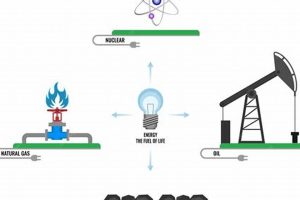
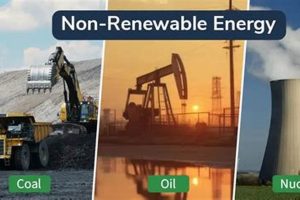
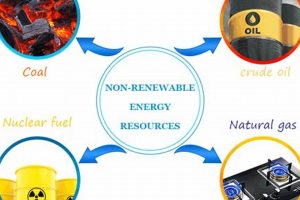
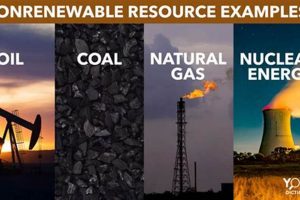
Resources categorized as finite and exhaustible fall into several distinct classifications based on their origin and utility. Fossil fuels, encompassing coal, petroleum, and natural gas, represent one significant category, formed over millennia from decaying organic matter. Mineral resources, such as metallic ores like iron and bauxite, and non-metallic resources like sand and gravel, constitute another crucial category, extracted from the Earth’s crust. Nuclear fuels, primarily uranium, represent a third category, utilized for nuclear power generation.
These finite resources have played a vital role in powering industrial development and shaping modern civilization. Access to and utilization of these resources have historically influenced geopolitical landscapes and economic growth. However, the finite nature of these resources necessitates careful management, efficient utilization, and exploration of alternative, sustainable resources to ensure long-term societal well-being and environmental sustainability.
Understanding the distinct characteristics and limitations of these resources is paramount for developing sustainable practices. Further exploration will delve into the specific challenges and opportunities associated with each resource category, examining extraction methods, environmental impacts, and the ongoing transition towards renewable alternatives. This will encompass discussions on resource management strategies, technological advancements, and the evolving global energy landscape.
Managing Finite Resources
Efficient utilization and responsible management of finite resources are crucial for ensuring long-term sustainability. The following provides practical guidance for individuals, industries, and governments.
Tip 1: Prioritize Energy Efficiency: Implementing energy-efficient technologies and practices in buildings, transportation, and industrial processes reduces demand on finite energy sources.
Tip 2: Invest in Renewable Energy Sources: Transitioning towards renewable energy sources like solar, wind, and hydropower reduces reliance on exhaustible resources and mitigates environmental impacts.
Tip 3: Promote Sustainable Transportation: Encouraging public transportation, cycling, and walking, as well as developing electric and fuel-efficient vehicles, minimizes the consumption of fossil fuels.
Tip 4: Support Recycling and Resource Recovery: Recycling metallic and non-metallic resources reduces the need for new extraction, conserving natural resources and minimizing environmental damage.
Tip 5: Implement Responsible Mining Practices: Employing environmentally sound mining practices minimizes land degradation, water pollution, and habitat destruction associated with resource extraction.
Tip 6: Develop Advanced Materials and Technologies: Research and development of advanced materials and technologies can improve resource efficiency, reduce waste, and enable the utilization of alternative resources.
Tip 7: Foster International Cooperation: Global collaboration on resource management, technology sharing, and sustainable development policies is essential for addressing shared challenges.
Adopting these strategies promotes resource conservation, reduces environmental impact, and contributes to a more sustainable future. These efforts are crucial for ensuring the responsible use of finite resources and paving the way for a smooth transition to a renewable energy future.
These actionable steps represent a starting point for individuals, communities, and nations to contribute to a more sustainable future. Further discussion will explore the broader implications of resource depletion and the long-term strategies required for a sustainable global economy.
1. Fossil Fuels

Fossil fuels represent a prominent category within non-renewable resources, serving as a primary energy source globally. Their formation over millions of years from decaying organic matter results in concentrated energy reserves. Understanding their specific characteristics and implications is crucial for comprehending the broader context of non-renewable resource management.
- Formation and Composition
Fossil fuels originate from ancient biomass subjected to intense heat and pressure over geological timescales. Coal, formed from plant matter, consists primarily of carbon. Petroleum, derived from marine organisms, is a complex mixture of hydrocarbons. Natural gas, often found alongside petroleum, is composed mainly of methane. These distinct compositions influence their energy content and environmental impact upon combustion.
- Energy Production and Consumption
Fossil fuels are combusted to generate heat and electricity, powering industries, transportation, and residential needs. Their high energy density makes them efficient energy carriers. However, this combustion releases greenhouse gases, contributing significantly to climate change. Global energy demand continues to drive fossil fuel consumption, posing a challenge to environmental sustainability.
- Environmental Impacts
The extraction, processing, and combustion of fossil fuels have significant environmental consequences. Coal mining can lead to habitat destruction and water pollution. Oil spills pose threats to marine ecosystems. Natural gas leaks contribute to methane emissions, a potent greenhouse gas. Addressing these environmental challenges is crucial for mitigating the negative impacts of fossil fuel dependence.
- Geopolitical Significance
The uneven distribution of fossil fuel reserves globally has significant geopolitical implications. Control over these resources influences international relations, trade dynamics, and energy security. The transition away from fossil fuels and towards renewable energy sources has the potential to reshape geopolitical landscapes and promote greater energy independence for nations.
The characteristics and implications of fossil fuels underscore the complex challenges associated with managing non-renewable resources. Balancing energy security with environmental sustainability requires a multifaceted approach encompassing technological innovation, policy changes, and international cooperation to transition towards a more sustainable energy future.
2. Nuclear Fuels

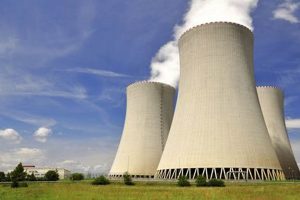
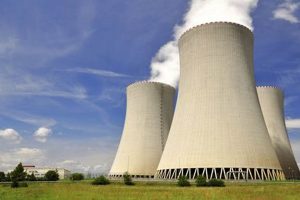
Nuclear fuels, primarily uranium and thorium, constitute a distinct category within non-renewable resources. Unlike fossil fuels, nuclear fuels do not release greenhouse gases during energy production, offering a potential advantage in mitigating climate change. However, their non-renewable nature stems from the finite availability of uranium and thorium ores in the Earth’s crust. The process of nuclear fission, which powers nuclear reactors, involves splitting the nuclei of these heavy atoms, releasing substantial energy. Uranium-235 is the most commonly used isotope for nuclear fission due to its fissile nature. For example, nuclear power plants in France generate a significant portion of the nation’s electricity using uranium fuel.
The extraction and processing of uranium ore involve environmental considerations, including land disturbance, water contamination, and the generation of radioactive tailings. Furthermore, the spent nuclear fuel from reactors remains radioactive for extended periods, requiring safe and secure long-term storage solutions. The potential for nuclear proliferation and the risk of accidents, such as Chernobyl and Fukushima, represent additional challenges associated with nuclear energy. Despite these challenges, nuclear fuels offer a high energy density and contribute to energy diversification, reducing reliance on fossil fuels. Research into advanced reactor designs and fuel cycles aims to enhance safety, minimize waste generation, and improve the sustainability of nuclear energy.
The inclusion of nuclear fuels within the broader context of non-renewable resources highlights the complex considerations surrounding energy production and consumption. Balancing the benefits of carbon-free electricity generation with the challenges of waste management and safety remains a crucial aspect of utilizing nuclear fuels responsibly. The finite nature of uranium and thorium resources necessitates ongoing research and development of alternative energy sources and improved nuclear technologies to ensure long-term energy security and environmental sustainability. A comprehensive understanding of nuclear fuels’ role within the broader energy landscape is essential for informed decision-making and policy development in the pursuit of a sustainable energy future.
3. Mineral Resources
Mineral resources represent a crucial component of non-renewable resources, encompassing a wide range of materials extracted from the Earth’s crust. These resources are essential for various industrial applications, construction, and technological advancements. Understanding their diverse nature, extraction processes, and associated environmental impacts is crucial for responsible resource management and sustainable development.
- Metallic Minerals
Metallic minerals, such as iron, copper, aluminum (derived from bauxite), and gold, are characterized by their electrical conductivity, malleability, and ductility. Iron ore, for instance, serves as a fundamental input for steel production, supporting infrastructure development globally. Copper, vital for electrical wiring and electronics, highlights the critical role of metallic minerals in modern technology. Extraction of these resources often involves open-pit mining or underground operations, which can impact surrounding ecosystems through habitat destruction and land degradation. The finite nature of these deposits necessitates efficient utilization and recycling practices to extend their lifespan.
- Non-Metallic Minerals
Non-metallic minerals encompass a diverse group of materials, including sand, gravel, limestone, and gypsum. These resources are essential for construction, manufacturing, and agricultural applications. Sand and gravel, for example, are primary components of concrete, while limestone is used in cement production and as a building material. The extraction of non-metallic minerals often involves quarrying, which can alter landscapes and impact local biodiversity. Sustainable management practices, including land reclamation and habitat restoration, are crucial for minimizing environmental impacts.
- Rare Earth Elements
Rare earth elements, a group of 17 metallic elements, possess unique magnetic and luminescent properties crucial for advanced technologies. Neodymium, for example, is used in high-strength magnets for wind turbines and electric vehicle motors. Dysprosium is essential for lasers and other optical devices. The increasing demand for rare earth elements, coupled with their concentrated distribution in specific geographical regions, raises concerns about supply chain vulnerabilities and the need for diversified sourcing strategies.
- Environmental and Social Considerations
The extraction and processing of mineral resources present significant environmental and social challenges. Mining operations can lead to deforestation, soil erosion, water pollution, and greenhouse gas emissions. Furthermore, mining activities can displace communities, impact indigenous populations, and create social inequalities. Implementing responsible mining practices, adhering to stringent environmental regulations, and fostering community engagement are essential for mitigating these negative impacts and promoting sustainable development.
The multifaceted nature of mineral resources underscores their integral role in modern society and the complex challenges associated with their extraction and utilization. As essential components of non-renewable resources, their finite availability necessitates careful management, efficient utilization, and the development of alternative materials and technologies. Addressing the environmental and social impacts of mining activities is crucial for ensuring a sustainable future and minimizing the long-term consequences of resource depletion.
4. Finite Availability

Finite availability represents a defining characteristic of non-renewable resources, fundamentally shaping their utilization and long-term implications. This inherent limitation arises from the geological timescales required for their formation, vastly exceeding human timescales. Fossil fuels, for example, originate from organic matter accumulated and transformed over millions of years. The current rate of consumption significantly outpaces the rate of formation, underscoring the finite nature of these resources. Similarly, mineral resources, formed through complex geological processes, exist in finite deposits within the Earth’s crust. The depletion of high-grade ores necessitates the exploitation of lower-grade deposits, increasing the energy and environmental costs associated with extraction. This finite availability drives the need for resource management strategies, including conservation, recycling, and the development of alternative materials.
The finite nature of these resources has profound economic and geopolitical implications. Scarcity can drive price volatility, impacting energy security and international relations. The uneven distribution of resources globally contributes to geopolitical tensions and resource competition. Understanding the finite availability of non-renewable resources is crucial for informed decision-making regarding resource allocation, investment in research and development, and the transition to sustainable alternatives. For instance, the projected depletion of certain rare earth elements, crucial for advanced technologies, necessitates exploration of alternative materials and diversification of supply chains. The finite availability of uranium, the primary fuel for nuclear power, underscores the importance of long-term waste management strategies and the development of advanced reactor designs.
In summary, finite availability represents a fundamental constraint on the utilization of non-renewable resources. This inherent characteristic necessitates a shift towards sustainable practices, including resource conservation, increased efficiency, and the development and adoption of renewable energy sources. Recognizing the interconnectedness of resource availability, economic stability, and environmental sustainability is crucial for navigating the challenges associated with finite resources and ensuring a sustainable future. The transition to a circular economy, emphasizing resource recovery and reuse, represents a crucial step towards decoupling economic growth from resource depletion and mitigating the long-term consequences of finite availability.
5. Environmental Impact

The extraction, processing, and utilization of non-renewable resources exert significant environmental impacts across various ecosystems. These impacts, often interconnected and far-reaching, necessitate careful consideration and mitigation strategies to ensure environmental sustainability. Understanding the specific environmental consequences associated with each type of non-renewable resource is crucial for informed decision-making and responsible resource management.
- Greenhouse Gas Emissions
Combustion of fossil fuels releases substantial quantities of greenhouse gases, primarily carbon dioxide, methane, and nitrous oxide, into the atmosphere. These gases contribute to climate change, driving global warming, sea-level rise, and extreme weather events. The extraction and processing of fossil fuels also release methane, a potent greenhouse gas. For example, coal-fired power plants represent a significant source of carbon dioxide emissions. Mitigating greenhouse gas emissions from fossil fuel utilization is a critical challenge in addressing climate change.
- Air and Water Pollution
Extraction and processing of non-renewable resources can lead to significant air and water pollution. Mining operations release particulate matter, sulfur dioxide, and heavy metals into the air, impacting air quality and human health. Coal mining, for example, can lead to acid mine drainage, contaminating water sources with heavy metals and acidic runoff. Oil spills pose severe threats to marine ecosystems, causing widespread damage to marine life and coastal environments. Implementing stringent environmental regulations and adopting cleaner technologies are crucial for minimizing air and water pollution associated with non-renewable resource extraction and utilization.
- Land Degradation and Habitat Loss
Mining activities, particularly open-pit mining, result in extensive land disturbance, habitat destruction, and deforestation. The removal of vegetation and topsoil disrupts ecosystems, reduces biodiversity, and increases soil erosion. For example, mountaintop removal mining for coal significantly alters landscapes and impacts downstream water quality. Implementing land reclamation and habitat restoration strategies is crucial for mitigating the ecological impacts of mining operations and promoting biodiversity conservation.
- Waste Management
Non-renewable resource extraction and utilization generate substantial waste streams, posing significant management challenges. Nuclear power plants produce radioactive waste requiring safe and secure long-term storage. The disposal of coal ash, a byproduct of coal combustion, can contaminate groundwater and surface water. The extraction and processing of mineral resources generate tailings, which can contain heavy metals and other hazardous substances. Implementing effective waste management strategies, including recycling, reuse, and safe disposal, is essential for minimizing environmental impacts and promoting resource efficiency.
The environmental impacts associated with non-renewable resources underscore the urgent need for a transition to more sustainable practices. Investing in renewable energy sources, improving energy efficiency, promoting resource conservation, and implementing responsible waste management strategies are crucial for mitigating the environmental consequences of non-renewable resource dependence. Addressing these challenges requires a comprehensive approach involving technological innovation, policy changes, international cooperation, and a fundamental shift towards a circular economy that prioritizes resource efficiency and environmental stewardship.
Frequently Asked Questions about Finite Resources
This section addresses common inquiries regarding finite resources, aiming to provide clear and concise information.
Question 1: What distinguishes renewable from non-renewable resources?
Renewable resources replenish naturally over relatively short periods, while non-renewable resources exist in finite quantities and are depleted with use. Solar, wind, and hydropower are examples of renewable resources, whereas fossil fuels and nuclear fuels are non-renewable.
Question 2: Why is the transition to renewable energy important?
Transitioning to renewable energy is essential for mitigating climate change, reducing reliance on finite resources, and promoting long-term energy security.
Question 3: What are the primary challenges associated with transitioning to renewable energy?
Challenges include the intermittency of some renewable sources, infrastructure development requirements, and the initial investment costs. Technological advancements and supportive policies are addressing these challenges.
Question 4: How does resource extraction impact local communities?
Resource extraction can have both positive and negative impacts on local communities. While it can create jobs and stimulate economic activity, it can also lead to environmental degradation, displacement of communities, and social disruption. Responsible resource management practices are essential for mitigating negative impacts.
Question 5: What role does recycling play in resource management?
Recycling conserves natural resources, reduces waste sent to landfills, and minimizes the environmental impact of resource extraction and processing. It plays a crucial role in promoting a circular economy and extending the lifespan of finite resources.
Question 6: How can individuals contribute to responsible resource management?
Individuals can contribute by reducing energy consumption, adopting sustainable transportation options, supporting recycling initiatives, and making informed consumer choices that prioritize resource efficiency and environmental responsibility.
Understanding the characteristics and implications of finite resources is crucial for informed decision-making and promoting a sustainable future. The transition to a more sustainable resource management paradigm requires collective action from individuals, industries, and governments.
Further exploration will delve into specific case studies and examples of sustainable resource management practices in various sectors.
Conclusion
Exploration of finite resource categoriesfossil fuels, nuclear fuels, and mineral resourcesreveals inherent limitations and significant environmental consequences. Fossil fuel combustion drives climate change, while nuclear fuels present waste disposal and safety challenges. Mineral resource extraction disrupts ecosystems and necessitates careful management of finite reserves. The finite nature of these resources underscores the urgency of transitioning to renewable alternatives and implementing sustainable practices.
The future hinges on a decisive shift toward sustainable resource management. This requires a multifaceted approach: embracing renewable energy technologies, enhancing resource efficiency, promoting recycling and reuse, and fostering responsible consumption patterns. Global cooperation and innovative solutions are essential to navigate the complex interplay of resource availability, environmental protection, and economic development. The choices made today will determine the availability of resources for future generations and the health of the planet.