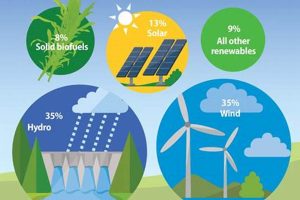
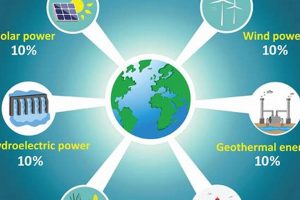
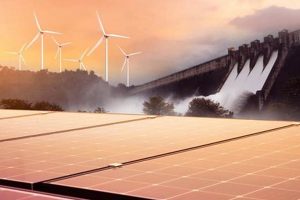
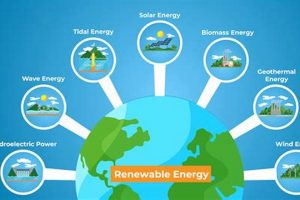
Energy derived from naturally replenishing processes is a crucial aspect of modern power generation. These resources, unlike finite fossil fuels, are continuously replenished by the environment, ensuring a sustainable energy future. Common examples include sunlight, wind, flowing water, geothermal heat, and biomass.
The utilization of such resources offers significant environmental advantages, mitigating greenhouse gas emissions and reducing reliance on conventional fuels. Historically, these energy forms have played a role in human civilization, but recent technological advancements have dramatically increased their efficiency and applicability. Shifting towards these alternatives enhances energy security and promotes economic diversification.
The following sections will delve into specific examples of prominent sustainable energy methods, detailing their operational principles, advantages, and challenges in contributing to a cleaner and more secure energy landscape. These include harnessing solar radiation, capturing kinetic energy from the wind, utilizing hydroelectric power, tapping into geothermal reservoirs, and converting organic matter into usable fuel.
Guidance on Sustainable Energy Options
The adoption of sustainable energy solutions is paramount for environmental preservation and long-term energy security. The following guidelines offer practical strategies for integrating these power generation methods.
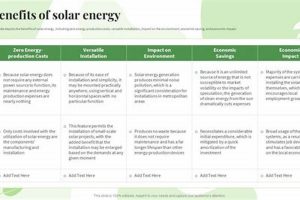
Tip 1: Prioritize Solar Energy Integration. Assess the feasibility of photovoltaic panel installation on residential, commercial, and industrial properties. Governmental incentives and declining technology costs make solar power an increasingly viable option.
Tip 2: Invest in Wind Energy Development. Support the construction of wind farms in suitable geographic locations. Consider community-scale wind projects to provide localized power generation and reduce transmission losses.
Tip 3: Enhance Hydropower Infrastructure. Optimize existing hydroelectric facilities to maximize energy output and minimize environmental impact. Explore opportunities for small-scale hydroelectric projects in appropriate river systems.
Tip 4: Explore Geothermal Energy Potential. Conduct thorough geological surveys to identify areas with geothermal resources. Implement geothermal heating and cooling systems in residential and commercial buildings where feasible.
Tip 5: Promote Biomass Energy Production. Establish sustainable biomass supply chains utilizing agricultural residues and forestry byproducts. Employ advanced biofuel technologies to convert biomass into liquid transportation fuels.
These strategies, when implemented effectively, can significantly reduce reliance on fossil fuels, mitigate climate change, and foster a more sustainable energy future. A diversified approach, incorporating multiple sustainable energy methods, is crucial for achieving energy independence and environmental stewardship.
The subsequent sections will provide a comprehensive overview of these sources, detailing their specific characteristics, advantages, and limitations.
1. Availability

The feasibility of deploying sustainable energy solutions hinges significantly on resource availability. Solar radiation, for example, varies substantially across geographic locations, influencing photovoltaic system output. Regions with high solar irradiance demonstrate greater potential for solar energy generation than areas with frequent cloud cover. Wind resource availability is similarly contingent on geographic factors, with coastal areas and open plains often exhibiting higher wind speeds suitable for wind turbine operation. These variations directly affect the economic viability and overall effectiveness of such systems. Hydropower relies on consistent precipitation and river flow, making its applicability dependent on hydrological cycles and watershed management. Geothermal energy availability is concentrated in geologically active regions, limiting its widespread deployment. Biomass availability is tied to agricultural practices, forestry management, and waste generation, requiring sustainable harvesting and conversion processes to avoid resource depletion.
The cause-and-effect relationship between resource availability and renewable energy deployment is fundamental. Scarce solar radiation, for example, directly inhibits solar power output, necessitating larger photovoltaic arrays to achieve desired energy production levels, thus raising costs. Similarly, inconsistent wind patterns reduce the capacity factor of wind turbines, impacting their economic competitiveness. Furthermore, inadequate water availability restricts hydropower generation, potentially leading to energy shortages during dry seasons. Understanding these correlations is critical for informed energy planning and strategic investment in renewable energy infrastructure. Real-world examples illustrate these principles. Germany’s significant investment in solar energy, despite relatively lower solar irradiance compared to sunnier regions, demonstrates the influence of policy incentives and technological advancements in overcoming resource limitations. Conversely, regions with abundant geothermal resources, such as Iceland, have successfully leveraged this advantage to achieve high levels of renewable energy penetration.
In summary, resource availability serves as a critical determinant of renewable energy viability. A thorough assessment of resource potential is essential for selecting appropriate renewable energy technologies, optimizing system design, and maximizing energy output. Challenges related to resource variability and intermittency necessitate the development of energy storage solutions and grid integration strategies. Ultimately, a comprehensive understanding of resource availability contributes to the successful implementation of sustainable energy solutions and the transition towards a cleaner energy future.
2. Sustainability

The inherent connection between the five primary categories of renewable energy and sustainability stems from their ability to replenish naturally, mitigating the depletion of finite resources. Solar, wind, hydro, geothermal, and biomass energy sources derive power from processes that, under responsible management, can endure indefinitely. The sustainability component, however, is not automatically guaranteed. Cause and effect relationships dictate that unsustainable practices within any of these categories can undermine their renewable nature. For example, deforestation to increase biomass feedstock can negate the carbon neutrality of biomass energy and disrupt ecosystems. Similarly, poorly planned hydroelectric dams can devastate aquatic habitats, compromising the long-term ecological viability of the resource.
Sustainability, therefore, is a critical qualifier. It mandates that these energy sources are harnessed in a manner that minimizes environmental impact and ensures long-term resource availability. This involves careful assessment of ecological consequences, implementation of mitigation strategies, and adherence to responsible resource management practices. Solar panel production, for instance, requires minimizing the use of rare earth minerals and establishing effective recycling programs to address end-of-life disposal. Wind turbine deployment must consider potential impacts on bird and bat populations, necessitating careful site selection and mitigation technologies. Geothermal energy extraction requires monitoring subsurface pressures to prevent induced seismicity. The importance of sustainability is exemplified by countries like Costa Rica, which have achieved high levels of renewable energy integration while prioritizing environmental conservation.
In conclusion, while solar, wind, hydro, geothermal, and biomass offer inherently renewable energy potential, their true value lies in their sustainable implementation. Neglecting the principles of sustainability transforms these potentially beneficial resources into environmentally damaging endeavors. The practical significance of this understanding demands a holistic approach to renewable energy development, integrating environmental safeguards, promoting responsible resource management, and fostering continuous innovation to minimize ecological footprint. The challenge lies in ensuring that the pursuit of clean energy does not come at the expense of long-term environmental integrity.
3. Technological Feasibility

The practical application of renewable energy is intrinsically linked to the maturity and efficacy of relevant technologies. The ability to harness solar, wind, hydro, geothermal, and biomass resources hinges on the existence and ongoing refinement of technological solutions capable of efficiently converting these resources into usable energy forms.
- Photovoltaic Efficiency
The efficiency of photovoltaic cells in converting sunlight to electricity is a critical factor in the economic viability of solar energy. Higher efficiency ratings translate to greater energy output per unit area, reducing land use requirements and overall system costs. Ongoing research focuses on developing advanced materials and cell designs to surpass current efficiency limitations. For example, perovskite solar cells show promise but face challenges related to long-term stability.
- Wind Turbine Design and Materials
The design and materials used in wind turbines directly impact their energy capture capabilities, operational lifespan, and maintenance requirements. Larger rotor diameters enable turbines to harness more wind energy, but also necessitate stronger and lighter materials to withstand increased mechanical stresses. Innovations in blade aerodynamics and tower construction contribute to improved performance and reduced downtime. The integration of smart sensors and predictive maintenance algorithms enhances turbine reliability.
- Hydropower Turbine Technology
Hydropower generation relies on turbine technology to convert the kinetic energy of flowing water into electricity. Turbine designs must be optimized for specific hydrological conditions, including water flow rates and head pressures. Fish-friendly turbine designs are increasingly important to mitigate environmental impacts on aquatic ecosystems. Pumped storage hydropower systems utilize reversible turbines to store excess energy and provide grid stabilization services.
- Geothermal Power Plant Operations
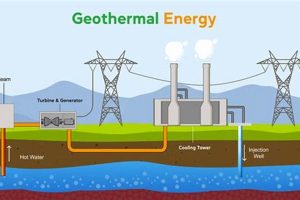
Geothermal power plants utilize various technologies to extract heat from the Earth’s interior and convert it into electricity. Enhanced geothermal systems (EGS) are designed to access geothermal resources in areas with limited natural permeability, requiring advanced drilling and hydraulic fracturing techniques. Corrosion-resistant materials are essential for handling highly mineralized geothermal fluids. Combined heat and power (CHP) systems maximize energy efficiency by utilizing waste heat for heating and cooling applications.
- Biomass Conversion Methods
Biomass conversion technologies encompass a range of processes for transforming organic matter into usable energy carriers, including combustion, gasification, and anaerobic digestion. Efficient biomass combustion requires advanced boiler designs to minimize emissions of particulate matter and other pollutants. Gasification converts biomass into a synthetic gas that can be used to generate electricity or produce biofuels. Anaerobic digestion breaks down organic matter in the absence of oxygen, producing biogas that can be used for heating, electricity generation, or transportation.
The technological feasibility of renewable energy is not static. Continuous innovation and development are essential for improving performance, reducing costs, and expanding the applicability of these technologies. Investment in research and development, coupled with supportive policy frameworks, is crucial for accelerating the transition to a sustainable energy future. Further advances are needed to optimize energy storage solutions, integrate renewable energy sources into existing grid infrastructure, and address challenges related to intermittency and variability.
4. Economic Viability

The integration of solar, wind, hydro, geothermal, and biomass energy sources hinges significantly on their economic competitiveness. The cost of generating electricity or heat from these renewable resources must be competitive with conventional fossil fuels to facilitate widespread adoption. Economic viability encompasses factors such as initial capital investment, operating and maintenance expenses, fuel costs (where applicable, as in biomass), and the lifetime energy output of the system. The cause-and-effect relationship is direct: if renewable energy technologies are prohibitively expensive compared to alternatives, their deployment will be limited, regardless of environmental benefits. Economic viability is therefore a critical component, influencing the speed and scale of renewable energy integration. Real-world examples demonstrate this principle. The dramatic decrease in the cost of solar photovoltaic (PV) systems over the past decade has been a primary driver of their rapid growth in many regions. Conversely, geothermal energy, while offering baseload power capabilities, often faces higher upfront capital costs, which can hinder its development in certain markets.
Subsidies, tax incentives, and carbon pricing mechanisms can significantly impact the economic equation, altering the competitiveness of the five renewable energy sources. Feed-in tariffs, for instance, guarantee a fixed price for electricity generated from renewable sources, providing revenue certainty for project developers and encouraging investment. Carbon taxes, on the other hand, increase the cost of fossil fuel-based power generation, making renewable energy more attractive. The practical application of these economic levers varies across different regions and policy environments. Germany’s Energiewende (energy transition) has relied heavily on feed-in tariffs to promote renewable energy development, while other countries have adopted a more market-based approach. The long-term economic viability of these renewable energy sources also depends on technological advancements that drive down costs and improve efficiency. Research and development efforts focused on next-generation solar cells, advanced wind turbine designs, and more efficient geothermal extraction techniques are crucial for ensuring the continued competitiveness of these technologies.
In summary, economic viability is a paramount consideration in the widespread adoption of renewable energy sources. The cost-effectiveness of solar, wind, hydro, geothermal, and biomass technologies directly influences their ability to compete with conventional fossil fuels and contribute to a cleaner energy future. While government policies and technological advancements play a significant role in shaping the economic landscape, achieving true grid parity requires ongoing efforts to drive down costs, improve efficiency, and enhance the overall value proposition of these sustainable energy alternatives. Challenges remain in addressing the intermittency of some renewable sources and integrating them seamlessly into existing grid infrastructure. Overcoming these hurdles is essential for realizing the full economic potential of renewable energy and transitioning towards a more sustainable energy system.
5. Environmental Impact
The environmental effects associated with the implementation of solar, wind, hydro, geothermal, and biomass energy sources are pivotal considerations in assessing their overall sustainability. While these energy forms are often promoted as alternatives to fossil fuels, each presents specific environmental challenges. The construction of solar farms can result in habitat loss and land degradation, particularly in desert ecosystems. Wind turbine deployment may lead to avian and bat mortality, requiring careful site selection and mitigation strategies. Hydropower projects can alter river ecosystems, impacting fish migration and water quality. Geothermal energy extraction carries the risk of induced seismicity and the release of greenhouse gases. Biomass energy production, if not managed sustainably, can contribute to deforestation and air pollution. The importance of rigorously evaluating and mitigating these impacts is paramount to ensure that renewable energy development aligns with broader environmental objectives.
Practical application of this understanding necessitates a comprehensive environmental impact assessment for each renewable energy project. This assessment should consider the specific characteristics of the site, the potential impacts on local ecosystems, and the implementation of mitigation measures to minimize negative consequences. For example, solar farm development can incorporate habitat restoration and biodiversity conservation measures. Wind turbine projects can employ bird and bat deterrent technologies. Hydropower facilities can implement fish passage systems and maintain minimum flow levels. Geothermal operations can utilize closed-loop systems to minimize the release of greenhouse gases. Sustainable biomass energy production requires careful forest management practices and the use of advanced combustion technologies. These strategies are essential for minimizing the environmental footprint of renewable energy projects and maximizing their contribution to a sustainable energy future.
In summary, while the five primary renewable energy sources offer significant potential for reducing greenhouse gas emissions and diversifying energy supplies, their deployment must be approached with careful consideration of potential environmental consequences. A thorough understanding of these impacts, coupled with the implementation of effective mitigation measures, is crucial for ensuring that renewable energy development contributes to a truly sustainable energy system. Challenges remain in addressing the cumulative impacts of renewable energy projects, balancing energy production with environmental protection, and fostering public acceptance of renewable energy development. Continued research and innovation are needed to develop more environmentally benign technologies and improve our understanding of the long-term ecological effects of renewable energy systems.
Frequently Asked Questions
This section addresses common inquiries regarding the primary renewable energy options, offering clarity and addressing prevalent misconceptions.
Question 1: Are renewable energy sources truly inexhaustible?
Renewable energy is derived from naturally replenishing processes; however, the sustainability of each source depends on responsible management and environmental stewardship. Overexploitation or unsustainable practices can diminish the availability and effectiveness of even these resources.
Question 2: What is the primary limiting factor for widespread adoption of sustainable energy?
The economic viability, particularly high initial capital costs, often presents a barrier to entry. Subsidies, technological advancements, and economies of scale are crucial to improve affordability.
Question 3: Do renewable energy technologies have adverse environmental impacts?
Yes, all energy technologies, including sustainable options, have environmental consequences. Careful site selection, impact assessments, and mitigation strategies are essential to minimize habitat disruption, avian mortality, and other potential negative effects.
Question 4: How does the intermittency of some sources affect grid stability?
Solar and wind energy are variable, depending on weather conditions. Energy storage technologies, smart grid management, and geographical diversification are crucial to ensure reliable power supply.
Question 5: Is nuclear energy considered one of the sustainable energy sources?
Nuclear energy is often discussed in the context of low-carbon energy, but it is not typically categorized alongside solar, wind, hydro, geothermal, and biomass. It relies on a finite fuel source (uranium) and presents unique waste disposal challenges.
Question 6: What role do government policies play in promoting renewable energy?
Government policies, such as tax incentives, feed-in tariffs, renewable energy mandates, and carbon pricing, are vital for creating a supportive environment and accelerating the transition to a cleaner energy system.
In summary, a thorough understanding of the advantages, disadvantages, and limitations of sustainable energy is essential for effective energy planning and informed decision-making. Overcoming technical, economic, and environmental challenges is crucial for realizing the full potential of these resources.
The following sections will explore the integration of renewable sources into existing infrastructure.
Conclusion
This discussion has explored the potential and challenges associated with five prominent renewable energy sources: solar, wind, hydro, geothermal, and biomass. Critical factors determining their viability include resource availability, sustainability, technological feasibility, economic competitiveness, and environmental impact. Effective deployment demands a comprehensive understanding of these elements and the implementation of responsible management practices.
The transition towards sustainable energy systems is an imperative driven by the need to mitigate climate change and ensure long-term energy security. Achieving this goal necessitates continued innovation, strategic investment, and the development of supportive policy frameworks. A sustained commitment to these objectives is crucial for realizing a future powered by clean, reliable, and environmentally responsible energy sources.