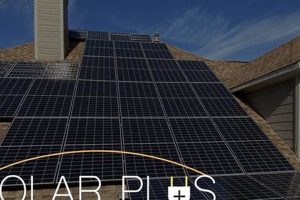
Solar power, derived from the sun’s radiation, represents a vital alternative to traditional fossil fuels. Harnessing this energy involves converting sunlight into electricity using photovoltaic cells or concentrating solar power systems. The abundance of sunlight makes it a readily available resource in many regions globally, positioning it favorably within the renewable energy sector.
The appeal of utilizing solar energy lies in its significant environmental advantages and its potential for long-term cost savings. Unlike fossil fuels, solar energy production generates minimal greenhouse gas emissions, contributing substantially to mitigating climate change. Furthermore, once a solar energy system is installed, the operational costs are relatively low, primarily involving maintenance rather than fuel procurement, leading to financial benefits over the lifespan of the system.
Several factors contribute to the prominent role of solar among renewable sources. Its wide accessibility, declining technology costs, and positive environmental impact are key elements. The following sections will delve into these aspects, providing a more detailed examination of the advantages that solidify its position within the clean energy landscape.
Optimizing Solar Energy Utilization
Maximizing the benefits of solar energy investment requires careful planning and execution. These tips provide guidance on enhancing system efficiency and long-term performance.
Tip 1: Conduct a Thorough Site Assessment: Prior to installation, evaluate the solar resource availability. Factors such as shading, orientation, and roof angle impact energy production. Obtain detailed solar irradiance data specific to the location to accurately estimate potential output.
Tip 2: Select High-Efficiency Components: Invest in solar panels and inverters with proven performance and high efficiency ratings. While initial costs may be higher, the increased energy generation over the system’s lifespan translates to greater returns.
Tip 3: Implement a Robust Monitoring System: Utilize monitoring technology to track system performance in real-time. This allows for prompt identification of any performance degradation or system faults, enabling timely maintenance and repairs.
Tip 4: Ensure Professional Installation: Engage experienced and certified solar installers. Proper installation is crucial for system longevity and optimal performance. Verify compliance with local building codes and safety standards.
Tip 5: Implement Regular Maintenance: Schedule periodic inspections and cleaning of solar panels. Accumulated dust, debris, and vegetation can reduce energy output. Routine maintenance ensures sustained high performance.
Tip 6: Optimize Energy Consumption: Reduce overall energy demand through energy-efficient appliances and practices. This minimizes the reliance on grid electricity and maximizes the self-consumption of solar-generated power.
Tip 7: Explore Energy Storage Solutions: Consider integrating battery storage to store excess solar energy generated during peak periods. This stored energy can be used during periods of low sunlight or power outages, increasing energy independence.
Following these recommendations can significantly enhance the effectiveness and economic viability of solar energy systems, leading to increased energy independence and reduced environmental impact.
The next section will explore potential advancements in solar technology that may further enhance its competitive advantage within the renewable energy market.
1. Abundant availability.
The extensive global availability of solar radiation forms a fundamental argument for its status within the renewable energy sector. Unlike finite resources or geographically restricted renewable options, solar energy potential exists across diverse climates and terrains, impacting its value proposition and promoting its scalability.
- Ubiquitous Energy Source
Solar radiation reaches virtually all regions on Earth, albeit with varying intensity. This widespread availability enables energy production in locations where other resources are scarce or inaccessible. The universality reduces dependency on specific geological conditions, broadening the deployment potential of solar technology.
- Scalability and Adaptability
The abundance of solar power facilitates both small-scale and large-scale energy projects. Individual households can install rooftop panels, while expansive solar farms can generate significant amounts of electricity. The modular nature of solar technology allows for adaptable integration into existing infrastructures, aligning with diverse energy demands.
- Reduced Dependence on Fossil Fuels
The widespread accessibility of solar energy allows nations and communities to reduce their reliance on traditional fossil fuels. Diversifying the energy mix improves energy security and reduces vulnerability to price fluctuations in the fossil fuel market. Regions with high solar irradiance, in particular, can achieve greater energy independence through strategic investment in solar infrastructure.
- Contribution to Global Electrification
In regions lacking established electrical grids, solar energy can provide decentralized power solutions. Off-grid solar systems offer a cost-effective means of supplying electricity to remote communities, supporting education, healthcare, and economic development. The abundant availability of solar resources is critical in accelerating the electrification of underserved populations globally.
The combination of its ubiquity, scalability, and contribution to energy independence solidifies the importance of solar energy as a prime candidate in the ongoing transition toward sustainable energy systems. These inherent characteristics contribute directly to its claim as an advantageous and widely applicable renewable resource.
2. Minimal environmental impact.

The categorization of solar energy as an advantageous renewable resource hinges significantly on its reduced environmental footprint compared to conventional energy sources. The process of converting sunlight into electricity generates minimal air and water pollution during operation. This contrasts with fossil fuels, which release substantial quantities of greenhouse gases and pollutants that contribute to climate change, respiratory problems, and acid rain. Consequently, solar energy mitigates adverse effects on both human health and ecological systems.
The construction and manufacturing of solar panels do involve energy consumption and the use of materials, including silicon and certain metals. However, life cycle assessments consistently demonstrate that the greenhouse gas emissions associated with solar energy systems are substantially lower than those from fossil fuel power plants. Furthermore, ongoing advancements in solar technology are continually improving manufacturing processes to reduce resource utilization and enhance recyclability, thereby further minimizing environmental impact. For example, the development of thin-film solar cells requires fewer materials than traditional silicon-based panels, contributing to a smaller environmental footprint.
In summation, the relatively benign environmental impact of solar energy during operation, coupled with efforts to minimize its impact during manufacturing and disposal, constitutes a core argument for its classification as a preferred renewable energy source. This characteristic aligns with global sustainability objectives and underscores its role in fostering a cleaner, healthier environment. The practical significance of understanding this connection lies in the ability to make informed decisions about energy investments and policies that prioritize environmental stewardship.
3. Decreasing technology costs.

The diminishing cost of solar energy technologies plays a pivotal role in its ascendance within the renewable energy sector. The initial high capital expenditure associated with solar panel installation historically presented a barrier to widespread adoption. However, sustained innovation in manufacturing processes, materials science, and economies of scale have drastically reduced the cost per watt of solar energy production. This cost reduction directly enhances solar power’s competitiveness against conventional energy sources, thereby solidifying its prominence as a leading renewable option. For instance, the price of solar photovoltaic (PV) panels has fallen by over 80% in the last decade, making solar energy economically viable for a broader range of consumers and industries.
This economic transformation has catalyzed increased investment in solar energy infrastructure. Governments and private entities are more inclined to support and deploy solar energy systems when the financial returns are favorable. Utility-scale solar projects are becoming increasingly common, often outcompeting fossil fuel-based power plants in terms of levelized cost of electricity (LCOE). Furthermore, reduced costs empower homeowners and businesses to install rooftop solar panels, fostering decentralized energy generation and lessening dependence on centralized power grids. The economic impetus provided by decreasing technology costs fuels market expansion, technological advancements, and further price reductions, creating a positive feedback loop.
The confluence of declining costs and rising energy demands positions solar energy as a strategic resource for meeting global energy needs sustainably. As technology continues to improve and economies of scale further drive down prices, solar energy is projected to become the most cost-effective energy source in many regions. This economic advantage, coupled with its environmental benefits, positions solar favorably as a dominant and accessible renewable resource, shaping the future of energy production and consumption patterns. The understanding of this dynamic is critical for policymakers, investors, and consumers seeking to transition to a cleaner and more sustainable energy future.
4. Scalability and flexibility.
The attributes of scalability and flexibility significantly contribute to solar energy’s prominence within the renewable resource sector. These characteristics allow for adaptable deployment across various applications and environments, strengthening the argument for its broad utility and sustainability.
- Adaptable Deployment Sizes
Solar energy systems can be implemented at scales ranging from individual residential rooftops to expansive utility-scale solar farms. This adaptability allows for tailored solutions based on specific energy needs and geographic constraints. For instance, a remote village might benefit from a small off-grid solar array, while a densely populated urban area could integrate solar panels into building facades to supplement energy consumption.
- Integration with Existing Infrastructure
Solar technology can be seamlessly integrated into existing electrical grids or operated as standalone, off-grid systems. This flexibility enables gradual transitions from conventional energy sources to renewable alternatives without requiring wholesale infrastructure overhauls. Moreover, solar-plus-storage solutions can enhance grid stability by providing dispatchable power during peak demand or periods of low solar irradiance.
- Versatility in Application
Solar energy extends beyond electricity generation to include applications such as solar water heating, solar-powered irrigation, and solar-driven desalination. This versatility expands its utility across diverse sectors, including agriculture, industry, and water resource management. Solar thermal systems, for example, can provide cost-effective heating solutions in regions with high solar insolation, reducing reliance on fossil fuel-based heating systems.
- Modular Design and Incremental Expansion
The modular design of solar energy systems facilitates incremental expansion, allowing for phased deployment to match evolving energy demands. This approach minimizes upfront capital investment and provides the flexibility to scale up capacity as needed. For example, a business could initially install a small solar array to offset a portion of its electricity consumption and subsequently expand the system as its energy needs increase.
The inherent scalability and flexibility of solar energy, encompassing adaptable deployment sizes, grid integration capabilities, diverse applications, and modular design, underscores its suitability as a primary renewable energy resource. These traits enable widespread adoption across diverse contexts, contributing to energy security, environmental sustainability, and economic development. The adaptability facilitates a broader transition to a cleaner energy future.
5. Distributed generation potential.

Solar energy’s capacity for distributed generation significantly strengthens the argument for its designation as a leading renewable resource. Distributed generation, defined as localized power generation near the point of consumption, offers numerous advantages over centralized power systems. Solar energy is uniquely suited for this model due to its modularity and the widespread availability of sunlight, making it possible to generate electricity directly at homes, businesses, and community facilities.
The integration of solar power into distributed generation networks enhances grid resilience by reducing reliance on long-distance transmission lines, which are vulnerable to outages and disruptions. Solar installations on residential rooftops, for instance, can provide backup power during grid failures, ensuring continuity of essential services. Moreover, distributed solar generation can lower energy costs for consumers by allowing them to offset their electricity purchases with self-generated power. The implementation of net metering policies, which enable solar system owners to sell excess electricity back to the grid, further incentivizes distributed solar adoption. Germany, for example, has heavily invested in distributed solar generation, resulting in a significant portion of its electricity being produced by decentralized solar installations. This approach has bolstered energy security and reduced dependence on imported fossil fuels.
In conclusion, the distributed generation potential of solar energy is a critical factor in evaluating its overall value as a renewable resource. By promoting localized power generation, solar energy enhances grid resilience, lowers energy costs, and empowers consumers to participate actively in the energy transition. This capacity, combined with its environmental benefits and decreasing costs, reinforces the argument for prioritizing solar energy in the development of sustainable energy systems.
6. Energy independence.

Energy independence, defined as a nation’s ability to meet its energy demands without reliance on foreign sources, is inextricably linked to the value of solar energy as a superior renewable resource. Dependence on imported fossil fuels exposes nations to geopolitical instability, price volatility, and potential supply disruptions. Solar energy, derived from a universally available resource, offers a pathway to mitigate these vulnerabilities. A widespread adoption of solar technology reduces reliance on external energy suppliers, fostering greater national energy security and self-determination. For example, countries with limited domestic fossil fuel reserves, such as many nations in the Caribbean, are increasingly turning to solar energy to decrease their dependence on imported oil and stabilize their energy markets. This reliance on solar not only bolsters their energy independence but also stimulates local economies through job creation in the renewable energy sector.
The integration of solar energy into national energy strategies promotes diversified energy portfolios, further reducing dependence on any single energy source. Distributed generation through rooftop solar panels, community solar projects, and utility-scale solar farms enhances grid resilience and reduces the potential impact of supply disruptions. Furthermore, domestic manufacturing of solar panels and related components can stimulate economic growth and create employment opportunities, solidifying the benefits of energy independence. The European Union, for example, has set ambitious renewable energy targets, including significant expansion of solar power, as part of its strategy to reduce reliance on Russian gas and strengthen its energy security.
In summary, the pursuit of energy independence is a compelling driver for embracing solar energy as a primary renewable resource. The capacity to generate electricity from sunlight, a readily available domestic resource, reduces reliance on volatile global energy markets and enhances national energy security. The combination of energy independence, environmental sustainability, and economic benefits solidifies solar’s position as a cornerstone of a resilient and self-sufficient energy future. Prioritizing policies and investments that support solar energy deployment will facilitate the transition towards greater energy independence and a more sustainable energy system.
7. Long-term cost savings.
The potential for long-term cost savings associated with solar energy is a critical factor influencing its status as an advantageous renewable resource. While the initial investment in solar energy systems can be substantial, the subsequent operational costs are significantly lower compared to conventional energy sources. This dynamic creates the opportunity for substantial financial benefits over the lifespan of the system, solidifying solar’s economic viability.
- Reduced Electricity Bills
Solar panel installations directly offset consumption of grid electricity. Homeowners and businesses with solar arrays experience lower monthly electricity bills, and in some cases, can eliminate them entirely. The avoided costs accumulate over time, leading to significant savings, especially in regions with high electricity rates. Net metering policies, where excess solar generation is credited to the consumer’s account, further enhance these savings.
- Minimal Fuel Costs
Unlike fossil fuel power plants, solar energy systems do not require the purchase of fuel. Once installed, the primary operating costs involve maintenance and occasional repairs. This eliminates exposure to fluctuating fuel prices, a significant advantage compared to energy sources reliant on commodities markets. The stability in operating costs contributes to predictable long-term energy expenses.
- Government Incentives and Tax Credits
Various government incentives, such as tax credits, rebates, and grants, further reduce the initial investment and enhance the economic attractiveness of solar energy. These incentives effectively lower the upfront costs, accelerating the payback period and increasing the overall return on investment. These programs are designed to promote the adoption of renewable energy and support the transition to a cleaner energy economy.
- Increased Property Value
Studies indicate that homes equipped with solar panel systems tend to have higher property values compared to similar homes without solar. This increase in value represents an additional financial benefit for homeowners. Potential buyers are often willing to pay a premium for homes with solar panels, given the reduced electricity bills and environmental benefits.
The combination of reduced electricity bills, minimal fuel costs, government incentives, and increased property value demonstrates the substantial long-term cost savings associated with solar energy. These economic advantages, coupled with its environmental benefits, position solar as a financially prudent and environmentally responsible energy solution, reinforcing its claim as a leading renewable resource.
Frequently Asked Questions About Solar Energy
The following section addresses common inquiries regarding solar energy’s viability and advantages within the renewable energy landscape.
Question 1: Is solar energy truly more efficient than other renewable sources?
Efficiency comparisons between renewable energy sources are multifaceted. While solar panel efficiency continues to improve, direct comparisons are challenging due to variations in resource availability, technological maturity, and application contexts. Solar’s advantage lies in its wide applicability and decreasing costs rather than a simple efficiency metric.
Question 2: How does solar energy perform in regions with limited sunlight?
Solar energy systems still generate electricity in regions with lower sunlight levels, though output is reduced. System design considers local irradiance data to optimize performance. Additionally, energy storage solutions can mitigate intermittency, ensuring a consistent power supply. Some regions also use government incentives to spur this method.
Question 3: What are the primary environmental concerns associated with solar panel production and disposal?
The manufacturing of solar panels involves energy consumption and the use of certain materials, presenting environmental considerations. However, life cycle assessments consistently demonstrate that solar’s overall environmental impact is significantly lower than fossil fuels. Ongoing research focuses on reducing resource utilization and enhancing recyclability to minimize environmental footprint.
Question 4: How does solar energy contribute to grid stability?
Integrating solar energy into existing power grids requires careful management to address intermittency. Energy storage solutions, smart grid technologies, and geographically diverse solar installations enhance grid stability. Solar energy systems, when combined with effective grid management strategies, can contribute to a more resilient and reliable power supply.
Question 5: Is solar energy a cost-effective option for all consumers?
The economic viability of solar energy varies depending on factors such as location, electricity rates, and government incentives. In many regions, solar has become cost-competitive with traditional energy sources, particularly when considering long-term savings and environmental benefits. A thorough cost-benefit analysis, tailored to individual circumstances, is essential.
Question 6: What advancements are expected in solar technology in the coming years?
Continued advancements in solar technology are anticipated, including improvements in panel efficiency, energy storage capacity, and grid integration methods. Perovskite solar cells, bifacial panels, and advanced battery storage systems are examples of innovations that could further enhance solar’s performance and reduce its costs.
Solar energy presents multifaceted advantages as a renewable resource, encompassing environmental, economic, and social dimensions. Evaluating its viability requires careful consideration of specific contexts and technological advancements.
The next section will explore the future prospects of solar energy and its potential role in shaping the global energy landscape.
Why Is Solar Energy the Best Renewable Resource
The preceding exploration has systematically examined the multifaceted advantages of solar energy, building a comprehensive argument for its prominence among renewable resources. Abundant availability, minimal environmental impact, declining technology costs, scalability, distributed generation potential, energy independence, and long-term cost savings emerge as key pillars supporting this assertion. While acknowledging the inherent complexities and ongoing technological developments within the renewable energy sector, the confluence of these attributes positions solar as a particularly compelling solution for meeting global energy demands sustainably.
The transition to a cleaner energy future necessitates a strategic and informed approach. Solar energy, with its unique blend of economic viability, environmental responsibility, and technological maturity, represents a critical component of this transition. Continued investment in solar research and deployment, coupled with supportive policy frameworks, will be essential to fully realize its potential and solidify its role as a leading energy source for generations to come. Its impact on global sustainability remains significant.
![Why Solar is a Renewable Source of Energy [Benefits] | Renewable Energy Solutions for a Sustainable Future | Clean & Green Power](https://pplrenewableenergy.com/wp-content/uploads/2026/04/th-454-300x200.jpg "Why Solar is a Renewable Source of Energy [Benefits] Renewable Energy Solutions for a Sustainable Future | Clean & Green Power")