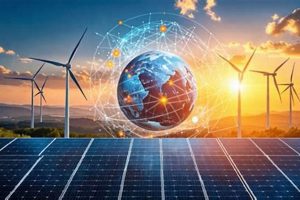
Modernized electrical grids leverage digital technology to monitor and manage electricity flow efficiently, integrating seamlessly with eco-friendly power sources like solar, wind, and hydro. For instance, these advanced networks can automatically adjust power distribution based on real-time energy demand and the availability of renewable generation. This integration optimizes energy delivery, reduces reliance on fossil fuels, and minimizes environmental impact.
These integrated systems offer significant advantages, including enhanced grid reliability and resilience against outages, improved energy efficiency through reduced transmission losses, and a lower carbon footprint. Historically, power grids were designed for centralized, fossil fuel-based generation. The shift towards decentralized, variable renewable sources necessitates a more intelligent and adaptable grid infrastructure to ensure stability and security.
This article will further explore the technical aspects of modern grid systems, the diverse range of sustainable energy options, the challenges and opportunities associated with their integration, and the future potential of this evolving energy landscape.
Tips for Advancing Modernized Grids and Sustainable Power
The following tips provide guidance for promoting more efficient and environmentally responsible energy systems.
Tip 1: Invest in Grid Modernization Technologies: Prioritizing investments in advanced metering infrastructure, sensors, and communication networks enhances grid management and facilitates better integration of renewable resources.
Tip 2: Diversify Renewable Energy Sources: A balanced portfolio of wind, solar, hydro, and other renewable sources mitigates intermittency challenges and strengthens energy security.
Tip 3: Implement Demand-Side Management Programs: Encouraging flexible energy consumption patterns through time-of-use pricing and smart appliances optimizes grid operation and reduces peak demand.
Tip 4: Promote Energy Storage Solutions: Utilizing battery storage, pumped hydro, and other storage technologies addresses the intermittent nature of renewables and ensures a reliable power supply.
Tip 5: Foster Public-Private Partnerships: Collaborative efforts between government, industry, and research institutions accelerate innovation and deployment of advanced grid and renewable energy technologies.
Tip 6: Develop Robust Cybersecurity Measures: Protecting grid infrastructure from cyber threats is crucial for maintaining the reliability and security of modern energy systems.
Tip 7: Streamline Regulatory Frameworks: Clear and consistent regulations facilitate investment in and adoption of innovative energy solutions.
By embracing these strategies, communities and nations can build more resilient, efficient, and sustainable energy systems, contributing to a cleaner environment and a more secure energy future.
These tips provide a starting point for continued discussion and action towards a more sustainable energy future. The concluding section will offer final thoughts and potential next steps.
1. Grid Modernization

Grid modernization forms a cornerstone of the transition to sustainable energy systems. It represents the evolution of traditional power grids into more intelligent, responsive, and efficient networks capable of seamlessly integrating renewable energy sources. This transformation is essential due to the inherent variability of renewables like solar and wind power. Without a modernized grid, efficiently managing and distributing these intermittent resources becomes exceedingly challenging. Grid modernization facilitates the two-way flow of electricity, enabling distributed generation and empowering consumers to become active participants in the energy market.
A modernized grid leverages digital technologies, including advanced sensors, smart meters, and sophisticated control systems, to optimize grid operations in real-time. These technologies enable dynamic pricing mechanisms that incentivize flexible energy consumption, reducing peak demand and maximizing the utilization of renewable generation. For example, smart grids can communicate with electric vehicles to schedule charging during periods of high renewable energy availability or low demand, further enhancing system efficiency and stability. Furthermore, grid modernization improves grid resilience by enabling faster fault detection and isolation, minimizing the impact of outages.
Modernizing the electrical grid is not merely a technological upgrade; it is a fundamental prerequisite for realizing the full potential of renewable energy and building a sustainable energy future. This transition requires significant investment in infrastructure and technology, along with supportive policies and regulations. Challenges remain in areas such as cybersecurity and interoperability, but the benefits of a modernized grid enhanced reliability, improved efficiency, and increased integration of renewables outweigh the complexities. Grid modernization lays the foundation for a more decentralized, resilient, and sustainable energy landscape.
2. Renewable Integration
Renewable integration represents a critical component of modernized, sustainable energy systems. It involves the effective incorporation of renewable energy sources, such as solar, wind, hydro, and geothermal, into existing electricity grids. This process necessitates advanced grid management capabilities to address the inherent intermittency and variability of these resources. Without intelligent grid infrastructure, fluctuating renewable generation can compromise grid stability and reliability. The relationship between renewable integration and modernized grids is symbiotic: sophisticated grid technologies facilitate higher penetrations of renewable energy, while the increasing prevalence of renewables drives the need for more intelligent grid management solutions. For example, advanced forecasting tools, coupled with real-time grid monitoring, enable operators to anticipate and mitigate fluctuations in solar and wind power output, ensuring a balanced and reliable electricity supply.
The practical significance of successful renewable integration lies in its contribution to decarbonizing the energy sector and mitigating climate change. By displacing fossil fuel-based generation with clean energy sources, renewable integration reduces greenhouse gas emissions and improves air quality. Furthermore, it enhances energy security by diversifying energy sources and reducing reliance on imported fuels. The economic benefits include job creation in the renewable energy sector and reduced energy costs in the long term. However, integrating renewables presents technical challenges, including grid stability issues, the need for energy storage solutions, and the development of robust transmission infrastructure. Real-world examples, such as the increasing deployment of smart inverters and the development of large-scale renewable energy projects connected to sophisticated grid management systems, demonstrate the progress being made in overcoming these challenges and realizing the full potential of renewable integration.
In conclusion, renewable integration stands as a cornerstone of the global transition to sustainable energy. Its success hinges upon the development and deployment of advanced grid technologies that can effectively manage the variability of renewable sources. Addressing the technical and economic challenges associated with renewable integration is crucial for achieving a secure, reliable, and decarbonized energy future. The continued advancement and implementation of innovative grid management and renewable energy technologies will be essential to maximizing the societal and environmental benefits of this critical transition.
3. Energy Storage

Energy storage technologies play a crucial role in enabling the effective integration of renewable energy sources within modernized electricity grids. The intermittent nature of renewable generation, such as solar and wind power, necessitates storage solutions to ensure a continuous and reliable electricity supply. Storing surplus renewable energy during periods of high generation and discharging it during periods of low generation or peak demand smooths out the variability of these resources and enhances grid stability. This capability is essential for maximizing the penetration of renewable energy and reducing reliance on conventional fossil fuel-based power plants. For example, grid-scale battery storage systems can absorb excess solar energy generated during the day and release it during the evening peak demand hours, effectively balancing supply and demand. Similarly, pumped hydro storage utilizes surplus energy to pump water uphill, storing it as potential energy that can be converted back to electricity when needed. The cause-and-effect relationship is clear: the intermittency of renewables necessitates energy storage, which in turn facilitates their greater integration within the grid.
The importance of energy storage as a component of smart grids and renewable energy systems is further underscored by its ability to provide ancillary grid services, such as frequency regulation and voltage support. These services are essential for maintaining grid stability and reliability. Energy storage systems can respond rapidly to fluctuations in grid frequency and voltage, ensuring a consistent and high-quality electricity supply. Moreover, energy storage can enhance grid resilience by providing backup power during outages caused by extreme weather events or other disruptions. Practical applications of energy storage are becoming increasingly widespread, from residential battery systems paired with rooftop solar panels to large-scale storage projects supporting utility-scale renewable energy integration. The growing deployment of energy storage technologies demonstrates their practical significance in enabling the transition to a more sustainable and resilient energy system.
In summary, energy storage serves as a critical enabling technology for smart grids and renewable energy integration. It addresses the inherent intermittency of renewable resources, enhances grid stability and reliability, and improves grid resilience. The continued development and deployment of cost-effective and efficient energy storage solutions are essential for maximizing the benefits of renewable energy and achieving a sustainable energy future. Challenges remain in terms of technology costs and regulatory frameworks, but the increasing recognition of the critical role of energy storage in the energy transition is driving innovation and investment in this crucial sector.
4. Demand Management

Demand management constitutes a critical component of modern, sustainable energy systems, particularly within the context of smart grids and increasing renewable energy integration. It encompasses strategies and technologies designed to influence electricity consumption patterns, optimizing energy use and grid stability. Effective demand management reduces peak demand, improves grid efficiency, and facilitates greater utilization of renewable energy resources. It allows grid operators to better manage the inherent variability of renewables like solar and wind power and reduces the need for new, often fossil fuel-based, generation capacity. This exploration delves into key facets of demand management, highlighting their respective roles and interconnectedness within the broader energy landscape.
- Dynamic Pricing
Dynamic pricing mechanisms, such as time-of-use tariffs, incentivize consumers to shift their energy consumption away from peak demand periods. By offering lower electricity prices during off-peak hours, when renewable energy generation is often higher, and higher prices during peak hours, dynamic pricing encourages more efficient use of grid resources. Real-world examples include utility programs that offer discounted rates for electric vehicle charging overnight or for running appliances during off-peak times. This approach minimizes stress on the grid during periods of high demand and maximizes the utilization of available renewable generation. The implication is a more balanced and efficient energy system.
- Demand Response Programs
Demand response programs involve voluntary reductions in electricity consumption by consumers in response to grid conditions or market signals. These programs can involve direct load control, where utilities remotely adjust certain appliances, or incentive-based programs, where consumers receive compensation for reducing their energy use during peak periods. Industrial facilities, for example, might participate in demand response programs by temporarily reducing production during peak hours, receiving financial incentives in return. Demand response programs enhance grid flexibility and reliability, particularly during periods of high demand or when renewable energy generation is low, ensuring a stable electricity supply. This flexibility is crucial for accommodating greater penetrations of renewable energy.
- Smart Appliances and Home Energy Management Systems
Smart appliances and home energy management systems empower consumers to monitor and control their energy usage more effectively. These technologies enable automated control of appliances, such as thermostats and water heaters, to optimize energy consumption based on real-time pricing signals or pre-set schedules. A smart thermostat, for instance, can automatically adjust the temperature based on occupancy patterns and time-of-use pricing, reducing energy waste and lowering electricity bills. These technologies provide consumers with greater control over their energy consumption, promoting energy efficiency and supporting demand management initiatives. Their increasing adoption contributes to more flexible and responsive demand patterns.
- Load Forecasting and Optimization
Accurate load forecasting is essential for effective demand management and grid operations. By predicting future electricity demand, grid operators can anticipate periods of high demand and implement appropriate demand management strategies or dispatch generation resources accordingly. Sophisticated forecasting models, incorporating weather data, historical consumption patterns, and real-time grid information, enhance the accuracy of load predictions. This enables more proactive grid management and optimized resource allocation, maximizing efficiency and reliability, particularly in the face of increasing renewable energy integration. Accurate forecasting is crucial for balancing variable renewable generation with fluctuating demand.
These facets of demand management, working in concert, offer a powerful suite of tools for optimizing energy consumption, integrating renewable energy resources more effectively, and enhancing grid reliability and resilience. The increasing adoption of smart grid technologies, coupled with supportive policies and regulatory frameworks, facilitates the widespread implementation of these demand management strategies. This transition toward more flexible and responsive demand-side management is crucial for achieving a sustainable and secure energy future, characterized by high penetrations of renewable energy and a more efficient and reliable electricity grid.
5. System Reliability

System reliability forms a critical pillar of modernized electricity grids, particularly with the increasing integration of renewable energy sources. Maintaining a stable and dependable power supply is paramount for ensuring the continued functioning of essential services and supporting economic activity. The inherent variability of renewable generation, such as solar and wind power, introduces new complexities to grid management, requiring advanced technologies and strategies to ensure reliable system operation. This exploration delves into key facets contributing to system reliability in the context of smart grids and renewable energy integration.
- Advanced Monitoring and Control Systems
Real-time monitoring and control systems provide grid operators with the situational awareness necessary to manage the complexities of a modernized grid with high penetrations of renewable energy. These systems collect data from various points across the grid, including substations, transformers, and smart meters, providing a comprehensive view of grid conditions. This data enables operators to anticipate and respond to potential disruptions, such as voltage fluctuations or frequency deviations, maintaining system stability. For instance, advanced control systems can automatically adjust power flow based on real-time conditions, optimizing grid performance and preventing cascading failures. The implication is a more resilient and responsive grid capable of handling the variability of renewable generation.
- Grid Redundancy and Resilience
Building redundancy and resilience into grid infrastructure is crucial for mitigating the impact of unforeseen events, such as extreme weather or equipment failures. Redundancy involves incorporating backup systems and alternative transmission pathways, ensuring that power can still be delivered even if a portion of the grid is compromised. Microgrids, self-contained grids capable of operating independently or in conjunction with the main grid, enhance resilience by providing localized power generation and distribution. For example, a community microgrid powered by solar panels and battery storage can continue to operate even if the main grid experiences an outage. These strategies improve system reliability and minimize the disruption caused by unforeseen events, a vital aspect of modern grids increasingly reliant on variable renewable sources.
- Predictive Maintenance and Asset Management
Predictive maintenance leverages data analytics and machine learning to anticipate equipment failures and optimize maintenance schedules. By analyzing data from grid sensors and other sources, predictive maintenance tools can identify potential problems before they occur, allowing for proactive intervention and preventing costly outages. Effective asset management strategies optimize the lifecycle of grid equipment, ensuring that investments in grid infrastructure are maximized. For example, predictive maintenance can identify a failing transformer, enabling its replacement before it causes a system-wide outage. These practices improve grid reliability and reduce maintenance costs, contributing to a more efficient and sustainable energy system.
- Cybersecurity and Data Integrity
Modernized grids rely heavily on digital communication networks and sophisticated control systems, making them vulnerable to cyberattacks. Robust cybersecurity measures are essential for protecting grid infrastructure from malicious actors and ensuring the integrity of grid operations. Data integrity safeguards the accuracy and reliability of grid data, preventing manipulation or unauthorized access. Implementing strong cybersecurity protocols, such as intrusion detection systems and encryption technologies, is crucial for maintaining system reliability and preventing disruptions. For example, robust cybersecurity measures can prevent hackers from gaining control of grid operations, safeguarding against potentially catastrophic consequences. Ensuring cybersecurity and data integrity is paramount for maintaining the reliability and security of modern grid systems, especially with increasing interconnectedness and reliance on digital technologies.
These facets of system reliability are intricately linked, working together to ensure a stable and dependable electricity supply in the face of increasing complexity introduced by renewable energy integration. Modernized grids, leveraging advanced technologies and sophisticated management strategies, are essential for maintaining system reliability while accommodating the variability of renewable generation. The ongoing development and implementation of these technologies and strategies will be crucial for achieving a sustainable and secure energy future, characterized by high penetrations of renewable energy and a robust and reliable electricity grid.
Frequently Asked Questions
This section addresses common inquiries regarding modernized grids and the integration of sustainable energy resources.
Question 1: How do modernized grids enhance the reliability of electricity supply, particularly with the increasing use of intermittent renewable sources?
Modernized grids leverage advanced sensors, automation, and control systems to manage the variability of renewable energy sources like solar and wind. Real-time monitoring and control capabilities allow grid operators to anticipate fluctuations in renewable generation and adjust power flow accordingly, ensuring a stable and reliable electricity supply. Enhanced grid resilience, through features like microgrids and distributed generation, further minimizes the impact of disruptions.
Question 2: What role does energy storage play in facilitating the transition to a greater reliance on renewable energy within modernized grids?
Energy storage addresses the intermittency of renewable resources by storing excess energy generated during periods of high production and discharging it during times of low generation or peak demand. This capability smooths out fluctuations in renewable power output, enhancing grid stability and enabling greater penetration of renewable energy sources without compromising reliability. Various storage technologies, such as batteries and pumped hydro, contribute to this essential grid function.
Question 3: How do demand-side management strategies contribute to the efficient operation of modernized grids and the integration of renewable energy?
Demand-side management programs incentivize flexible energy consumption patterns, reducing peak demand and optimizing grid resource utilization. Dynamic pricing mechanisms, demand response programs, and smart appliances encourage consumers to shift their energy usage to times of lower demand or higher renewable generation, further enhancing grid efficiency and facilitating greater reliance on renewable sources.
Question 4: What are the key challenges associated with modernizing electricity grids and integrating renewable energy sources, and how are they being addressed?
Key challenges include the high upfront costs of grid modernization and renewable energy infrastructure, the intermittency of renewable resources, and the need for robust cybersecurity measures. These challenges are being addressed through technological advancements, supportive government policies and incentives, innovative financing mechanisms, and collaborative research and development efforts.
Question 5: What are the economic and environmental benefits of transitioning to modernized grids and integrating renewable energy sources?
Economic benefits include job creation in the renewable energy and grid modernization sectors, reduced reliance on imported fuels, and lower long-term energy costs. Environmental benefits encompass reduced greenhouse gas emissions, improved air quality, and decreased reliance on finite fossil fuel resources. This transition contributes to a more sustainable and resilient energy future.
Question 6: How can consumers actively participate in the transition toward smarter, more sustainable energy systems?
Consumers can participate by adopting energy-efficient appliances, participating in demand response programs, installing rooftop solar panels or other distributed generation resources, and advocating for policies that support grid modernization and renewable energy development. These actions collectively contribute to a cleaner and more resilient energy future.
Understanding these key aspects is crucial for fostering informed discussions and promoting effective policies that support the transition toward more sustainable and resilient energy systems.
The following section will delve into specific case studies and real-world examples of successful smart grid and renewable energy integration projects.
Conclusion
This exploration has highlighted the critical intersection of smart grid technologies and renewable energy resources in shaping a sustainable energy future. Modernized grids, equipped with advanced monitoring, control, and automation capabilities, provide the essential infrastructure for effectively integrating variable renewable sources like solar and wind power. Energy storage solutions address intermittency challenges, ensuring grid stability and reliability. Demand-side management strategies further optimize grid operations and maximize the utilization of renewable generation. Addressing the technical, economic, and regulatory aspects of this transition is crucial for realizing the full potential of a decarbonized and resilient energy system.
The transition toward smart grids and renewable energy represents a fundamental shift in the energy landscape. It necessitates ongoing innovation, investment, and collaboration across stakeholders. The future of energy hinges on the continued development and deployment of these technologies, paving the way for a more sustainable, secure, and prosperous future for all.