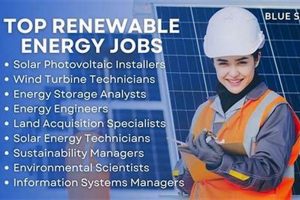
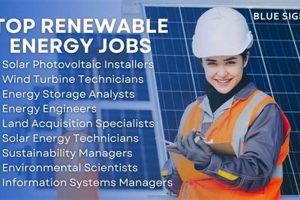
Positions within this sector encompass a wide range of specializations, from designing and manufacturing solar panels to installing wind turbines and developing geothermal power plants. These roles often involve research and development, project management, engineering, installation, maintenance, and sales. For instance, a solar panel installation technician might be responsible for assembling and securing photovoltaic systems on residential rooftops, while a wind energy engineer might design and oversee the construction of large-scale wind farms.
Employment opportunities related to sustainable power generation are vital for addressing climate change and fostering economic growth. They contribute to reducing greenhouse gas emissions, diversifying energy sources, and enhancing national energy security. Historically, this sector has experienced significant expansion, driven by technological advancements, decreasing costs, and increasing public awareness of environmental issues. This growth is expected to continue as countries worldwide transition towards cleaner energy systems.
The following sections will explore specific career paths within the sustainable energy sector, examining the required skills, educational backgrounds, and potential career trajectories. Further discussion will delve into the current job market trends and future prospects for these dynamic and crucial roles.
Tips for Pursuing Careers in Sustainable Energy
This section offers guidance for individuals interested in pursuing employment opportunities related to sustainable power generation.
Tip 1: Develop Specialized Skills: Focus on acquiring in-demand skills such as electrical engineering, mechanical engineering, software development, or project management. These skills are highly transferable across various roles within the sector.
Tip 2: Gain Relevant Experience: Internships, volunteer work, and research projects offer valuable practical experience and enhance resumes. Seek opportunities with organizations working in areas like solar, wind, or geothermal energy.
Tip 3: Network with Professionals: Attend industry conferences, join professional organizations, and connect with individuals working in sustainable energy. Networking can lead to mentorship opportunities and job prospects.
Tip 4: Stay Updated on Industry Trends: The sustainable energy sector is constantly evolving. Stay informed about the latest technological advancements, policy changes, and market trends through industry publications and online resources.
Tip 5: Consider Advanced Education: A master’s or doctoral degree in a relevant field like engineering, environmental science, or policy can provide a competitive advantage and open doors to specialized roles.
Tip 6: Research Potential Employers: Thoroughly research companies and organizations working in sustainable energy. Understanding their mission, values, and projects can help target job applications effectively.
Tip 7: Tailor Resumes and Cover Letters: Highlight relevant skills and experience in resumes and cover letters. Emphasize qualifications that align with specific job requirements and company objectives.
By following these tips, individuals can effectively position themselves for rewarding careers in the dynamic and expanding sustainable energy sector.
The following section concludes with a summary of key insights and future outlook for careers in this vital field.
1. Growing Demand

The increasing global demand for clean energy sources directly fuels the expansion of the renewable energy technology job market. This demand is driven by several factors, including growing concerns about climate change, governmental policies promoting sustainable energy adoption, and declining costs of renewable energy technologies. As nations and industries strive to reduce their carbon footprint and transition towards cleaner energy systems, the need for skilled professionals to design, install, maintain, and manage these technologies intensifies. This cause-and-effect relationship positions growing demand as a critical component of the renewable energy technology job landscape.
The practical significance of this connection is evident in real-world examples. The increasing popularity of electric vehicles, for instance, creates a surge in demand for professionals specializing in battery technology, charging infrastructure, and grid management. Similarly, the expansion of solar and wind farms requires expertise in areas such as project development, engineering, construction, and operations. Understanding this dynamic allows individuals and educational institutions to anticipate future workforce needs and adapt training programs accordingly. For example, universities are expanding engineering programs focused on renewable energy, and vocational schools are offering specialized training in solar panel installation and maintenance.
In summary, the growing demand for renewable energy is a primary driver of job creation within the sector. This understanding underscores the long-term career potential within the field and highlights the crucial role of education and training in meeting future workforce demands. Challenges remain, however, in ensuring a skilled workforce that can adapt to the rapid pace of technological advancement and evolving industry needs. Addressing these challenges through targeted investments in education, training, and workforce development is essential for realizing the full potential of the renewable energy transition.
2. Varied Skillsets

The renewable energy technology sector encompasses a broad spectrum of occupations, demanding a diverse range of skillsets. This variety stems from the multifaceted nature of renewable energy systems, which involve research, development, design, manufacturing, installation, maintenance, and management. Consequently, professionals with backgrounds in engineering, manufacturing, construction, information technology, finance, and policy find opportunities within the sector. This interconnectedness between varied skillsets and the diverse needs of the renewable energy industry forms a crucial component of its overall structure.
The practical significance of this diversity can be observed through specific examples. Wind farm projects require structural engineers to design turbine foundations, electrical engineers to manage power transmission, and software developers to optimize energy output. Similarly, solar energy projects demand expertise in photovoltaic technology, materials science, and installation techniques. Furthermore, policy analysts and legal professionals play crucial roles in navigating regulatory landscapes and ensuring compliance. These examples demonstrate the breadth of skillsets required for successful implementation and operation of renewable energy technologies.
In summary, the varied skillsets required within the renewable energy technology sector underscore its complexity and dynamism. This diversity drives innovation and facilitates the development of comprehensive solutions for sustainable energy generation, storage, and distribution. However, this also presents a challenge in ensuring a sufficiently skilled workforce to meet evolving industry demands. Targeted educational programs and training initiatives are essential for cultivating a workforce equipped to handle the diverse technical and non-technical requirements of this rapidly expanding field. This development fosters continuous growth and strengthens the sector’s capacity to address global energy challenges.
3. Technological Innovation
Technological innovation serves as a primary driver for the creation and evolution of renewable energy technology jobs. Advancements in areas such as solar photovoltaic technology, wind turbine design, energy storage solutions, and smart grid systems directly influence the types of jobs available, the required skillsets, and the overall growth of the sector. This cause-and-effect relationship positions technological innovation as a fundamental component of the renewable energy job landscape. For instance, the development of more efficient and cost-effective solar panels has led to an increased demand for installation technicians, sales representatives, and maintenance personnel.
The practical significance of this connection is evident in the continuous emergence of new job roles. The rise of artificial intelligence and machine learning, for example, is creating opportunities for data scientists and software engineers to optimize renewable energy systems and enhance grid stability. Similarly, advancements in battery technology are driving demand for specialists in battery design, manufacturing, and integration. These examples demonstrate how technological breakthroughs translate into tangible career pathways and shape the future of the workforce.
In summary, technological innovation remains a crucial catalyst for job creation within the renewable energy sector. This ongoing evolution demands a workforce adaptable to emerging technologies and emphasizes the importance of continuous learning and skills development. Furthermore, fostering an environment that encourages research, development, and commercialization of new technologies is essential for sustained growth and competitiveness within the industry. Addressing the challenges of attracting and retaining skilled professionals in this rapidly changing landscape will be key to realizing the full potential of renewable energy technologies and achieving a sustainable energy future.
4. Environmental Impact

A fundamental connection exists between environmental impact and renewable energy technology jobs. The core purpose of these jobs is to mitigate the negative environmental consequences of traditional energy sources by developing, implementing, and maintaining cleaner alternatives. This cause-and-effect relationship positions environmental impact as a central motivator and driving force behind the growth and development of the renewable energy sector. For instance, the increasing urgency to reduce greenhouse gas emissions and combat climate change directly fuels the demand for professionals specializing in solar, wind, and other renewable energy technologies.
The practical significance of this connection is evident in the tangible environmental benefits associated with renewable energy projects. The installation of solar panels on residential rooftops, for example, reduces reliance on fossil fuel-based electricity generation, thereby decreasing air pollution and greenhouse gas emissions. Similarly, the development of offshore wind farms contributes to cleaner energy production while minimizing land use impacts. These examples illustrate how renewable energy technology jobs directly contribute to measurable environmental improvements and a transition towards a more sustainable energy future. Furthermore, the restoration of degraded ecosystems through projects like dam removal and habitat restoration creates new employment opportunities focused on ecological restoration and environmental remediation.
In summary, environmental impact serves as a core driver and defining characteristic of renewable energy technology jobs. These jobs are intrinsically linked to the goal of environmental protection and sustainability. The continued growth of this sector presents significant opportunities to address pressing environmental challenges while simultaneously generating economic benefits and creating a more sustainable future. However, challenges remain in ensuring equitable access to these benefits and mitigating potential environmental trade-offs associated with specific renewable energy technologies. Ongoing assessment and mitigation of potential environmental impacts are crucial for ensuring the long-term sustainability of the renewable energy transition.
5. Economic Opportunities

A strong link exists between economic opportunities and renewable energy technology jobs. The development, manufacturing, installation, and maintenance of renewable energy technologies create jobs across a wide range of skill levels and geographic locations. This job creation stimulates economic growth, fosters innovation, and contributes to a more diversified and resilient economy. This cause-and-effect relationship establishes economic opportunity as an integral component of the renewable energy technology sector. For instance, the construction of a new wind farm generates jobs not only for engineers and technicians but also for construction workers, supply chain managers, and local businesses providing goods and services.
The practical significance of this connection is evident in regions experiencing economic revitalization due to investments in renewable energy. Declining coal communities, for example, are finding new economic pathways through the development of solar and wind projects. These projects provide employment opportunities for displaced workers and attract new businesses to the region. Furthermore, the growth of the renewable energy sector stimulates innovation and entrepreneurship, leading to the creation of new products, services, and business models. This dynamism fosters competition and drives down costs, making renewable energy more accessible and affordable.
In summary, economic opportunity serves as a key driver and significant outcome of the renewable energy technology sector. The transition to a sustainable energy future offers substantial economic benefits, including job creation, economic growth, and increased competitiveness. However, challenges remain in ensuring equitable distribution of these benefits and addressing potential economic dislocations associated with the decline of fossil fuel industries. Strategic investments in workforce development, infrastructure modernization, and community engagement are crucial for maximizing the economic potential of the renewable energy transition and creating a more inclusive and prosperous future.
6. Global Reach

A fundamental connection exists between global reach and renewable energy technology jobs. The global nature of climate change and the universal need for clean energy solutions necessitate international collaboration and knowledge sharing within the renewable energy sector. This interconnectedness drives the demand for professionals with diverse cultural backgrounds, language skills, and international experience. This cause-and-effect relationship positions global reach as a crucial component of the renewable energy job landscape. For instance, multinational corporations involved in wind turbine manufacturing require engineers and project managers capable of working across different countries and regulatory environments.
The practical significance of this global reach is evident in the international collaborations driving renewable energy projects worldwide. Joint ventures between European and Asian companies, for example, facilitate the transfer of technology and expertise in solar panel production, while partnerships between African nations and international organizations promote the development of geothermal energy resources. These examples demonstrate how global collaboration accelerates the deployment of renewable energy technologies and fosters a more interconnected and resilient global energy system. Furthermore, the increasing demand for sustainable solutions in developing countries creates opportunities for professionals specializing in microgrid technologies, off-grid energy access, and community-based renewable energy projects.
In summary, global reach serves as a defining characteristic and a critical driver of growth within the renewable energy technology job market. This global interconnectedness fosters innovation, accelerates the deployment of clean energy solutions, and promotes a more sustainable and equitable energy future for all. However, challenges remain in ensuring equitable access to technology, financing, and expertise across different regions. Strengthening international cooperation, promoting capacity building initiatives, and addressing trade barriers are essential for maximizing the global benefits of the renewable energy transition and achieving a truly sustainable global energy system.
Frequently Asked Questions
This section addresses common inquiries regarding careers in renewable energy technology.
Question 1: What educational background is typically required for these roles?
Many roles require at least a bachelor’s degree in engineering (e.g., electrical, mechanical, or environmental), computer science, or a related field. Advanced degrees, such as a master’s or doctorate, can be beneficial for specialized research and development positions.
Question 2: What are the typical entry-level positions in this field?
Entry-level positions often include roles like field technicians, data analysts, and project assistants. These positions provide valuable hands-on experience and can serve as stepping stones to more senior roles.
Question 3: Are these jobs geographically concentrated, or are there opportunities nationwide?
Opportunities exist across various geographic regions, though some areas with high concentrations of renewable energy resources or manufacturing facilities may offer more abundant options. The increasing global adoption of sustainable energy solutions is creating job opportunities worldwide.
Question 4: What is the long-term job outlook for the renewable energy sector?
The long-term job outlook is generally positive, with continued growth anticipated due to increasing demand for sustainable energy solutions, technological advancements, and supportive government policies. The sector is expected to be a significant source of new job creation in the coming decades.
Question 5: How can one gain experience in this field prior to graduating from university?
Internships, co-op programs, research projects, and volunteer work with renewable energy organizations offer valuable pre-graduation experience. Participating in student clubs or competitions related to sustainable energy can also enhance one’s resume and demonstrate interest in the field.
Question 6: What are some important skills to develop for success in this field?
Technical skills related to specific renewable energy technologies are essential, as are strong problem-solving abilities, data analysis skills, project management experience, and communication skills. Adaptability and a commitment to continuous learning are also highly valued due to the rapidly evolving nature of the industry.
Addressing these common queries provides a clearer understanding of career pathways within the renewable energy technology sector.
The subsequent section will offer a concluding perspective on the future of these essential roles in shaping a sustainable energy landscape.
Conclusion
Renewable energy technology jobs represent a critical component of the global transition to sustainable energy systems. This exploration has highlighted the diverse range of roles within the sector, encompassing engineering, manufacturing, installation, maintenance, research, and policy. The increasing demand for clean energy solutions, coupled with ongoing technological advancements, positions this field as a significant source of employment opportunities and economic growth. Furthermore, the environmental benefits associated with renewable energy technologies underscore the crucial role these jobs play in mitigating climate change and promoting a healthier planet.
The future of renewable energy technology jobs hinges on continued innovation, strategic investment in education and training, and supportive policy frameworks. Embracing these opportunities will be essential not only for achieving a sustainable energy future but also for fostering economic prosperity and creating a more resilient and equitable world. The transition to a clean energy economy presents a unique opportunity to address global challenges and build a more sustainable future, with renewable energy technology jobs serving as a cornerstone of this transformative process. Continued focus on developing a skilled workforce and fostering innovation within this dynamic sector will be paramount to realizing its full potential.