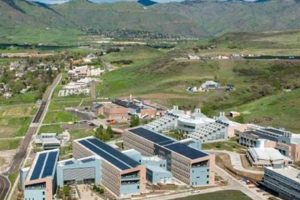
The National Renewable Energy Laboratory (NREL) maintains a significant presence in Golden, Colorado. This location houses research facilities and laboratories dedicated to advancing renewable energy technologies and energy efficiency. For example, the Energy Systems Integration Facility (ESIF) at this site allows researchers to test and develop new grid integration technologies.
This Colorado-based research hub plays a vital role in developing sustainable energy solutions for the nation and the world. The advancements made there contribute to reducing reliance on fossil fuels, improving energy security, and mitigating climate change. Established in 1977 as the Solar Energy Research Institute (SERI), this institution has a rich history of scientific innovation. Its strategic location near the foothills of the Rocky Mountains provides access to diverse geographical and climatic conditions, making it an ideal environment for renewable energy research and development.
The following sections delve further into specific research areas and initiatives undertaken at this important facility, exploring its contributions to wind energy, solar power, bioenergy, and grid modernization.
Tips for Energy Efficiency and Renewable Energy Adoption
The following tips offer guidance on practical steps individuals and communities can take to contribute to a sustainable energy future, inspired by the research and innovations taking place at the National Renewable Energy Laboratory’s Golden, Colorado location.
Tip 1: Optimize Home Energy Use: Conduct a home energy audit to identify areas for improvement. Consider upgrades such as insulation, energy-efficient windows, and LED lighting.
Tip 2: Explore Solar Energy Options: Evaluate the potential for rooftop solar installations. Community solar programs offer an alternative for those unable to install panels directly.
Tip 3: Embrace Electric Vehicles: Transitioning to electric vehicles reduces reliance on fossil fuels and minimizes transportation emissions. Explore available incentives and charging infrastructure.
Tip 4: Support Energy Storage Solutions: Battery storage systems can enhance the reliability of renewable energy sources and improve grid stability.
Tip 5: Advocate for Sustainable Policies: Support policies that promote renewable energy development, energy efficiency standards, and grid modernization.
Tip 6: Engage in Community Initiatives: Participate in local programs that encourage sustainable practices and educate community members about energy-saving strategies.
Tip 7: Consider Building Efficiency: When building or renovating, incorporate energy-efficient design principles and materials to minimize long-term energy consumption.
By implementing these strategies, individuals and communities can contribute to a more sustainable energy landscape, supporting the critical research and development conducted at the nation’s premier renewable energy laboratory.
These actionable steps represent a pathway toward a cleaner, more secure energy future. The concluding section reinforces the importance of continued innovation and collaboration in achieving national energy goals.
1. Renewable Energy Research

The National Renewable Energy Laboratory’s Golden, Colorado, location serves as a crucial hub for renewable energy research. This research encompasses a wide range of technologies, including solar photovoltaics, wind energy, bioenergy, geothermal energy, and water power. Exploring and advancing these technologies is essential for transitioning to a sustainable energy future, reducing reliance on fossil fuels, and mitigating the effects of climate change. For example, researchers at the Golden location are developing advanced photovoltaic materials to improve solar panel efficiency and reduce manufacturing costs. They are also conducting wind turbine simulations to optimize blade design and enhance energy capture. Furthermore, the facilitys research into algae-based biofuels offers a potential pathway toward sustainable transportation fuels.
The practical significance of this research is substantial. Advancements in renewable energy technologies contribute directly to national energy security and economic growth. For instance, improved solar panel efficiency can lead to lower electricity costs for consumers and businesses. Similarly, advancements in wind turbine technology can unlock greater wind energy potential, creating new jobs and stimulating economic activity in rural communities. The research conducted at the Golden location is also vital for informing energy policy decisions and guiding investments in renewable energy infrastructure.
In summary, the renewable energy research conducted at the National Renewable Energy Laboratory in Golden, Colorado, plays a critical role in addressing the nation’s energy challenges. This research drives innovation, fosters economic development, and supports a transition toward a cleaner, more sustainable energy future. Continued investment in this research is essential for achieving long-term energy independence and environmental sustainability. Addressing challenges such as grid integration and energy storage remains a focus, requiring ongoing collaborative efforts among researchers, policymakers, and industry partners.
2. Energy Efficiency Advancements

The National Renewable Energy Laboratory (NREL) in Golden, Colorado, plays a pivotal role in driving energy efficiency advancements. Research and development efforts at this location focus on improving energy efficiency across various sectors, including buildings, transportation, and industry. These advancements are crucial for reducing energy consumption, lowering costs, and mitigating environmental impact.
- Building Technologies Research
NREL’s Golden facility conducts extensive research on building technologies aimed at minimizing energy use in residential and commercial structures. This includes developing advanced insulation materials, energy-efficient windows and roofing systems, and smart building controls. For example, researchers are exploring new materials and designs for highly insulating windows that minimize heat transfer while maximizing natural light. These advancements contribute to reduced heating and cooling loads, lowering energy bills and greenhouse gas emissions.
- Advanced Transportation Technologies
Improving the efficiency of transportation systems is another key focus area. Researchers at NREL are developing advanced vehicle technologies, including lightweight materials, more efficient engines, and improved aerodynamics. Furthermore, the facility supports research on electric vehicle technologies and charging infrastructure. These advancements are essential for reducing reliance on fossil fuels and mitigating transportation-related emissions.
- Industrial Process Efficiency
NREL also contributes to improving energy efficiency in industrial processes. Research efforts focus on optimizing industrial equipment, developing energy-efficient manufacturing processes, and implementing waste heat recovery systems. For instance, NREL collaborates with industries to identify opportunities for energy savings within their operations, leading to reduced energy consumption and cost savings.
- Grid Integration and Optimization
Energy efficiency advancements are closely linked to grid modernization efforts. NREL’s research on smart grids and grid integration technologies helps optimize energy distribution and reduce transmission losses. This includes developing advanced grid management systems and exploring the use of energy storage solutions. These efforts are crucial for enabling greater integration of renewable energy resources and enhancing grid reliability.
The energy efficiency advancements pioneered at NREL’s Golden location contribute significantly to national energy goals. By reducing energy consumption across various sectors, these innovations lower costs for consumers and businesses, enhance energy security, and mitigate environmental impacts. The continued research and development at this facility are essential for achieving a sustainable energy future. Further exploration of these technologies and their integration within broader energy systems will be crucial for maximizing their impact and achieving widespread adoption.
3. Grid Modernization Studies

The National Renewable Energy Laboratory’s (NREL) Golden, Colorado, location plays a critical role in grid modernization studies. These studies address the evolving needs of the nation’s electricity grid, focusing on integrating renewable energy sources, enhancing grid reliability and resilience, and improving energy efficiency. A primary driver for grid modernization is the increasing penetration of variable renewable energy sources like solar and wind power. NREL researchers in Golden develop and test advanced grid technologies, including smart grid controls, advanced power electronics, and energy storage solutions, to manage the intermittency of these resources effectively. For instance, researchers are developing control algorithms that optimize the dispatch of renewable energy resources based on real-time grid conditions and weather forecasts. This work enables greater utilization of renewable energy while maintaining grid stability.
Grid modernization studies at NREL also address the growing need for grid resilience in the face of extreme weather events and cyberattacks. Researchers are developing technologies that enhance grid flexibility and enable faster restoration after disruptions. Microgrids, for example, can operate independently from the main grid during outages, providing critical services to essential facilities. NREL’s Golden location provides a platform for testing and validating these technologies, ensuring their effectiveness in real-world scenarios. The Energy Systems Integration Facility (ESIF) at NREL allows researchers to simulate various grid conditions and test the performance of new technologies under different scenarios, accelerating the development and deployment of grid modernization solutions.
In summary, grid modernization studies at NREL’s Golden location are essential for ensuring a reliable, efficient, and sustainable electricity grid. These studies address the challenges and opportunities presented by the increasing integration of renewable energy sources and the evolving needs of a modernizing grid. The research conducted at this facility provides critical insights and practical solutions for transforming the nation’s energy infrastructure. Continued investment in grid modernization research is crucial for maintaining a robust and resilient grid that can support a clean energy future. Future research directions include exploring the use of artificial intelligence and machine learning for grid management, as well as developing advanced cybersecurity measures to protect critical grid infrastructure.
4. Sustainable Energy Solutions

The National Renewable Energy Laboratory (NREL) in Golden, Colorado, plays a crucial role in developing and deploying sustainable energy solutions. This research institution focuses on addressing critical challenges related to energy independence, environmental sustainability, and economic growth. The work conducted at NREL directly contributes to the advancement of sustainable energy technologies and their integration into the broader energy system. For instance, NREL researchers develop advanced solar photovoltaic materials, leading to more efficient and cost-effective solar energy generation. This, in turn, facilitates wider adoption of solar power, reducing reliance on fossil fuels and mitigating greenhouse gas emissions. Another example is NREL’s research on grid modernization, which enables better integration of variable renewable energy sources like wind and solar, enhancing grid reliability and resilience.
The practical significance of NREL’s work on sustainable energy solutions is substantial. Developing cost-competitive renewable energy technologies makes clean energy more accessible to consumers and businesses. This accelerates the transition to a low-carbon economy, creating new jobs in the clean energy sector and stimulating economic growth. Moreover, NREL’s research on energy efficiency contributes to reducing energy consumption, lowering costs for consumers, and minimizing environmental impact. The development and deployment of sustainable transportation fuels, such as biofuels and hydrogen, also play a vital role in decarbonizing the transportation sector, a significant source of greenhouse gas emissions. NREL’s contributions in this area are critical for achieving national climate goals.
In conclusion, the pursuit of sustainable energy solutions is central to NREL’s mission. The research and development conducted at the Golden, Colorado, location have far-reaching implications for the nation’s energy future. By advancing sustainable energy technologies, improving energy efficiency, and modernizing the electric grid, NREL helps pave the way for a cleaner, more secure, and prosperous energy future. Addressing the remaining challenges, such as energy storage and grid integration, requires ongoing research and collaborative efforts among researchers, policymakers, and industry stakeholders. The continued investment in sustainable energy research at NREL is essential for achieving long-term energy independence and environmental sustainability.
5. Partnerships and Collaborations

The National Renewable Energy Laboratory (NREL) in Golden, Colorado, recognizes that transformative advancements in sustainable energy require collaborative endeavors. Partnerships and collaborations are therefore central to NREL’s mission, enabling the laboratory to leverage expertise, resources, and diverse perspectives to accelerate innovation and maximize impact. These collaborations span academia, industry, government agencies, and international organizations, fostering a vibrant ecosystem of innovation.
- Industry Partnerships
NREL collaborates extensively with industry partners to translate research findings into commercially viable technologies and solutions. These partnerships provide pathways for technology transfer, enabling private sector companies to commercialize NREL-developed innovations. For example, NREL has partnered with wind turbine manufacturers to test and optimize new blade designs, leading to improved turbine performance and cost reductions. These collaborations are crucial for accelerating the deployment of renewable energy technologies and driving market growth.
- Academic Collaborations
NREL fosters strong ties with universities and research institutions, engaging in joint research projects, student exchange programs, and educational initiatives. These collaborations leverage the expertise of leading researchers and provide opportunities for training the next generation of energy professionals. For example, NREL collaborates with universities on research projects related to advanced solar cell materials and grid integration technologies. These partnerships contribute to fundamental scientific advancements and the development of a skilled workforce in the renewable energy sector.
- Government Agency Partnerships
NREL works closely with various government agencies, including the Department of Energy, the Environmental Protection Agency, and state and local governments. These partnerships support policy development, inform regulatory decisions, and facilitate the deployment of sustainable energy solutions. For instance, NREL provides technical expertise to government agencies on energy efficiency standards and renewable energy integration policies. These collaborations ensure that research findings are translated into effective policies and programs that promote a sustainable energy future.
- International Collaboration
NREL engages in international collaborations to address global energy challenges and share best practices. These partnerships involve working with research institutions, governments, and organizations in other countries to advance renewable energy technologies and promote sustainable development. For example, NREL collaborates with international partners on projects related to off-grid energy access and climate change mitigation. These global collaborations foster knowledge sharing, accelerate innovation, and contribute to a more sustainable energy future for all.
The diverse partnerships and collaborations fostered by NREL are essential for accelerating the transition to a sustainable energy future. By leveraging expertise, resources, and perspectives from various sectors, NREL maximizes the impact of its research and development efforts. These collaborative endeavors are crucial for driving innovation, commercializing new technologies, informing policy decisions, and fostering a global community dedicated to sustainable energy solutions. The continued cultivation of these partnerships is essential for addressing the complex challenges of climate change and achieving a clean energy future.
6. Scientific Innovation Hub
The designation of the National Renewable Energy Laboratory’s (NREL) Golden, Colorado location as a scientific innovation hub stems from its consistent generation of breakthroughs in renewable energy and energy efficiency technologies. This status is not merely a label but a reflection of the facility’s substantial contributions to scientific advancement, technological development, and practical implementation of sustainable energy solutions. The cause-and-effect relationship is clear: NREL’s dedicated research efforts, coupled with its state-of-the-art facilities and collaborative environment, lead to significant innovations that drive the clean energy transition. For instance, breakthroughs in photovoltaic materials research at NREL have led to more efficient and cost-effective solar cells, directly impacting the growth of the solar energy industry.
As a component of NREL’s overall mission, the Golden location’s role as a scientific innovation hub is paramount. It serves as a catalyst for transforming laboratory discoveries into real-world applications. The Energy Systems Integration Facility (ESIF) in Golden provides a unique platform for researchers to test and validate new technologies in a simulated grid environment, bridging the gap between research and deployment. This accelerates the commercialization of innovative energy solutions, fostering economic growth and job creation within the clean energy sector. Furthermore, the concentration of scientific expertise at NREL Golden attracts talented researchers and engineers, further enhancing the facility’s capacity for innovation. This creates a self-reinforcing cycle of innovation, attracting further investment and driving further breakthroughs.
Understanding NREL Golden’s role as a scientific innovation hub offers practical significance for policymakers, industry stakeholders, and the public. It underscores the importance of continued investment in research and development to maintain progress toward a sustainable energy future. Challenges remain, including the need for further cost reductions in renewable energy technologies, improved energy storage solutions, and enhanced grid infrastructure to support greater renewable energy integration. NREL’s ongoing innovation is essential for addressing these challenges and ensuring the successful transition to a clean energy economy. The facility’s contributions extend beyond technological advancements to include workforce development, policy recommendations, and international collaboration, solidifying its position as a crucial driver of progress in the global pursuit of sustainable energy.
7. Colorado-based facility

The National Renewable Energy Laboratory’s (NREL) presence in Golden, Colorado, is more than just a geographical designation; it’s integral to the laboratory’s identity and mission. Locating this key facility in Colorado offers distinct advantages, influencing research directions, partnerships, and overall impact. The state’s abundant sunshine provides ideal conditions for solar energy research and development. Similarly, Colorado’s varied terrain and wind patterns make it a suitable location for wind energy studies. The proximity to the Rocky Mountains offers opportunities for research on hydropower and geothermal energy. This strategic location influences NREL’s focus areas, attracting researchers specializing in these technologies and fostering collaborations with local industries and universities. For example, NREL’s partnership with the Colorado School of Mines strengthens research capabilities in areas such as geothermal energy and energy storage.
The “Colorado-based facility” aspect of NREL extends beyond its geographical location to encompass the state’s supportive policy environment and thriving clean energy industry. Colorado’s commitment to renewable energy and energy efficiency creates a favorable ecosystem for NREL’s research and development efforts. The state’s Renewable Portfolio Standard, which mandates a certain percentage of electricity generation from renewable sources, provides a market driver for the technologies developed at NREL. Furthermore, the presence of a robust clean energy industry in Colorado facilitates technology transfer and commercialization of NREL’s innovations. This creates a synergistic relationship between NREL, the state government, and the private sector, accelerating the deployment of clean energy solutions and driving economic growth.
Understanding the significance of NREL’s Colorado location provides valuable context for evaluating the laboratory’s impact and future directions. The state’s natural resources, policy environment, and industrial landscape contribute significantly to NREL’s success in advancing renewable energy and energy efficiency technologies. Continued collaboration between NREL, Colorado stakeholders, and national partners will be crucial for addressing remaining challenges, such as grid modernization and energy storage. The strategic location of NREL in Golden, Colorado, positions the laboratory to play a leading role in shaping a sustainable energy future for the nation and the world.
Frequently Asked Questions
This section addresses common inquiries regarding the National Renewable Energy Laboratory’s (NREL) Golden, Colorado, location, providing concise and informative responses.
Question 1: What is the primary focus of research conducted at NREL’s Golden location?
Research at NREL Golden focuses on a broad range of renewable energy and energy efficiency technologies, including solar photovoltaics, wind energy, bioenergy, geothermal energy, grid modernization, and energy storage. The goal is to develop and deploy innovative solutions for a sustainable energy future.
Question 2: How does NREL Golden contribute to grid modernization efforts?
NREL Golden conducts extensive research on grid integration of renewable energy sources, developing advanced grid technologies and control systems to ensure grid stability and reliability with increasing penetration of variable renewable generation. The Energy Systems Integration Facility (ESIF) allows researchers to test and validate these technologies under real-world conditions.
Question 3: What types of partnerships does NREL Golden engage in?
NREL Golden collaborates with a diverse range of partners, including universities, industry, government agencies, and international organizations. These partnerships leverage expertise and resources to accelerate innovation, technology transfer, and policy development.
Question 4: How does NREL Golden’s location in Colorado influence its research?
Colorado’s abundant sunshine, varied terrain, and wind patterns provide ideal conditions for renewable energy research. The state’s supportive policy environment and thriving clean energy industry create a favorable ecosystem for NREL’s work.
Question 5: What are some key facilities at NREL’s Golden location?
The Energy Systems Integration Facility (ESIF) is a prominent research facility at NREL Golden, enabling researchers to test and validate grid integration technologies. Other key facilities include the Research Support Facility and the Science and Technology Facility, which house laboratories and research equipment for various renewable energy and energy efficiency studies.
Question 6: How can I access research findings and publications from NREL Golden?
NREL makes its research findings and publications publicly available through its website (www.nrel.gov). The website provides access to technical reports, journal articles, conference papers, and other resources related to NREL’s research activities.
Understanding NREL Golden’s role in advancing clean energy technologies is crucial for informed decision-making and fostering a sustainable energy future. Continued exploration of these topics contributes to a broader understanding of the challenges and opportunities in the transition to a clean energy economy.
For further information or inquiries, please consult the NREL website or contact the laboratory directly.
Conclusion
This exploration has highlighted the multifaceted importance of the National Renewable Energy Laboratory’s Golden, Colorado, presence. From foundational research in renewable energy technologies to advanced grid modernization studies, the facility’s contributions are essential for a sustainable energy transition. Key takeaways include the site’s unique research capabilities, its collaborative partnerships, and the influence of Colorado’s supportive policy environment.
The ongoing work at this location offers a crucial pathway toward a cleaner, more secure, and sustainable energy future. Continued investment and collaborative efforts are essential to fully realize the potential of renewable energy and energy efficiency, addressing the complex energy challenges facing the nation and the world.