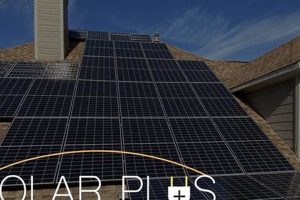
The term describes lease agreements focused on photovoltaic energy systems. These agreements enable access to solar power generation without the significant upfront investment typically associated with purchasing and installing panels. A homeowner, for example, might enter into such an arrangement, allowing a third-party provider to install and maintain the equipment on their property in exchange for a fixed monthly payment, often lower than their previous electricity bill.
This approach fosters wider adoption of renewable energy, mitigating environmental impact and promoting energy independence. Historically, the high initial cost of solar panel systems presented a barrier for many. Lease structures have played a key role in democratizing access to clean energy by removing that financial obstacle. This expansion contributes to a more sustainable energy future, reducing reliance on fossil fuels and supporting a greener economy.
The following sections will explore the financial implications, contractual considerations, and long-term advantages associated with such arrangements, providing a detailed analysis for potential participants.
Guidance on Solar Leasing
The following provides practical guidance concerning solar leasing agreements, emphasizing crucial aspects for informed decision-making.
Tip 1: Understand Contractual Obligations: Thoroughly review the lease agreement, paying particular attention to the contract’s duration, renewal options, and termination clauses. Comprehending these details prevents unforeseen financial implications later.
Tip 2: Assess System Performance Guarantees: Evaluate the lease’s provisions concerning system performance. Reputable providers offer guarantees regarding the amount of energy the system will generate. This ensures the expected energy savings materialize.
Tip 3: Scrutinize Maintenance Responsibilities: Clarify who is responsible for system maintenance and repairs. The lease should explicitly outline these duties and associated costs. Unforeseen maintenance expenses can negate the benefits of a solar lease.
Tip 4: Investigate Potential Property Value Impact: Consider the potential impact on property value. While solar systems generally increase property value, leased systems may be viewed differently by potential buyers. Research local market trends and consult with real estate professionals.
Tip 5: Analyze Financial Benefits Thoroughly: Calculate the long-term financial benefits, comparing the lease payments to anticipated energy savings. Factor in potential increases in electricity rates. A comprehensive financial analysis determines the overall value proposition.
Tip 6: Explore Buyout Options: Investigate the possibility of purchasing the system at the end of the lease term. Understand the buyout price and compare it to the cost of purchasing a new system. This provides flexibility and control over the system’s future.
These considerations help ensure a beneficial experience, aligning renewable energy adoption with sound financial planning.
The subsequent sections will delve into advanced topics related to solar technology and its long-term sustainability impact.
1. Initial cost avoidance

The primary driver for many adopting solar leasing agreements stems from the elimination of substantial upfront capital expenditure. Conventional solar panel ownership necessitates a considerable investment for equipment purchase and installation. Solar leasing circumvents this obstacle by transferring system ownership and associated costs to a third-party provider. This facilitates immediate access to solar energy benefits without the initial financial burden.
For example, a homeowner seeking to reduce their carbon footprint and electricity bills might find the multi-thousand-dollar price tag of a purchased system prohibitive. A solar lease allows them to install panels on their roof with minimal or no initial outlay. The provider owns the system, handles maintenance, and benefits from any tax incentives, while the homeowner gains access to cheaper, cleaner energy, paying only a fixed monthly fee. Businesses can similarly benefit, freeing up capital for core operations rather than investing in solar infrastructure.
Understanding the correlation between initial cost avoidance and solar leasing is crucial. It explains the increasing popularity of this financing model, as it widens accessibility to solar power for those otherwise unable to afford it. While long-term ownership may offer greater financial returns, the immediate access and reduced financial risk presented by solar leasing are significant advantages, particularly in markets with volatile energy prices and increasing environmental awareness.
2. Contractual term length

The duration of solar lease agreements significantly impacts the overall financial viability and long-term benefits. These agreements, typically spanning 10 to 25 years, bind the lessee to a fixed monthly payment for the use of a solar energy system. A longer contract term generally results in lower monthly payments, making solar energy accessible with reduced immediate costs. However, it also commits the lessee to a fixed financial obligation over an extended period, regardless of potential changes in energy prices or technological advancements in solar panel efficiency. For example, a homeowner entering a 20-year lease locks in a specific rate even if solar technology improves significantly and electricity prices drop, potentially missing out on more cost-effective alternatives available later.
Conversely, shorter contract terms offer greater flexibility, allowing lessees to adapt to evolving market conditions and technological innovations. While monthly payments may be higher, the lessee retains the option to upgrade to newer, more efficient systems or switch to alternative energy sources at the end of the lease. A business, for instance, might prefer a 10-year lease to align with its strategic planning horizon, allowing for future decisions based on changing energy demands and technological advancements. Furthermore, understanding the contractual term length is crucial when considering property sales. A solar lease transfers to the new owner unless explicitly negotiated, potentially affecting property value and marketability. Clear clauses in the lease agreement regarding transferability and termination options are vital.
In conclusion, the selection of an appropriate contractual term length requires careful consideration of individual circumstances, risk tolerance, and long-term energy goals. A longer term minimizes immediate costs but reduces flexibility, while a shorter term offers adaptability but entails higher monthly payments. Weighing these factors and consulting with financial advisors are essential steps to ensure a solar lease agreement aligns with individual financial objectives and energy needs. A comprehensive understanding of the leases clauses related to term length, transferability, and termination mitigates potential risks and maximizes the benefits of solar energy adoption.
3. System performance guarantees

System performance guarantees represent a critical component of solar lease agreements. These guarantees provide lessees with assurances regarding the anticipated energy production from the installed solar system, mitigating financial risks and aligning provider accountability with customer expectations.
- Energy Production Thresholds
These guarantees specify a minimum level of energy output that the system is expected to generate over a defined period, typically annually. Should the system fail to meet this threshold due to factors beyond the lessee’s control (e.g., equipment malfunction, inaccurate solar irradiance estimates), the lease agreement may stipulate financial compensation or system adjustments to rectify the shortfall. This safeguard protects the lessee from paying for energy they do not receive and incentivizes providers to ensure optimal system performance.
- Degradation Clauses
Solar panels experience gradual performance degradation over their lifespan. Performance guarantees often include clauses addressing this natural decline, outlining acceptable degradation rates and compensatory measures if degradation exceeds predetermined limits. These clauses provide lessees with long-term protection against unforeseen performance drops, ensuring the continued financial viability of the lease agreement throughout its duration.
- Monitoring and Reporting Mechanisms
Effective performance guarantees necessitate robust monitoring and reporting mechanisms. Providers typically employ remote monitoring systems to track energy production in real-time. Regular performance reports, detailing energy output and system health, are shared with the lessee, fostering transparency and enabling proactive identification of potential issues. Transparent data sharing is vital for building trust and verifying compliance with the performance guarantee.
- Remedial Actions and Dispute Resolution
The guarantee should clearly outline the procedures for addressing performance deficiencies. This encompasses investigative protocols, repair timelines, and compensation mechanisms. A well-defined dispute resolution process is essential for resolving disagreements between the lessee and provider. The presence of clearly defined remedial actions and dispute resolution mechanism helps ensure that underperformance issues are resolved fairly and in a timely manner.
These facets collectively underscore the significance of system performance guarantees within the context of solar leasing. By establishing clear expectations, assigning accountability, and providing mechanisms for recourse, these guarantees contribute to the overall attractiveness and financial security of solar energy adoption through leasing models.
4. Maintenance responsibilities

Maintenance responsibilities are inextricably linked to lease agreements centered on solar energy systems. The allocation of these responsibilities directly impacts the financial benefits and operational efficiency of such arrangements. Defining who bears the onus for system upkeep, repairs, and replacements is crucial for ensuring the sustained performance and longevity of the installed solar infrastructure. Without clear delineation, ambiguity can lead to protracted disputes, unexpected costs, and compromised energy production. For instance, a homeowner leasing solar panels may assume the leasing company handles all maintenance, only to discover they are responsible for snow removal, which significantly reduces energy generation in winter months. Such misunderstandings can negate the anticipated cost savings and undermine the viability of the lease.
The scope of maintenance responsibilities within a solar lease typically encompasses several key areas: panel cleaning, inverter maintenance, system monitoring, and repair of damaged components. Leases may assign all or some of these duties to either the lessor (the solar company) or the lessee (the property owner). Leases that place all maintenance responsibilities on the lessor often command higher monthly payments, reflecting the increased service provision. Conversely, leases shifting maintenance to the lessee typically feature lower monthly costs but expose the property owner to potential expenses and operational burdens. Consider a commercial property owner leasing a large-scale solar array. If the lease agreement assigns inverter maintenance to the property owner, they become responsible for sourcing qualified technicians and covering the associated costs, potentially impacting their budgetary planning. A comprehensive agreement will clarify these roles to avoid conflict.
Ultimately, a well-defined allocation of maintenance responsibilities is paramount for a successful solar lease. It safeguards both parties’ interests, ensuring the system operates optimally while minimizing unforeseen financial burdens. Careful scrutiny of lease terms pertaining to maintenance, coupled with a clear understanding of associated costs and obligations, empowers lessees to make informed decisions and maximize the value derived from their solar energy investment. Neglecting this aspect can lead to costly surprises and detract from the economic and environmental benefits of the leasing arrangement. A clear and concise maintenance schedule will ensure accountability and reduce the likelihood of disputes or system downtime, enhancing overall satisfaction and the return on the renewable energy investment.
5. Financial savings potential

The financial savings potential inherent in solar leasing represents a primary motivator for adoption. The ability to access solar energy without significant upfront investment unlocks economic advantages contingent upon various factors.
- Reduced Electricity Bills
Solar leasing can result in lower monthly electricity bills compared to traditional grid-supplied power. The savings arise from the displacement of grid energy consumption with self-generated solar energy. The extent of these savings depends on factors such as system size, energy consumption patterns, and local electricity rates. For example, a household with high energy usage during peak daylight hours stands to benefit more significantly from solar leasing than one with minimal daytime consumption.
- Fixed Payment Structure
Many solar lease agreements feature a fixed monthly payment structure, offering predictability in energy expenses. This contrasts with the fluctuating rates often associated with conventional electricity providers, shielding consumers from price volatility. This predictability enables better budgeting and financial planning. However, it is important to consider whether the fixed payment will remain competitive over the long term, as electricity prices may not always increase.
- Net Metering Credits
In regions with net metering policies, excess solar energy generated by the leased system can be fed back into the grid, earning credits that offset future electricity consumption. These credits further enhance the financial savings potential. The value of net metering credits depends on the specific policies in place and can vary significantly by jurisdiction. In some areas, the credits may be sufficient to eliminate or substantially reduce electricity bills, while in others the financial benefit is more modest.
- Tax Incentives and Rebates (Indirectly)
While the lessee typically does not directly benefit from tax incentives associated with solar ownership (as the leasing company owns the system), these incentives are factored into the lease pricing. This often translates into more competitive monthly payments than would otherwise be possible. The leasing company benefits from these incentives and will hopefully lower costs in turn.
These facets of financial savings collectively underscore the economic attractiveness of solar leasing. Realizing the full potential depends on careful assessment of energy consumption patterns, local electricity rates, and the terms of the lease agreement. Comparing projected savings against the lease payments over the long term is crucial to determine the actual economic benefits.
Frequently Asked Questions Concerning Solar Leasing
The following addresses common inquiries regarding solar leasing, providing clarity on key aspects of these arrangements.
Question 1: What constitutes “les solar”?
The term refers to a solar leasing agreement, a contractual arrangement allowing access to solar energy without upfront purchase costs. A third-party provider installs and maintains a solar system on the property, and the property owner pays a fixed monthly fee for the generated electricity. The legal ownership of the system remains with the provider throughout the lease term.
Question 2: What are the typical contract lengths associated with “les solar”?
Solar lease agreements generally span 10 to 25 years. The duration impacts monthly payments and long-term financial benefits. Longer terms typically yield lower monthly payments but commit the lessee to a fixed rate for an extended period. Shorter terms offer flexibility but involve higher monthly costs.
Question 3: How are maintenance responsibilities assigned in “les solar” agreements?
Maintenance responsibilities vary depending on the specific lease terms. Some agreements place all maintenance duties on the lessor (the solar company), while others assign some or all responsibilities to the lessee (the property owner). Clarity on this aspect is crucial to avoid unexpected costs and operational burdens.
Question 4: What are system performance guarantees within “les solar” agreements?
System performance guarantees outline the expected energy output of the solar system. These guarantees specify minimum energy production thresholds. Should the system fail to meet these thresholds, the lease agreement may provide for financial compensation or system adjustments.
Question 5: How does property ownership affect “les solar” agreements?
With solar leases, the solar panels are owned by the solar company, not the property owner. This can impact property value differently than if the solar panels were owned. Leasing agreements transfer to the new owner unless explicit negotiated terms dictate the process, and such is critical to review details regarding property sale or transfer to a new owner
Question 6: Can a solar lease be transferred to a new property owner?
Solar lease agreements typically transfer to new property owners. However, the terms of transfer should be carefully reviewed in the lease agreement. Some leases require the new owner to assume the agreement, while others offer buyout options or termination clauses. Consultation with legal counsel is advisable when selling a property with a solar lease.
Understanding these key aspects is vital for making informed decisions regarding solar leasing and assessing its suitability for individual circumstances.
The following section will delve into the environmental impact of solar energy and its contribution to sustainable energy solutions.
Conclusion Regarding Solar Leasing
This exploration has illuminated the intricacies of solar leasing agreements, outlining key considerations from initial cost avoidance to long-term financial implications. Comprehending contract lengths, maintenance responsibilities, and system performance guarantees is paramount for assessing the viability of such arrangements. The presented information serves to equip potential participants with the necessary knowledge to navigate the complexities inherent in solar energy adoption through leasing models.
As the demand for sustainable energy solutions grows, a thorough understanding of financial mechanisms like solar leasing becomes increasingly crucial. The informed evaluation of individual needs and market conditions is essential for realizing the potential benefits of clean energy adoption. A commitment to due diligence and expert consultation will pave the way for a future powered by renewable resources, strategically and economically deployed.
![Why Solar is a Renewable Source of Energy [Benefits] | Renewable Energy Solutions for a Sustainable Future | Clean & Green Power](https://pplrenewableenergy.com/wp-content/uploads/2026/04/th-454-300x200.jpg "Why Solar is a Renewable Source of Energy [Benefits] Renewable Energy Solutions for a Sustainable Future | Clean & Green Power")