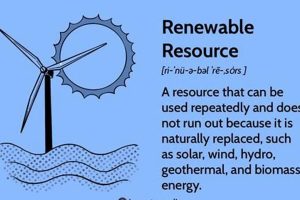
Solar radiation, the electromagnetic energy emitted by the sun, is characterized as a sustainable power source. It replenishes naturally on a human timescale, ensuring continuous availability without depletion. Examples of utilizing this energy include photovoltaic cells converting light into electricity and solar thermal systems employing sunlight for heating purposes.
The significance of harnessing solar power lies in its potential to mitigate reliance on finite fossil fuels, thus diminishing carbon emissions and combating climate change. Historically, the application of sunlight for energy has evolved from passive heating techniques to sophisticated technologies enabling large-scale electricity generation and industrial process heating.
Further discussion will address the various methods for capturing and converting solar radiation, assess its economic viability compared to traditional energy sources, and explore the challenges and opportunities associated with its widespread implementation.
Harnessing Solar Power
The effective utilization of radiative solar energy requires strategic planning and investment to maximize its benefits.
Tip 1: Conduct a Thorough Site Assessment: Before investing in solar technology, evaluate the location’s solar irradiance. Analyze factors such as shading, orientation, and cloud cover to determine the potential energy yield. Data from solar resource maps and on-site measurements are crucial for accurate assessments.
Tip 2: Select Appropriate Technology: Different applications necessitate different technologies. Photovoltaic (PV) panels are suitable for electricity generation, while solar thermal systems are more efficient for water heating or space heating. Match the technology to the specific energy needs to optimize performance.
Tip 3: Optimize System Design: Properly size the system to meet energy demands, taking into account future growth. Incorporate energy storage solutions, such as batteries or thermal storage, to address intermittency issues and ensure continuous power supply during periods of low solar radiation.
Tip 4: Ensure Professional Installation: Engage qualified and certified installers to ensure the system is installed correctly and safely. Proper installation minimizes the risk of system failures, maximizes energy production, and ensures compliance with safety standards.
Tip 5: Implement Regular Maintenance: Schedule routine inspections and cleaning to maintain system efficiency. Dust, debris, and shading can significantly reduce energy output. Regular maintenance extends the lifespan of the components and preserves optimal performance.
Tip 6: Monitor System Performance: Implement a monitoring system to track energy production and identify any performance anomalies. Real-time data allows for proactive troubleshooting and optimization of system parameters.
Tip 7: Explore Incentive Programs and Policies: Take advantage of available government incentives, tax credits, and net metering programs to reduce the initial investment costs and increase the economic viability of the solar project. Stay informed about relevant policies that support the adoption of renewable energy technologies.
By following these strategies, organizations and individuals can effectively harness sunlight’s potential, reducing reliance on conventional energy sources and contributing to a more sustainable future.
Further analysis will explore the economic and environmental impacts of widespread adoption of solar energy.
1. Continuous Replenishment

The classification of solar radiation as a sustainable energy source is fundamentally linked to its property of continuous replenishment. Unlike finite fossil fuels, solar energy is inexhaustible on a human timescale due to the ongoing nuclear fusion processes within the sun. This continuous influx of energy ensures a persistent supply for terrestrial applications, negating the concern of resource depletion that plagues conventional energy models. The availability of solar radiation, dependent on geographical location and atmospheric conditions, remains constant over extended periods, providing a predictable energy resource.
The direct consequence of this sustained supply is the potential for long-term energy independence and reduced vulnerability to volatile fuel markets. Examples of solar-powered facilities, such as utility-scale photovoltaic plants in arid regions, demonstrate the practical application of this continuous replenishment. These installations, designed with lifespans exceeding several decades, capitalize on the consistent solar irradiance to generate electricity with minimal operational costs, primarily related to maintenance and monitoring. The integration of energy storage solutions further enhances the reliability of solar-derived power during periods of low solar intensity, ensuring uninterrupted supply.
In summary, the continuous replenishment characteristic is the cornerstone of sunlight’s designation as a sustainable energy alternative. Understanding this attribute is crucial for developing effective energy policies, promoting investment in solar technologies, and mitigating the environmental impact associated with conventional energy production. Challenges remain in addressing intermittency and optimizing energy storage, but the fundamental assurance of continuous resource availability positions solar radiation as a vital component of a future sustainable energy landscape.
2. Non-Depleting Supply

The attribute of a non-depleting supply is fundamental to the classification of radiative solar energy as a sustainable resource. This characteristic distinguishes it from finite energy reserves and underscores its potential for long-term energy solutions.
- Inexhaustible Energy Source
The sun’s energy output is generated through continuous nuclear fusion, ensuring a supply that far exceeds human energy demands for billions of years. This effectively inexhaustible nature means that harnessing solar radiation does not diminish the resource itself, unlike fossil fuels or nuclear materials.
- Constant Energy Flux
The flow of energy from the sun, while variable due to atmospheric conditions and seasonal changes, is consistent over extended periods. This predictability allows for the design and implementation of energy systems that can reliably tap into this continuous energy stream, assuming appropriate energy storage or grid integration strategies.
- Minimal Resource Consumption for Extraction
Solar energy conversion primarily requires the deployment of photovoltaic panels or solar thermal collectors. Once installed, these systems extract energy with minimal consumption of other resources, thereby avoiding the environmental impacts associated with resource extraction, processing, and transportation that are inherent to fossil fuel industries.
- Long-Term Sustainability
The combination of an inexhaustible energy source, a predictable energy flux, and minimal resource consumption translates to long-term sustainability. This sustainability extends beyond mere resource availability to encompass reduced environmental impact, enhanced energy security, and potential for decentralized energy production, contributing to a more resilient energy infrastructure.
These facets of a non-depleting supply directly correlate with the long-term benefits associated with employing solar technologies. This characteristic, coupled with ongoing technological advancements and declining costs, reinforces the position of radiative solar energy as a vital component of future energy portfolios. Furthermore, this understanding underpins the development of effective energy policies promoting the transition to sustainable energy systems globally.
3. Global Availability

The designation of solar radiation as a sustainable energy source is intrinsically linked to its global availability. Unlike geographically constrained fossil fuel reserves, sunlight is accessible, in varying degrees, across the planet. This ubiquitous presence ensures that most regions possess the potential to harness it, albeit with differing levels of effectiveness due to factors such as latitude, cloud cover, and seasonal variations. The importance of this global availability stems from its potential to democratize energy production and reduce dependence on centralized, often politically sensitive, energy supply chains. For instance, nations lacking substantial fossil fuel reserves can leverage solar resources to enhance energy independence and security. Countries in the equatorial regions, characterized by high solar irradiance, exemplify the benefits of this abundant availability, where solar energy is economically competitive with traditional power generation methods. Similarly, even regions with lower average solar irradiance can effectively utilize solar technologies for localized power generation and heating, reducing reliance on imported fuels and mitigating carbon emissions.
The practical significance of this understanding translates into the proliferation of distributed solar energy systems, exemplified by rooftop photovoltaic installations in residential and commercial buildings globally. Such decentralized energy production reduces transmission losses and strengthens grid resilience, especially in areas prone to natural disasters or grid outages. Furthermore, the global availability of solar energy facilitates the deployment of off-grid solutions in remote areas, providing access to electricity for communities lacking connection to conventional power grids. This is particularly crucial in developing nations, where access to affordable and reliable energy is a prerequisite for economic development and improved living standards. The implementation of solar-powered water pumps for irrigation and solar home systems for lighting and basic appliances demonstrates the transformative potential of globally available solar energy in these contexts.
In summary, the global availability of solar energy is a critical component of its classification as a sustainable resource. This accessibility enables diverse regions to harness it for decentralized power generation, enhances energy independence, and promotes sustainable development. While challenges persist in optimizing solar energy capture and storage in regions with varying climatic conditions, the inherent global availability ensures its continued relevance as a vital component of the global energy mix. The practical understanding of this availability influences policy decisions, technological innovation, and investment strategies related to the deployment of solar technologies worldwide.
4. Sustainable Option

Sunlight’s classification as a sustainable option arises directly from its renewable nature. Its continuous availability and minimal environmental impact position it as a viable alternative to fossil fuels. The sustainable characteristic inherently links to the concept of minimizing long-term environmental and resource depletion. Using solar energy reduces reliance on non-renewable sources, thereby mitigating greenhouse gas emissions and pollution associated with their extraction, processing, and combustion. Solar farms, for example, demonstrate the large-scale implementation of sunlight as a sustainable option for electricity generation, displacing the need for coal-fired power plants and lowering carbon footprints. This underscores the importance of recognizing “sustainable option” as a key component of solar energy’s appeal and value.
Furthermore, the practical application of solar technologies contributes to sustainable development goals beyond just energy production. Solar-powered water purification systems, implemented in regions with limited access to clean water, exemplify how sunlight can provide sustainable solutions for basic human needs. Solar-powered irrigation systems enhance agricultural sustainability by reducing the need for fossil fuel-powered pumps, leading to lower operational costs and reduced environmental impact. The expanding market for solar-powered devices, from lighting to transportation, illustrates the growing recognition of its potential to transform various sectors toward sustainable practices. The implementation of net-metering policies, allowing homeowners to sell excess solar energy back to the grid, incentivize further adoption and contribute to a more sustainable energy distribution system.
In conclusion, the label “sustainable option” when applied to sunlight is not merely an abstract concept but a reflection of its tangible benefits regarding resource conservation, environmental protection, and long-term viability. Challenges related to intermittency and energy storage remain, but the inherent sustainability of the resource, coupled with ongoing technological advancements, reinforces its importance in the global transition towards a more sustainable energy future. The practical significance of understanding sunlight as a sustainable option lies in promoting informed decision-making concerning energy policy, technological development, and investment strategies.
5. Low Carbon Impact

The reduced carbon footprint associated with solar energy systems represents a significant advantage in the context of sustainable energy production. Its low carbon impact distinguishes it from fossil fuel-based energy generation, contributing to climate change mitigation efforts.
- Minimal Greenhouse Gas Emissions During Operation
Solar energy technologies, such as photovoltaic panels, generate electricity with negligible greenhouse gas emissions during their operational phase. In contrast to fossil fuel power plants, which release carbon dioxide, methane, and other pollutants, solar facilities primarily emit emissions during manufacturing, transportation, and decommissioning. The emissions footprint is significantly lower, making solar a cleaner energy alternative. A solar farm replacing a coal-fired plant exemplifies this reduction, directly lowering the amount of greenhouse gases released into the atmosphere.
- Reduced Air Pollution
The replacement of fossil fuels with solar power leads to decreased air pollution. Burning coal, oil, and natural gas releases particulate matter, sulfur dioxide, and nitrogen oxides, which contribute to respiratory illnesses and other health problems. Solar energy generation avoids these pollutants, improving air quality and public health. Urban areas adopting solar energy experience improvements in air quality, demonstrating the tangible health benefits.
- Lower Life Cycle Emissions
A comprehensive life cycle assessment of solar energy systems reveals lower overall emissions compared to fossil fuel alternatives. While the manufacturing of solar panels involves some emissions, the total emissions produced over the system’s lifespan are substantially less than those associated with fossil fuel extraction, transportation, and combustion. This reduced life cycle carbon footprint supports long-term sustainability goals. For instance, solar panel recycling programs are further reducing the environmental impact of panel disposal, minimizing landfill waste and recovering valuable materials.
- Contribution to Decarbonization Efforts
The adoption of solar energy technologies directly contributes to decarbonization efforts aimed at mitigating climate change. By displacing fossil fuels, solar energy reduces the overall carbon intensity of the energy sector, aiding in the transition to a low-carbon economy. Government incentives and policies promoting solar energy adoption accelerate this transition, encouraging investments in solar infrastructure and technological innovation. The growing number of countries setting ambitious renewable energy targets underscores the importance of solar energy in achieving climate goals.
These considerations highlight the substantial benefits of solar energy in reducing carbon emissions and promoting environmental sustainability. Solar, due to its low carbon impact, plays a vital role in transitioning to a cleaner energy future and mitigating the effects of climate change. The ongoing advancements in solar technologies further reduce its carbon footprint, solidifying its position as a key component of global decarbonization strategies.
6. Scalable Applications
The potential of sunlight as a renewable energy source is amplified by the broad range of scalable applications that enable its utilization across diverse settings and energy demands. These applications, ranging from small-scale residential installations to large-scale utility projects, underscore the versatility and adaptability of solar technology.
- Residential Rooftop Systems
Rooftop photovoltaic (PV) systems represent a readily scalable application of solar energy. Individual homeowners can install PV panels to generate electricity for their own consumption, reducing their reliance on the grid and potentially selling excess power back to the utility. This decentralized approach contributes to grid stability and promotes energy independence. The modular nature of PV panels allows homeowners to tailor system size to their specific energy needs, enabling incremental scaling as demand evolves. Government incentives and declining panel costs have spurred the widespread adoption of residential rooftop systems globally.
- Commercial and Industrial Installations
Businesses and industrial facilities can deploy solar energy systems to power operations, reduce energy costs, and enhance their sustainability profiles. These installations often involve larger PV arrays mounted on rooftops or adjacent land, providing a significant portion of the facility’s electricity demand. The scalability of commercial and industrial solar applications allows for phased implementation, enabling organizations to gradually increase their solar energy capacity as their energy needs grow. Furthermore, solar thermal systems can be integrated to provide heating and cooling for industrial processes, expanding the scope of solar energy utilization.
- Utility-Scale Solar Farms
Utility-scale solar farms represent the largest-scale application of solar energy, involving vast arrays of PV panels or concentrated solar power (CSP) plants that generate electricity for distribution across regional or national grids. These large-scale projects contribute significantly to the overall renewable energy supply, displacing fossil fuel generation and reducing carbon emissions. The scalability of utility-scale solar farms allows for the addition of incremental capacity, enabling utilities to meet increasing energy demand with clean, renewable sources. The development of advanced grid management technologies and energy storage solutions further enhances the reliability and stability of solar-integrated power grids.
- Off-Grid and Rural Electrification
Solar energy systems offer a viable solution for providing electricity to remote areas and off-grid communities where extending the conventional grid is economically or logistically challenging. Solar home systems (SHSs) and mini-grids can provide electricity for lighting, appliances, and other essential services, improving quality of life and fostering economic development. The scalability of off-grid solar applications allows for the gradual expansion of electricity access, enabling communities to transition from basic lighting to powering businesses and critical infrastructure. International development organizations and governments are increasingly investing in off-grid solar solutions to promote energy access and sustainable development in underserved regions.
These diverse scalable applications highlight the versatility of sunlight as a renewable energy source. From individual households to large-scale utilities, solar technologies can be tailored to meet a wide range of energy needs, contributing to a more sustainable and resilient energy future. Continued innovation in solar technology and supportive government policies will further accelerate the adoption of scalable solar applications, driving the transition to a cleaner and more equitable energy system.
7. Future Energy Security

The correlation between solar energy and future energy security is based on the premise of resource diversification and reduced geopolitical risk. Reliance on a single or limited number of energy sources exposes nations to price volatility, supply disruptions, and political instability. The integration of solar power into the energy mix mitigates these vulnerabilities by providing a geographically distributed and domestically controlled energy resource. Nations with abundant solar resources can enhance their energy independence, lessening dependence on foreign energy imports and fostering economic stability. Germany’s Energiewende, for instance, demonstrates a national strategy to increase renewable energy integration, including solar, to improve energy security and reduce reliance on imported fossil fuels.
Solar energy also contributes to energy security by enhancing grid resilience and promoting decentralized power generation. Distributed solar installations, such as rooftop photovoltaic systems, reduce strain on centralized power grids and improve their ability to withstand disruptions caused by natural disasters or infrastructure failures. Microgrids powered by solar energy provide reliable electricity to remote communities, enhancing energy access and reducing dependence on extended transmission lines. The deployment of solar-powered microgrids in island nations demonstrates the practicality of solar energy for enhancing energy security in vulnerable regions. Moreover, advancements in energy storage technologies, coupled with solar generation, enable continuous power supply, even during periods of low sunlight, further reinforcing energy security.
In conclusion, the relationship between solar energy and future energy security rests on principles of diversification, resilience, and independence. Harnessing sunlight for electricity generation reduces reliance on finite fossil fuels, mitigates geopolitical risks, and strengthens energy infrastructure. While challenges remain in optimizing grid integration and ensuring consistent power supply, the strategic deployment of solar technologies is essential for achieving long-term energy security and building a more sustainable energy future. The practical implementation of policies that support solar energy adoption, such as feed-in tariffs and renewable energy mandates, is vital for realizing these benefits and bolstering energy security on a global scale.
Frequently Asked Questions About Solar Energy
The following questions address common inquiries regarding the classification of sunlight as a renewable energy source, providing clarity on key aspects of its utilization and sustainability.
Question 1: Is solar energy truly inexhaustible?
The sun’s energy output, sustained by nuclear fusion, is expected to continue for billions of years. On a human timescale, solar radiation is effectively inexhaustible, distinguishing it from finite resources like fossil fuels.
Question 2: Does solar energy contribute to environmental pollution?
The operation of solar energy systems produces minimal greenhouse gas emissions. Some emissions are associated with the manufacturing and disposal of solar panels, but these are significantly lower than those from fossil fuel-based power plants.
Question 3: How reliable is solar energy given its intermittent nature?
The intermittency of solar radiation due to weather patterns and day-night cycles necessitates energy storage solutions or grid integration strategies. Technological advancements in battery storage and smart grid management are enhancing the reliability of solar energy.
Question 4: Is solar energy economically competitive with traditional energy sources?
The cost of solar energy has decreased significantly in recent years, making it increasingly competitive with fossil fuels in many regions. Government incentives, tax credits, and economies of scale further enhance its economic viability.
Question 5: Can solar energy be deployed effectively in all geographical locations?
While solar radiation is available globally, its intensity varies by location. Regions with higher solar irradiance are more suitable for solar energy generation, but even areas with lower irradiance can effectively utilize solar technologies for localized power generation and heating.
Question 6: What are the long-term environmental impacts of solar energy deployment?
The large-scale deployment of solar energy can have some environmental impacts, such as land use changes and resource depletion during manufacturing. However, these impacts are generally less severe than those associated with fossil fuel extraction and combustion, particularly when considering the benefits of reduced greenhouse gas emissions.
These answers provide a comprehensive overview of key considerations related to solar energy as a renewable resource. Understanding these aspects is essential for informed decision-making concerning energy policy and sustainable development.
The next section will discuss the advancements in solar technology.
Conclusion
The preceding analysis has thoroughly explored the assertion that sunlight is a renewable energy source. The discussion encompasses the continuous replenishment, non-depleting supply, global availability, sustainability, low carbon impact, scalability, and contribution to future energy security inherent in solar radiation. These characteristics collectively validate the classification of sunlight as a sustainable and viable alternative to conventional energy sources.
Continued investment in technological innovation, strategic policy implementation, and proactive environmental stewardship are crucial to maximizing the potential of sunlight as a renewable energy source. The global transition towards a sustainable energy future necessitates a commitment to harnessing this abundant resource, mitigating climate change, and ensuring long-term energy security for all.