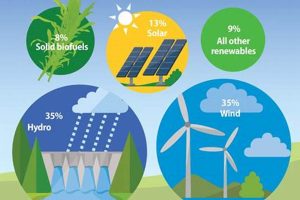
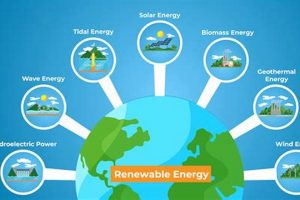
Hydroelectric power harnesses the energy of moving water to generate electricity. This process typically involves damming a river or stream, creating a reservoir. Water is then channeled through turbines, causing them to spin and drive generators that produce electricity. A common example includes large-scale dams built across major rivers, but smaller, run-of-river systems also exist, diverting a portion of the stream’s flow.
The significance of water-generated electricity lies in its potential for providing a stable and consistent energy supply. When managed sustainably, it offers long-term energy security and can contribute to reduced reliance on fossil fuels. Historically, harnessing the power of water has been a vital source of energy for various societies, evolving from waterwheels used for milling grain to sophisticated hydroelectric power plants supplying electricity to entire regions.
The following sections will explore the arguments for and against classifying this method as consistently sustainable, considering environmental impacts and long-term viability. Discussions include the effects on aquatic ecosystems, greenhouse gas emissions related to reservoir construction and operation, and the overall role of water-generated electricity in a diversified energy portfolio. A balanced perspective on the merits and demerits is presented.
Considerations for Assessing Hydroelectric Sustainability
Evaluating water-generated electricity requires a comprehensive approach, acknowledging both its potential benefits and associated drawbacks. The following guidelines provide a framework for assessing the sustainability of specific installations.
Tip 1: Evaluate Environmental Impact Assessments: Rigorous environmental impact assessments are crucial prior to project implementation. These should comprehensively analyze the potential effects on aquatic ecosystems, including fish migration patterns, water quality, and biodiversity.
Tip 2: Analyze Greenhouse Gas Emissions: Quantify greenhouse gas emissions associated with reservoir construction, vegetation decomposition within the reservoir, and altered downstream river flows. Include these emissions in a full lifecycle analysis.
Tip 3: Assess Water Usage Efficiency: Examine water usage efficiency to minimize water losses through evaporation and leakage. Implement measures to optimize water utilization for electricity generation.
Tip 4: Consider Social and Economic Impacts: Evaluate social and economic impacts on local communities, including displacement, land use changes, and access to resources. Implement mitigation strategies to address negative impacts.
Tip 5: Monitor Reservoir Sedimentation: Track reservoir sedimentation rates and implement sediment management strategies to maintain reservoir capacity and prevent downstream effects. Consider sediment bypass or removal techniques.
Tip 6: Ensure Regulatory Compliance: Adhere to all relevant environmental regulations and permitting requirements. Conduct regular audits to ensure ongoing compliance and identify areas for improvement.
Tip 7: Promote Technological Innovation: Invest in research and development of advanced hydroelectric technologies, such as fish-friendly turbines and optimized reservoir management techniques, to minimize environmental impacts.
Tip 8: Prioritize Community Engagement: Foster open communication and collaboration with local communities, stakeholders, and environmental organizations throughout the project lifecycle. Incorporate community feedback into project planning and operation.
By adhering to these guidelines, a more thorough and objective evaluation can determine the sustainable attributes of water-generated electricity and contribute to the responsible development of this energy resource.
The concluding section will summarize the arguments surrounding the overall classification and potential implications.
1. Water Cycle

The water cycle is fundamental to the operation and classification of hydroelectric power as a renewable energy source. It describes the continuous movement of water on, above, and below the surface of the Earth, driven by solar energy and gravity. This natural cycle provides the essential resource for generating electricity.
- Evaporation and Precipitation
Evaporation converts water from liquid to gas, primarily from oceans, lakes, and rivers. Precipitation, including rain and snow, returns this water to the Earth’s surface, replenishing water bodies. This cyclical process ensures a continuous supply of water for hydroelectric facilities. However, variations in precipitation patterns due to climate change can impact the reliability of this water supply.
- Surface Runoff and Infiltration
Surface runoff refers to water flowing over land into rivers and streams, while infiltration is the process of water seeping into the ground, replenishing groundwater reserves. Both contribute to the water volume available for hydroelectric generation. Changes in land use, such as deforestation, can affect runoff and infiltration rates, potentially diminishing water availability for power generation.
- Water Storage in Reservoirs
Hydroelectric facilities typically rely on reservoirs to store water, regulating flow to ensure a consistent supply for electricity generation. These reservoirs act as artificial components of the water cycle, allowing for controlled release of water through turbines. However, the construction of reservoirs can alter natural water flow patterns and impact downstream ecosystems.
- Climate Change Impacts
Climate change poses a significant threat to the water cycle, altering precipitation patterns, increasing evaporation rates, and leading to more frequent and intense droughts and floods. These changes can affect the reliability of hydroelectric power generation, as water availability becomes more unpredictable. Adaptation strategies, such as improved water management practices and diversification of energy sources, are essential to mitigate these risks.
The water cycle’s continuous nature underpins the potential for hydroelectric power to be a renewable energy source. However, the sustainability of this power source is contingent on responsible water resource management, consideration of environmental impacts, and adaptation to the effects of climate change on water availability. Without these considerations, the long-term viability of hydroelectric power is questionable.
2. Reservoir Impacts

Reservoir construction, an integral aspect of hydroelectric power generation, presents considerable environmental and social consequences that directly influence the assessment of whether hydroelectric power aligns with the principles of a replenishing resource. The creation of reservoirs, while essential for regulating water flow and ensuring consistent electricity production, fundamentally alters the natural landscape and hydrological regime of river systems. This alteration results in habitat loss for terrestrial and aquatic species, disruption of fish migration patterns, and potential displacement of local communities. For instance, the Three Gorges Dam in China, while providing significant electricity generation capacity, has been associated with large-scale displacement and ecological damage.
Furthermore, reservoirs can contribute to greenhouse gas emissions through the decomposition of submerged vegetation, releasing methane and carbon dioxide into the atmosphere. The extent of these emissions depends on factors such as reservoir size, climate, and vegetation type. In tropical regions, emissions can be substantial, potentially offsetting some of the climate benefits associated with replacing fossil fuel-based electricity generation. Sedimentation within reservoirs also poses a long-term challenge, reducing storage capacity and affecting downstream water quality. The accumulation of sediment behind dams necessitates costly removal or bypass strategies to maintain operational efficiency and prevent ecological damage. Therefore, a comprehensive understanding of reservoir impacts is crucial to accurately evaluate the long-term sustainability of hydroelectric power.
In conclusion, the multifaceted impacts of reservoir construction significantly influence the classification of hydroelectric power as a consistently replenishing source. While the utilization of water to generate electricity holds potential as a component of a diversified energy portfolio, the detrimental ecological, social, and climatic consequences associated with reservoir creation necessitate careful consideration and mitigation strategies. The true sustainability of hydroelectric power hinges on minimizing these adverse effects and ensuring responsible resource management to maintain the integrity of aquatic ecosystems and the well-being of affected communities.
3. Ecosystem Disruption

Ecosystem disruption, stemming from hydroelectric power development, fundamentally challenges the classification of this energy source as consistently renewable. The alterations imposed on riverine ecosystems by dams and reservoirs trigger a cascade of effects that compromise biodiversity, ecological function, and the long-term sustainability of affected environments.
- Habitat Fragmentation and Loss
Dam construction fragments river systems, isolating populations of aquatic species and limiting their access to essential habitats for spawning, feeding, and migration. Reservoir inundation destroys terrestrial and riparian habitats, displacing or eliminating plant and animal communities. The Glen Canyon Dam on the Colorado River, for example, significantly altered downstream habitats, impacting native fish populations and riparian vegetation. This habitat loss diminishes biodiversity and undermines the resilience of the ecosystem.
- Alteration of Hydrological Regimes
Dams disrupt natural flow patterns, altering the timing, magnitude, and frequency of floods and low-flow periods. These changes impact water temperature, nutrient transport, and sediment deposition, affecting aquatic life and ecosystem processes. The altered flow regime can also promote the growth of invasive species and reduce the habitat suitability for native species. Controlled releases from dams often fail to replicate the natural variability essential for maintaining ecosystem health.
- Impacts on Fish Populations
Dams pose significant barriers to fish migration, preventing access to spawning grounds and disrupting life cycles. Fish passage facilities, such as fish ladders, can mitigate some of these impacts, but their effectiveness varies depending on species and dam design. Turbine passage can also result in fish mortality. Declines in salmon populations in the Pacific Northwest, attributed in part to hydroelectric dams, exemplify the detrimental effects on fish populations.
- Water Quality Degradation
Reservoir impoundment can lead to water quality degradation, including increased water temperatures, reduced dissolved oxygen levels, and accumulation of nutrients. These changes can harm aquatic life and promote the growth of harmful algal blooms. The decomposition of organic matter in reservoirs can also release greenhouse gases, contributing to climate change. The environmental costs associated with water quality degradation further challenge the characterization of hydroelectric power as a consistently sustainable energy source.
The multifaceted ecosystem disruptions associated with hydroelectric power development necessitate careful consideration when assessing its renewability. While water is a replenishable resource, the irreversible ecological damage caused by dams and reservoirs raises questions about the long-term sustainability of this energy source. Mitigation measures, such as fish passage facilities and environmental flow releases, can reduce some of the negative impacts, but they cannot fully restore the integrity of disrupted ecosystems. Therefore, a comprehensive assessment of the ecological costs and benefits is essential for determining the true sustainability of hydroelectric power.
4. Greenhouse Gases
While often promoted as a clean energy source, hydroelectric power’s relationship with greenhouse gas emissions is more complex than initially perceived. Reservoirs created for hydroelectric facilities can become significant sources of methane and carbon dioxide, both potent greenhouse gases. This occurs primarily through the decomposition of submerged vegetation and organic matter in the reservoir. Anaerobic conditions at the reservoir bottom favor methane production, while aerobic decomposition near the surface generates carbon dioxide. The magnitude of these emissions varies depending on factors such as reservoir size, location (particularly in tropical regions), and the amount of organic matter present. For instance, some studies have shown that the emissions from certain tropical hydroelectric reservoirs can be comparable to or even exceed those from fossil fuel power plants, at least in the initial years after impoundment. This contrasts sharply with the intended benefit of reducing greenhouse gas emissions through renewable energy adoption.
The net impact of hydroelectric facilities on greenhouse gas emissions also depends on the specific alternatives being displaced. If a hydroelectric plant replaces a coal-fired power plant, the overall emissions reduction may still be substantial, even considering reservoir emissions. However, if it replaces a natural gas plant or another renewable energy source, the net benefit could be considerably smaller, or even negative in some cases. Furthermore, the construction process for hydroelectric dams, including concrete production and land clearing, contributes to upfront greenhouse gas emissions. A comprehensive lifecycle assessment is therefore necessary to accurately evaluate the overall climate impact of a specific hydroelectric project, comparing it against other energy alternatives. This assessment should consider not only the direct emissions from the reservoir but also the avoided emissions from displaced fossil fuel sources and the emissions associated with construction and operation.
In conclusion, the connection between hydroelectric power and greenhouse gases highlights the importance of a nuanced understanding of its environmental impacts. While water is a renewable resource, the construction and operation of hydroelectric facilities can contribute significantly to greenhouse gas emissions, challenging the perception of this energy source as universally clean. To accurately assess its climate benefits, a comprehensive lifecycle analysis is essential, considering factors such as reservoir characteristics, alternative energy sources, and construction emissions. Responsible planning and management of hydroelectric projects should prioritize minimizing greenhouse gas emissions to maximize their contribution to a low-carbon energy future, if indeed this option remains a good option compared to other Renewable Energy sources.
5. Sedimentation

Sedimentation, the accumulation of silt, sand, and other particulate matter in reservoirs behind hydroelectric dams, represents a significant challenge to the long-term viability of water-generated electricity as a consistently replenishing resource. River systems naturally transport sediment downstream, but dams obstruct this flow, causing sediment to accumulate within the reservoir. This deposition diminishes the reservoir’s storage capacity, reducing its ability to regulate water flow for electricity generation and irrigation. Over time, sedimentation can render a reservoir unusable, effectively terminating the hydroelectric facility’s operational lifespan. The Sanmenxia Dam on the Yellow River in China serves as a stark example, experiencing rapid sedimentation that severely compromised its intended functions and necessitated costly and disruptive modifications. The rate of sedimentation depends on factors such as watershed characteristics, land use practices, and the dam’s design. Deforestation and erosion in the watershed exacerbate sedimentation rates, while dams with smaller reservoirs and steeper slopes tend to experience faster infilling.
Effective sediment management strategies are crucial for mitigating the negative impacts of sedimentation on hydroelectric facilities. These strategies include watershed management practices to reduce erosion, sediment bypass tunnels to divert sediment around the dam, and sediment flushing or dredging to remove accumulated sediment from the reservoir. However, these methods are often expensive and can have their own environmental consequences. Sediment flushing, for instance, can release large volumes of sediment downstream, potentially harming aquatic ecosystems. Selecting the most appropriate sediment management strategy requires careful consideration of the specific site conditions, environmental impacts, and economic costs. Ignoring sedimentation issues leads to a gradual decline in the plant’s electricity generating capacity and overall sustainability. Long-term projections of sediment accumulation rates are essential for informed decision-making regarding reservoir management and the planning of future hydroelectric projects.
In conclusion, sedimentation poses a substantial threat to the long-term renewability of water-generated electricity. The gradual infilling of reservoirs with sediment reduces their storage capacity, compromising their ability to regulate water flow for electricity generation and ultimately shortening their operational lifespan. While various sediment management strategies exist, they are often costly and can have adverse environmental impacts. Addressing sedimentation requires a comprehensive approach that integrates watershed management, reservoir design, and adaptive management practices. Understanding and proactively managing sedimentation is crucial for ensuring the sustainability of water-generated electricity as a consistently replenishing energy source, linking responsible practices to the water cycle and its components.
6. Lifecycle Analysis

Lifecycle Analysis (LCA) offers a systematic evaluation of the environmental impacts associated with a product or service throughout its entire lifespan, from resource extraction to end-of-life management. In the context of determining whether water-generated electricity aligns with principles of renewability, LCA provides a crucial framework for comprehensively assessing all stages of power generation. Traditional assessments often focus solely on the operational phase, neglecting the significant environmental burdens associated with dam construction, reservoir creation, and eventual decommissioning. An LCA approach allows for the quantification and comparison of environmental impacts across the entire value chain, providing a more accurate picture of the true sustainability of water-generated electricity.
Specifically, a comprehensive LCA for a hydroelectric facility would consider the following stages: resource extraction for dam construction materials (e.g., concrete, steel), manufacturing and transportation of components, land clearing and flooding for reservoir creation, greenhouse gas emissions from decaying vegetation in the reservoir, impacts on aquatic ecosystems, water usage, electricity generation, and eventual decommissioning and site restoration. By quantifying environmental burdens such as greenhouse gas emissions, water consumption, habitat destruction, and waste generation at each stage, an LCA enables a more nuanced evaluation of the overall environmental performance of water-generated electricity compared to alternative energy sources. For example, an LCA study of a large hydroelectric dam in the Amazon basin revealed that the greenhouse gas emissions from the reservoir, particularly methane, significantly offset the climate benefits associated with displacing fossil fuel-based power generation. This finding challenged the conventional wisdom that water-generated electricity is always a low-carbon energy source.
Therefore, integrating LCA into the assessment of water-generated electricity’s renewability is essential for informed decision-making and responsible energy planning. While water itself is a renewable resource, the environmental impacts associated with hydroelectric facilities can be substantial and long-lasting. LCA provides a tool for identifying and mitigating these impacts, promoting more sustainable practices, and ensuring that water-generated electricity truly contributes to a low-carbon energy future. A lifecycle perspective ensures a comprehensive evaluation that moves beyond simplified assumptions, considering the multifaceted environmental consequences of water-generated electricity as a whole. The insights from LCA are critical for policymakers, project developers, and stakeholders seeking to balance energy needs with environmental protection.
7. Regional Variability
The classification of water-generated electricity as a consistently replenishing resource is heavily influenced by regional variability in hydrological conditions and energy demand. The availability of water, the primary input for this type of electricity generation, varies significantly across geographic regions due to differences in precipitation patterns, topography, and climate. Areas with abundant and consistent rainfall, such as the Pacific Northwest of the United States or regions of Scandinavia, are naturally better suited for water-generated electricity development. In contrast, arid or semi-arid regions, or those experiencing prolonged droughts, may face limitations in water availability, affecting the reliability and sustainability of water-generated electricity plants. Consequently, the assessment of water-generated electricity’s renewability cannot be generalized; it requires a site-specific analysis that considers the long-term hydrological context of the region.
Furthermore, the energy demand and grid infrastructure in a region also play a crucial role in determining the practicality and sustainability of water-generated electricity. A region with high electricity demand and a well-developed grid may benefit significantly from a large-scale water-generated electricity project, provided that the environmental and social impacts are carefully managed. However, in regions with lower electricity demand or limited grid capacity, the economic and environmental costs of developing large-scale water-generated electricity may outweigh the benefits. Smaller, decentralized water-generated electricity systems, such as run-of-river plants, may be more appropriate in such contexts. For example, mountainous regions with remote communities may benefit from small-scale water-generated electricity, reducing reliance on fossil fuels and improving energy access. Therefore, the integration of water-generated electricity into a region’s energy mix must be tailored to its specific needs and circumstances.
In summary, regional variability in hydrological conditions, energy demand, and grid infrastructure profoundly affects the suitability and sustainability of water-generated electricity. A blanket classification of water-generated electricity as a consistently replenishing energy source is misleading without considering these regional factors. Site-specific assessments, including comprehensive environmental impact studies and analyses of energy demand and grid capacity, are essential for informed decision-making and responsible development of water-generated electricity. Addressing regional variability requires adaptive management strategies that account for changing climate conditions and evolving energy needs, ensuring that water-generated electricity contributes to a sustainable and resilient energy future.
Frequently Asked Questions About Water-Generated Electricity
The following questions address common inquiries concerning water-generated electricity, specifically regarding its classification as a consistently replenishing energy resource. The answers aim to provide clarity and address potential misconceptions.
Question 1: Is water-generated electricity inherently environmentally benign?
The generation of electricity using water is not inherently free from environmental consequences. Reservoir construction can lead to habitat loss, alteration of river ecosystems, and greenhouse gas emissions from decomposing vegetation. Therefore, the environmental impact requires careful assessment.
Question 2: Does the size of a hydroelectric dam influence its sustainability?
Yes, the size of a hydroelectric dam can significantly affect its sustainability. Large-scale dams often have more extensive environmental and social impacts than smaller, run-of-river facilities. However, smaller plants might have lower electricity output and efficiency.
Question 3: How does climate change impact the renewability of water-generated electricity?
Climate change can significantly affect the renewability of water-generated electricity by altering precipitation patterns, increasing evaporation rates, and leading to more frequent droughts. These changes can reduce water availability and the reliability of hydroelectric generation.
Question 4: What role does sediment management play in the long-term viability of water-generated electricity?
Sediment management is crucial for the long-term viability of water-generated electricity. Sedimentation reduces reservoir capacity and can damage turbines. Effective sediment management strategies are necessary to maintain plant efficiency and prolong its lifespan.
Question 5: Are all hydroelectric facilities created equal in terms of environmental impact?
No, the environmental impact of hydroelectric facilities varies depending on factors such as location, design, and operational practices. Some facilities may incorporate fish passage structures and environmental flow releases to mitigate their impacts, while others may lack such measures.
Question 6: What are the alternatives for sustainable hydro energy?
The best alternative options can include run-of-river systems, pumped storage hydroelectricity, and incorporating environmental considerations into the design and operation of traditional hydroelectric facilities. Prioritizing these components can have major positive impacts.
In summation, the classification of water-generated electricity as a consistently replenishing energy source hinges on various factors, including environmental impacts, climate change vulnerability, and effective management practices. A comprehensive assessment is essential for determining the true sustainability of this energy resource.
The concluding section will summarize the arguments surrounding the overall classification and potential implications.
Conclusion
This exploration of whether is hydroelectric power a renewable energy source reveals a complex reality beyond a simple yes or no answer. The article highlights that while the source, moving water, is continuously replenished through the water cycle, the long-term sustainability of this energy form is contingent on numerous factors. Reservoir construction brings significant environmental consequences, including ecosystem disruption, greenhouse gas emissions, and sedimentation, challenging the assumption of universal renewability. Regional variability in hydrological conditions further complicates the classification, underscoring the need for site-specific assessments.
Therefore, water-generated electricity’s role as a genuinely sustainable energy solution necessitates a holistic perspective. Careful planning, responsible management practices, and ongoing innovation are crucial to mitigate the adverse impacts associated with its development. A commitment to comprehensive lifecycle analyses, proactive sediment management, and ecosystem restoration is essential for maximizing its contribution to a low-carbon energy future. The long-term viability of water-generated electricity hinges on addressing its environmental challenges with the same rigor applied to its power generation capabilities, ensuring a balanced approach to energy production and environmental preservation.