Coal is a combustible black or brownish-black sedimentary rock composed mostly of carbon and hydrocarbons. It is formed from the remains of vegetation that has been consolidated, hardened, and altered by heat and pressure over millions of years. This formation process places it firmly in the category of resources that require geological timescales to replenish.
The implications of coal’s formation process are significant. Because it takes millions of years to create substantial coal deposits, the rate at which it is extracted far exceeds the rate at which it can be naturally replenished. This disparity between consumption and formation leads to its classification as a finite resource. Historically, coal has played a pivotal role in industrial development, powering factories and providing energy for transportation and electricity generation. However, its finite nature and the environmental consequences associated with its extraction and combustion have spurred the development of alternative energy sources.
Given the lengthy geological processes involved in its creation, and the impact of its usage on the environment, its categorization as a non-renewable resource is widely accepted and influences energy policy and research into sustainable alternatives. Understanding this categorization is critical for developing responsible energy strategies that prioritize long-term sustainability.
Considerations Regarding Coal as an Energy Source
The utilization of coal as an energy source necessitates careful consideration of several factors, primarily due to its classification as a non-renewable resource and the environmental implications associated with its extraction and combustion.
Tip 1: Assess Resource Depletion: Acknowledge that coal reserves are finite. Energy planning should account for the long-term decline in available coal deposits and explore strategies for diversification.
Tip 2: Evaluate Environmental Impact: Quantify the environmental costs associated with coal usage, including greenhouse gas emissions, air pollution, and water contamination. These costs should be factored into energy policy decisions.
Tip 3: Prioritize Energy Efficiency: Implement measures to reduce energy consumption across various sectors. Improved energy efficiency can mitigate the demand for coal and extend the lifespan of existing reserves.
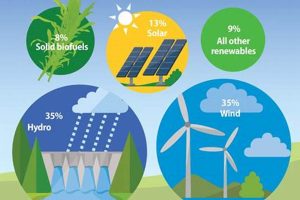
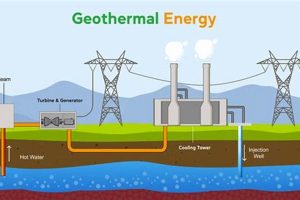
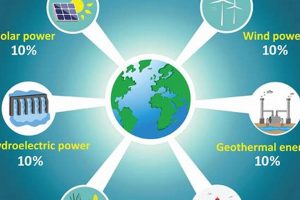
Tip 4: Invest in Renewable Alternatives: Direct resources towards the development and deployment of renewable energy technologies, such as solar, wind, and geothermal power. These alternatives offer a sustainable pathway towards meeting energy demands.
Tip 5: Support Carbon Capture Technologies: Explore and support the advancement of carbon capture and storage (CCS) technologies. CCS can potentially reduce the amount of carbon dioxide released into the atmosphere from coal-fired power plants, although its viability and scalability remain subjects of ongoing research.
Tip 6: Implement Stricter Emission Standards: Enforce rigorous emission standards for coal-fired power plants to minimize the release of pollutants that contribute to air and water pollution. This requires consistent monitoring and enforcement.
Tip 7: Promote Responsible Mining Practices: Encourage mining practices that minimize environmental disruption and ensure the rehabilitation of mined areas. This includes mitigating soil erosion, preventing water contamination, and restoring ecosystems.
Addressing the challenges associated with reliance on coal requires a multi-faceted approach that encompasses resource management, environmental protection, and technological innovation. Failing to address these considerations can lead to long-term environmental damage and economic instability.
The path forward involves transitioning towards a more sustainable energy future, prioritizing renewable resources and adopting responsible practices in the utilization of existing resources like coal.
1. Geological Formation Time

Geological formation time is a critical factor in determining whether a resource, such as coal, qualifies as renewable. The term refers to the extended periods, typically millions of years, required for the natural processes that create a particular substance or deposit. In the context of coal, this timescale directly contradicts the criteria for renewability, which necessitate that a resource can be replenished within a human lifetime or at a rate comparable to its consumption.
- Peat Accumulation and Transformation
The initial stage of coal formation involves the accumulation of plant matter in swampy environments, forming peat. This process, while continuous on a small scale, requires specific climatic and geological conditions sustained over millennia to create substantial peat deposits. Subsequent transformation of peat into coal grades (lignite, bituminous, anthracite) demands further burial, pressure, and heat over millions of years. This protracted development means that even if peat formation continues today, the transition to usable coal reserves is far too slow to compensate for current extraction rates.
- Carboniferous Period as a Benchmark
A significant portion of the world’s coal reserves originated during the Carboniferous period, approximately 300 to 360 million years ago. During this era, vast forests thrived in warm, humid climates, contributing massive amounts of organic matter to the formation of coal. While plant matter continues to decompose and form organic sediments today, the specific geological and environmental conditions of the Carboniferous period are not replicable on a human timescale. This limits the prospect of rapid coal replenishment.
- Geochemical Processes and Deep Earth Interactions
The transformation of organic matter into coal is not simply a matter of time but also involves complex geochemical processes occurring deep within the Earth’s crust. These processes, including diagenesis and metamorphism, alter the chemical composition and physical properties of the organic material under extreme pressure and temperature conditions. Such transformations are not easily accelerated or replicated, reinforcing the non-renewable status of coal.
- Contrast with Renewable Biomass
The difference between coal and renewable biomass is stark. Renewable biomass, such as wood or agricultural crops, can be grown and harvested within a relatively short period, allowing for replenishment at a rate that can match or exceed consumption. Coal, on the other hand, requires millions of years of geological activity, making its rate of replenishment infinitesimally slow compared to its extraction. This fundamental difference underscores the distinction between renewable and non-renewable energy resources.
In summary, the geological formation time of coalspanning millions of years and requiring specific, non-replicable geological and environmental conditionsdirectly classifies it as a non-renewable energy source. This protracted timescale makes it impossible to replenish coal reserves at a rate comparable to their consumption, highlighting the need for sustainable energy alternatives to mitigate resource depletion and environmental impacts.
2. Finite Resource Quantity

The concept of a finite resource quantity is central to understanding why coal cannot be classified as a renewable energy source. Finite resources are characterized by their limited availability on Earth, implying that once consumed, they cannot be regenerated within a timeframe relevant to human society. This limitation has profound implications for long-term energy planning and sustainability.
- Fixed Global Reserve
The Earth’s coal reserves, while substantial, represent a fixed quantity. Geological surveys and resource assessments provide estimates of the total coal deposits that exist. However, these estimates do not imply continuous replenishment. Instead, they highlight the upper limit of what is extractable. As consumption continues, the remaining accessible reserves diminish, eventually leading to scarcity. For example, regions heavily reliant on coal, such as certain parts of China and India, are projected to face significant depletion of readily accessible reserves within the coming decades, necessitating reliance on imports or alternative energy sources.
- Uneven Distribution and Accessibility
Coal deposits are not uniformly distributed across the globe. Certain regions possess significantly larger reserves than others, leading to geopolitical dependencies and economic disparities. Furthermore, not all coal reserves are economically or technologically accessible. Some deposits are located deep underground, requiring costly and complex mining operations. Others are of lower quality, yielding less energy and producing more pollutants when burned. The finite nature of easily accessible, high-quality coal underscores the need for efficient utilization and diversification of energy sources.
- Economic and Environmental Costs of Extraction
As easily accessible coal reserves are depleted, extraction efforts shift to more challenging and environmentally sensitive locations. This leads to increased economic costs associated with mining and transportation, as well as heightened environmental impacts, including habitat destruction, water pollution, and greenhouse gas emissions. The financial and ecological burdens of accessing increasingly scarce coal resources further reinforce its non-renewable status. For instance, mountain top removal mining, a practice used to extract coal seams buried beneath mountaintops, has devastating effects on ecosystems and local communities.
- Dependence on Geological Processes
The formation of coal relies on geological processes spanning millions of years, involving the accumulation and compression of plant matter under specific conditions. The rate at which coal is being extracted and consumed far exceeds the rate at which it is being formed naturally. This disparity between consumption and formation is a defining characteristic of non-renewable resources. Unlike solar or wind energy, which are continuously replenished, coal is a finite product of ancient geological epochs, rendering it unsustainable as a primary long-term energy source.
The finite resource quantity of coal, coupled with its uneven distribution, the escalating costs of extraction, and its dependence on protracted geological processes, definitively establishes it as a non-renewable energy source. This understanding is paramount for developing sustainable energy policies that prioritize renewable alternatives and responsible resource management.
3. Combustion Emissions Impact

Combustion emissions impact is a critical consideration when evaluating whether coal can be classified as a renewable energy source. The environmental consequences stemming from burning coal for energy production significantly undermine any potential claim of sustainability, solidifying its categorization as non-renewable.
- Greenhouse Gas Emissions and Climate Change
The combustion of coal releases substantial quantities of greenhouse gasses, primarily carbon dioxide (CO2), into the atmosphere. CO2 is a major contributor to climate change, driving global warming, rising sea levels, and more frequent extreme weather events. The accumulation of atmospheric CO2 from coal combustion has long-lasting effects on the planet, far exceeding the rate at which natural processes can absorb or mitigate these emissions. This disruption of the carbon cycle is inherently unsustainable.
- Air Pollution and Public Health
Coal combustion releases harmful air pollutants, including particulate matter (PM2.5 and PM10), sulfur dioxide (SO2), nitrogen oxides (NOx), and mercury. These pollutants contribute to respiratory illnesses, cardiovascular diseases, and other adverse health effects. The public health burden associated with coal-fired power plants is considerable, leading to increased healthcare costs and reduced quality of life. For instance, cities with high concentrations of coal-fired power plants often experience significantly higher rates of respiratory ailments, particularly among vulnerable populations such as children and the elderly.
- Acid Rain and Ecosystem Damage
Sulfur dioxide and nitrogen oxides released during coal combustion contribute to acid rain. Acid rain acidifies lakes and streams, harming aquatic life and damaging forests and soils. The ecological damage caused by acid rain can have long-term consequences for biodiversity and ecosystem health. The effects can extend far beyond the immediate vicinity of coal-fired power plants, impacting ecosystems hundreds of miles away.
- Water Contamination and Waste Disposal
Coal-fired power plants require significant amounts of water for cooling, and the wastewater discharged can contain pollutants such as heavy metals and thermal pollution. Additionally, the disposal of coal ash, a byproduct of combustion, poses environmental risks. Coal ash contains toxic substances that can leach into groundwater and contaminate soil, posing threats to human health and ecosystems. The improper management of coal ash has led to several high-profile environmental disasters, highlighting the potential for long-term water contamination.
In conclusion, the significant environmental and public health consequences associated with coal combustion emissions definitively preclude its classification as a renewable energy source. The long-lasting impacts on climate, air quality, ecosystems, and water resources underscore the unsustainable nature of relying on coal for energy production, emphasizing the need for a transition to cleaner, renewable alternatives.
4. Depletion Exceeds Formation

The principle of “Depletion Exceeds Formation” is fundamentally linked to the classification of coal as a non-renewable energy source. This concept highlights the critical imbalance between the rate at which coal is consumed and the geological timescale required for its natural creation, solidifying its unsustainable nature.
- Contrast in Temporal Scales
The formation of coal involves geological processes spanning millions of years, where plant matter accumulates and transforms under specific conditions of heat and pressure. In contrast, the extraction and consumption of coal occur at rates dictated by human industrial demands, a process condensed into decades or centuries. This stark difference in timescales exemplifies the core issue: coal is being used at a rate far outpacing its natural regeneration.
- Impact on Reserve Lifespan
Global coal reserves, though substantial, are finite. The continuous extraction without commensurate replenishment leads to a gradual reduction in available reserves. Projections indicate that at current consumption rates, economically viable coal reserves will be significantly depleted within the next few centuries. This looming depletion underscores the unsustainability of relying on coal as a primary energy source and necessitates the exploration of alternative, renewable options.
- Economic and Environmental Ramifications
As easily accessible coal deposits are exhausted, the cost and environmental impact of extraction increase. Mining operations must delve deeper or resort to more disruptive techniques like mountaintop removal, resulting in greater ecological damage. Furthermore, the transportation of coal from increasingly remote locations adds to the economic burden. The diminishing returns from coal extraction, both financially and environmentally, highlight the urgency of transitioning to sustainable energy alternatives.
- Disruption of Natural Equilibrium
The rapid consumption of coal releases carbon that was sequestered over millions of years back into the atmosphere as carbon dioxide. This sudden influx of CO2 disrupts the natural carbon cycle, contributing to climate change and ocean acidification. The environmental consequences of this disruption are far-reaching and long-lasting, highlighting the unsustainable nature of relying on a resource where depletion and combustion have such a significant impact on the planet’s natural systems.
The facets of “Depletion Exceeds Formation,” including the disparity in temporal scales, the impact on reserve lifespan, the economic and environmental ramifications, and the disruption of natural equilibrium, collectively demonstrate why coal cannot be considered a renewable resource. The unsustainable rate of consumption relative to its geological formation underscores the imperative for adopting renewable energy sources and sustainable practices to secure long-term energy needs.
5. Carbon Cycle Disruption

The extraction and combustion of coal exert significant influence on the global carbon cycle, an intricate system involving the exchange of carbon among the atmosphere, oceans, land, and living organisms. This disruption is a central argument against classifying coal as a renewable energy source, highlighting the unsustainable nature of its utilization.
- Release of Sequestered Carbon
Coal is formed from plant matter that has been buried and compressed over millions of years, effectively sequestering carbon from the atmosphere. When coal is burned, this stored carbon is released as carbon dioxide (CO2), a potent greenhouse gas. This rapid influx of CO2 into the atmosphere far exceeds the rate at which natural processes can absorb it, leading to an imbalance in the carbon cycle. For example, the increased atmospheric CO2 concentrations since the Industrial Revolution are largely attributed to the burning of fossil fuels, including coal, leading to demonstrable climate change effects.
- Imbalance in Carbon Reservoirs
The combustion of coal shifts carbon from geological reservoirs (coal deposits) to atmospheric and oceanic reservoirs. This transfer disrupts the natural equilibrium of the carbon cycle. The atmospheric reservoir increases, contributing to global warming, while the oceanic reservoir experiences acidification as it absorbs excess CO2. This acidification threatens marine ecosystems, particularly coral reefs and shellfish populations. These interconnected consequences illustrate the broad-scale disruption of the carbon cycle caused by coal utilization.
- Impact on Carbon Sinks
Deforestation and land degradation associated with coal mining further diminish the capacity of natural carbon sinks, such as forests and soils, to absorb CO2 from the atmosphere. The removal of vegetation reduces the amount of CO2 that can be sequestered through photosynthesis, exacerbating the imbalance in the carbon cycle. For example, large-scale deforestation to access coal reserves in regions like Indonesia reduces the natural carbon sequestration capacity, contributing to increased greenhouse gas emissions.
- Long-Term Climate Effects
The elevated levels of atmospheric CO2 resulting from coal combustion have long-term climate effects, including rising global temperatures, altered precipitation patterns, and increased frequency of extreme weather events. These changes can disrupt ecosystems, agriculture, and human societies, creating a cascade of environmental and economic challenges. The persistence of CO2 in the atmosphere for centuries further underscores the lasting disruption to the carbon cycle, solidifying coal’s status as a non-renewable and environmentally impactful energy source.
In summary, the extraction and combustion of coal significantly disrupt the natural carbon cycle by releasing sequestered carbon, imbalancing carbon reservoirs, reducing the capacity of carbon sinks, and contributing to long-term climate change. These disruptions highlight the unsustainable nature of relying on coal for energy production and emphasize the need for a transition to renewable energy sources that do not exacerbate the carbon cycle imbalance.
6. Unsustainable Extraction Rate
The unsustainable extraction rate of coal is a primary determinant in its classification as a non-renewable energy source. This rate, driven by global energy demand, vastly exceeds the geological timescale required for coal formation, thereby precluding any reasonable assertion of renewability. The consequences of this imbalance extend beyond simple resource depletion, impacting environmental stability and long-term energy security. The current extraction rate, largely fueled by industrialized and developing nations alike, is analogous to drawing water from a well far faster than it can naturally refill, leading to inevitable depletion.
The disparity between extraction and formation is not merely a theoretical concern. Real-world examples abound. In regions such as Appalachia, in the United States, decades of intensive coal mining have depleted readily accessible seams and caused widespread environmental damage through mountaintop removal. Similarly, in China, the rapid industrial expansion has led to unsustainable coal extraction rates, contributing to severe air pollution and stressing the country’s coal reserves. These examples illustrate that the rate of consumption is far exceeding the ability of geological processes to replenish the resource. Furthermore, the increasing reliance on unconventional extraction methods, such as hydraulic fracturing for coalbed methane, demonstrates the lengths to which industries must go to maintain supply, further highlighting the unsustainability of the current paradigm. The practice of exporting coal from countries like Australia to meet the energy demands of nations like Japan and South Korea further accelerates the global depletion rate, creating a distributed impact that amplifies the problem’s scale.
Understanding the relationship between unsustainable extraction rates and the non-renewable nature of coal is crucial for formulating effective energy policies. Recognizing this fundamental limitation necessitates a shift towards renewable energy sources, improved energy efficiency, and responsible resource management. Failure to address the unsustainable extraction rate of coal will result in accelerated resource depletion, increased environmental degradation, and long-term energy insecurity. Therefore, a comprehensive strategy that prioritizes sustainable alternatives is essential for mitigating the negative consequences of continued reliance on this finite resource.
7. Long-Term Availability Concerns

Long-term availability concerns are paramount when evaluating whether coal can be considered a renewable energy source. These concerns stem from the finite nature of coal reserves and the rate at which they are being depleted, influencing future energy security and sustainability strategies.
- Declining Reserve Quality
As easily accessible and high-quality coal reserves diminish, extraction efforts shift to lower-grade deposits or more challenging geological formations. This transition impacts energy output, requiring larger quantities of coal to produce equivalent power, increasing both economic costs and environmental consequences. For example, the shift to extracting lignite coal, a lower-grade form, necessitates greater volumes to achieve the same energy output as bituminous coal, further accelerating overall resource depletion. Consequently, the energy efficiency decreases while environmental damage increases, impacting the long-term viability of coal as a reliable energy source.
- Geopolitical Supply Risks
Coal reserves are not evenly distributed globally, creating geopolitical dependencies and supply risks. Reliance on a limited number of coal-exporting countries can expose importing nations to price volatility, supply disruptions, and geopolitical instability. Dependence on countries with unstable political climates or strained international relations may jeopardize access to coal, impacting energy security. Diversifying energy sources and investing in domestic renewable energy alternatives are critical strategies to mitigate these geopolitical risks and ensure long-term energy availability.
- Technological and Economic Constraints
Extracting remaining coal reserves often requires advanced and costly technologies, such as deep mining or unconventional methods like coalbed methane extraction. These techniques are not only expensive but also carry greater environmental risks, including groundwater contamination and ecosystem disruption. The economic feasibility of extracting these reserves may diminish over time as technology costs increase and environmental regulations become more stringent. These technological and economic constraints further limit the long-term availability of coal as a viable energy option.
- Environmental Regulation and Stranded Assets
Increasingly stringent environmental regulations, aimed at reducing greenhouse gas emissions and air pollution, pose a significant threat to the long-term availability of coal. As governments implement policies to phase out coal-fired power plants and promote cleaner energy sources, coal assets may become “stranded,” losing their economic value before the end of their operational lifespan. This risk discourages investment in new coal projects and accelerates the transition towards renewable energy alternatives. The evolving regulatory landscape underscores the non-renewable and unsustainable nature of coal, further impacting its long-term availability as an energy source.
In summary, the long-term availability concerns surrounding coal, stemming from declining reserve quality, geopolitical supply risks, technological and economic constraints, and environmental regulations, highlight its non-renewable nature. Addressing these concerns necessitates a strategic shift towards renewable energy sources to ensure sustainable energy security and mitigate environmental impacts. Understanding these facets is critical for developing policies that promote a diversified and resilient energy future, lessening dependence on finite fossil fuels like coal.
Frequently Asked Questions
The following questions address common misconceptions and provide clarity regarding coal’s classification as a non-renewable energy source.
Question 1: Is coal formation an ongoing process?
While peat formation, the initial stage of coal creation, continues in certain environments, the transformation of peat into coal requires millions of years under specific geological conditions. The rate of this natural process is negligible compared to the rate at which coal is currently extracted and consumed.
Question 2: Can technological advancements render coal renewable?
No. Technological advancements in extraction or combustion efficiency do not alter the fundamental non-renewable nature of coal. Improved efficiency can extend the lifespan of existing reserves but does not replenish them.
Question 3: Does the presence of vast coal reserves imply renewability?
The existence of substantial global coal reserves does not equate to renewability. These reserves are finite and represent a fixed quantity that is being depleted at an unsustainable rate.
Question 4: How does coal impact the carbon cycle?
The combustion of coal releases carbon that has been sequestered underground for millions of years into the atmosphere as carbon dioxide. This influx of CO2 disrupts the natural carbon cycle, contributing to climate change and ocean acidification.
Question 5: What is the primary reason for classifying coal as non-renewable?
The fundamental reason lies in the disparity between the rate of consumption and the rate of formation. Coal takes millions of years to form, while it is extracted and burned at a rate that exhausts reserves within a few centuries, making it unsustainable.
Question 6: Are there any forms of “clean coal” that can be considered renewable?
The term “clean coal” typically refers to technologies that reduce emissions from coal combustion, such as carbon capture and storage. However, these technologies do not alter the non-renewable nature of the resource itself.
Understanding the limitations and environmental impacts associated with coal is essential for developing sustainable energy strategies and promoting renewable alternatives.
Transitioning to renewable energy sources is vital for long-term environmental and economic stability.
Is Coal a Renewable Source of Energy? A Final Determination
The preceding analysis establishes definitively that coal does not meet the criteria for classification as a renewable energy source. Its formation necessitates geological timescales spanning millions of years, a timeframe irreconcilable with the rapid rate of extraction and consumption. Moreover, the environmental consequences associated with coal combustion, including greenhouse gas emissions and ecological damage, further underscore its unsustainable nature. The examination of reserve limitations, carbon cycle disruption, and the disequilibrium between resource depletion and natural formation all confirm this classification.
Given the compelling evidence, the continued reliance on coal as a primary energy source presents considerable long-term risks. The transition towards sustainable, renewable alternatives is not merely an environmental imperative but a strategic necessity for securing future energy resources and mitigating the adverse impacts of climate change. Further research, policy implementation, and global cooperation are essential to ensure a sustainable energy future and the responsible management of finite resources.