A system exists to track and represent the attributes of renewable electricity generation. When one megawatt-hour (MWh) of electricity is generated from a renewable source like wind or solar, one tradable certificate is created. These certificates, embodying the environmental benefits of renewable generation, can be sold separately from the electricity itself, allowing companies to support clean energy development even if their physical electricity supply isn’t directly from renewable sources.
This mechanism plays a vital role in expanding renewable energy markets. It allows corporations to demonstrate their commitment to sustainability and meet regulatory requirements or voluntary environmental goals. By creating a market-based approach, the system helps drive investment in new renewable energy projects and accelerates the transition to a cleaner electricity grid. Its historical development stems from a need to provide transparent and verifiable tracking of renewable energy production, addressing the challenge of physically delivering renewable energy to every consumer.
This foundation provides a basis for exploring deeper topics related to these instruments, including market dynamics, pricing mechanisms, and the varying standards and regulations that govern their use across different regions. It also allows for examination of their role in corporate sustainability strategies and their impact on the overall trajectory of renewable energy development.
Tips for Understanding and Utilizing Renewable Energy Certificates
Navigating the complexities of renewable energy certificates (RECs) requires careful consideration of several key aspects. The following tips offer valuable insights for effectively utilizing RECs within a broader sustainability strategy.
Tip 1: Understand Certificate Types: Different types of RECs exist, reflecting varying technological sources (e.g., wind, solar, biomass) and regional specifications. Comprehending these distinctions is crucial for selecting certificates aligned with specific organizational goals.
Tip 2: Verify Certificate Credibility: Ensure RECs originate from reputable sources and are verified by recognized tracking systems to guarantee their authenticity and avoid the risk of “greenwashing.”
Tip 3: Align with Organizational Goals: Define specific sustainability objectives before procuring RECs. This ensures alignment between certificate purchases and overall environmental commitments.
Tip 4: Consider Additionality: Assess whether the purchase of RECs genuinely supports the development of new renewable energy projects, maximizing positive environmental impact.
Tip 5: Evaluate Market Conditions: REC prices fluctuate based on supply and demand dynamics. Understanding these market forces helps optimize purchasing strategies and secure competitive pricing.
Tip 6: Integrate with Broader Strategy: REC purchases should complement, not replace, efforts to reduce direct emissions and transition to on-site renewable energy generation.
Tip 7: Transparent Reporting: Clearly and accurately disclose REC purchases and usage within sustainability reports to demonstrate transparency and accountability.
By considering these tips, organizations can effectively leverage RECs to support renewable energy development and contribute to a more sustainable future. Understanding these nuances allows for strategic decision-making and maximizes the positive impact of REC investments.
This understanding of REC mechanisms and strategic utilization paves the way for informed decisions regarding their integration into comprehensive sustainability initiatives.
1. Generation Tracking

Generation tracking forms the bedrock of renewable energy certificate (REC) systems. Without a robust and verifiable method for tracking the generation of renewable electricity, the entire REC market would lack credibility. This tracking ensures that each REC represents a specific quantity of electricity generated from a qualified renewable source. This process typically involves registered generators submitting data to tracking systems, providing evidence of generation and facilitating the issuance of corresponding RECs. This verifiable link between generation and certificates is crucial for establishing the integrity and value of RECs.
For example, a solar farm generating 100 MWh of electricity would receive 100 associated RECs. This precise accounting ensures that the environmental attributes of this renewable generation are accurately represented in the market. This granularity enables buyers to confidently claim their support for renewable energy and accurately report their environmental impact. Without this precise tracking, the system would be vulnerable to fraud and double-counting, undermining the market’s effectiveness.
In conclusion, accurate generation tracking is indispensable for the effective functioning of REC markets. It provides the necessary transparency and accountability that underpin the value and credibility of RECs. This fundamental component ensures that RECs accurately represent renewable energy generation, enabling both buyers and sellers to participate in a trustworthy market that drives investment in clean energy resources. Challenges remain in standardizing tracking methodologies across different regions and technologies, but the core principle of verifiable generation tracking remains central to the integrity and future of REC markets.
2. Ownership Unbundling

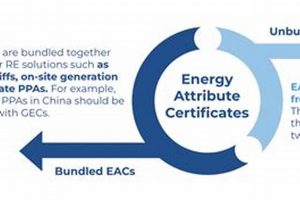
Ownership unbundling is a fundamental concept in the functioning of renewable energy certificates (RECs). It refers to the separation of the physical electricity generated from a renewable source from the environmental attributes associated with that generation. These attributes, representing the positive environmental impacts of renewable energy (such as reduced greenhouse gas emissions), are embodied within the REC. This separation allows the electricity itself to be sold through traditional energy markets, while the environmental benefits are tracked and traded independently through the REC market. This mechanism is crucial because it enables consumers to support renewable energy development even if they are not physically located near a renewable energy project or connected to a grid that supplies renewable electricity.
For instance, a company located in a region primarily powered by fossil fuels can purchase RECs generated by a wind farm in another region. While the company still receives its electricity from the local grid, the purchase of RECs allows it to claim the environmental benefits associated with the wind farm’s generation. This unbundling creates a flexible market mechanism that promotes renewable energy development by expanding the pool of potential buyers beyond those with direct access to renewable sources. This, in turn, drives investment in new renewable energy projects by increasing the demand for RECs. Without ownership unbundling, the benefits of renewable energy would be confined to those directly connected to renewable sources, limiting market growth and potentially hindering broader adoption.
In summary, ownership unbundling is a key component of the REC framework, facilitating the independent trade of environmental attributes. This separation drives broader market participation and stimulates investment in renewable energy projects, enabling companies to support renewable energy development irrespective of their geographical location or energy source. This mechanism plays a vital role in expanding renewable energy markets and accelerating the transition to a cleaner energy future. Further exploration of specific market structures and regulatory frameworks that govern RECs can provide a deeper understanding of their practical application and impact on the renewable energy sector.
3. Market Trading

Market trading is integral to the functionality of renewable energy certificates (RECs). RECs are tradable commodities, representing the environmental attributes of one megawatt-hour (MWh) of renewable electricity generation. The existence of active REC markets enables price discovery and facilitates the transfer of these environmental benefits from generators to buyers. This trading dynamic creates a financial incentive for renewable energy development, as generators can sell RECs to supplement revenue from electricity sales. Conversely, organizations seeking to demonstrate their commitment to renewable energy can purchase RECs to offset their carbon footprint or meet regulatory requirements. This market-based approach fosters competition and efficiency, driving down the cost of renewable energy and accelerating its adoption.
For example, a corporation committed to using 100% renewable energy might find it impractical to build its own solar farm. Instead, it can purchase RECs equivalent to its electricity consumption. These RECs, sourced from existing renewable generators, allow the company to effectively claim the environmental benefits of renewable energy. Simultaneously, a wind farm developer can sell its generated RECs, enhancing project viability and attracting further investment in renewable energy capacity. This reciprocal relationship between buyers and sellers, facilitated by market trading, is essential for the growth and maturation of the renewable energy sector. Trading platforms and registries provide the infrastructure for secure and transparent transactions, ensuring the integrity and credibility of REC markets.
In summary, the market trading of RECs plays a pivotal role in the broader renewable energy landscape. By establishing a clear price signal and facilitating the exchange of environmental attributes, REC markets drive investment, stimulate competition, and accelerate the transition to a cleaner energy future. Challenges related to market fragmentation and varying regulatory frameworks across jurisdictions require ongoing attention. However, the fundamental principle of market trading underpins the effectiveness of RECs as a mechanism for promoting renewable energy development and supporting corporate sustainability goals. Understanding these market dynamics is crucial for organizations seeking to effectively utilize RECs within their broader environmental strategies.
4. Claiming Renewables

Claiming the use of renewable energy is intrinsically linked to the function of renewable energy certificates (RECs). RECs provide a mechanism for organizations to substantiate claims of renewable energy use, even if their electricity is not directly sourced from renewable generation facilities. This connection is crucial because it allows companies to support renewable energy development and demonstrate their commitment to sustainability, even if they lack direct access to renewable sources. The act of claiming renewable energy usage relies on the ownership and retirement of RECs. When an organization purchases and retires RECs, it effectively claims the environmental attributes associated with the corresponding renewable energy generation. This process provides transparency and accountability, ensuring that renewable energy claims are backed by verifiable evidence. Without RECs, accurately and credibly claiming renewable energy use would be significantly more challenging.
For instance, a data center consuming substantial electricity might purchase wind RECs equivalent to its consumption. By retiring these RECs, the data center can credibly claim that its operations are powered by wind energy, even if the local grid relies primarily on fossil fuels. This practice enables organizations to align their operations with sustainability goals and demonstrate environmental leadership. However, the process of claiming renewables requires careful consideration of market dynamics and regulatory frameworks. The type of REC purchased, its source, and the retirement process must align with established standards and best practices to avoid accusations of “greenwashing.” Transparency in reporting and disclosure is paramount to maintaining credibility and demonstrating genuine commitment to renewable energy.
In summary, the ability to claim renewable energy usage is a significant outcome of the REC mechanism. RECs provide the necessary framework for verifiable and transparent claims, enabling organizations to support renewable energy development and demonstrate environmental responsibility. This connection between RECs and claiming renewables is central to their value proposition and their role in driving the transition to a cleaner energy future. However, navigating the complexities of REC markets and ensuring alignment with recognized standards requires diligence and a thorough understanding of the underlying principles. This understanding is crucial for organizations seeking to leverage RECs effectively and make credible claims regarding their renewable energy consumption.
5. Driving Investments

Renewable energy certificates (RECs) play a crucial role in driving investments in renewable energy projects. The REC mechanism creates a market-based approach that incentivizes the development of new renewable generation capacity. By providing a tradable commodity representing the environmental attributes of renewable electricity, RECs offer a revenue stream for renewable energy developers, enhancing project viability and attracting further investment. This section explores the key facets of this investment dynamic.
- Enhanced Project Financials
RECs directly improve the financial viability of renewable energy projects. The revenue generated from REC sales can supplement the income from electricity sales, reducing project risk and improving the overall financial return. This enhanced financial profile makes renewable energy projects more attractive to investors, leading to increased capital deployment and accelerated project development. For example, a wind farm developer can sell RECs alongside the generated electricity, improving project economics and attracting financing.
- Meeting Corporate Sustainability Goals
Corporate demand for RECs, driven by sustainability commitments and environmental regulations, creates a robust market for these instruments. This demand provides a stable revenue stream for renewable energy projects, further incentivizing investment. Companies seeking to reduce their carbon footprint or meet renewable energy targets are willing to purchase RECs, providing a critical source of funding for renewable energy developers. This market-driven approach effectively channels corporate sustainability initiatives into tangible investments in renewable energy capacity.
- Stimulating Market Competition
The REC market fosters competition among renewable energy developers, driving innovation and cost reductions. The ability to sell RECs creates a competitive landscape where developers strive to offer the most cost-effective renewable energy solutions. This competition benefits both buyers and the broader market by accelerating the deployment of more efficient and affordable renewable energy technologies. This dynamic contributes to a more vibrant and sustainable energy ecosystem.
- Facilitating Long-Term Contracts
RECs can facilitate long-term power purchase agreements (PPAs) for renewable energy projects. The stability of REC revenue streams can provide greater certainty for project financing, making long-term PPAs more attractive to both buyers and sellers. These long-term contracts provide stable revenue for renewable energy projects and offer price stability for corporate buyers, further driving investment in renewable energy infrastructure. This contractual framework supports sustained growth and development within the renewable energy sector.
In conclusion, the REC mechanism plays a vital role in driving investments in renewable energy by enhancing project financials, meeting corporate sustainability goals, stimulating market competition, and facilitating long-term contracts. This market-based approach provides a powerful incentive for renewable energy development, accelerating the transition to a cleaner and more sustainable energy future. The interplay between REC markets and broader policy frameworks further influences the effectiveness of this mechanism in mobilizing capital and driving the growth of the renewable energy sector. Further analysis of specific policy landscapes and market trends can provide a more granular understanding of the investment dynamics within the renewable energy sector.
Frequently Asked Questions about Renewable Energy Certificates
This section addresses common inquiries regarding the functionality and application of renewable energy certificates (RECs). Understanding these key aspects is crucial for effective utilization of RECs within broader sustainability strategies.
Question 1: How do RECs differ from carbon offsets?
RECs represent the environmental attributes of renewable electricity generation, specifically addressing the renewable energy component of sustainability goals. Carbon offsets, conversely, represent reductions in greenhouse gas emissions from various sources, often unrelated to electricity generation. RECs address renewable energy consumption, while carbon offsets address broader emissions reductions.
Question 2: What ensures the integrity of RECs?
Robust tracking systems and independent verification bodies ensure REC integrity. These systems track renewable energy generation, certificate creation, and ownership transfer, providing transparency and accountability. Rigorous auditing processes minimize the risk of double counting and fraudulent activities, maintaining market credibility.
Question 3: How does REC retirement work?
REC retirement involves permanently removing a REC from the market, signifying its use towards a specific claim of renewable energy consumption. This process prevents the same REC from being used multiple times, ensuring the integrity of renewable energy claims. Retirement typically occurs through designated registries that track REC ownership and status.
Question 4: Do RECs guarantee additionality?
Additionality, meaning that REC purchases support the development of new renewable energy projects, is not automatically guaranteed. Assessing additionality requires careful consideration of project financials and market dynamics. Some RECs are specifically designated as supporting new projects, providing greater assurance of additionality.
Question 5: How are RECs priced?
REC prices are determined by market forces of supply and demand. Factors such as renewable energy targets, regulatory requirements, and corporate sustainability commitments influence REC demand. Supply is influenced by the availability of renewable energy generation and the number of RECs issued. These market dynamics drive price fluctuations.
Question 6: Are RECs recognized internationally?
While the underlying concept of RECs is globally recognized, specific standards and regulations vary across jurisdictions. Different countries and regions have established their own REC tracking systems and eligibility criteria. Understanding these regional variations is crucial for organizations operating in multiple markets.
Understanding these frequently asked questions provides a foundational understanding of REC mechanisms and their role in supporting renewable energy development. This knowledge base is crucial for informed decision-making regarding the integration of RECs into corporate sustainability strategies.
This FAQ section segues into a deeper examination of the specific benefits and challenges associated with REC utilization within various organizational contexts.
Conclusion
This exploration has illuminated the mechanics of renewable energy certificates (RECs), outlining their function as tradable instruments representing the environmental attributes of renewable electricity generation. Key aspects examined include the unbundling of environmental attributes from electricity itself, the function of robust tracking systems, the dynamics of REC trading markets, and the crucial role of RECs in enabling credible claims of renewable energy use. Furthermore, the significant impact of RECs on driving investments in new renewable energy projects has been highlighted, emphasizing their importance in accelerating the transition to a cleaner energy future. The complexities of additionality, market pricing dynamics, and variations in regional standards have also been addressed, underscoring the need for careful consideration when integrating RECs into corporate sustainability strategies.
The future of renewable energy hinges on innovative market mechanisms and robust policy frameworks. RECs, as a powerful tool for driving renewable energy development and supporting corporate sustainability goals, hold significant potential for shaping this future. Continued refinement of REC systems, enhanced transparency, and greater standardization across markets will be essential for maximizing their effectiveness. As organizations increasingly seek to demonstrate their commitment to environmental responsibility, a thorough understanding of REC mechanisms will become increasingly vital for navigating the evolving energy landscape and contributing to a sustainable future.