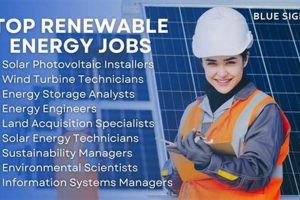
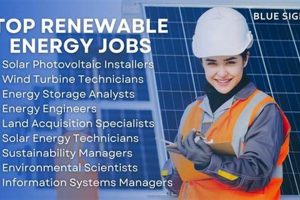
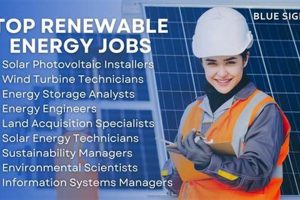
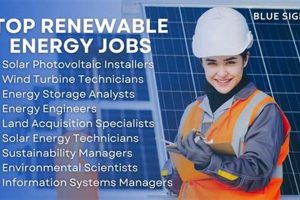
Public sector positions within the renewable energy sector encompass a wide range of roles, from policy analysts and regulatory specialists to engineers and scientists. These positions exist at various levels of government, including local, regional, and national agencies. For example, a city government might employ a sustainability coordinator to oversee the implementation of renewable energy projects, while a federal agency might hire engineers to manage large-scale wind or solar installations.
Employment opportunities focused on sustainable energy sources are crucial for achieving climate goals and fostering economic growth. Public sector involvement drives innovation, supports infrastructure development, and ensures the responsible integration of renewable energy technologies. Historically, government support has played a pivotal role in the growth of the renewable energy sector, from early research and development investments to contemporary incentive programs and regulatory frameworks. These interventions have helped to reduce costs, improve efficiency, and expand market access for renewable energy.
The following sections delve into specific career paths within public service related to renewable energy, including detailed descriptions of typical responsibilities, required qualifications, and potential career progression. Information on current job openings and resources for prospective applicants will also be provided.
Tips for Pursuing Public Sector Careers in Renewable Energy
Navigating the public sector recruitment process for renewable energy positions requires a strategic approach. The following tips offer guidance for individuals interested in pursuing these career opportunities.
Tip 1: Develop Specialized Expertise: Acquiring advanced knowledge in a specific area of renewable energy, such as solar photovoltaic technology, wind turbine engineering, or energy policy analysis, can significantly enhance one’s competitiveness. Relevant certifications and advanced degrees can also be advantageous.
Tip 2: Understand the Public Sector Landscape: Familiarize oneself with the various government agencies and departments involved in renewable energy initiatives. Researching their specific mandates, programs, and hiring practices is crucial.
Tip 3: Network Strategically: Attend industry conferences, workshops, and career fairs to connect with professionals in the field. Engaging with government representatives and recruiters can provide valuable insights and potential job leads.
Tip 4: Tailor Applications: Carefully review job descriptions and customize application materials to highlight relevant skills and experience. Emphasize qualifications that align with the specific requirements of each position.
Tip 5: Prepare for the Interview Process: Research common interview questions for public sector roles and practice responses. Be prepared to discuss one’s understanding of renewable energy policy, technical expertise, and commitment to public service.
Tip 6: Highlight Relevant Experience: Even seemingly unrelated experience can be valuable. Emphasize transferable skills, such as project management, data analysis, and communication, demonstrating their applicability to the renewable energy sector.
Tip 7: Stay Updated on Policy and Technology: The renewable energy landscape is constantly evolving. Remaining current on the latest policy developments, technological advancements, and market trends is essential for career advancement.
By following these tips, prospective applicants can improve their prospects of securing a fulfilling and impactful career within the public sector’s renewable energy field. A strategic and well-informed approach is key to navigating the recruitment process successfully.
The concluding section offers a summary of key resources and further guidance for individuals interested in pursuing these dynamic career opportunities.
1. Policy Development

Policy development forms the bedrock of public sector involvement in the renewable energy transition. Effective policies create the necessary framework for attracting investment, fostering innovation, and deploying renewable energy technologies at scale. These policies can range from financial incentives, such as tax credits and subsidies, to regulatory mandates, such as renewable portfolio standards, which require utilities to source a certain percentage of their electricity from renewable sources. The development of such policies requires rigorous analysis, stakeholder engagement, and a deep understanding of the energy landscape. For example, the establishment of feed-in tariffs, which guarantee a fixed price for renewable energy fed into the grid, has proven instrumental in driving the growth of solar photovoltaic installations in several countries. The effectiveness of these policies depends on careful design, implementation, and ongoing evaluation.
Within the context of government jobs related to renewable energy, policy development creates a demand for specialized expertise. Policy analysts, researchers, and legal professionals play crucial roles in crafting, analyzing, and implementing these policies. They conduct economic modeling, assess environmental impacts, engage with industry stakeholders, and draft legislation. Their work directly influences the growth and trajectory of the renewable energy sector. For instance, policy analysts might evaluate the effectiveness of different incentive programs for promoting electric vehicle adoption, while legal experts ensure regulatory compliance and address legal challenges associated with renewable energy projects. The interplay between policy development and implementation creates a dynamic environment requiring adaptable and knowledgeable professionals.
A robust understanding of policy developments significance within the realm of public sector renewable energy jobs is critical for achieving a sustainable energy future. Well-designed policies can drive technological innovation, stimulate economic growth, and mitigate climate change. However, ineffective or poorly implemented policies can hinder progress and create unintended consequences. Addressing the challenges associated with policy development, such as balancing competing interests, ensuring equitable access to renewable energy benefits, and adapting to evolving technologies, requires ongoing collaboration between policymakers, researchers, industry stakeholders, and the public. This collaborative approach is essential for creating a policy landscape that fosters a just and sustainable energy transition.
2. Project Management
Project management plays a critical role in the successful execution of government initiatives within the renewable energy sector. These initiatives often involve complex, multi-faceted projects, ranging from the construction of large-scale solar farms and wind turbine installations to the implementation of energy efficiency programs and the development of smart grid technologies. Effective project management ensures these initiatives are completed on time, within budget, and meet specified performance targets. This involves meticulous planning, resource allocation, risk assessment, and ongoing monitoring throughout the project lifecycle. For instance, the construction of a geothermal power plant requires coordinating numerous stakeholders, including engineers, contractors, environmental consultants, and regulatory agencies. A skilled project manager ensures seamless collaboration, manages potential risks, and adheres to stringent environmental and safety standards.
The importance of project management as a component of government jobs in renewable energy cannot be overstated. It directly influences the effectiveness and efficiency of public investments in the sector. Successful project completion contributes to achieving broader policy objectives, such as reducing greenhouse gas emissions, enhancing energy security, and stimulating economic development. Furthermore, well-managed projects enhance public trust and confidence in government’s ability to deliver on its commitments to a sustainable energy future. Consider the example of a government-led program to install solar panels on public buildings. A proficient project manager ensures timely procurement of equipment, manages installation logistics, monitors system performance, and reports on cost savings and environmental benefits, demonstrating the tangible value of public investment.
A practical understanding of project management principles is essential for professionals seeking careers in government renewable energy. Expertise in areas such as budget management, contract negotiation, stakeholder engagement, and risk mitigation is highly valued. Moreover, the ability to navigate complex regulatory landscapes, manage technical challenges, and adapt to evolving project requirements is crucial for success. The growing complexity and scale of renewable energy projects underscore the need for skilled project managers to ensure efficient and effective deployment of public resources, ultimately contributing to a more sustainable and resilient energy future.
3. Research and Analysis

Research and analysis provide crucial underpinnings for effective policymaking and project implementation within the public sector’s renewable energy domain. Rigorous data collection and analysis inform decisions related to technology deployment, resource allocation, regulatory frameworks, and market incentives. Understanding energy consumption patterns, assessing the environmental impact of different energy sources, and evaluating the economic feasibility of renewable energy projects are essential functions within this context. This segment explores key facets of research and analysis within government roles related to renewable energy.
- Energy System Modeling:
Sophisticated models simulate energy systems to project future energy demand, assess the integration of renewable energy sources, and evaluate the impact of various policy scenarios. These models incorporate factors such as electricity generation, transmission, distribution, and consumption patterns. For example, a model might simulate the impact of increasing wind energy penetration on grid stability or project the cost-effectiveness of different energy storage technologies. These analyses inform decisions regarding grid modernization, investment in renewable energy infrastructure, and the design of effective energy policies.
- Environmental Impact Assessment:
Evaluating the environmental impact of renewable energy projects is crucial for ensuring sustainable development. These assessments analyze potential effects on land use, water resources, biodiversity, air quality, and greenhouse gas emissions. For example, an environmental impact assessment for a hydroelectric dam project would examine its potential effects on aquatic ecosystems and downstream water availability. These analyses inform project design, mitigation strategies, and permitting decisions, ensuring that renewable energy development minimizes environmental trade-offs.
- Techno-Economic Analysis:
Techno-economic analyses assess the cost-effectiveness and performance of different renewable energy technologies. These analyses consider factors such as capital costs, operating expenses, energy yield, and technology lifespan. For example, a techno-economic analysis might compare the cost of solar photovoltaic systems with wind turbines, considering factors like installation costs, maintenance requirements, and energy production potential. This information informs investment decisions, technology selection, and the development of financial incentives for renewable energy deployment.
- Policy Analysis:
Policy analysis examines the effectiveness of existing and proposed policies related to renewable energy. This involves evaluating the impact of policies on energy markets, investment decisions, consumer behavior, and environmental outcomes. For example, an analysis might assess the effectiveness of a renewable portfolio standard in promoting renewable energy deployment or evaluate the impact of carbon pricing mechanisms on greenhouse gas emissions. These analyses inform policy adjustments, the design of new regulations, and the development of strategies to achieve renewable energy targets.
The insights generated through research and analysis directly inform policy decisions, guide project development, and ensure the responsible integration of renewable energy technologies. These analytical capabilities are essential for navigating the complexities of the energy transition and achieving a sustainable energy future. Within government, these functions underscore the demand for professionals with strong analytical skills, expertise in energy modeling, and a deep understanding of renewable energy technologies and policy frameworks. The ongoing evolution of the energy sector necessitates continuous research and analysis to adapt to emerging technologies, changing market dynamics, and evolving policy landscapes. The ability to conduct robust research and analysis remains a cornerstone of effective governance in the pursuit of a sustainable energy future.
4. Regulatory Oversight
Regulatory oversight forms a critical component of government involvement in the renewable energy sector, ensuring the responsible and sustainable development and deployment of these technologies. This oversight encompasses a range of activities, including permitting processes for renewable energy projects, enforcement of environmental regulations, grid interconnection standards, and consumer protection measures. Effective regulatory oversight balances the need for rapid renewable energy deployment with the imperative to minimize environmental impacts, protect public safety, and maintain grid stability. For example, regulations governing the siting of wind turbines often consider factors such as noise levels, proximity to residential areas, and potential impacts on wildlife, balancing the benefits of clean energy generation with the need to protect local communities and ecosystems. The regulatory landscape plays a crucial role in shaping the trajectory of renewable energy development, influencing investment decisions, technological innovation, and market dynamics.
As a key aspect of government jobs in renewable energy, regulatory oversight creates a demand for specialized expertise. Regulatory specialists, compliance officers, and legal professionals play essential roles in developing, implementing, and enforcing regulations related to renewable energy. They review project proposals, conduct environmental impact assessments, ensure compliance with permitting requirements, and investigate potential violations. Their work ensures that renewable energy projects adhere to established standards, protecting public health, safety, and the environment. For instance, regulatory specialists within a government agency might review applications for solar farm permits, ensuring compliance with land use regulations, environmental protection standards, and grid interconnection requirements. This meticulous oversight helps maintain public confidence in the renewable energy sector and fosters a sustainable and equitable energy transition.
A comprehensive understanding of regulatory oversight’s significance within the public sector’s renewable energy efforts is essential for achieving both environmental and economic objectives. Well-designed regulations can streamline project development, reduce risks, and create a level playing field for investors. Conversely, overly burdensome or unclear regulations can stifle innovation and hinder the deployment of renewable energy technologies. Addressing the challenges associated with regulatory oversight, such as balancing competing interests, adapting to rapidly evolving technologies, and ensuring consistent enforcement, requires ongoing collaboration between government agencies, industry stakeholders, and research institutions. This collaborative approach is crucial for fostering a regulatory environment that promotes responsible and sustainable renewable energy development, ultimately contributing to a cleaner, more secure, and resilient energy future.
5. Technical Expertise

Technical expertise forms a cornerstone of government involvement in the renewable energy sector. Public sector roles increasingly demand specialized knowledge and skills across a range of disciplines, including engineering, energy systems modeling, data analysis, and environmental science. This expertise is essential for effective policy development, project implementation, regulatory oversight, and grid management. A deep understanding of renewable energy technologies, such as solar photovoltaic systems, wind turbines, geothermal power plants, and energy storage solutions, is crucial for evaluating project feasibility, assessing environmental impacts, and ensuring the reliable integration of these technologies into existing energy infrastructure. For example, engineers within a government agency might analyze the structural integrity of wind turbine designs, ensuring they meet safety and performance standards, while energy system modelers project the impact of large-scale solar integration on grid stability. This technical proficiency is essential for informed decision-making and the successful execution of renewable energy initiatives.
The importance of technical expertise as a component of government jobs in renewable energy is underscored by the increasing complexity of the energy transition. As governments strive to achieve ambitious renewable energy targets, the need for specialized technical skills intensifies. Professionals with expertise in areas such as grid modernization, energy storage integration, and cybersecurity are essential for ensuring a smooth and secure transition to a more sustainable energy system. Consider the example of a government-led initiative to develop a smart grid. Technical experts play a crucial role in designing and implementing the necessary communication networks, sensor technologies, and data analytics platforms required for optimizing grid performance, integrating distributed renewable energy resources, and enhancing grid resilience. This technical proficiency is crucial for realizing the full potential of smart grid technologies and achieving a more efficient and reliable energy system.
A strong foundation of technical knowledge is essential for professionals seeking careers in government related to renewable energy. Advanced degrees and certifications in relevant fields, such as engineering, environmental science, and energy policy, are often required for these positions. Moreover, practical experience in the design, installation, operation, or maintenance of renewable energy systems is highly valued. The evolving technological landscape necessitates continuous learning and professional development to remain at the forefront of innovation. As the renewable energy sector continues to grow and mature, the demand for specialized technical expertise within government will only intensify, highlighting the crucial role of technical professionals in driving the transition to a sustainable energy future. The ability to effectively leverage technical knowledge to inform policy decisions, manage complex projects, and ensure the responsible deployment of renewable energy technologies is paramount for achieving a cleaner, more secure, and resilient energy future.
6. Community Engagement

Community engagement plays a vital role in the successful development and implementation of renewable energy initiatives within the public sector. Effective engagement builds public trust, fosters collaboration, and ensures that renewable energy projects align with community values and priorities. It involves proactive communication, transparent decision-making processes, and meaningful opportunities for public input throughout the project lifecycle. This engagement helps address potential concerns, mitigate conflicts, and build a shared understanding of the benefits and challenges associated with renewable energy development. This section explores key facets of community engagement within the context of government jobs related to renewable energy.
- Stakeholder Identification and Mapping:
Identifying key stakeholders, including residents, businesses, community organizations, and indigenous groups, is a foundational step in effective community engagement. Understanding their diverse interests, perspectives, and potential concerns is crucial for tailoring communication strategies and ensuring that all voices are heard. For example, in a proposed wind farm project, stakeholders might include landowners, nearby residents concerned about noise impacts, environmental groups focused on wildlife protection, and local businesses interested in economic development opportunities. Mapping these stakeholders helps prioritize engagement efforts and ensures that relevant information reaches the appropriate audiences.
- Public Information and Education:
Providing accurate and accessible information about renewable energy technologies, project plans, and potential impacts is essential for informed decision-making. Public forums, workshops, online resources, and community meetings offer opportunities to educate stakeholders about the benefits of renewable energy, address their concerns, and foster open dialogue. For example, a government agency might organize a public workshop to explain the environmental and economic benefits of a proposed solar project, address concerns about visual impacts, and answer questions about the project’s development timeline. Transparent and accessible information empowers communities to actively participate in the decision-making process.
- Collaborative Planning and Decision-Making:
Involving communities in the planning and decision-making processes for renewable energy projects fosters a sense of ownership and increases the likelihood of project success. This can involve establishing community advisory boards, conducting surveys, hosting public hearings, and incorporating community feedback into project design and implementation. For instance, incorporating community input on the siting of a solar farm can help minimize visual impacts and address concerns about land use. Collaborative planning processes build trust, reduce conflicts, and ensure that renewable energy projects align with community values.
- Benefit Sharing and Community Development:
Exploring opportunities for benefit sharing and community development can enhance public support for renewable energy projects. This can involve creating local job opportunities, providing training programs, investing in community infrastructure, or establishing community benefit funds. For example, a wind farm project might create jobs for local residents during construction and operation, while a solar project could contribute to a community fund supporting local schools or infrastructure improvements. These initiatives demonstrate the tangible benefits of renewable energy development and foster a sense of shared prosperity.
These facets of community engagement are integral to the work of public sector professionals involved in renewable energy. Effective community engagement builds public support, minimizes conflicts, and ensures that renewable energy projects contribute to both environmental and community well-being. These skills are essential for fostering a just and equitable energy transition, ensuring that the benefits of renewable energy are shared widely and that community voices are heard throughout the decision-making process. As the renewable energy sector continues to grow, the importance of community engagement will only intensify, highlighting the crucial role of public sector professionals in building strong partnerships with communities and fostering a shared vision for a sustainable energy future.
Frequently Asked Questions
This section addresses common inquiries regarding public sector employment opportunities within the renewable energy field.
Question 1: What types of educational backgrounds are typically sought for these positions?
Relevant fields of study include engineering (electrical, mechanical, environmental), environmental science, policy analysis, law, and urban planning. Advanced degrees (Master’s, PhD) and relevant certifications can be advantageous.
Question 2: How does the public sector recruitment process differ from private sector hiring?
Public sector processes often involve more structured procedures, including competitive examinations, panel interviews, and background checks. Emphasis is frequently placed on experience related to policy analysis, regulatory compliance, and public service.
Question 3: What are the typical career progression pathways within government renewable energy roles?
Career progression can involve increasing levels of responsibility in areas such as policy development, project management, regulatory oversight, or technical analysis. Opportunities for advancement to senior management and leadership positions exist within various government agencies.
Question 4: What are the key skills and qualities valued in public sector renewable energy professionals?
Highly valued skills include analytical thinking, problem-solving, communication, project management, and technical expertise in relevant areas. A demonstrated commitment to public service and the ability to navigate complex regulatory landscapes are also essential.
Question 5: What are the primary challenges faced by professionals in these roles?
Challenges can include navigating complex bureaucratic processes, balancing competing stakeholder interests, securing funding for projects, and adapting to evolving policy landscapes and technological advancements. Staying abreast of current trends and regulations is crucial for overcoming these challenges.
Question 6: How can individuals gain relevant experience to enhance their competitiveness for these positions?
Valuable experience can be gained through internships with government agencies, research positions at universities or think tanks, volunteer work with environmental organizations, and participation in relevant professional development programs. Demonstrating a proactive approach to gaining relevant experience can significantly strengthen one’s application.
Understanding these key aspects of public sector careers in renewable energy provides valuable insights for individuals interested in pursuing these opportunities. Thorough research, strategic planning, and a commitment to professional development are essential for success in this dynamic and impactful field.
The following section offers a comprehensive list of resources for further exploration and career development within the public sector renewable energy field.
Government Jobs Renewable Energy
Public sector roles related to renewable energy represent a critical component of the global transition to a sustainable energy future. This exploration has highlighted the diverse range of opportunities available, spanning policy development, project management, research and analysis, regulatory oversight, technical expertise, and community engagement. The increasing demand for skilled professionals in these areas reflects the growing importance of government leadership in driving the adoption of clean energy technologies and achieving ambitious climate goals. The multifaceted nature of these roles requires a combination of technical proficiency, analytical skills, policy acumen, and a commitment to public service.
The future of energy depends on continued investment in human capital within the public sector. Attracting and retaining talented individuals with the necessary expertise to navigate the complexities of the renewable energy landscape is essential for achieving a just and sustainable energy transition. The challenges and opportunities presented by this evolving sector demand ongoing innovation, collaboration, and a steadfast commitment to building a cleaner, more resilient, and equitable energy future for all. Further exploration of the resources provided can empower individuals seeking to contribute to this critical endeavor and shape the future of energy.