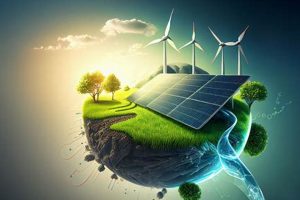
Electricity generated from renewable sources like solar, wind, hydro, geothermal, and biomass constitutes a sustainable alternative to fossil fuels. For instance, photovoltaic panels convert sunlight directly into electricity, while wind turbines harness kinetic energy from moving air. These methods produce minimal greenhouse gas emissions during operation, unlike conventional power plants.
Sustainable electricity generation is critical for mitigating climate change and enhancing energy security. A shift towards these resources reduces reliance on finite fossil fuel reserves and decreases air pollution, contributing to improved public health. Historically, reliance on fossil fuels has dominated energy production; however, advancements in technology and growing environmental awareness have propelled the development and adoption of sustainable energy alternatives.
This article will further explore specific renewable energy technologies, their current applications, future potential, and the challenges associated with their widespread implementation.
Tips for Supporting Sustainable Electricity
Consumers and businesses can contribute to the growth and adoption of renewable energy sources through informed choices and proactive measures.
Tip 1: Invest in rooftop solar panels. Generating electricity on-site reduces reliance on the grid and lowers electricity bills. Net metering programs can further offset costs by crediting excess energy fed back into the grid.
Tip 2: Choose a green energy supplier. Many utility companies offer plans that source electricity from renewable resources. Selecting these plans increases demand for sustainable electricity generation.
Tip 3: Improve energy efficiency at home and in the workplace. Reducing overall electricity consumption lessens the demand for power generation from any source. This can be achieved through simple measures like using energy-efficient appliances and lighting.
Tip 4: Support policies that promote renewable energy development. Advocate for government incentives, tax credits, and streamlined permitting processes for renewable energy projects.
Tip 5: Educate oneself and others about the benefits of sustainable electricity. Greater public awareness can drive further adoption and investment in these crucial technologies.
Tip 6: Consider investing in renewable energy companies and projects. This can provide financial support for the growth of the sector and potentially offer attractive returns.
Tip 7: Reduce reliance on gasoline-powered vehicles. Opting for electric vehicles or utilizing public transportation, cycling, and walking reduces demand for fossil fuels in the transportation sector, further contributing to a cleaner energy landscape.
By adopting these strategies, individuals and organizations can contribute to a more sustainable energy future, mitigating the environmental impact of electricity generation and promoting a cleaner, more secure energy landscape.
These actionable steps empower individuals and organizations to contribute directly to a more sustainable future. The transition to widespread sustainable electricity generation requires collective action and ongoing innovation.
1. Renewable Sources

Renewable sources form the foundation of clean energy power, providing sustainable alternatives to finite fossil fuels. Understanding their diverse nature is crucial for comprehending the full potential of clean energy power generation.
- Solar Energy
Photovoltaic cells and concentrated solar power systems convert sunlight directly into electricity. Large-scale solar farms, like those in the Mojave Desert, and rooftop solar panels on residential homes exemplify this technology’s scalability. Solar energy offers a distributed generation model, reducing transmission losses and enhancing grid resilience.
- Wind Energy
Wind turbines capture the kinetic energy of moving air and convert it into electricity. Offshore wind farms, benefiting from stronger and more consistent winds, and onshore wind farms in regions with favorable wind resources, represent significant deployments. Wind energy complements solar power, as wind often blows strongest at night.
- Hydropower
Harnessing the potential energy of water held at elevation, hydropower plants generate electricity. Large dams, like the Hoover Dam, demonstrate the scale of this technology. However, considerations for ecological impact are essential for responsible hydropower development.
- Geothermal Energy
Tapping into the Earth’s internal heat, geothermal power plants generate electricity. Regions with high geothermal activity, such as Iceland, utilize this resource extensively. Geothermal offers a consistent, baseload power source.
These diverse renewable sources, each with unique characteristics and applications, collectively contribute to a sustainable energy future. Their integration into the energy mix is essential for reducing reliance on fossil fuels and mitigating the impacts of climate change. Further advancements in energy storage technologies will enhance the reliability and dispatchability of these intermittent sources, enabling a more complete transition to clean energy power.
2. Sustainable Generation

Sustainable generation is the cornerstone of clean energy power, representing the ability to produce electricity without depleting natural resources or causing significant environmental harm. It hinges on utilizing renewable resources and implementing practices that minimize negative impacts throughout the lifecycle of energy production. This approach stands in stark contrast to traditional fossil fuel-based generation, which is inherently unsustainable due to its reliance on finite resources and its contribution to climate change.
- Resource Replenishment
Sustainable generation relies on resources that naturally replenish over time, ensuring a continuous supply of energy. Solar, wind, hydro, and geothermal resources are prime examples. Unlike fossil fuels, which require millions of years to form, these resources are continuously replenished by natural processes. This continuous replenishment is fundamental to the long-term viability of clean energy power.
- Environmental Impact Minimization
Minimizing environmental impact throughout the entire energy lifecycle is paramount for sustainable generation. This includes reducing greenhouse gas emissions, minimizing water usage, and protecting ecosystems. For example, life cycle assessments of solar panels consider manufacturing processes, transportation, installation, operation, and end-of-life recycling to ensure minimal environmental impact. This holistic approach is crucial for truly sustainable energy production.
- Long-Term Viability
Sustainable generation ensures the long-term availability of energy resources for future generations. By relying on renewable resources and implementing responsible practices, sustainable generation avoids the depletion of finite resources that characterizes fossil fuel-based energy production. This long-term perspective is essential for energy security and global sustainability.
- Economic Benefits
Sustainable generation can create economic opportunities through job creation in the renewable energy sector, reduced energy costs through increased efficiency, and decreased healthcare costs associated with improved air quality. The growth of the solar and wind industries, for instance, has led to significant job creation in manufacturing, installation, and maintenance. These economic benefits further reinforce the value of transitioning to clean energy power.
These facets of sustainable generation collectively contribute to the overarching goal of clean energy power: providing reliable, affordable, and environmentally responsible energy for present and future generations. The transition to a sustainable energy system requires ongoing innovation, policy support, and societal commitment to ensure a cleaner, more secure energy future.
3. Emission Reduction

Emission reduction is intrinsically linked to clean energy power, representing a critical driver for its adoption and a key benefit of its implementation. Transitioning from fossil fuel-based energy generation to clean energy sources significantly reduces greenhouse gas emissions, mitigating the impacts of climate change and improving air quality. This connection underscores the urgency of transitioning to a cleaner energy future.
- Greenhouse Gas Mitigation
Clean energy power dramatically reduces greenhouse gas emissions compared to conventional power generation. Solar and wind power, for instance, produce virtually no greenhouse gases during operation, unlike coal-fired power plants, which are major emitters of carbon dioxide. This reduction in greenhouse gas emissions is crucial for mitigating climate change and its associated impacts, such as rising sea levels and extreme weather events.
- Air Quality Improvement
Clean energy power sources, unlike fossil fuel combustion, do not emit harmful air pollutants such as sulfur dioxide, nitrogen oxides, and particulate matter. These pollutants contribute to respiratory illnesses and other health problems. The transition to clean energy power thus leads to improved air quality, benefiting public health and reducing healthcare costs.
- Decarbonizing the Energy Sector
The energy sector is a major contributor to global greenhouse gas emissions. Clean energy power offers a pathway to decarbonize this sector, replacing high-emission sources with low- or zero-emission alternatives. This decarbonization is essential for achieving global climate goals and mitigating the long-term impacts of climate change.
- Climate Change Mitigation
The link between greenhouse gas emissions and climate change is well-established. By reducing emissions, clean energy power plays a crucial role in mitigating climate change and its associated risks. The widespread adoption of clean energy technologies is therefore essential for a sustainable future.
These facets of emission reduction highlight the critical role of clean energy power in addressing climate change and promoting environmental sustainability. The transition to a cleaner energy system requires a concerted effort across sectors, involving technological advancements, policy support, and societal commitment to achieve significant emission reductions and mitigate the long-term impacts of climate change. Clean energy power is not merely an alternative energy source; it is a necessary component of a sustainable future.
4. Energy Independence

Energy independence, often intertwined with energy security, signifies a nation’s capacity to meet its energy demands without excessive reliance on external sources. Clean energy power plays a crucial role in achieving this objective, reducing dependence on volatile global fossil fuel markets and enhancing national energy security. This connection is increasingly important in a world facing geopolitical instability and resource scarcity.
- Reduced Reliance on Imports
Clean energy power, generated domestically, reduces reliance on energy imports, particularly fossil fuels. This lessens vulnerability to price fluctuations and supply disruptions in global markets. Denmark, for example, with its substantial wind power capacity, has significantly reduced its reliance on imported fossil fuels, enhancing its energy independence.
- Enhanced Energy Security
Diversifying energy sources through clean energy power strengthens energy security. Relying on a single source, particularly imported fossil fuels, creates vulnerabilities. Clean energy sources, being domestically available, provide a more secure and resilient energy foundation. Germany’s Energiewende, with its focus on renewable energy, aims to enhance energy security by diversifying its energy mix.
- Geopolitical Stability
Reduced reliance on imported fossil fuels through clean energy power decreases vulnerability to geopolitical instability in energy-producing regions. This enhances national autonomy and reduces the risk of energy supply disruptions due to political conflicts or international sanctions. The European Union’s pursuit of renewable energy partly aims to reduce its dependence on Russian gas, enhancing geopolitical stability.
- Economic Benefits
Investing in clean energy power can stimulate domestic economic growth by creating jobs in manufacturing, installation, and maintenance of renewable energy technologies. This reduces reliance on foreign energy industries and strengthens the domestic economy. China’s massive investments in solar panel manufacturing have created numerous jobs and established the country as a global leader in the renewable energy industry.
These facets of energy independence demonstrate the crucial role of clean energy power in ensuring national energy security, reducing reliance on volatile global markets, and fostering economic growth. The transition to a cleaner energy future not only offers environmental benefits but also enhances national resilience and geopolitical stability. Clean energy power is thus a strategic investment in long-term energy independence and economic prosperity.
5. Technological Advancement

Technological advancement is inextricably linked to the progress and viability of clean energy power. Advancements in materials science, manufacturing processes, and energy storage solutions directly impact the efficiency, cost-effectiveness, and scalability of clean energy technologies. This relationship is a crucial driver for the ongoing transition to a sustainable energy future. For instance, advancements in photovoltaic cell technology have led to significant increases in solar panel efficiency, enabling greater energy production from smaller areas. Similarly, breakthroughs in battery technology are enhancing energy storage capabilities, addressing the intermittency challenges associated with solar and wind power.
The development of smart grids, enabled by advanced sensor technology and data analytics, plays a vital role in integrating renewable energy sources into existing power infrastructure. Smart grids optimize energy distribution, manage fluctuating power supply from intermittent sources, and enhance grid stability. Furthermore, ongoing research and development in areas like advanced nuclear reactors, hydrogen fuel cells, and carbon capture technologies offer potential pathways for further decarbonizing the energy sector. The practical significance of these advancements lies in their ability to reduce the cost of clean energy, improve its reliability, and facilitate its widespread adoption. Examples include the declining cost of wind turbines, leading to larger wind farms and increased wind power generation, and the development of more efficient and durable batteries for electric vehicles, promoting wider adoption of electric mobility.
Continued technological advancements are essential for overcoming the remaining challenges associated with clean energy power, such as intermittency, grid integration, and energy storage. Further breakthroughs in areas like artificial intelligence, nanotechnology, and materials science hold immense potential for optimizing clean energy technologies and accelerating the global transition to a sustainable energy system. Addressing these challenges through technological innovation is not merely a desirable pursuit; it is a fundamental necessity for mitigating climate change and ensuring a secure and sustainable energy future for generations to come. The ongoing interplay between technological advancement and clean energy power represents a critical pathway toward achieving global sustainability goals.
Frequently Asked Questions about Clean Energy Power
This section addresses common inquiries regarding clean energy power, aiming to provide clear and concise information.
Question 1: What constitutes clean energy power?
Clean energy power encompasses electricity generated from renewable sources that produce minimal greenhouse gas emissions, including solar, wind, hydro, geothermal, and biomass energy.
Question 2: How does clean energy power mitigate climate change?
By replacing fossil fuel-based electricity generation with clean energy sources, greenhouse gas emissions are significantly reduced, mitigating a primary driver of climate change.
Question 3: What are the primary economic benefits of transitioning to clean energy power?
Economic benefits include job creation in the renewable energy sector, reduced energy costs through increased efficiency, and decreased healthcare costs associated with improved air quality. Furthermore, investments in clean energy can stimulate economic growth and reduce reliance on volatile fossil fuel markets.
Question 4: How reliable are clean energy sources, given their intermittent nature?
While some clean energy sources like solar and wind are intermittent, advancements in energy storage technologies, such as batteries and pumped hydro, are enhancing their reliability and enabling a more consistent power supply. Diversification of renewable energy sources and grid management strategies further enhance reliability.
Question 5: What are the key challenges facing widespread clean energy adoption?
Challenges include intermittency of certain renewable sources, grid integration complexities, upfront infrastructure costs, and the need for continued technological advancements in energy storage and grid management.
Question 6: How can individuals contribute to the transition to clean energy power?
Individuals can contribute by investing in rooftop solar panels, choosing green energy suppliers, improving energy efficiency at home and in the workplace, supporting policies that promote renewable energy development, and educating themselves and others about the benefits of clean energy.
Transitioning to clean energy power requires collective action, technological innovation, and supportive policies. Addressing these FAQs helps foster informed decision-making and promotes a broader understanding of the importance of clean energy for a sustainable future.
The subsequent section delves further into the specific technologies driving the clean energy revolution.
Conclusion
This exploration of clean energy power has underscored its multifaceted nature, encompassing renewable sources, sustainable generation, emission reduction, energy independence, and technological advancement. From the harnessing of solar and wind energy to the development of advanced energy storage solutions and smart grids, the transition towards clean energy represents not merely a technological shift, but a fundamental necessity for global sustainability. The imperative to mitigate climate change, coupled with the growing need for energy security and economic stability, reinforces the critical role of clean energy power in shaping a sustainable future.
The transition to a clean energy future demands sustained commitment, ongoing innovation, and collaborative action across sectors. Policy support, investment in research and development, and public awareness are crucial catalysts for accelerating the adoption of clean energy technologies and realizing their full potential. The future of energy hinges on embracing clean energy power as a cornerstone of a sustainable, secure, and prosperous world.