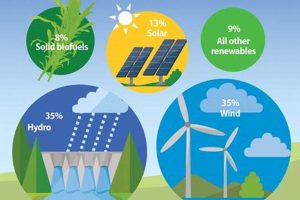
Powering commercial operations with electricity generated from sources like solar, wind, hydro, biomass, and geothermal offers a sustainable alternative to fossil fuels. An example includes a manufacturing facility using rooftop solar panels to offset its electricity consumption or a data center powered by wind energy. This approach reduces reliance on finite resources and minimizes environmental impact.
Sustainable power procurement contributes significantly to corporate social responsibility goals and can enhance a company’s brand image. Furthermore, utilizing these resources can lead to long-term cost savings through stabilized energy prices and potential government incentives. The shift towards these alternative energy sources has gained significant momentum in recent decades, driven by growing environmental awareness and advancements in renewable energy technologies.
The following sections will delve deeper into specific types of renewable energy sources suitable for commercial applications, discuss the economic and logistical considerations for businesses transitioning to sustainable power, and explore future trends in the renewable energy sector.
Tips for Transitioning to Renewable Energy Sources
Organizations seeking to reduce their environmental footprint and stabilize energy costs can benefit from strategic planning and implementation. The following tips offer guidance for a successful transition to sustainable power.
Tip 1: Conduct a Thorough Energy Audit: A comprehensive audit assesses current energy consumption patterns, identifies areas for improvement, and provides a baseline for measuring the impact of transitioning to renewable sources. This analysis should encompass all aspects of the organization’s operations.
Tip 2: Explore On-Site Generation: Evaluate the feasibility of installing renewable energy generation systems, such as solar panels or wind turbines, on company property. This can reduce reliance on grid electricity and provide long-term cost savings.
Tip 3: Consider Power Purchase Agreements (PPAs): PPAs allow organizations to purchase electricity directly from renewable energy developers, providing access to clean power without the upfront investment of on-site generation.
Tip 4: Investigate Renewable Energy Certificates (RECs): Purchasing RECs offsets electricity consumption from non-renewable sources, demonstrating a commitment to sustainability even if direct access to renewable energy is limited.
Tip 5: Optimize Energy Efficiency: Implementing energy-saving measures, such as upgrading lighting systems and improving building insulation, reduces overall energy demand, maximizing the impact of renewable energy integration.
Tip 6: Research Government Incentives and Tax Credits: Numerous financial incentives are available to support businesses transitioning to renewable energy. Thorough research can identify applicable programs and significantly reduce implementation costs.
Tip 7: Engage with Experienced Consultants: Navigating the complexities of renewable energy procurement can be challenging. Consulting with experts provides valuable insights and ensures informed decision-making.
By implementing these strategies, organizations can effectively transition to sustainable power, minimizing environmental impact and contributing to a cleaner energy future. The benefits extend beyond immediate cost savings, encompassing enhanced brand reputation and long-term sustainability.
The concluding section will reiterate the importance of sustainable business practices and encourage organizations to embrace the transition to renewable energy sources.
1. Cost Reduction

Minimizing operational expenses is a primary objective for any business. Transitioning to renewable energy sources offers significant potential for cost reduction, impacting long-term financial stability and competitiveness. Exploring the multifaceted nature of these cost savings provides valuable insights for organizations considering sustainable energy solutions.
- Reduced Energy Consumption:
Implementing energy efficiency measures alongside renewable energy integration minimizes overall energy consumption. Upgrading to energy-efficient lighting, optimizing HVAC systems, and improving building insulation significantly reduce reliance on external energy sources. For example, a manufacturing facility implementing these measures alongside rooftop solar panels reduces its overall energy consumption, leading to substantial cost savings.
- Lower and More Predictable Energy Prices:
Renewable energy sources, particularly solar and wind, often provide electricity at lower and more stable prices compared to fossil fuels. This shields businesses from volatile fossil fuel market fluctuations, providing predictable operational expenses. A business switching to a fixed-price Power Purchase Agreement (PPA) for wind energy benefits from predictable energy costs for the duration of the agreement.
- Government Incentives and Tax Credits:
Numerous financial incentives, including tax credits, rebates, and grants, are available to businesses adopting renewable energy solutions. These programs significantly reduce the upfront investment and accelerate the return on investment. A company installing a geothermal heating system can leverage available tax credits to offset installation costs.
- Decreased Maintenance Costs:
Renewable energy systems, particularly solar and wind, generally require less maintenance than traditional fossil fuel-based systems. This translates to lower operational expenses over the system’s lifespan. For example, solar panels require minimal maintenance compared to a natural gas generator.
By leveraging these cost reduction strategies, businesses transitioning to renewable energy sources enhance their financial performance while contributing to a more sustainable future. These savings contribute to increased profitability and reinvestment opportunities, further strengthening long-term competitiveness.
2. Environmental Sustainability

Environmental sustainability is intrinsically linked to the adoption of renewable energy sources by businesses. Utilizing power generated from sources like solar, wind, hydro, and geothermal significantly reduces reliance on finite fossil fuels, mitigating greenhouse gas emissions and their associated environmental consequences. This shift reduces air and water pollution, contributing to a healthier planet and mitigating the risks associated with climate change. For instance, a company switching from a coal-powered electricity supply to a solar farm reduces its carbon footprint substantially, directly contributing to environmental sustainability objectives.
The importance of environmental sustainability as a core component of renewable energy adoption extends beyond immediate ecological benefits. It fosters a culture of responsible resource management, enhances brand reputation among environmentally conscious consumers and investors, and aligns with evolving regulatory landscapes. Furthermore, investing in renewable energy infrastructure stimulates innovation and economic growth within the sustainable energy sector. A practical example includes a beverage company investing in wind energy to power its operations, not only reducing its environmental impact but also attracting customers who value sustainable practices. This, in turn, enhances the company’s brand image and market competitiveness.
Successfully integrating environmental sustainability within a renewable energy strategy requires careful consideration of various factors. These include evaluating the lifecycle environmental impact of different renewable energy technologies, ensuring responsible sourcing of materials for renewable energy infrastructure, and implementing robust monitoring and reporting mechanisms to track progress and identify areas for improvement. Despite these challenges, the transition to renewable energy remains a critical step towards achieving long-term environmental sustainability and mitigating the adverse effects of climate change. The shift also presents opportunities for businesses to enhance their operational efficiency, reduce costs, and strengthen their commitment to corporate social responsibility.
3. Brand Enhancement

Incorporating renewable energy into business operations significantly enhances brand image and market perception. Consumers are increasingly aware of environmental issues and often favor businesses demonstrating a commitment to sustainability. This preference translates into increased customer loyalty, positive brand associations, and a competitive edge in the marketplace. A clothing retailer powering its stores with solar energy, for example, can attract environmentally conscious consumers, strengthening brand loyalty and potentially increasing market share.
This connection between renewable energy and brand enhancement stems from the alignment of corporate values with consumer expectations. By publicly embracing sustainable practices, organizations communicate a commitment to environmental responsibility, resonating with customers who prioritize these values. This strengthens brand trust and credibility, differentiating the organization from competitors lacking a similar commitment. Furthermore, utilizing renewable energy can become a core component of brand storytelling, enabling businesses to connect with consumers on an emotional level and build stronger relationships. A technology company showcasing its use of wind energy in its data centers, for instance, reinforces its commitment to innovation and sustainability, appealing to a broader customer base.
Leveraging renewable energy for brand enhancement requires strategic communication and transparency. Organizations must clearly articulate their sustainability efforts to consumers, highlighting the specific benefits of their renewable energy initiatives. This transparency builds trust and avoids accusations of “greenwashing.” Additionally, integrating renewable energy into broader marketing campaigns can further amplify the brand-enhancing effects. While challenges such as the initial investment costs and the intermittent nature of some renewable energy sources exist, the long-term benefits of enhanced brand image, increased customer loyalty, and positive market perception often outweigh these considerations. Ultimately, the strategic adoption of renewable energy positions organizations for sustained growth and success in an increasingly environmentally conscious marketplace.
4. Energy Independence
Energy independence, achieved through renewable sources, allows businesses to decrease reliance on external energy providers and volatile fuel markets. This self-reliance strengthens operational stability, mitigates risks associated with price fluctuations, and enhances long-term planning capabilities. The subsequent points will explore key facets of this independence.
- Control over Energy Supply
Renewable energy empowers businesses to generate their own power, reducing dependence on external suppliers and the associated vulnerabilities. A manufacturing facility with on-site solar panels, for instance, controls a portion of its energy production, shielding itself from grid outages and price hikes. This control enhances operational resilience and ensures business continuity even during external disruptions.
- Price Stability and Predictability
Renewable energy sources often involve predictable, long-term operating costs. Unlike fossil fuels, which are subject to market volatility, renewable energy prices remain relatively stable, enabling more accurate financial forecasting and long-term budget planning. A business utilizing a fixed-price Power Purchase Agreement (PPA) for wind energy benefits from predictable energy costs, facilitating better financial management.
- Reduced Exposure to Geopolitical Risks
Reliance on external energy sources exposes businesses to geopolitical risks and supply chain disruptions. Renewable energy generation reduces this exposure, providing greater stability and control. A company powering its data center with geothermal energy reduces its dependence on imported fuels, mitigating potential supply chain disruptions and geopolitical uncertainties.
- Enhanced Operational Resilience
Energy independence strengthens a business’s ability to withstand external disruptions. On-site renewable energy generation acts as a backup power source during grid outages, ensuring business continuity. A hospital with a combined solar and battery storage system can maintain essential services during a power outage, demonstrating enhanced operational resilience.
By embracing renewable energy, organizations achieve greater energy independence, enhancing operational stability, mitigating financial and geopolitical risks, and contributing to a more sustainable and resilient business model. This shift towards self-reliance positions businesses for long-term success in an increasingly complex and interconnected global landscape. The transition not only empowers individual organizations but also contributes to greater energy security and resilience within the broader economy.
5. Regulatory Compliance

Regulatory compliance plays a crucial role in the adoption and implementation of renewable energy solutions within the business sector. Governments worldwide are increasingly enacting legislation and regulations designed to promote renewable energy usage, reduce greenhouse gas emissions, and transition towards more sustainable energy systems. These regulations often include mandates, incentives, and reporting requirements that directly impact businesses. Understanding and adhering to these regulations is essential for organizations seeking to integrate renewable energy into their operations.
One key aspect of regulatory compliance is understanding the specific requirements and incentives applicable to a business’s location and industry. These may include Renewable Portfolio Standards (RPS), which mandate a certain percentage of electricity generation from renewable sources, or carbon pricing mechanisms, which incentivize emissions reductions. For example, a utility company operating in a state with an RPS must ensure its energy portfolio meets the mandated renewable energy percentage. Failure to comply can result in financial penalties. Conversely, businesses can leverage tax credits and subsidies for renewable energy investments, optimizing their financial returns while adhering to regulatory requirements. A manufacturing company installing solar panels can benefit from government incentives, reducing the overall cost of the project and accelerating the return on investment.
Navigating the regulatory landscape requires diligent monitoring of evolving policies and proactive engagement with regulatory bodies. Staying informed about changes in legislation, permit requirements, and reporting obligations is crucial for maintaining compliance and avoiding potential penalties. Furthermore, engaging with industry associations and legal experts can provide valuable insights and guidance on interpreting and implementing regulatory requirements. While regulatory compliance can present challenges, it also provides a framework for sustainable business practices, encourages innovation, and creates a level playing field for organizations transitioning to renewable energy. Ultimately, understanding and adhering to regulatory compliance is not merely a legal obligation but a strategic imperative for businesses seeking to thrive in a rapidly evolving energy landscape. It ensures long-term sustainability, strengthens brand reputation, and positions organizations for success in a future driven by clean energy.
6. Technological Innovation
Technological innovation serves as a crucial catalyst for the widespread adoption and effectiveness of renewable energy solutions within the business sector. Advancements in renewable energy technologies, energy storage solutions, smart grids, and energy management systems are continuously improving the efficiency, affordability, and accessibility of renewable energy for businesses of all sizes. This ongoing innovation drives down costs, enhances performance, and expands the range of applications for renewable energy, making it an increasingly viable and attractive option for organizations seeking to reduce their environmental impact and enhance their operational efficiency.
- Improved Energy Generation Technologies
Advancements in solar panel technology, wind turbine design, and geothermal energy extraction techniques have significantly increased the efficiency and output of renewable energy generation. Higher efficiency solar panels, for example, generate more electricity from the same surface area, maximizing energy production for businesses. Similarly, more advanced wind turbine designs capture wind energy more effectively, leading to increased power output. These improvements contribute to greater cost-effectiveness and make renewable energy a more competitive alternative to traditional fossil fuels.
- Advanced Energy Storage Solutions
Energy storage technologies, such as batteries and pumped hydro storage, address the intermittent nature of renewable energy sources like solar and wind. Storing excess energy generated during peak production periods and releasing it during periods of low generation ensures a consistent and reliable power supply for businesses. A business with a solar panel array and battery storage system, for instance, can store excess solar energy generated during the day and utilize it during the evening or on cloudy days, maximizing the use of renewable energy and reducing reliance on the grid.
- Smart Grid Integration
Smart grids utilize digital technologies to optimize energy distribution and management, integrating renewable energy sources seamlessly into the electricity grid. These intelligent networks enhance grid stability, facilitate more efficient energy flow, and enable better demand-side management. Businesses connected to a smart grid can benefit from real-time energy pricing information, optimizing energy consumption patterns and reducing costs. Smart grids also enable greater integration of distributed renewable energy resources, such as rooftop solar panels, into the overall energy system.
- Sophisticated Energy Management Systems
Energy management systems (EMS) leverage data analytics and automation to optimize energy consumption within buildings and industrial facilities. These systems monitor energy usage patterns, identify areas for improvement, and automatically adjust energy-consuming equipment to minimize waste. A business implementing an EMS can significantly reduce its energy consumption, lowering operating costs and maximizing the benefits of renewable energy integration. EMS technologies also provide valuable insights into energy performance, enabling businesses to make data-driven decisions regarding energy procurement and usage.
These interconnected technological advancements are driving the ongoing evolution of renewable energy within the business sector. As innovation continues to push the boundaries of what is possible, renewable energy solutions become increasingly accessible, affordable, and effective, paving the way for a more sustainable energy future for businesses worldwide. The integration of these technologies not only reduces environmental impact but also enhances operational efficiency, strengthens resilience, and positions businesses for long-term success in a global economy increasingly driven by clean energy.
7. Long-Term Stability
Long-term stability forms a cornerstone of successful business operations, particularly regarding energy procurement. Renewable energy sources offer inherent advantages in achieving this stability, providing a predictable and resilient foundation for future growth. This section explores the multifaceted relationship between long-term stability and renewable energy adoption within the business context.
- Predictable Energy Costs
Renewable energy sources, unlike fossil fuels, offer greater price stability. Long-term contracts, such as Power Purchase Agreements (PPAs), lock in fixed energy prices for extended periods, shielding businesses from volatile fossil fuel markets. This predictability allows for more accurate financial forecasting and reduces uncertainty in long-term budget planning. A manufacturing company with a 20-year PPA for wind energy benefits from predictable energy costs, facilitating better financial management and investment decisions.
- Resource Availability
Renewable energy relies on readily available resources, such as sunlight, wind, and geothermal heat, unlike finite fossil fuels. This inherent resource availability ensures a consistent energy supply for businesses over the long term, reducing the risk of supply disruptions and price volatility associated with resource scarcity. A data center powered by geothermal energy benefits from a consistent and reliable energy source, reducing the risk of disruptions caused by fuel shortages.
- Reduced Regulatory Uncertainty
Investing in renewable energy aligns with the global shift towards decarbonization and reduces exposure to future regulatory changes targeting fossil fuel usage. This proactive approach provides long-term stability and minimizes the risk of future compliance issues or financial penalties. A company investing in solar energy today reduces its exposure to potential future carbon taxes or emissions regulations, ensuring long-term regulatory compliance and stability.
- Enhanced Operational Resilience
Renewable energy, particularly when combined with energy storage solutions, enhances operational resilience against grid outages and external disruptions. On-site generation and storage capabilities provide backup power, ensuring business continuity and minimizing downtime. A hospital with a combined solar and battery storage system can maintain essential services during a grid outage, demonstrating enhanced operational resilience and ensuring long-term stability of critical operations.
These facets of long-term stability, facilitated by renewable energy adoption, contribute to a more resilient and sustainable business model. By mitigating risks associated with volatile energy prices, resource scarcity, and regulatory changes, businesses can focus on long-term growth and strategic planning, creating a stronger foundation for future success in an increasingly complex and competitive global landscape. The transition to renewable energy not only offers environmental benefits but also strengthens business operations and financial performance, positioning organizations for sustained growth and stability in the long term.
Frequently Asked Questions about Renewable Energy for Businesses
This section addresses common inquiries regarding the integration of renewable energy sources into business operations, providing clarity and dispelling misconceptions.
Question 1: What are the initial costs associated with transitioning to renewable energy?
Initial costs vary depending on the chosen technology (solar, wind, geothermal), project scale, and location. While upfront investments can be significant, various financing options, government incentives, and long-term cost savings often offset these initial expenses.
Question 2: How does the reliability of renewable energy compare to traditional energy sources?
While some renewable sources like solar and wind are intermittent, advancements in energy storage technologies and grid management systems mitigate this intermittency, ensuring a reliable power supply. Hybrid systems combining renewable sources with traditional backups further enhance reliability.
Question 3: What is the environmental impact of manufacturing renewable energy equipment?
Manufacturing renewable energy equipment does have an environmental footprint. However, lifecycle assessments consistently demonstrate that the environmental benefits of renewable energy over its lifespan significantly outweigh the impacts of manufacturing.
Question 4: How can businesses determine the most suitable renewable energy solution for their specific needs?
Conducting a thorough energy audit, assessing available resources (sunlight, wind, geothermal), and consulting with renewable energy experts are crucial steps in determining the optimal solution tailored to a business’s unique operational requirements.
Question 5: What are the long-term maintenance requirements for renewable energy systems?
Renewable energy systems generally require less maintenance than traditional fossil fuel-based systems. However, regular inspections, cleaning, and occasional component replacements are necessary to ensure optimal performance and longevity.
Question 6: How does the integration of renewable energy impact a business’s bottom line?
Renewable energy can positively impact a business’s bottom line through reduced energy costs, government incentives, enhanced brand image, and increased operational resilience. These factors contribute to long-term financial stability and competitiveness.
Transitioning to renewable energy presents both challenges and opportunities. Careful planning, thorough research, and collaboration with experienced professionals are crucial for maximizing the benefits and ensuring a successful implementation. The long-term advantages, however, significantly outweigh the initial hurdles.
The following section will offer concluding remarks on the significance of adopting renewable energy within the business community.
Conclusion
This exploration of business energy from renewables has highlighted the multifaceted benefits of transitioning to sustainable power sources. From substantial cost reductions and enhanced brand image to increased energy independence and long-term stability, the advantages are compelling. Furthermore, the crucial role of technological innovation and regulatory compliance in accelerating the adoption of renewable energy solutions has been underscored. Addressing frequently asked questions provided clarity on practical considerations and dispelled common misconceptions surrounding the transition.
The shift towards business energy from renewables represents not merely a trend but a fundamental shift in how organizations operate and contribute to a sustainable future. The transition requires strategic planning, informed decision-making, and a commitment to long-term sustainability. Embracing renewable energy is not simply an option; it is an imperative for businesses seeking to thrive in a world increasingly shaped by climate change and resource constraints. The future of business is inextricably linked to the responsible and innovative utilization of renewable energy sources.