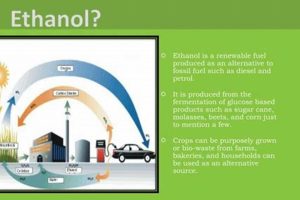
The classification of energy sources as either renewable or non-renewable hinges on their ability to be replenished at a rate comparable to their consumption. Renewable sources, such as solar, wind, and geothermal, are naturally replenished. Conversely, non-renewable sources, including fossil fuels like coal, oil, and natural gas, are finite resources that take millions of years to form. The crucial factor in determining renewability is the rate of replenishment versus the rate of consumption.
The utilization of different energy sources has profound implications for environmental sustainability and long-term energy security. Reliance on finite reserves contributes to greenhouse gas emissions and resource depletion. Transitioning to sustainable alternatives offers numerous advantages, including reduced carbon footprints, diminished dependence on geopolitical factors affecting fossil fuel markets, and the stimulation of innovation in clean energy technologies. Historically, energy production has heavily relied on fossil fuels, but growing awareness of environmental consequences is driving a shift towards more sustainable practices.
The following sections will delve into a specific energy source, analyzing its composition, origins, and current methods of extraction and utilization. Furthermore, the discussion will critically assess whether the characteristics of this source align with the criteria of renewability, considering its environmental impact and future prospects within the evolving energy landscape.
Analyzing Energy Source Classification
The following information provides insights into determining the renewability status of a particular energy source, focusing on factors crucial to its categorization.
Tip 1: Assess the Replenishment Rate: Evaluate whether the resource can be naturally replenished within a human timescale. If extraction significantly exceeds the regeneration rate, it is unlikely to be renewable.
Tip 2: Examine the Source’s Origin: Determine if the source originates from processes that are actively ongoing and sustainable (e.g., solar radiation, wind patterns). Sources formed over geological timescales are generally non-renewable.
Tip 3: Consider Greenhouse Gas Emissions: Analyze the overall greenhouse gas emissions associated with its extraction, processing, and combustion. Higher emissions often suggest a less sustainable energy source.
Tip 4: Investigate Environmental Impact: Evaluate the environmental consequences of extraction and utilization, including habitat destruction, water pollution, and air quality degradation. Significant adverse impacts are indicative of a non-renewable resource due to ecological disruption.
Tip 5: Explore Resource Availability: Assess the known reserves and projected depletion rates. Finite resources with limited availability are inherently non-renewable.
Tip 6: Research Technological Advancements: Investigate potential technological advancements that could mitigate environmental impacts or enhance the efficiency of resource utilization. However, technology alone does not transform a non-renewable resource into a renewable one.
Tip 7: Analyze the Full Life Cycle: Consider the environmental impacts throughout the entire life cycle of the energy source, from extraction to disposal. A comprehensive analysis is necessary for accurate classification.
Applying these principles allows for a comprehensive and reasoned assessment of an energy source’s classification, facilitating informed decisions regarding energy policy and resource management.
The subsequent analysis will apply these tips to a specific energy source, providing a detailed evaluation of its renewability status.
1. Finite geological formation

The characteristic of finite geological formation is central to the determination of whether gas qualifies as a renewable energy source. The origins and constraints governing its formation are fundamental to understanding its long-term availability and sustainability.
- Anaerobic Decomposition Processes
Gas, primarily methane, originates from the anaerobic decomposition of organic matter buried deep within the Earth’s crust. This process requires specific geological conditions, including sufficient pressure, temperature, and the presence of suitable source rocks. The formation of substantial gas deposits takes millions of years, a timeframe that fundamentally contradicts the concept of renewability, which implies replenishment within a human lifespan.
- Limited Source Rock Availability
The abundance and distribution of gas deposits are directly tied to the availability of source rocks rich in organic matter. These source rocks are finite geological formations, and their depletion directly impacts the potential for future gas formation. Unlike renewable resources that rely on continuous solar or atmospheric processes, the creation of new gas reserves is constrained by the limited availability of suitable geological environments.
- Geological Trapping Mechanisms
Even when organic matter undergoes the necessary decomposition processes, the resulting gas must be trapped within specific geological structures, such as anticlines or faults, to form commercially viable reservoirs. These trapping mechanisms are finite and often represent unique geological occurrences. The dependence on such specific and limited conditions further underscores the non-renewable nature of gas.
- Irreversible Depletion Upon Extraction
Once gas is extracted from a reservoir, the geological formation is permanently altered, and the resource is effectively depleted. While technological advancements may enhance extraction efficiency, they do not alter the fundamental limitation that gas reserves are finite and non-renewable. The removal of gas is an irreversible process, unlike the cyclical nature of renewable energy sources.
The finite geological formation of gas, encompassing the anaerobic decomposition process, limited source rock availability, specific trapping mechanisms, and irreversible depletion upon extraction, unequivocally classifies it as a non-renewable energy source. These geological constraints dictate that gas cannot be replenished at a rate comparable to its consumption, highlighting the fundamental distinction between fossil fuels and renewable resources.
2. Depletion Exceeds Replenishment

The relationship between depletion rates and replenishment capacities is a crucial determinant in classifying an energy source as either renewable or non-renewable. When depletion surpasses replenishment, the resource is considered finite, rendering it unsustainable for long-term energy needs. This principle directly impacts the assessment of whether gas can be considered a renewable energy source.
Gas, predominantly methane, originates from the anaerobic decomposition of organic matter over millions of years, deep within the Earth’s crust. Current extraction rates of natural gas are several orders of magnitude higher than the geological processes that create it. Consequently, the volume of gas extracted annually far exceeds any natural formation of new gas reserves. This imbalance leads to a continuous decline in accessible gas reserves, characterizing it as a depleting resource. Examples of this are observed in regions with mature gas fields, where production declines necessitate enhanced recovery techniques or the exploration of unconventional sources such as shale gas, which are also finite. These trends underscore the non-renewable character of gas.
Understanding this relationship is of practical significance for energy policy, resource management, and environmental sustainability. Recognizing that gas reserves are being depleted at a rate exceeding their natural replenishment emphasizes the need for diversification of energy sources and investments in genuinely renewable alternatives. This comprehension drives the development of more sustainable practices and reduces reliance on finite resources. Failure to acknowledge this disparity can lead to resource scarcity and associated economic and environmental consequences. Thus, the principle of depletion exceeding replenishment serves as a foundational criterion for determining the long-term viability and sustainability of gas as an energy source.
3. Combustion Emits Greenhouse Gases

The emission of greenhouse gases during the combustion of fuels is a critical factor in assessing the environmental impact of energy sources. This characteristic directly influences the classification of gas as a renewable or non-renewable resource, given the global emphasis on mitigating climate change.
- Carbon Dioxide Emissions
The primary greenhouse gas emitted during gas combustion is carbon dioxide (CO2). While gas combustion generally produces less CO2 per unit of energy compared to coal or oil, the sheer scale of gas consumption globally results in substantial overall CO2 emissions. These emissions contribute significantly to the enhanced greenhouse effect, leading to global warming and climate change. The accumulation of atmospheric CO2 from gas combustion directly contradicts the principles of sustainability associated with renewable energy sources.
- Methane Leakage
In addition to CO2 emissions from combustion, methane (CH4), the primary component of gas, is a potent greenhouse gas itself. Methane can leak into the atmosphere during gas extraction, processing, transportation, and distribution. Even small amounts of methane leakage can have a significant impact on the climate due to methane’s higher global warming potential compared to CO2 over a shorter timeframe. Addressing methane leakage is crucial for accurately evaluating the environmental footprint of gas and its compatibility with renewable energy goals.
- Life Cycle Emissions Analysis
A comprehensive assessment of the greenhouse gas emissions associated with gas requires a life cycle analysis that considers emissions from all stages, including extraction, processing, transportation, storage, distribution, and combustion. This analysis reveals that while gas may have lower direct combustion emissions than some fossil fuels, the cumulative emissions across its entire life cycle are substantial. When compared to genuinely renewable energy sources like solar or wind, which have minimal life cycle greenhouse gas emissions, gas presents a less favorable environmental profile.
- Impact on Renewable Energy Transition
The continued reliance on gas as a transitional fuel source can impede the transition to renewable energy systems. Investments in gas infrastructure may lock in dependence on fossil fuels for decades, diverting resources and attention from the development and deployment of renewable energy technologies. The need to drastically reduce greenhouse gas emissions to meet climate targets necessitates prioritizing the rapid expansion of renewable energy sources rather than prolonging the use of gas.
The significant greenhouse gas emissions associated with gas combustion, including CO2 and methane, coupled with life cycle considerations and potential impediments to renewable energy adoption, reinforce the classification of gas as a non-renewable energy source. The environmental consequences of gas utilization highlight the urgency of transitioning to sustainable energy alternatives with minimal greenhouse gas emissions.
4. Unsustainable Extraction Practices
The classification of gas as a non-renewable energy source is intrinsically linked to the methods employed in its extraction, many of which exhibit characteristics of unsustainable practices. These practices contribute significantly to environmental degradation, resource depletion, and long-term ecological instability, solidifying gas’s departure from any classification resembling renewable energy.
One prominent example is hydraulic fracturing, commonly known as fracking. This technique involves injecting high-pressure fluids into shale rock formations to release trapped gas. While it has expanded gas production, fracking raises serious concerns. It requires substantial water resources, often in regions already facing water scarcity, and the wastewater generated can contaminate surface and groundwater sources. Additionally, fracking has been linked to induced seismicity in certain areas. The exploitation of shale gas via fracking thus exemplifies a paradigm of unsustainable resource extraction: short-term gains achieved at the expense of long-term environmental health.
Conventional gas extraction also presents challenges. Habitat destruction associated with well pad construction, pipeline installation, and road development disrupts ecosystems and fragments natural landscapes. Gas flaring, the practice of burning off excess gas at well sites, contributes to air pollution and greenhouse gas emissions, further diminishing the environmental credentials of this energy source. These practices, driven by economic incentives to maximize gas production, underscore the inherent unsustainability of gas extraction. They highlight the need for stringent regulatory oversight, technological innovation to minimize environmental harm, and, ultimately, a transition towards genuinely renewable energy sources capable of meeting energy demands without compromising ecological integrity.
5. Limited Resource Availability
The finite nature of geological gas reserves is a defining factor in its classification as a non-renewable energy source. The limited availability of this resource has profound implications for long-term energy security and environmental sustainability.
- Finite Global Reserves
Geological gas deposits are unevenly distributed across the globe, with a finite quantity of recoverable resources. Proven reserves, while substantial, represent a fixed amount that will eventually be depleted with continued extraction. The concentration of these reserves in specific geographic regions creates geopolitical dependencies and potential resource scarcity as demand increases. The depletion of easily accessible reserves necessitates the exploitation of more challenging and costly resources, such as shale gas or deep-sea deposits, which further strains the environment.
- Depletion Rates and Production Declines
The rate at which gas is extracted significantly exceeds the rate at which it is naturally replenished. This imbalance leads to production declines in existing gas fields and necessitates the constant exploration and development of new reserves. As conventional gas fields mature and decline, the industry increasingly relies on unconventional sources, which often have higher extraction costs and environmental impacts. The increasing reliance on these sources further underscores the limitations of gas as a long-term, sustainable energy source.
- Impact on Energy Security
Dependence on a limited resource like gas exposes countries to energy security risks. Price volatility, supply disruptions, and geopolitical instability in gas-producing regions can significantly impact energy markets and national economies. The finite nature of gas reserves also raises concerns about future energy affordability and accessibility, particularly for developing nations. Diversifying energy sources and investing in renewable alternatives are essential strategies for mitigating these risks and ensuring long-term energy security.
- Contrast with Renewable Resources
The limited availability of gas stands in stark contrast to the inexhaustible nature of renewable energy sources, such as solar, wind, and geothermal. These resources are continuously replenished by natural processes and offer a sustainable pathway to meet future energy demands. Unlike gas, renewable energy sources are not subject to depletion and can provide a reliable and environmentally friendly alternative. The transition to renewable energy is crucial for reducing reliance on finite fossil fuels and building a more sustainable energy future.
The finite and geographically constrained nature of gas reserves, coupled with its depletion rate exceeding natural replenishment, directly contradicts the principles of renewability. The inherent limitations associated with gas availability necessitate a strategic shift towards diversified energy portfolios that prioritize renewable energy sources for long-term sustainability and energy security.
Frequently Asked Questions
The following addresses common inquiries regarding the classification of gas as a renewable energy source, providing concise, fact-based answers.
Question 1: Is natural gas inherently renewable due to its organic origins?
Natural gas originates from the decomposition of organic matter over millions of years. While it stems from organic sources, its formation process is exceedingly slow compared to human consumption rates, thus disqualifying it as renewable.
Question 2: Can technological advancements make gas a renewable resource?
Technological advancements may improve gas extraction efficiency or reduce emissions associated with its use, but they cannot replenish depleted gas reserves. Gas remains a finite resource irrespective of technological improvements.
Question 3: Does the lower carbon footprint of gas compared to coal make it a renewable alternative?
While gas combustion produces fewer carbon emissions than coal, it still contributes significantly to greenhouse gas emissions. Renewable energy sources, such as solar and wind, have substantially lower lifecycle emissions and are the appropriate alternatives.
Question 4: Is biogas, derived from organic waste, considered the same as natural gas in terms of renewability?
Biogas, produced from the anaerobic digestion of organic waste, is considered a renewable energy source. Unlike natural gas, biogas is replenished through ongoing biological processes. However, biogas production is distinct from the geological formation of natural gas.
Question 5: How does the energy return on investment (EROI) of gas compare to renewable sources?
The EROI of gas extraction and processing can vary, but it is generally lower than that of some renewable energy sources like wind and solar. This means that more energy is required to extract and process gas compared to certain renewable alternatives.
Question 6: Does the abundance of natural gas reserves justify its classification as a sustainable energy source?
Even with substantial proven gas reserves, the finite nature of these reserves means they will eventually be depleted. Sustainability requires reliance on resources that are continuously replenished, which natural gas is not.
In summary, while gas may offer certain advantages over other fossil fuels, its fundamental characteristics as a finite, geologically formed resource with associated greenhouse gas emissions disqualify it from being classified as renewable.
The subsequent discussion will explore the prospects for transitioning to genuinely renewable energy sources.
Conclusion
This exploration has examined the fundamental characteristics of gas, specifically addressing the question of whether it qualifies as a renewable energy source. Through analysis of its geological formation, depletion rates, greenhouse gas emissions, extraction practices, and resource availability, the assessment consistently points to its classification as non-renewable. The very nature of its formation, requiring millions of years, stands in stark contrast to the rapid consumption rates prevalent today. Moreover, the environmental consequences associated with gas extraction and combustion further disqualify it as a sustainable energy solution.
Given the increasing urgency of addressing climate change and ensuring long-term energy security, a definitive shift towards genuinely renewable energy sources is imperative. The continued reliance on finite resources like gas, despite potential short-term benefits, ultimately undermines global sustainability goals. Therefore, strategic investments in renewable energy technologies and policies are essential for securing a future where energy production aligns with environmental stewardship.