Global electricity generation increasingly relies on methods that replenish naturally and release little to no pollutants. These methods include solar, wind, hydro, geothermal, and biomass. Understanding the proportion of energy derived from these sources is crucial for assessing progress towards sustainability goals and mitigating climate change impacts. For example, a nation generating a high percentage of its power from solar and wind is likely to have a lower carbon footprint compared to one primarily using fossil fuels.
The adoption of cleaner methods carries significant advantages. Environmental benefits include reduced greenhouse gas emissions, improved air quality, and decreased reliance on finite resources. Historically, these options were often considered expensive and unreliable. However, technological advancements and economies of scale have made them increasingly cost-competitive and dependable, fostering global investment and deployment. Growing public awareness and supportive government policies further accelerate their integration into energy systems worldwide.
This analysis will examine the current global mix, exploring recent trends, the drivers behind growth in cleaner generation, and the challenges remaining to achieve broader adoption. Factors such as technological innovation, policy interventions, infrastructure development, and the evolving economics of power production will be considered. Finally, future projections regarding the share of sustainable sources in the overall power landscape will be addressed.
Understanding Global Renewable Energy Contribution
Comprehending the fraction of energy derived from naturally replenishing sources is vital for informed decision-making and effective climate action. The following points offer insights for interpreting and utilizing this data:
Tip 1: Analyze Trends Over Time: Examine historical data to identify growth patterns and assess the effectiveness of policies aimed at promoting sustainable energy generation. For instance, a consistent upward trend indicates successful implementation of supportive regulations and technological advancements.
Tip 2: Compare Across Regions: Evaluate variations in sustainable energy adoption between different countries and regions. This comparative analysis reveals best practices, identifies geographical advantages, and highlights areas requiring targeted support.
Tip 3: Consider Energy Source Specificity: Disaggregate data by sustainable energy type (solar, wind, hydro, etc.) to understand their individual contributions and relative strengths. A focus on specific sources allows for optimized investment and tailored policy interventions.
Tip 4: Assess Grid Integration Challenges: Evaluate the infrastructure requirements and technological adaptations needed to integrate intermittent sources effectively. Addressing these challenges ensures reliable and stable electricity supply.
Tip 5: Evaluate Cost Competitiveness: Monitor the levelized cost of energy (LCOE) for various technologies relative to conventional sources. Understanding these economic factors informs investment decisions and policy designs.
Tip 6: Understand Policy and Regulatory Frameworks: Analyze the impact of policies like feed-in tariffs, renewable portfolio standards, and carbon pricing mechanisms on driving sustainable energy growth. Recognizing policy effectiveness supports informed adjustments and strategic planning.
Tip 7: Recognize Technological Advancements: Stay informed about ongoing research and development in areas such as energy storage, smart grids, and advanced materials. These advancements will further enhance the feasibility and efficiency of sources.
Accurate interpretation of the proportion of global energy coming from naturally replenishing sources provides valuable insights for policymakers, investors, and citizens alike. It informs strategic decisions, encourages innovation, and supports the transition toward a sustainable energy future.
The subsequent section will delve into the factors influencing projections for increased sustainable energy use worldwide.
1. Global percentage.

The “global percentage” represents a quantifiable metric indicating the proportion of total energy consumption sourced from sustainable, naturally replenished resources. This figure directly reflects the extent to which worldwide energy systems are transitioning away from fossil fuels. For instance, a global percentage of 30% signifies that nearly a third of the world’s energy needs are being met by solar, wind, hydro, geothermal, and biomass sources. As the “global percentage” increases, the demand for fossil fuels decreases, with a corresponding decrease in carbon emissions. Therefore, the “global percentage” acts as a crucial indicator of environmental impact.
Understanding this “global percentage” requires analysis of specific sector contributions. The electricity sector is frequently at the forefront of renewable energy adoption, followed by heating and transport. Countries such as Iceland and Norway, with abundant hydropower resources, demonstrate significantly higher “global percentage” figures compared to nations reliant on coal-fired power plants. Monitoring the “global percentage” also involves tracking the investment in sustainable infrastructure, the deployment of new technologies, and the implementation of policy mechanisms such as carbon taxes or renewable energy mandates. For example, Germany’s Energiewende policy aimed to dramatically increase electricity from sustainable sources, directly impacting its “global percentage” and influencing international efforts.
The significance of the “global percentage” lies in its capacity to serve as a benchmark for progress and inform policy adjustments. While a higher “global percentage” indicates positive movement towards sustainability, challenges remain. Intermittency of some sustainable sources, grid integration issues, and the need for energy storage solutions all present obstacles. Nonetheless, the “global percentage” is a fundamental measure that contextualizes the global energy transition, highlighting both accomplishments and the work ahead. The pursuit of raising this number directly correlates with mitigating climate change and securing a more sustainable energy future for all.
2. Growth trajectory.

The “growth trajectory” of sustainable energy deployment is intrinsically linked to the question of the percentage of global energy sourced from sustainable sources. A positive “growth trajectory,” characterized by consistent increases in sustainable energy capacity and generation, directly contributes to a higher proportion of the world’s energy mix originating from these sources. Conversely, a stagnant or declining “growth trajectory” limits the expansion of sustainable energy and maintains a reliance on fossil fuels, thereby impeding progress towards a sustainable energy future. The rate and direction of this “growth trajectory” are determined by a complex interplay of technological advancements, policy interventions, economic factors, and societal attitudes.
The relationship between the “growth trajectory” and the overall proportion of sustainable energy can be observed in various national contexts. Countries with ambitious renewable energy targets and supportive policies, such as Germany and Denmark, have experienced significant increases in sustainable energy capacity, resulting in a steeper “growth trajectory” and a greater contribution of sustainable energy to their national energy supply. In contrast, nations with less favorable policy environments or limited investment in renewable energy infrastructure often exhibit a slower “growth trajectory” and a lower percentage of sustainable energy in their overall energy mix. The “growth trajectory” can be influenced by factors such as feed-in tariffs, tax incentives, renewable portfolio standards, and carbon pricing mechanisms, each of which can either accelerate or decelerate the adoption of sustainable energy technologies.
Understanding the dynamics of the “growth trajectory” is essential for policymakers and investors seeking to promote the adoption of sustainable energy. By analyzing historical trends, identifying key drivers and barriers, and projecting future growth scenarios, stakeholders can make informed decisions about resource allocation, policy design, and technology development. A sustained and accelerated “growth trajectory” is critical for achieving global climate goals, mitigating environmental impacts, and transitioning to a more sustainable and resilient energy system. However, challenges such as grid integration, energy storage, and land-use conflicts must be addressed to ensure that the “growth trajectory” remains on a positive and sustainable path, ultimately increasing its contribution to the overall energy supply.
3. Energy source types.

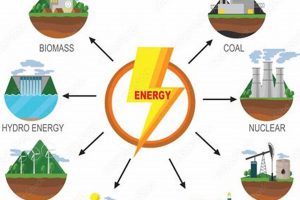
The composition of sustainable energy sources directly determines the overall proportion of naturally replenished energy in the global mix. Various source types, including solar, wind, hydro, geothermal, and biomass, contribute diversely to the total. Each source possesses unique characteristics in terms of availability, scalability, and environmental impact, thereby influencing the overall “how much of the world’s energy comes from renewable sources” percentage. For instance, countries with abundant solar resources may prioritize photovoltaic deployment, whereas nations with significant hydropower potential may focus on dam construction or pumped storage facilities. The choice of energy source types directly impacts the total energy produced.
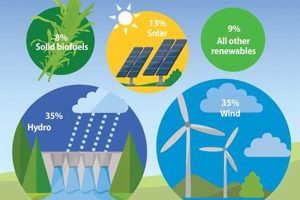
Variations in regional geography, technological maturity, and policy support drive the diversity in sustainable energy source adoption. Denmark, with its mature wind energy sector, demonstrates a high proportion of its power generation from wind turbines. Iceland relies predominantly on geothermal and hydropower resources. Brazil utilizes a significant amount of bioenergy. The integration of diverse source types enhances the reliability and resilience of energy systems by mitigating the intermittency challenges associated with single-source dependence. Furthermore, advancements in energy storage technologies are enabling greater incorporation of variable sustainable sources such as solar and wind. Diversification leads to increased proportion of sustainable sources.
Effective understanding of the “energy source types” and their contributions, is crucial for informing investment decisions and policy frameworks. Comprehensive assessments of resource availability, technological feasibility, and economic viability guide the strategic allocation of resources and the design of targeted policies. Policy instruments such as feed-in tariffs, tax credits, and renewable portfolio standards can incentivize the development and deployment of specific sustainable energy technologies, thereby augmenting their contribution to the global energy mix. An increasingly diversified sustainable energy portfolio is pivotal for transitioning towards a low-carbon economy and achieving ambitious climate targets. The correct types lead to better numbers.
4. Regional variations.

The proportion of energy sourced from renewable methods exhibits considerable disparity across geographical regions. These “Regional variations” stem from a complex interaction of factors, significantly impacting the overall percentage of global energy derived from sustainable resources.
- Resource Availability and Geographical Factors
The inherent abundance or scarcity of specific renewable resources dictates potential. Regions with ample sunlight, such as the Southwestern United States and the Middle East, possess a comparative advantage in solar energy production. Similarly, nations with extensive coastlines or mountainous terrain are well-suited for wind and hydropower generation, respectively. These geographical realities inherently influence the contribution of sustainable sources to the total energy mix in specific areas.
- Economic Development and Infrastructure
The level of economic advancement and the presence of robust energy infrastructure play crucial roles. Developed nations typically possess greater financial resources to invest in sustainable energy technologies and upgrade existing grids to accommodate intermittent sources. Conversely, developing countries may face financial constraints and infrastructural limitations, hindering their ability to transition rapidly towards sustainable energy systems. These economic and infrastructural factors thus shape the pace and scale of renewable energy adoption within different regions.
- Policy and Regulatory Frameworks
Governmental policies and regulatory frameworks exert a profound influence. Regions with supportive policies, such as feed-in tariffs, tax incentives, and renewable portfolio standards, tend to exhibit higher rates of renewable energy deployment. Conversely, regions lacking such incentives or facing regulatory barriers may lag behind in the transition towards sustainable energy systems. Policy choices, therefore, directly impact the composition of the energy mix at the regional level.
- Social and Cultural Attitudes
Public awareness, acceptance, and support for sustainable energy initiatives are also vital considerations. Regions with a strong environmental consciousness and a willingness to embrace new technologies often demonstrate greater adoption of renewable energy solutions. Conversely, regions with ingrained reliance on fossil fuels or skepticism towards sustainable technologies may experience slower rates of transition. Societal attitudes, therefore, represent a significant factor shaping regional energy landscapes.
These interconnected facets demonstrate that the global “how much of the world’s energy comes from renewable sources” percentage is not a uniform figure. Regional disparities, driven by resource availability, economic factors, policy choices, and societal attitudes, necessitate tailored strategies for promoting sustainable energy development. Understanding these “Regional variations” is crucial for devising effective policies and investments to accelerate the global transition towards a cleaner energy future.
5. Policy impact.

Government interventions, collectively termed “Policy impact,” exert a decisive influence on the proportional contribution of sustainable sources to the global energy supply. Policy decisions shape investment climates, technology adoption rates, and consumer behavior, ultimately determining the extent to which energy systems transition towards naturally replenished alternatives.
- Feed-in Tariffs (FITs)
Feed-in tariffs guarantee a fixed price for sustainable energy generated and fed into the grid. This policy mechanism provides financial certainty for investors, incentivizing the development of projects. Germany’s Energiewende, relying heavily on FITs, significantly boosted its sustainable energy capacity. Without such predictable revenue streams, investment risks increase, potentially hindering the growth of sustainable generation.
- Renewable Portfolio Standards (RPS)
Renewable Portfolio Standards mandate that a specific percentage of electricity sold by utilities must originate from sustainable sources. This creates a guaranteed demand for sustainable energy, encouraging utilities to procure it and stimulating investment in new sustainable facilities. California’s RPS, for example, has driven significant investment in solar and wind energy projects within the state. Compliance mechanisms, however, are essential for the RPS to be effective.
- Carbon Pricing Mechanisms
Carbon pricing mechanisms, such as carbon taxes and cap-and-trade systems, impose a cost on carbon emissions. This makes fossil fuels relatively more expensive, thereby enhancing the economic competitiveness of sustainable energy technologies. The European Union Emissions Trading System (EU ETS) is a prime example, though its effectiveness has varied due to fluctuating carbon prices. Well-designed carbon pricing schemes can provide a strong economic incentive for decarbonization.
- Tax Incentives and Subsidies
Tax incentives, such as investment tax credits and production tax credits, reduce the upfront costs or operating expenses associated with sustainable energy projects. Subsidies, in the form of direct payments or low-interest loans, can further enhance the financial viability of these projects. The U.S. Investment Tax Credit (ITC) for solar energy has played a key role in driving down solar costs and increasing deployment. The removal or reduction of these incentives can significantly impact project economics.
The examples illustrate that the percentage of global energy sourced from sustainable sources is not solely a function of technological innovation or resource availability. Rather, “Policy impact” shapes the energy landscape, creating favorable or unfavorable conditions for the expansion of sustainable generation. Consistent, well-designed, and effectively implemented policies are essential for accelerating the transition towards a cleaner and more sustainable energy future. Further, policy can be designed to penalize environmentally negative outcomes with things like carbon taxes.
Frequently Asked Questions Regarding the Proportion of Global Energy from Renewable Sources
The following section addresses common inquiries concerning the percentage of the world’s energy derived from sustainable methods. It aims to provide clarity on prevalent misconceptions and pertinent details.
Question 1: What constitutes a “renewable” energy source within the context of global energy statistics?
A “renewable” energy source, for statistical purposes, is typically defined as energy derived from natural processes that are replenished at a rate that equals or exceeds their rate of depletion. Common examples include solar, wind, hydro, geothermal, and biomass. Nuclear energy, while low-carbon, is generally not classified as a renewable source due to its reliance on finite uranium resources.
Question 2: Why is there often variation in reported figures regarding the global renewable energy percentage?
Discrepancies in reported figures arise due to differing methodologies, data sources, and definitions employed by various international organizations and national governments. Some organizations may include specific types of biomass or large-scale hydropower in their calculations, while others may not. Data collection practices and the timeliness of updates also contribute to variations in reported figures.
Question 3: What are the primary factors hindering a more rapid increase in the global renewable energy percentage?
Several factors impede the rapid expansion of sustainable energy. These include the intermittency of certain renewable sources, the need for significant investments in grid infrastructure and energy storage solutions, the persistence of fossil fuel subsidies, and regulatory barriers that hinder the deployment of projects. Overcoming these obstacles requires concerted efforts from governments, industries, and researchers.
Question 4: Does the percentage of energy from renewable sources translate directly into a proportional reduction in greenhouse gas emissions?
While increasing the proportion of sustainable energy generally reduces greenhouse gas emissions, the relationship is not always perfectly linear. The emissions intensity of the fossil fuels being displaced, the lifecycle emissions associated with the construction and operation of renewable facilities, and the efficiency of energy storage and transmission technologies all influence the overall impact on greenhouse gas emissions.
Question 5: How can individuals contribute to increasing the percentage of global energy derived from renewable sources?
Individuals can contribute through various means, including supporting policies that promote the development of sustainable energy, investing in household solutions such as solar panels and energy-efficient appliances, reducing personal energy consumption, and advocating for corporate sustainability initiatives. Collective action at the individual level can amplify the demand for, and adoption of, sustainable energy technologies.
Question 6: What is the projected trajectory for the percentage of global energy coming from renewable sources in the coming decades?
Projections vary depending on the assumptions regarding technological advancements, policy interventions, and economic growth. However, most forecasts indicate a substantial increase in the proportion of energy from sustainable sources in the coming decades. Achieving ambitious climate goals, as outlined in the Paris Agreement, will necessitate a significant acceleration of this trend, requiring widespread deployment of sustainable energy technologies across all sectors.
Understanding the intricacies and nuances surrounding the percentage of global energy derived from renewable sources is crucial for informed decision-making and effective climate action. Addressing these frequently asked questions contributes to a more comprehensive understanding of the challenges and opportunities ahead.
The subsequent section will delve into the future outlook for global sustainable energy expansion, examining emerging technologies and evolving policy landscapes.
Assessing Renewable Energy’s Global Contribution
This analysis has explored the existing fraction of global energy production derived from sustainable sources, detailing key metrics, influential factors, and disparities across regions. Consideration has been given to the roles of different power sources, policy frameworks, and economic dynamics. Understanding “how much of the world’s energy comes from renewable sources” requires acknowledging the complexities of differing data collection methodologies and various definitions of renewable energy.
The increasing imperative for decarbonization necessitates a sustained and concerted effort to augment the proportion of sustainable energy within the global energy mix. Continued technological innovation, strategic policy implementation, and widespread public support are vital to accelerating the transition toward a cleaner and more sustainable energy future. The pursuit of increased adoption is not merely an environmental goal, but a prerequisite for long-term global stability and resilience. The progress achieved towards this aim must be accurately and transparently measured to inform effective strategies and ensure accountability.