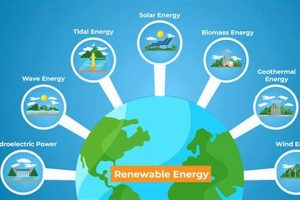
Resources that replenish naturally and are essentially inexhaustible are categorized as sustainable power generators. These sources are characterized by their ability to be replenished at a rate equal to or greater than the rate at which they are consumed. Common examples include solar radiation, wind power, geothermal heat, and hydroelectric power.
The utilization of such power sources offers substantial environmental and economic advantages. Decreased reliance on fossil fuels mitigates greenhouse gas emissions, thereby lessening the impact on climate change. Further, the widespread adoption of these resources fosters energy independence, reduces price volatility associated with finite resources, and stimulates economic growth through the creation of jobs in related industries. Historically, societies have harnessed these power forms in rudimentary ways; however, advancements in technology have enabled more efficient and large-scale implementation.
The following sections will explore the diverse methods of generating electricity from various sustainable sources, examining their respective technologies, environmental implications, and potential contributions to a future powered by clean and perpetually available energy.
Guidance on Renewable Energy Adoption
The integration of perpetually replenishing energy into various sectors necessitates careful planning and informed decision-making. The following guidance outlines essential considerations for effective implementation.
Tip 1: Conduct a Thorough Energy Audit: An initial assessment of current energy consumption patterns is crucial. This involves analyzing energy usage across all operations to identify areas where sustainable options can be integrated efficiently.
Tip 2: Prioritize Energy Efficiency: Before investing in power generation methods, implement energy-efficient technologies and practices. This reduces overall energy demand, thereby minimizing the scale of sustainable generation systems required.
Tip 3: Assess Local Resource Availability: The viability of each sustainable energy technology depends on geographical location. Solar power is most effective in regions with high solar irradiance, while wind power is suitable for areas with consistent wind patterns. Geothermal energy necessitates access to geothermal resources.
Tip 4: Evaluate Grid Interconnection Options: If excess generated power is available, assess the feasibility of connecting to the existing power grid. This allows for the sale of surplus power, creating a potential revenue stream.
Tip 5: Consider Energy Storage Solutions: The intermittent nature of some technologies, such as solar and wind, necessitates the incorporation of energy storage solutions. Battery storage systems can provide a reliable power supply during periods of low generation.
Tip 6: Understand Regulatory Frameworks: Familiarize oneself with local, regional, and national regulations and incentives related to technology adoption. Government policies often provide financial support and streamlined permitting processes.
The successful transition to environmentally sustainable power hinges on a holistic approach that encompasses energy efficiency, strategic resource assessment, and adherence to regulatory guidelines. These measures will allow for a smooth and cost-effective integration.
The subsequent sections will provide case studies showcasing successful technology implementations across diverse sectors.
1. Sustainability

Sustainability, in the context of power generation, denotes the ability of a source to provide energy without depleting natural resources or causing long-term environmental damage. This principle is fundamentally intertwined with the concept of power generation methods that are naturally replenished and inherently inexhaustible.
- Resource Replenishment Rate
A core element of sustainability lies in the rate at which an energy source regenerates. Sustainable options are characterized by replenishment rates equal to or exceeding consumption rates. Solar radiation, for example, is a continuous source of energy, and wind patterns, driven by solar heating, are constantly renewed. Conversely, fossil fuels are finite and non-renewable, leading to eventual depletion.
- Environmental Impact Mitigation
Sustainability also hinges on minimizing negative environmental consequences. Technologies that significantly reduce greenhouse gas emissions, air and water pollution, and habitat destruction are considered more sustainable. While all energy production methods have some environmental impact, sustainable options strive to minimize these effects through cleaner technologies and responsible resource management.
- Long-Term Availability
A sustainable energy source must be available for the foreseeable future. This requires considering not only the immediate abundance of the resource but also its resilience to climate change and other long-term environmental factors. Sources reliant on stable weather patterns, such as hydroelectric power dependent on consistent rainfall, must factor in climate variability in their long-term sustainability assessments.
- Economic Feasibility and Social Equity
True sustainability considers both economic viability and social equity. A sustainable power system must be affordable and accessible to all members of society, avoiding disproportionate burdens on vulnerable populations. Furthermore, the economic infrastructure supporting that system must be resilient and capable of long-term operation without relying on unsustainable subsidies or external dependencies.
The interconnectedness of resource replenishment, environmental impact mitigation, long-term availability, economic feasibility, and social equity collectively defines the sustainability of power generation. Technologies that comprehensively address these factors represent the most promising pathways towards a truly sustainable energy future, and are vital components to a balanced energy economy.
2. Replenishment

The attribute of replenishment forms the cornerstone of power derived from sources that are sustainable. Replenishment refers to the natural processes by which an energy resource is renewed or restored within a timeframe relevant to human consumption. Without replenishment, a resource, regardless of its initial abundance, is ultimately finite and unsustainable as a source of power. This characteristic differentiates renewable sources from fossil fuels, the latter requiring geological timescales for their formation. The rate of replenishment relative to the rate of energy extraction dictates the long-term viability of a sustainable energy source. For instance, solar radiation is continuously available and replenished by nuclear fusion within the sun, ensuring a practically inexhaustible supply. Wind energy is replenished by atmospheric circulation patterns driven by solar heating, and hydroelectric power is replenished by the water cycle, which includes precipitation and runoff.
The practical significance of understanding replenishment cycles lies in the ability to model and predict the availability and reliability of sustainable energy resources. For example, hydrological models can assess the potential yield of hydroelectric power plants based on anticipated rainfall patterns and reservoir capacity. Wind resource assessments can determine the suitability of locations for wind farms based on historical wind data and meteorological forecasts. Furthermore, understanding replenishment rates is crucial for managing the environmental impacts of power generation. Over-extraction of geothermal energy, for instance, can lead to a depletion of geothermal reservoirs if the rate of extraction exceeds the rate of natural replenishment. Similarly, unsustainable harvesting of biomass can lead to deforestation and soil degradation, undermining the long-term viability of biomass as a source of power.
In conclusion, replenishment is not merely a desirable characteristic of a sustainable energy resource; it is a defining feature. The ability of a resource to renew itself within a reasonable timeframe ensures its long-term availability and minimizes the potential for environmental degradation. However, understanding and managing replenishment rates is crucial for ensuring the sustainable utilization of these resources. Challenges remain in accurately predicting and modeling replenishment cycles, particularly in the face of climate change and other environmental stressors. Continuous monitoring and research are essential for optimizing the extraction and utilization of power from replenished sources, ensuring a sustainable energy future.
3. Environmental Impact

The environmental impact associated with power generation constitutes a critical differentiator between sustainable and non-sustainable energy sources. Sources that are naturally replenished are generally characterized by substantially lower life cycle environmental burdens compared to fossil fuels or nuclear power. These reduced burdens stem from several factors, including minimal or no emissions of greenhouse gasses during operation, reduced air and water pollution, and decreased resource depletion. For example, solar photovoltaic systems generate electricity directly from sunlight, emitting no greenhouse gasses during electricity production. Similarly, wind turbines harness kinetic energy from the wind, avoiding combustion and associated air pollutants. Hydroelectric power relies on the potential energy of water stored in reservoirs, a process that avoids fossil fuel combustion but can have environmental impacts related to dam construction and alteration of river ecosystems.
However, it is imperative to acknowledge that even power generated through sources that are naturally replenished can have some environmental consequences. The manufacturing of solar panels and wind turbines requires energy and materials, resulting in some greenhouse gas emissions and resource consumption. The construction of large-scale hydroelectric dams can inundate terrestrial habitats, disrupt fish migration patterns, and alter downstream water flows. The extraction of geothermal energy can release small amounts of greenhouse gasses, and improperly managed biomass combustion can contribute to air pollution. Therefore, a comprehensive life cycle assessment is necessary to accurately quantify the environmental impact of power, accounting for all stages from resource extraction to decommissioning. Furthermore, technological advancements and best management practices are essential for minimizing the environmental footprint of sources that are naturally replenished. For instance, the development of more efficient solar cells and wind turbine designs can reduce the energy and material requirements for their production. Careful planning and mitigation strategies can minimize the environmental impacts of hydroelectric dams.
In conclusion, the environmental impact is a crucial consideration in the selection and deployment of energy technologies. Power that is naturally replenished generally offers a significant advantage over fossil fuels and nuclear power in terms of reduced greenhouse gas emissions and other environmental burdens. However, a comprehensive life cycle assessment and continuous improvement of technologies and management practices are necessary to minimize the environmental footprint of sources that are naturally replenished and ensure their long-term sustainability. Continued research and development into cleaner and more efficient methods for harnessing the power of nature will be essential for mitigating the environmental consequences of power generation and achieving a sustainable energy future.
4. Resource Availability
The practical application of any given energy source is intrinsically linked to its geographic and temporal accessibility. This availability dictates the economic feasibility and scalability of the associated power generation technologies. A thorough assessment of resource availability is therefore paramount in determining the viability of incorporating sustainable energy into an energy portfolio.
- Geographic Distribution
The uneven distribution of natural resources across the globe directly influences the suitability of different forms of sustainable generation in different regions. Solar irradiance, for instance, is highest in desert climates and areas with high annual sunshine hours, making solar photovoltaic systems particularly attractive in those locales. Conversely, geothermal resources are concentrated in tectonically active regions, limiting the availability of geothermal energy to specific geographic areas. Wind resources are dependent on prevailing wind patterns and topographical features, making certain locations ideal for wind farms while rendering others unsuitable. Understanding these geographic constraints is crucial for efficient resource allocation and optimized technology deployment.
- Temporal Variability
Many sustainable energy resources exhibit significant temporal variability, impacting the consistency of power generation. Solar energy is intermittent, varying with diurnal cycles, weather patterns, and seasonal changes. Wind energy is also variable, dependent on fluctuating wind speeds. Hydroelectric power is subject to seasonal variations in precipitation and runoff. These temporal variations necessitate the integration of energy storage solutions or the diversification of energy sources to ensure a reliable and consistent power supply. Forecasting methodologies and grid management strategies are essential for mitigating the challenges posed by temporal variability.
- Resource Quality and Intensity
The quality and intensity of a given resource influences the efficiency and cost-effectiveness of power generation. High-intensity solar radiation yields greater electricity output from photovoltaic systems. Strong and consistent wind speeds enhance the productivity of wind turbines. High-temperature geothermal reservoirs facilitate more efficient electricity generation. Lower-quality resources may require more extensive infrastructure or advanced technologies to achieve comparable energy output, potentially impacting economic viability.
- Land Use Considerations
The deployment of sustainable power technologies often necessitates substantial land areas, raising land use considerations. Large-scale solar farms and wind farms require significant land tracts, potentially competing with other land uses such as agriculture or conservation. Hydroelectric reservoirs can inundate large areas of land, displacing communities and altering ecosystems. Careful land use planning and environmental impact assessments are essential for minimizing the negative impacts of sustainable energy development.
These facets of resource availability collectively determine the feasibility and practicality of harnessing various forms of naturally replenishing energy. While many resources offer potential benefits, effective integration requires a detailed understanding of geographic distribution, temporal variability, resource quality, and land use considerations. Overcoming these challenges through technological innovation, strategic planning, and appropriate policy frameworks is paramount for realizing the full potential of energy from replenished sources and transitioning towards a sustainable energy future.
5. Technological Advancement

Technological advancement is inextricably linked to the viability and scalability of various forms of power that is naturally replenished. Innovations across diverse engineering disciplines directly impact the efficiency, cost-effectiveness, and environmental performance of harvesting such power. The progression from rudimentary windmills to sophisticated wind turbines, and from early solar cells to high-efficiency photovoltaic panels, exemplifies this dependence. The deployment of sustainable systems hinges on continuous improvements that enhance energy conversion rates, reduce manufacturing costs, and minimize land use requirements. Without ongoing technological development, the potential contribution of such sources to the global energy supply would remain significantly constrained.
Specific examples highlight this crucial connection. Advancements in materials science have led to the development of lighter and more durable turbine blades, enabling wind turbines to capture more energy from lower wind speeds. Innovations in power electronics have improved the integration of intermittent electricity sources into the grid, enhancing grid stability and reliability. Research into advanced battery technologies is facilitating the storage of excess energy generated during peak production periods, addressing the challenge of intermittency associated with solar and wind power. Furthermore, the development of more efficient and environmentally benign manufacturing processes is reducing the overall environmental footprint of deploying power generating from sources that are naturally replenished.
In conclusion, technological advancement is not merely a facilitating factor but an essential driver of the increasing adoption and effectiveness of power from continually replenished sources. Overcoming the inherent limitations of these resources, such as intermittency and geographic constraints, requires continuous investment in research and development. Addressing existing technological barriers and pursuing further innovation will be critical for realizing the full potential of power from continual replenishment in meeting global energy demands and transitioning towards a sustainable energy future. Sustained progress relies upon cross-disciplinary collaboration and a commitment to ongoing refinement of the technologies that harness the power of nature.
6. Economic Viability

Economic viability is a critical determinant in the widespread adoption and sustained utilization of technologies that generate energy from replenished sources. The initial capital investment, operational expenses, and long-term returns associated with such projects significantly influence their competitiveness relative to conventional fossil fuel-based systems. If power from replenished sources cannot compete economically, market penetration will be limited, regardless of environmental benefits or resource abundance. The cost of solar photovoltaic systems, for example, has decreased dramatically over the past decade, making solar power a viable alternative to fossil fuels in many regions. Similarly, technological advancements in wind turbine design and manufacturing have reduced the cost of wind power, enabling it to compete effectively in electricity markets. Government subsidies, tax incentives, and carbon pricing mechanisms can further enhance the economic viability of power generation from replenished sources by internalizing the external costs associated with fossil fuel combustion and providing a level playing field for cleaner technologies.
The economic viability of such technology is not solely determined by direct generation costs. Indirect economic benefits, such as job creation, reduced healthcare costs associated with air pollution, and decreased reliance on imported fuels, must also be considered. A transition towards a sustainable energy economy can stimulate innovation, create new industries, and enhance energy security, leading to broader economic prosperity. For example, the expansion of the solar and wind industries has created numerous jobs in manufacturing, installation, and maintenance. Furthermore, decreased reliance on fossil fuels reduces a nation’s vulnerability to price volatility and geopolitical instability, enhancing energy independence and economic resilience. However, challenges remain in ensuring the economic viability of such power sources in all regions and under all market conditions. The intermittent nature of some replenished sources requires investment in energy storage solutions or grid infrastructure upgrades to ensure a reliable power supply, potentially increasing costs. Furthermore, the geographic concentration of certain resources may limit the economic viability of technologies in some locations.
In conclusion, economic viability is a fundamental driver of the transition towards a sustainable energy future. While power from replenished sources offers substantial environmental and social benefits, widespread adoption requires competitive costs and attractive returns on investment. Government policies, technological advancements, and innovative financing mechanisms play a crucial role in enhancing the economic viability of such systems and creating a level playing field for cleaner energy technologies. By promoting economic incentives and addressing market barriers, it is possible to accelerate the deployment of systems that generate power from continually replenished sources, fostering a more sustainable and prosperous future.Sustained progress relies upon cross-disciplinary collaboration and a commitment to ongoing refinement of the technologies that harness the power of nature.
7. Energy Security

Energy security, defined as the uninterrupted availability of energy sources at an affordable price, is inextricably linked to the utilization of continually replenished sources of energy. Reliance on finite fossil fuels exposes nations to price volatility, geopolitical instability, and supply disruptions. Diversifying energy portfolios with sources that are naturally replenished, mitigates these risks, fostering greater energy independence and economic resilience. The inherent geographical distribution of such technologies, such as solar and wind resources, enables nations to reduce dependence on imported fuels and establish domestic power generation capabilities. For example, Germany’s investment in solar and wind energy has lessened its reliance on Russian natural gas, enhancing its energy security posture. The development of indigenous renewable energy industries also stimulates economic growth and creates employment opportunities, further strengthening national security.
The integration of such technologies can enhance the resilience of energy systems to extreme weather events and other disruptions. Distributed power generation systems, such as rooftop solar panels, can provide electricity to homes and businesses during grid outages caused by storms or other disasters. Microgrids, which combine sustainable power sources with energy storage systems, can operate independently of the main grid, ensuring a reliable power supply in remote or vulnerable areas. For example, Puerto Rico’s experience with Hurricane Maria underscored the importance of decentralized renewable energy systems for maintaining power during grid failures. By diversifying power sources and decentralizing power generation, nations can enhance the robustness and reliability of their energy infrastructure.
In summary, the deployment of such generating capabilities is a strategic imperative for enhancing energy security. Reducing dependence on fossil fuels, promoting energy diversification, and enhancing grid resilience contribute to a more stable and secure energy future. While challenges remain in integrating intermittent resources into existing grids and ensuring affordability, the long-term benefits of such technologies in terms of energy security and economic stability outweigh the costs. Continuous investment in research and development, supportive government policies, and innovative financing mechanisms are essential for accelerating the transition to a sustainable and secure energy future.
Frequently Asked Questions
The following questions address common inquiries and misconceptions surrounding power generated from sources that are continually replenished. This information aims to provide clarity and promote a deeper understanding of sustainable energy.
Question 1: What constitutes a “source that is naturally replenished,” and how does it differ from other power sources?
A source that is naturally replenished refers to any energy resource that is naturally replenished at a rate comparable to or exceeding its rate of consumption. This contrasts with fossil fuels, which are finite resources formed over millions of years and are not replenished on a human timescale.
Question 2: Are power sources that are naturally replenished truly environmentally benign?
While power derived from naturally replenished sources generally has a lower environmental impact than fossil fuels, it is not entirely without environmental consequences. Manufacturing processes, land use considerations, and resource extraction can all have some environmental impact. However, these impacts are typically less severe and more manageable than those associated with fossil fuels.
Question 3: How reliable are power sources that are naturally replenished, given their intermittent nature?
The reliability of certain technologies, such as solar and wind, is influenced by weather patterns and diurnal cycles. Energy storage solutions, grid management strategies, and diversification of energy sources can mitigate intermittency challenges and ensure a consistent power supply.
Question 4: Are technologies that harness power sources that are naturally replenished economically competitive with traditional fossil fuels?
The economic competitiveness of such technologies has improved significantly in recent years, driven by technological advancements and decreasing costs. Government incentives, carbon pricing mechanisms, and the recognition of the long-term economic benefits of sustainable power contribute to their increasing economic viability.
Question 5: What are the limitations associated with the widespread adoption of power from naturally replenished sources?
Limitations include geographic constraints, temporal variability, land use considerations, and the need for grid infrastructure upgrades. Overcoming these challenges requires continued innovation, strategic planning, and supportive policy frameworks.
Question 6: How can individuals and communities contribute to the transition towards power generated from naturally replenished sources?
Individuals and communities can contribute by adopting energy-efficient practices, supporting policies that promote sustainable power, investing in technologies, and advocating for a transition towards a cleaner energy future.
Power from naturally replenished sources offers significant environmental, economic, and energy security benefits. While challenges remain, continuous innovation and strategic planning pave the way for wider use.
The following section explores real-world case studies of successful technology implementations across various sectors.
Renewable Energy Source Synthesis
This exploration has elucidated the multifaceted nature of power generated from sources that are naturally replenished, encompassing environmental impact, resource availability, technological advancement, economic viability, and energy security implications. Analysis reveals that the strategic deployment of technologies is imperative for mitigating climate change, fostering energy independence, and promoting sustainable economic growth. Understanding the nuances of each power source, from solar and wind to hydro and geothermal, enables informed decision-making regarding energy portfolios and infrastructure investments.
The transition towards a sustainable energy future necessitates sustained commitment to innovation, policy reform, and responsible resource management. Global collaboration and knowledge sharing are critical for accelerating the adoption of power from continually replenished sources, ensuring a secure, affordable, and environmentally responsible energy supply for generations to come. Further research and thoughtful implementation are essential to maximize benefits and navigate complexities in the pursuit of long-term sustainability.