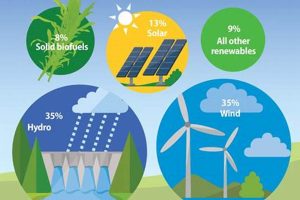
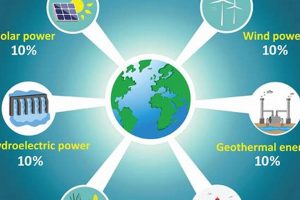
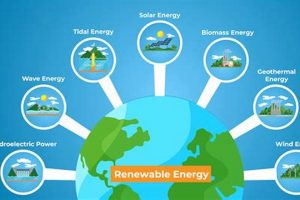
The proportion of the nation’s power derived from resources that are naturally replenished, such as solar, wind, geothermal, and hydropower, is a critical indicator of the energy sector’s sustainability. This metric represents the degree to which the country’s electricity generation relies on sources with minimal long-term environmental impact. For example, if 20% of the total energy consumed comes from these sources, this constitutes the percentage of the overall energy supply attributable to renewable technologies.
Increasing this proportion offers numerous benefits, including reduced greenhouse gas emissions, decreased reliance on finite fossil fuels, and improved air quality. Historically, these energy sources played a marginal role in the overall energy mix. However, technological advancements, supportive government policies, and growing environmental awareness have driven significant growth in recent decades, altering the composition of the nation’s energy portfolio. The expansion of these resources creates new economic opportunities and strengthens energy security.
The subsequent discussion will examine the contributing factors to shifts in the percentage, specific renewable technologies contributing to the overall total, and future projections concerning the role these sources are anticipated to play in meeting the nation’s energy demands. These discussions will also explore policy impacts and economic implications of relying on a higher percentage of renewable energy.
Strategies to Increase Renewable Energy Integration
The following tips outline strategies for enhancing the contribution of renewable sources to the United States’ overall energy mix. These approaches focus on policy, technological innovation, and infrastructure development.
Tip 1: Implement Consistent and Predictable Policy Frameworks: Establish long-term renewable energy targets and tax incentives to provide certainty for investors and developers. A stable regulatory environment fosters confidence and encourages greater investment in renewable energy projects.
Tip 2: Invest in Grid Modernization: Upgrade the nation’s electricity grid to accommodate the variable nature of renewable energy sources like wind and solar. Smart grid technologies, energy storage solutions, and enhanced transmission capacity are crucial for integrating renewables efficiently.
Tip 3: Promote Research and Development: Fund research into advanced renewable energy technologies, such as next-generation solar cells, improved energy storage, and enhanced wind turbine designs. Innovation is essential for reducing costs and improving the performance of renewable energy systems.
Tip 4: Streamline Permitting Processes: Simplify and accelerate the permitting process for renewable energy projects while ensuring environmental protection. Lengthy and complex permitting procedures can hinder the deployment of renewable energy infrastructure.
Tip 5: Support Community Engagement and Education: Foster public understanding and acceptance of renewable energy technologies through educational programs and community outreach initiatives. Addressing public concerns and building local support is crucial for successful project implementation.
Tip 6: Encourage Energy Storage Solutions: Incentivize the development and deployment of energy storage technologies, such as batteries and pumped hydro, to address the intermittency challenges associated with renewable energy sources. Storage allows for a more reliable and dispatchable renewable energy supply.
Tip 7: Establish Regional Energy Cooperation: Facilitate collaboration between states and regions to develop and implement renewable energy strategies. Coordinated planning and resource sharing can enhance the efficiency and effectiveness of renewable energy deployment across broader geographical areas.
These strategies provide a roadmap for increasing the proportion of the nation’s energy supply derived from renewable sources. Implementation requires a coordinated effort across government, industry, and the public sector.
The conclusion will elaborate on the long-term impact of these strategies on the nation’s energy landscape and environmental sustainability.
1. Solar Power Growth

Solar power growth represents a substantial component of the overall increase in renewable energy generation and consequently, a critical factor in the rise of the proportion of U.S. energy derived from renewable sources. The rapid expansion of solar energy capacity has significantly impacted the nation’s energy mix, driving a shift away from conventional fossil fuels.
- Decreasing Photovoltaic Costs
The continuous decline in the cost of photovoltaic (PV) technology has made solar energy increasingly competitive with traditional energy sources. Lower installation costs have incentivized residential, commercial, and utility-scale solar projects, contributing to a broader adoption of solar energy systems and a direct increase in the “percent of us energy from renewable sources”.
- Federal and State Incentives
Policies such as the federal solar Investment Tax Credit (ITC) and various state-level renewable energy standards (RES) provide financial incentives and regulatory mandates that encourage solar energy development. These policies lower the upfront costs of solar installations and ensure a market for renewable energy generation, bolstering solar power growth and its contribution to the overall “percent of us energy from renewable sources”.
- Utility-Scale Solar Projects
Large-scale solar farms and power plants have emerged as significant contributors to solar energy generation. These projects, often developed by utility companies or independent power producers, can generate substantial amounts of electricity, displacing fossil fuel-based generation and increasing the overall “percent of us energy from renewable sources” in the national energy mix. Projects like the Ivanpah Solar Electric Generating System exemplify this contribution.
- Rooftop Solar Adoption
The increasing adoption of rooftop solar panels on residential and commercial buildings represents a distributed form of solar energy generation that collectively contributes to the growth of solar power. Net metering policies, which allow solar panel owners to sell excess electricity back to the grid, further incentivize rooftop solar adoption, augmenting the proportion of renewable energy in the nation’s overall energy consumption and elevating the “percent of us energy from renewable sources”.
These facets collectively underscore the vital role of solar power growth in augmenting the contribution of renewable sources to the U.S. energy supply. As technology advances and policies continue to support solar energy development, the proportion of the nation’s power derived from solar sources is anticipated to further increase, playing a key role in achieving a more sustainable energy future and advancing the “percent of us energy from renewable sources”.
2. Wind Energy Contribution

Wind energy contribution is inextricably linked to the proportion of the nation’s energy derived from renewable sources. As one of the fastest-growing renewable energy technologies, wind power directly elevates the overall percentage by displacing conventional fossil fuel generation. The cause-and-effect relationship is straightforward: increased wind energy production directly translates to a higher proportion of renewable energy within the national energy mix. The significance lies in wind energy’s ability to provide substantial, utility-scale electricity generation without emitting greenhouse gases or relying on finite resources. For instance, states like Iowa and Texas generate a significant portion of their electricity from wind, demonstrably increasing their contribution to the national renewable energy percentage. This understanding is practically significant for policymakers and energy planners seeking to meet renewable energy targets and mitigate climate change.
Further analysis reveals that the impact of wind energy contribution is not uniform across the country. Regions with favorable wind resources, such as the Great Plains, have witnessed greater deployment of wind farms and, consequently, a larger contribution to the nation’s renewable energy proportion. Improvements in turbine technology, such as larger rotor diameters and higher hub heights, have also enhanced energy capture and efficiency, making wind energy projects more economically viable and driving further expansion. Moreover, the development of offshore wind farms presents a significant opportunity to tap into stronger and more consistent wind resources, potentially leading to a substantial increase in wind energy’s contribution to the overall renewable energy percentage. The Block Island Wind Farm, the first offshore wind farm in the United States, exemplifies the potential of this technology to significantly boost renewable energy production.
In summary, wind energy contribution is a critical component of the nation’s renewable energy proportion. Its expansion is driven by technological advancements, favorable policy environments, and the availability of abundant wind resources. While challenges such as intermittency and transmission infrastructure constraints remain, ongoing efforts to improve grid integration and energy storage technologies are addressing these issues. Ultimately, the continued growth of wind energy is essential for achieving a sustainable energy future and increasing the overall proportion of the nation’s energy derived from renewable sources. The degree to which wind power can continue its growth trend will heavily influence the future “percent of us energy from renewable sources”.
3. Hydropower's Steady Role
Hydropower maintains a relatively consistent, albeit not rapidly expanding, contribution to the “percent of us energy from renewable sources”. As a mature renewable energy technology, its role is characterized by established infrastructure and predictable generation patterns. The importance of hydropower lies in its baseload capabilities; it provides a stable and reliable source of renewable electricity, offsetting the variability associated with some other renewable sources. Examples include the Hoover Dam and the Grand Coulee Dam, which have consistently generated substantial amounts of electricity for decades, contributing significantly to the nation’s renewable energy mix. This stability is practically significant for grid operators seeking to maintain a consistent power supply while incorporating intermittent renewable sources.
Further analysis reveals that while new hydropower projects are less common due to environmental concerns and regulatory hurdles, efforts to improve the efficiency of existing facilities and add power generation to non-powered dams contribute incrementally to the overall proportion of renewable energy. Pumped storage hydropower also plays a crucial role in grid stabilization by storing excess electricity generated from other renewable sources and releasing it during periods of high demand. This function is increasingly important as the proportion of intermittent renewables in the energy mix increases. The Bath County Pumped Storage Station in Virginia serves as an example of this technology’s ability to enhance grid reliability and support renewable energy integration.
In summary, hydropower’s steady role is a crucial component of the nation’s “percent of us energy from renewable sources”. While its contribution is not growing as rapidly as some other renewables, its reliability and baseload capabilities are essential for maintaining a stable and sustainable energy supply. Addressing environmental concerns and improving the efficiency of existing infrastructure are key challenges for ensuring that hydropower continues to play a significant role in the nation’s renewable energy future. Its continued, stable contribution is a vital element in the overall effort to increase the “percent of us energy from renewable sources”.
4. Geothermal Energy Potential
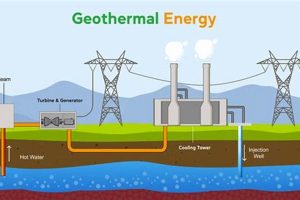
Geothermal energy potential directly impacts the “percent of us energy from renewable sources”. The extent to which untapped geothermal resources are developed and utilized directly influences the proportion of the nation’s energy derived from renewable sources. As geothermal energy production increases, it displaces electricity generation from fossil fuels, thereby elevating the overall renewable energy percentage. The importance of geothermal energy potential lies in its capacity to provide a consistent, baseload source of renewable power, unlike some intermittent renewable resources. For instance, the Geysers geothermal field in California has been generating electricity for decades, contributing reliably to the state’s and nation’s renewable energy supply. This consistent energy output is practically significant for grid stability and reliability.
Further analysis reveals that the actualization of geothermal energy potential is not uniform across the United States. Regions with high geothermal gradients, such as the western states, possess greater potential for geothermal energy development. Advanced geothermal technologies, including enhanced geothermal systems (EGS), are expanding the geographic reach of viable geothermal resources by accessing heat from deep underground formations. These technologies have the potential to significantly increase geothermal energy production and, consequently, the “percent of us energy from renewable sources”. The implementation of EGS projects, even in regions not traditionally associated with geothermal activity, could substantially augment the nation’s renewable energy capacity and diversify the renewable energy portfolio.
In summary, geothermal energy potential is a significant, albeit underutilized, factor in determining the nation’s “percent of us energy from renewable sources”. While geographic limitations and technological challenges exist, the development of advanced geothermal technologies and targeted deployment in suitable regions could substantially increase geothermal energy’s contribution to the overall renewable energy mix. Realizing this potential requires sustained investment in research and development, supportive policy frameworks, and efficient regulatory processes. The extent to which geothermal resources are harnessed will directly influence the nation’s progress toward a sustainable energy future and an increase in the “percent of us energy from renewable sources”.
5. Biomass Source Utilization

Biomass source utilization is a contributing element to the overall “percent of us energy from renewable sources”. The extent to which biomass resources are effectively converted into energy directly influences the proportion of the nation’s energy portfolio derived from renewable sources. Efficient and sustainable biomass utilization displaces fossil fuel consumption, thereby increasing the renewable energy percentage. The following facets detail key aspects of this relationship.
- Sustainable Forestry Practices
Sustainable forestry practices are essential for ensuring that wood-based biomass is a truly renewable resource. Responsible forest management, including reforestation and selective harvesting, minimizes environmental impacts and ensures a continuous supply of biomass for energy production. For instance, the use of logging residues and thinning materials from sustainably managed forests can provide a renewable energy source without depleting forest resources. Adherence to sustainable forestry principles is vital for maintaining biomass’s status as a renewable energy source and contributing positively to the “percent of us energy from renewable sources”.
- Agricultural Residues and Energy Crops
The utilization of agricultural residues, such as corn stover and wheat straw, and dedicated energy crops, like switchgrass and miscanthus, presents a significant opportunity for biomass energy production. These resources can be converted into biofuels or used directly for electricity generation, reducing reliance on fossil fuels and enhancing the “percent of us energy from renewable sources”. For example, cellulosic ethanol production from agricultural residues offers a pathway to sustainable biofuel production with lower greenhouse gas emissions compared to conventional gasoline.
- Waste-to-Energy Technologies
Waste-to-energy (WTE) technologies, including incineration and anaerobic digestion, convert municipal solid waste (MSW) and other waste streams into energy. These processes not only reduce landfill waste but also generate electricity and heat, contributing to the “percent of us energy from renewable sources”. Modern WTE facilities employ advanced pollution control technologies to minimize environmental impacts. The effective implementation of WTE projects represents a dual benefit: waste reduction and renewable energy production.
- Biogas Production from Landfills and Wastewater Treatment Plants
Biogas, composed primarily of methane, is produced through the anaerobic decomposition of organic matter in landfills and wastewater treatment plants. Capturing and utilizing biogas for electricity generation or direct use as a fuel reduces greenhouse gas emissions and provides a renewable energy source. Many landfills and wastewater treatment plants are now equipped with biogas recovery systems, which contribute to the “percent of us energy from renewable sources” while mitigating environmental pollution.
These facets highlight the diverse pathways through which biomass source utilization contributes to the nation’s renewable energy mix. Sustainable management practices, efficient conversion technologies, and responsible waste management are essential for maximizing the benefits of biomass energy and ensuring its continued role in increasing the “percent of us energy from renewable sources”. The integration of biomass energy into the broader renewable energy portfolio requires careful consideration of environmental, economic, and social factors to ensure its long-term sustainability and effectiveness.
6. Policy Driven Expansion

Policy-driven expansion is a critical determinant of the “percent of us energy from renewable sources”. Governmental policies, regulations, and incentives directly influence the pace and scale at which renewable energy technologies are deployed. These policies, acting as catalysts, create favorable market conditions, reduce financial barriers, and provide regulatory certainty, thereby stimulating investment and accelerating the adoption of renewable energy systems. The practical significance lies in the tangible impact these policies have on increasing the proportion of renewable energy within the nation’s overall energy mix. For instance, Renewable Portfolio Standards (RPS) mandate that utilities procure a specific percentage of their electricity from renewable sources, directly driving demand and expanding the renewable energy sector. The federal Investment Tax Credit (ITC) for solar energy reduces the upfront cost of solar installations, making them more economically attractive and leading to increased deployment. These examples underscore the direct causal link between policy interventions and the expansion of renewable energy capacity.
Further analysis reveals that the effectiveness of policy-driven expansion depends on several factors, including the consistency, longevity, and stringency of the policies. Long-term policy certainty is crucial for attracting large-scale investments in renewable energy infrastructure. Inconsistent or short-term policies can create market uncertainty and discourage investment. Feed-in tariffs, which guarantee a fixed price for renewable energy generation, have been successful in promoting renewable energy deployment in some countries. Similarly, carbon pricing mechanisms, such as carbon taxes or cap-and-trade systems, create economic incentives for reducing greenhouse gas emissions and promote the adoption of cleaner energy sources, including renewables. The diverse range of policy tools available allows policymakers to tailor strategies to specific regional contexts and energy market conditions. For example, states with abundant wind resources may prioritize policies that support wind energy development, while states with high solar irradiance may focus on promoting solar energy.
In summary, policy-driven expansion is an indispensable component of increasing the “percent of us energy from renewable sources”. The implementation of well-designed and consistently applied policies creates the necessary market conditions and incentives for driving renewable energy deployment. While challenges related to policy design, implementation, and enforcement exist, the strategic use of policy tools remains essential for achieving a sustainable energy future. The effectiveness of policy interventions will ultimately determine the extent to which the nation can transition towards a greater reliance on renewable energy sources, leading to a substantial increase in the “percent of us energy from renewable sources”.
Frequently Asked Questions
The following questions address common inquiries and misconceptions concerning the proportion of energy in the United States derived from renewable sources. The responses are intended to provide factual and objective information on this critical aspect of the nation’s energy landscape.
Question 1: What constitutes “renewable energy” as it relates to the “percent of us energy from renewable sources”?
The term “renewable energy” encompasses energy resources that are naturally replenished on a human timescale. This typically includes solar, wind, hydropower, geothermal, and biomass energy. The precise definition may vary depending on the regulatory context.
Question 2: How is the “percent of us energy from renewable sources” calculated?
This metric is calculated by dividing the total energy generated from renewable sources by the total energy consumed in the United States, typically expressed as a percentage. Data is usually compiled and reported by governmental agencies such as the Energy Information Administration (EIA).
Question 3: Why is the “percent of us energy from renewable sources” important?
This metric is important because it reflects the nation’s progress towards a more sustainable energy system. A higher percentage indicates reduced reliance on fossil fuels, lower greenhouse gas emissions, and improved energy security.
Question 4: What are the primary factors influencing the “percent of us energy from renewable sources”?
Key factors include government policies (e.g., tax incentives, renewable portfolio standards), technological advancements (e.g., improved solar panel efficiency, reduced wind turbine costs), and market demand for cleaner energy sources.
Question 5: Does the “percent of us energy from renewable sources” vary significantly by region?
Yes, there can be substantial regional variation due to differences in resource availability (e.g., solar irradiance, wind speed), state-level policies, and infrastructure development.
Question 6: What are the primary challenges to increasing the “percent of us energy from renewable sources”?
Challenges include the intermittency of some renewable sources (e.g., solar, wind), the need for grid modernization to accommodate renewable energy integration, and the economic competitiveness of renewable energy compared to traditional fossil fuels.
In summary, the “percent of us energy from renewable sources” is a crucial indicator of the nation’s energy sustainability. Understanding its calculation, importance, and the factors that influence it is essential for informed decision-making in the energy sector.
The subsequent section will elaborate on the future prospects and projections for the “percent of us energy from renewable sources”.
Conclusion
This exploration has underscored the multifaceted nature of the “percent of us energy from renewable sources.” It is evident that this figure represents more than just a statistic; it encapsulates the confluence of technological innovation, policy decisions, resource availability, and societal priorities. The analysis of solar power growth, wind energy contribution, hydropower’s steady role, geothermal energy potential, biomass source utilization, and policy-driven expansion reveals a complex interplay of factors that collectively shape the nation’s renewable energy landscape. Comprehending these elements is essential for formulating effective strategies to advance the energy transition.
The ongoing shift toward a greater “percent of us energy from renewable sources” demands sustained commitment from policymakers, researchers, and the public alike. A continued emphasis on technological advancement, coupled with consistent and strategically designed policy frameworks, is paramount for overcoming existing challenges and unlocking the full potential of renewable energy technologies. The future energy security and environmental sustainability of the nation hinges, in part, on the collective resolve to prioritize and accelerate the transition toward a more renewable-based energy economy. The advancement of this “percent of us energy from renewable sources” is not merely a matter of environmental stewardship but a fundamental necessity for long-term national prosperity and resilience.