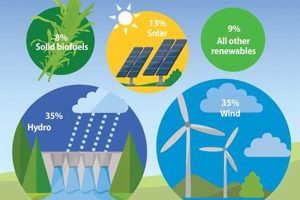
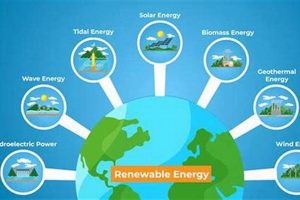
The shift from fossil fuels to sustainable power generation methods represents a fundamental change in how societies meet their energy demands. This evolution involves adopting resources such as solar, wind, hydro, geothermal, and biomass to replace or significantly reduce reliance on coal, oil, and natural gas. For instance, constructing large-scale solar farms or wind turbine arrays exemplifies this process.
This move is driven by the pressing need to mitigate climate change, improve air quality, and enhance energy security. Historically, dependence on finite resources has created geopolitical vulnerabilities and environmental degradation. Embracing cleaner alternatives offers a pathway to reduced carbon emissions, decreased pollution, and a more stable energy supply chain, fostering long-term economic and environmental resilience.
Therefore, understanding the various technologies, policy frameworks, and economic considerations associated with this shift is crucial. Subsequent discussions will delve into the specific challenges and opportunities involved in deploying these clean energy technologies, examining the role of government incentives, infrastructure development, and public acceptance in facilitating a successful and equitable shift towards a sustainable energy future.
Guidance for Renewable Energy Integration
The following provides essential guidelines for a structured and effective integration of sustainable energy options into existing systems.
Tip 1: Conduct a Comprehensive Energy Audit: A detailed assessment of current energy consumption patterns is crucial. This audit identifies areas of inefficiency and potential for renewable energy adoption. For example, analyzing electricity bills and conducting on-site inspections reveal energy usage profiles.
Tip 2: Prioritize Energy Efficiency Measures: Before large-scale deployment of renewable resources, implement energy-saving technologies. This reduces overall energy demand and maximizes the impact of renewable generation. Examples include upgrading insulation, installing energy-efficient lighting, and optimizing building management systems.
Tip 3: Evaluate Renewable Resource Availability: Assess the local availability and suitability of different renewable energy sources. Factors such as solar irradiance, wind speeds, geothermal potential, and biomass resources should inform technology selection. Consider conducting site-specific resource assessments for accurate data.
Tip 4: Develop a Phased Implementation Plan: A gradual and well-planned implementation strategy is essential for managing costs and minimizing disruption. Begin with smaller-scale projects and gradually expand as expertise and infrastructure develop. For instance, start by installing solar panels on a single building before expanding to a larger campus.
Tip 5: Secure Government Incentives and Funding: Explore available government programs, tax credits, and subsidies that support sustainable energy projects. These incentives can significantly reduce the financial burden of renewable energy investments. Research both national and local government offerings.
Tip 6: Engage Stakeholders and Build Public Support: Communicate the benefits of the energy shift to stakeholders, including employees, customers, and the local community. Addressing concerns and fostering understanding are key to achieving successful adoption. Holding public forums and sharing informational resources can build support.
Tip 7: Invest in Grid Modernization: A modernized electrical grid is essential for accommodating intermittent renewable energy sources. Upgrades such as smart grids, energy storage solutions, and improved transmission infrastructure enhance grid stability and reliability. Prioritize investments that enable bi-directional power flow and real-time monitoring.
These guidelines offer a structured approach for organizations and communities seeking to transition towards a sustainable energy future. By prioritizing energy efficiency, resource assessment, and phased implementation, entities can maximize the benefits and minimize the challenges associated with this essential shift.
Further analysis will delve into specific case studies and technological advancements shaping the future of the sustainable energy landscape.
1. Policy Frameworks

Policy frameworks serve as the foundational infrastructure for the widespread adoption of sustainable energy. The establishment of clear and consistent policies is essential to provide investors with the confidence needed to commit capital to renewable energy projects. Without supportive policies, the financial risks associated with emerging technologies and nascent markets often deter investment, hindering the progress of transitioning from traditional energy sources. For example, feed-in tariffs, which guarantee a set price for electricity generated from renewable sources, have spurred significant growth in solar and wind energy in countries like Germany and Spain by reducing financial uncertainty for project developers.
Furthermore, regulatory mechanisms such as renewable portfolio standards (RPS) mandate that a certain percentage of a utility’s electricity supply must come from sustainable sources. These standards create a guaranteed market for renewable energy, driving demand and incentivizing investment in new renewable energy facilities. California’s RPS, for instance, has been instrumental in making it one of the leading states in renewable energy deployment in the United States. Similarly, carbon pricing mechanisms, whether in the form of carbon taxes or cap-and-trade systems, increase the cost of fossil fuels, making renewable energy sources more economically competitive.
In conclusion, policy frameworks are indispensable for facilitating the transition to sustainable energy. By providing clear signals to the market, reducing investment risks, and creating a level playing field, these policies are crucial for driving the deployment of sustainable energy technologies and achieving long-term sustainability goals. The absence of such frameworks often results in stunted growth and continued reliance on unsustainable energy sources. Therefore, prioritizing the development and implementation of robust policy frameworks is paramount for accelerating the shift to a sustainable energy future.
2. Technological Innovation

Technological innovation is a cornerstone of the widespread shift towards sustainable energy systems. Advancements across various technological domains are essential to enhance the efficiency, affordability, and reliability of renewable energy technologies, thereby facilitating their broader adoption and integration into existing energy infrastructures.
- Advanced Materials for Solar Cells
The development of new materials, such as perovskites and organic semiconductors, promises to significantly increase the efficiency of solar cells while reducing manufacturing costs. For example, perovskite solar cells have demonstrated rapidly increasing power conversion efficiencies in laboratory settings, potentially surpassing traditional silicon-based solar cells. The successful commercialization of these materials could revolutionize solar energy deployment.
- High-Capacity Energy Storage Systems
Innovations in energy storage, including lithium-ion batteries, flow batteries, and pumped hydro storage, are crucial for addressing the intermittency challenges associated with wind and solar power. Tesla’s Megapack, for instance, provides grid-scale energy storage solutions, enabling the integration of larger amounts of renewable energy into the electricity grid. Furthermore, research into alternative battery chemistries seeks to improve energy density, lifespan, and safety.
- Smart Grid Technologies
Smart grid technologies, encompassing advanced sensors, communication networks, and data analytics, enable more efficient and resilient energy distribution. Smart grids facilitate real-time monitoring of energy flows, optimize grid operations, and accommodate the integration of distributed renewable energy resources. For example, advanced metering infrastructure (AMI) allows for two-way communication between utilities and consumers, enhancing demand response capabilities and improving grid stability.
- Improved Wind Turbine Designs
Ongoing advancements in wind turbine technology, such as taller towers, longer blades, and optimized aerodynamic designs, are increasing the power output and efficiency of wind turbines. The development of offshore wind farms, which harness stronger and more consistent winds, also contributes to greater energy generation. Companies like Vestas and Siemens Gamesa are continually innovating to enhance wind turbine performance and reduce the cost of wind energy.
These technological advancements are interconnected and collectively contribute to accelerating the energy transition. By improving the performance and reducing the costs of sustainable energy technologies, innovation makes sustainable energy more competitive with traditional fossil fuels. Sustained investment in research and development is vital to unlock further breakthroughs and ensure a successful and rapid shift to a sustainable energy future.
3. Infrastructure Investment

Infrastructure investment is inextricably linked to the successful shift toward sustainable energy. Without strategic allocation of capital to upgrade and expand existing infrastructure, the widespread adoption and integration of renewable resources face significant impediments. This investment spans diverse sectors, including electricity transmission and distribution networks, energy storage facilities, and transportation infrastructure for renewable energy components.
The deployment of distributed renewable energy sources, such as rooftop solar panels and community wind projects, requires modernized grid infrastructure capable of handling bidirectional power flows and accommodating intermittent generation. Legacy grid systems, designed for centralized power generation, often lack the capacity to efficiently manage distributed renewable energy. Investment in smart grid technologies, including advanced sensors, communication networks, and automated control systems, enhances grid flexibility and stability, enabling the seamless integration of renewable energy resources. For example, the development of the Tres Amigas SuperStation in New Mexico, a multi-terminal direct current hub, facilitates the transfer of renewable energy across different grid regions, improving reliability and reducing curtailment. Similarly, investments in energy storage solutions, such as battery storage systems and pumped hydro storage, mitigate the intermittency challenges of solar and wind power, ensuring a consistent and dependable energy supply.
Ultimately, infrastructure investment serves as a catalyst for the broader energy transformation. Strategic and targeted investments in grid modernization, energy storage, and transportation networks unlock the full potential of sustainable energy technologies, driving economic growth, enhancing energy security, and mitigating climate change. Insufficient investment in these areas risks hindering the shift to a sustainable energy future, perpetuating reliance on fossil fuels and exacerbating environmental challenges. Therefore, prioritizing infrastructure investment is paramount for achieving a successful and equitable shift towards a clean energy economy.
4. Economic Viability

The economic viability of sustainable energy sources is a critical determinant in the widespread adoption of these technologies. The long-term practicality of transitioning away from fossil fuels hinges on the ability of renewable energy to compete economically with conventional energy sources. A lack of economic competitiveness acts as a significant barrier, impeding investment and delaying the large-scale deployment of sustainable alternatives. Conversely, as the cost of renewable energy technologies decreases, their attractiveness to investors and consumers increases, accelerating the transition. For example, the dramatic reduction in the cost of solar photovoltaic (PV) systems over the past decade has made solar energy a viable option in many regions, driving significant growth in solar energy capacity.
Subsidies, tax incentives, and carbon pricing mechanisms play a vital role in enhancing the economic attractiveness of renewable energy. These measures can level the playing field by internalizing the environmental costs associated with fossil fuels and providing financial support for emerging renewable technologies. Government policies can stimulate private sector investment and innovation, driving down costs and improving the competitiveness of renewable energy. The implementation of feed-in tariffs in Germany, which guaranteed a fixed price for renewable energy, spurred significant growth in the renewable energy sector and demonstrated the effectiveness of policy in promoting economic viability. Furthermore, economies of scale, driven by increased demand and manufacturing capacity, contribute to cost reductions in renewable energy technologies. For instance, as wind turbine production volumes have increased, the cost per kilowatt-hour of wind energy has decreased, making wind power an increasingly competitive source of electricity.
Ultimately, the economic viability of renewable energy sources is a dynamic and evolving factor that depends on technological advancements, policy support, and market conditions. Sustained investment in research and development, combined with supportive government policies, is essential to ensure that renewable energy technologies become economically competitive with traditional energy sources. By driving down costs and enhancing the economic attractiveness of renewable energy, societies can accelerate the shift towards a sustainable and resilient energy future. The ongoing decline in the cost of solar and wind energy provides a compelling example of how technological innovation and economies of scale can transform the energy landscape, making the transition to sustainable energy both environmentally responsible and economically sound.
5. Environmental Impact

The environmental consequences associated with energy production and consumption necessitate a comprehensive assessment when considering alternative energy strategies. Reducing the adverse effects of traditional fossil fuels constitutes a primary driver for the global shift toward sustainable energy resources.
- Reduced Greenhouse Gas Emissions
Reliance on fossil fuels contributes significantly to greenhouse gas emissions, a major factor in climate change. Transitioning to renewable energy sources, such as solar, wind, and hydro power, substantially reduces these emissions. For example, replacing a coal-fired power plant with a solar farm demonstrably lowers the carbon footprint of electricity generation, mitigating the effects of global warming and associated environmental changes.
- Diminished Air and Water Pollution
Combustion of fossil fuels releases pollutants that degrade air and water quality. Renewable energy technologies generally produce fewer pollutants during operation. Wind and solar power, for instance, do not directly emit air pollutants, while hydroelectric power, though impacting river ecosystems, avoids the release of airborne contaminants associated with coal or natural gas. The implementation of renewable energy reduces respiratory illnesses and minimizes the acidification of water bodies.
- Land Use Considerations
While renewable energy technologies offer environmental benefits, they also present land-use challenges. Large-scale solar farms and wind turbine installations require significant land areas, potentially impacting natural habitats. Thoughtful planning and site selection are crucial to minimize ecological disruption. For example, locating solar farms on brownfield sites or utilizing existing infrastructure corridors for wind energy transmission can mitigate land-use impacts.
- Resource Depletion Mitigation
Fossil fuels are finite resources, and their extraction and processing have substantial environmental consequences, including habitat destruction and water contamination. Renewable energy sources, such as solar and wind, harness naturally replenishing resources, reducing dependence on finite reserves. While the manufacturing of renewable energy technologies requires materials, the long-term reliance on renewable sources diminishes resource depletion pressures.
The collective benefits of mitigating greenhouse gas emissions, reducing pollution, addressing land use concerns, and minimizing resource depletion underscore the imperative of transitioning to renewable energy sources. Although renewable technologies are not without environmental impacts, their overall effect is significantly less detrimental than that of fossil fuels, facilitating a more sustainable and environmentally responsible energy future.
6. Social Equity

Social equity plays a crucial role in the shift towards sustainable energy. The transition has the potential to exacerbate existing inequalities if not managed carefully. The deployment of renewable energy technologies, while environmentally beneficial, can disproportionately impact vulnerable communities. For example, the siting of large-scale renewable energy projects on or near indigenous lands without proper consultation can lead to displacement and loss of cultural heritage. Similarly, increased energy costs resulting from the transition, if not mitigated, can disproportionately burden low-income households, further widening the gap between the affluent and the disadvantaged.
Conversely, a well-planned transition can serve as a powerful tool for promoting social equity. Investment in renewable energy infrastructure in underserved communities can create jobs, stimulate local economies, and provide access to clean and affordable energy. Community solar projects, for instance, enable residents to collectively invest in and benefit from solar energy, regardless of their individual ability to afford rooftop solar panels. Energy efficiency programs targeted at low-income households can reduce energy consumption and lower utility bills, freeing up resources for other essential needs. Furthermore, ensuring that all communities have a voice in the planning and implementation of renewable energy projects fosters greater social acceptance and minimizes potential negative impacts. The success of renewable energy initiatives in countries such as Costa Rica and Uruguay demonstrates how equitable policies can drive sustainable development while improving the quality of life for all citizens.
In summary, integrating social equity considerations into the shift towards sustainable energy is not only ethical but also essential for its long-term success. A just transition requires proactive measures to address potential inequalities, promote community participation, and ensure that the benefits of renewable energy are shared equitably. By prioritizing social equity, societies can create a more sustainable and inclusive energy future, where everyone has access to clean, affordable, and reliable energy.
7. Energy Storage

The integration of energy storage systems is fundamentally linked to the successful adoption of renewable energy sources. Intermittency characterizes many renewable energy resources, such as solar and wind power, leading to fluctuations in energy generation based on weather conditions and time of day. Energy storage addresses this variability by storing excess energy produced during periods of high generation and releasing it during periods of low generation or high demand. This functionality is crucial for ensuring a consistent and reliable energy supply, a prerequisite for transitioning away from dispatchable fossil fuel-based power plants.
Batteries, pumped hydro storage, compressed air energy storage, and thermal energy storage represent various technologies employed to store energy. Lithium-ion batteries are increasingly prevalent for grid-scale and residential applications due to their relatively high energy density and rapid response times. Pumped hydro storage, while geographically limited, provides large-scale, long-duration energy storage capabilities. The deployment of these storage technologies enables renewable energy to serve as a baseload power source, replacing traditional fossil fuel plants. For instance, Californias ambitious renewable energy goals are contingent on substantial investments in energy storage to manage the variability of solar and wind power generation. Similarly, Australia is deploying large-scale battery storage systems to stabilize its grid and integrate more renewable energy following the closure of coal-fired power plants.
Therefore, energy storage is not merely an adjunct to renewable energy; it is an indispensable component. The effective deployment of storage technologies mitigates intermittency, enhances grid stability, and facilitates the displacement of fossil fuels. Challenges remain, including cost reduction, technological improvements to increase storage duration and efficiency, and the development of appropriate regulatory frameworks to incentivize storage deployment. Overcoming these challenges is vital to realizing a fully sustainable energy future.
Frequently Asked Questions
The following addresses prevalent inquiries concerning the ongoing energy transformation.
Question 1: What are the primary drivers necessitating the shift towards sustainable energy sources?
The imperative stems from a confluence of factors, notably the mitigation of climate change, enhancement of energy security, and curtailment of air and water pollution. Reliance on fossil fuels contributes significantly to greenhouse gas emissions, geopolitical instability, and environmental degradation, thereby necessitating a transition to cleaner, more secure energy options.
Question 2: What are the main obstacles hindering the widespread adoption of sustainable energy technologies?
Barriers include the intermittency of certain renewable sources, the necessity for substantial upfront capital investments, the requirement for modernized grid infrastructure, and the occasional presence of policy and regulatory uncertainties. Overcoming these obstacles requires technological innovation, strategic policy support, and concerted public and private sector collaboration.
Question 3: What role does energy storage play in enabling the transition?
Energy storage systems are critical for addressing the intermittent nature of several sustainable energy sources, such as solar and wind. These systems store surplus energy during periods of high production, releasing it during periods of peak demand or low generation, thus ensuring a consistent and reliable energy supply.
Question 4: How does the shift affect the cost of electricity for consumers?
The impact on electricity costs is complex and variable, influenced by factors such as government policies, technological advancements, and regional resource availability. Initial capital investments may be substantial, but long-term operational savings and reduced environmental externalities can, in many instances, result in more competitive energy prices. Subsidies and incentives play a significant role in moderating short-term cost increases.
Question 5: What measures can governments take to accelerate the energy transition?
Governments can implement various measures, including setting renewable portfolio standards, providing tax incentives and subsidies for sustainable energy projects, investing in grid modernization, establishing carbon pricing mechanisms, and supporting research and development of innovative energy technologies. Clear and consistent policy frameworks provide essential certainty for investors.
Question 6: What are the implications for employment and the workforce?
The transition has the potential to create new employment opportunities in the manufacturing, installation, and maintenance of sustainable energy technologies. However, it may also result in job losses in the fossil fuel industry. Retraining and workforce development programs are crucial for ensuring a just transition that supports affected workers and communities.
These frequently asked questions highlight key aspects of the ongoing energy transformation. Understanding these facets aids in navigating the complexities of this crucial shift.
Further exploration of relevant case studies will be discussed next.
Conclusion
The preceding analysis underscores the complex and multifaceted nature of transitioning to renewable energy sources. From policy frameworks and technological innovations to infrastructure investments, economic viability, environmental impact, social equity, and energy storage, each element plays a critical role in the overall process. Successfully navigating this transition requires a holistic approach that considers both the technical and societal dimensions of energy production and consumption.
The imperative for action remains clear. The future energy landscape demands a concerted effort to mitigate climate change, enhance energy security, and promote sustainable development. Continued investment in research, development, and deployment of renewable energy technologies, coupled with supportive policy frameworks, is essential for securing a cleaner, more resilient energy future for generations to come. A commitment to thoughtful planning and equitable implementation will ultimately determine the success of this crucial undertaking.