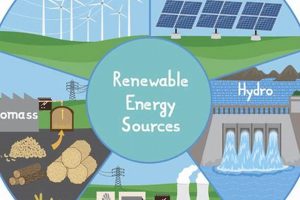
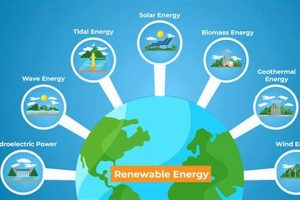
Various forms of power underpin modern society, driving industries, illuminating homes, and enabling transportation. These power sources range from naturally replenishing options to finite reserves extracted from the earth. Examples include the harnessing of solar radiation through photovoltaic cells, the kinetic potential of flowing water used in hydroelectric generation, the geothermal heat rising from the Earth’s core, and the combustion of fossil fuels like coal and natural gas to produce electricity.
The availability and utilization of these resources are pivotal for economic growth and societal advancement. Renewable forms offer long-term sustainability and reduced environmental impact, mitigating concerns about climate change and resource depletion. Historically, dependence on easily accessible but environmentally detrimental sources has led to pollution and ecological imbalance. A transition toward cleaner, more sustainable alternatives presents significant opportunities for innovation and job creation while ensuring a more resilient and equitable energy future.
The subsequent sections will delve into specific categories of these power generating methods, examining their operational principles, environmental footprints, and economic viability. A comprehensive overview of both established technologies and emerging advancements will be provided. Further discussion will explore the challenges and opportunities associated with integrating these diverse options into the global power grid.
Optimizing the Selection and Implementation of Power Generation Methods
Careful consideration of various factors is crucial when evaluating and adopting different approaches to power generation. Implementing these strategies requires a thorough understanding of technical feasibility, economic viability, and environmental impact.
Tip 1: Conduct a Comprehensive Resource Assessment: Before investing in any power generation technology, meticulously assess the availability and quality of the resource. For solar, analyze insolation data. For wind, evaluate wind speed and turbulence patterns. For geothermal, characterize subsurface temperature gradients and permeability.
Tip 2: Prioritize Lifecycle Cost Analysis: Evaluate the total cost of ownership, encompassing initial capital expenditure, operating expenses, maintenance costs, and decommissioning costs. A seemingly inexpensive technology may prove costly in the long run due to high maintenance requirements or limited lifespan.
Tip 3: Integrate Grid Stability Considerations: Account for the intermittent nature of certain generation methods, such as solar and wind. Implement energy storage solutions, demand-side management strategies, and advanced grid control technologies to maintain system reliability.
Tip 4: Ensure Regulatory Compliance and Permitting: Navigate the complex landscape of environmental regulations and permitting requirements. Engage with relevant government agencies early in the planning process to avoid costly delays and ensure project compliance.
Tip 5: Foster Community Engagement: Engage with local communities to address concerns and build support for proposed power generation projects. Transparent communication and community benefits agreements can mitigate opposition and facilitate project approval.
Tip 6: Invest in Research and Development: Support research and development efforts aimed at improving the efficiency, reliability, and affordability of innovative energy technologies. Technological advancements can unlock new opportunities for sustainable power generation.
Tip 7: Diversify the Energy Portfolio: Avoid over-reliance on any single generating method. A diversified energy portfolio enhances resilience to disruptions, reduces price volatility, and maximizes the utilization of available resources.
Careful adherence to these guidelines facilitates the selection and deployment of effective, sustainable, and economically sound solutions. The ultimate goal is to secure a reliable and environmentally responsible supply for future generations.
The subsequent sections will offer insights into future directions and the evolving role of each methods in addressing global energy challenges.
1. Resource Availability

The accessibility and abundance of naturally occurring inputs dictate the feasibility and scalability of various power generation methods. This availability profoundly shapes the economic viability, geographical distribution, and environmental consequences associated with harnessing different sources. The presence or absence of these inputs thus forms a fundamental constraint on the development and deployment of power generating infrastructure.
For instance, regions with high solar irradiance are inherently more conducive to solar photovoltaic generation. Similarly, areas with significant geothermal gradients offer the potential for geothermal power plants. Conversely, the absence of sufficient wind resources precludes large-scale wind farm development. Even the availability of water resources plays a vital role. Hydroelectric facilities depend on consistent river flows, while thermoelectric plants often rely on water for cooling. The uneven geographical distribution of fossil fuels underscores the geopolitical implications tied to those forms. Therefore, an accurate assessment of the size, quality, and accessibility of each fuel is crucial in determining energy policy and infrastructure investment.
Ultimately, a comprehensive understanding of resource availability is paramount for making informed decisions about power generation. Factors like resource depletion, environmental impact, and geopolitical considerations are intertwined with this fundamental constraint. Therefore, policies aimed at diversifying energy portfolios and promoting sustainable power solutions must inherently account for these limitations and seek to leverage locally abundant, renewable resources where possible, ensuring a stable and reliable supply of electricity.
2. Environmental Footprint

Power generation inevitably leaves an environmental footprint, varying significantly depending on the source. The extraction, processing, and utilization of fuels give rise to environmental consequences, ranging from greenhouse gas emissions and air pollution to land degradation and water contamination. Understanding these consequences is critical for informed decision-making about generating alternatives. For instance, coal-fired power plants are associated with high carbon dioxide emissions, contributing to climate change, and particulate matter emissions, impacting air quality and human health. Conversely, nuclear power avoids direct greenhouse gas emissions but presents challenges related to radioactive waste disposal. Renewable options, while generally less environmentally damaging, also have footprints. Hydroelectric dams alter river ecosystems, wind turbines can impact bird populations, and solar farms require land use, which potentially alters habitats.
Quantifying the environmental footprint of various options requires lifecycle assessments, considering impacts across the entire value chain, from resource extraction to decommissioning. This analysis informs the development of mitigation strategies to reduce negative environmental consequences. Carbon capture technologies, for example, aim to reduce emissions from fossil fuel power plants. Improved waste management practices seek to minimize the environmental impact of nuclear power. Sustainable land management and habitat restoration efforts can mitigate the environmental impact of renewable power installations. Government regulations, such as emission standards and renewable energy mandates, play a vital role in promoting the adoption of environmentally sound practices within the energy sector. Furthermore, technological innovations, like advanced battery storage and smart grids, can enable greater integration of intermittent renewables, reducing reliance on fossil fuels and their environmental impacts.
Ultimately, the environmental footprint is an unavoidable consideration in evaluating diverse options. Minimizing this footprint requires a holistic approach encompassing technological advancements, policy interventions, and informed decision-making. Prioritizing options with lower impacts while mitigating the negative consequences of existing infrastructure is crucial. The transition to a more sustainable and environmentally responsible energy system demands a comprehensive understanding of the environmental costs associated with different forms and a commitment to reducing those burdens on the planet.
3. Economic Viability

The economic viability of various energy sources serves as a critical determinant in their widespread adoption and integration into the power grid. Cost-effectiveness, return on investment, and long-term affordability are primary considerations for investors, policymakers, and consumers alike when evaluating power generating alternatives.
- Capital Costs and Infrastructure Development
The initial investment required to construct a power plant varies significantly across different forms. Solar and wind facilities necessitate substantial upfront capital for equipment, land acquisition, and grid connections. Nuclear power plants involve particularly high construction costs due to stringent safety requirements and complex engineering. Conversely, natural gas plants generally have lower initial capital costs, contributing to their historical popularity. These differences in capital intensity influence the financial risk associated with energy projects and impact the ultimate price of electricity.
- Operating and Maintenance Expenses
Ongoing expenses related to fuel, labor, and maintenance exert a substantial influence on the long-term economics of generating facilities. Fossil fuel plants incur continuous fuel costs, subject to market price fluctuations. Nuclear plants have relatively low fuel costs but high maintenance costs associated with radiation safety and waste management. Renewable sources like solar and wind have minimal fuel costs but necessitate expenditures for maintenance of equipment and components. These operating expenses contribute to the overall levelized cost of energy (LCOE) and affect the competitiveness of these options.
- Levelized Cost of Energy (LCOE)
The LCOE serves as a standardized metric for comparing the economic competitiveness of power generating methods. It represents the present value of the total cost of building and operating a power plant over its lifetime, divided by the total electricity generated. LCOE incorporates capital costs, operating expenses, fuel costs, and decommissioning costs, providing a comprehensive measure of economic attractiveness. Renewable energy technologies have experienced significant LCOE reductions in recent years, making them increasingly competitive with traditional fossil fuel plants. However, LCOE does not account for factors like grid integration costs and intermittency, which can impact the overall system cost.
- Government Incentives and Subsidies
Government policies, such as tax credits, subsidies, and feed-in tariffs, can significantly influence the economic viability of various fuel sources. These incentives reduce the financial risk for investors and accelerate the deployment of specific technologies. Renewable energy sources have benefited from substantial government support in many countries, driving their growth and reducing their costs. Conversely, fossil fuel subsidies have historically distorted energy markets, making them artificially cheaper than alternatives. The removal or reform of fossil fuel subsidies can create a more level playing field and promote the adoption of sustainable options.
The economic viability factors intricately intertwine with technical feasibility, environmental considerations, and regulatory frameworks. A comprehensive assessment of these interconnected elements is essential for informed decision-making in the selection and deployment of diverse power alternatives.
4. Technological Maturity

The degree of technological advancement significantly impacts the deployment, reliability, and economic feasibility of various power generating resources. Maturity reflects the level of refinement, operational experience, and established supply chains associated with a specific technology, influencing its risk profile and potential for widespread adoption. Younger technologies often entail higher risks, whereas more proven technologies provide greater certainty.
- Established Technologies: Fossil Fuels and Conventional Nuclear Fission
Fossil fuel-based power generation, including coal, natural gas, and oil, represents a technologically mature sector. Decades of operational experience, coupled with well-established supply chains and regulatory frameworks, contribute to its widespread use. Similarly, conventional nuclear fission reactors, while facing public perception challenges, benefit from decades of operational history and established engineering practices. Maturity in these areas implies relatively lower technological risk but does not negate associated environmental concerns or long-term sustainability challenges.
- Commercially Available Renewables: Solar Photovoltaics and Wind Power
Solar photovoltaic (PV) and wind power technologies have achieved significant commercial viability and are considered relatively mature renewable options. Continuous advancements in materials science, manufacturing processes, and grid integration techniques have driven down costs and improved performance. Extensive field experience informs best practices in site selection, turbine design, and operational optimization. However, challenges remain in addressing intermittency and ensuring grid stability as these sources constitute a larger share of the energy mix.
- Emerging Technologies: Advanced Nuclear Reactors and Carbon Capture
Advanced nuclear reactor designs, including small modular reactors (SMRs) and Generation IV reactors, are in various stages of development, aiming to improve safety, efficiency, and waste management compared to conventional designs. Carbon capture, utilization, and storage (CCUS) technologies seek to mitigate greenhouse gas emissions from fossil fuel power plants and industrial facilities. While these technologies hold significant potential, they are still considered emerging, requiring further demonstration, cost reductions, and regulatory approvals before large-scale deployment can occur.
- Nascent Technologies: Fusion Power and Enhanced Geothermal Systems
Fusion power represents a long-term aspirational goal, promising a clean and abundant energy source based on the fusion of light atomic nuclei. Enhanced geothermal systems (EGS) aim to unlock geothermal resources in regions lacking naturally occurring hot rock formations. These technologies are in the early stages of research and development, facing significant technical and economic challenges. While their potential impact is substantial, widespread deployment remains decades away, contingent on scientific breakthroughs and substantial investment.
Technological maturity serves as a key factor influencing the investment decisions, policy choices, and deployment strategies associated with various generating alternatives. Balancing the need for innovation with the imperative for reliability and affordability requires a nuanced assessment of the technological readiness level of each option, guiding the evolution of the energy landscape.
5. Grid Integration

Grid integration represents a pivotal challenge and opportunity in the transition towards a diversified and sustainable electrical power system. The ability to seamlessly incorporate power from various origins, each with unique characteristics and operational profiles, is essential for maintaining grid stability, reliability, and economic efficiency. Effective integration strategies necessitate advancements in infrastructure, control systems, and regulatory frameworks to accommodate the evolving landscape of generation.
- Intermittency Management
Renewable sources, such as solar and wind, introduce inherent variability into electricity supply due to their dependence on weather conditions. Integrating these intermittent sources requires sophisticated forecasting tools, flexible generation resources, and advanced energy storage solutions to balance supply and demand. For example, battery storage systems can smooth out fluctuations in solar output, while fast-ramping natural gas plants can provide backup power during periods of low wind or solar generation. Effective intermittency management is crucial for maintaining grid stability and avoiding power outages as the share of renewable sources increases.
- Grid Modernization and Smart Grids
Traditional electricity grids are not designed to handle the bidirectional power flows and distributed generation associated with modern power systems. Grid modernization efforts involve upgrading transmission and distribution infrastructure, deploying smart grid technologies, and implementing advanced control systems. Smart grids incorporate sensors, communication networks, and data analytics to monitor grid conditions in real-time, optimize power flows, and enable demand response programs. These technologies enhance grid resilience, improve efficiency, and facilitate the integration of distributed generation sources, such as rooftop solar panels and community wind farms.
- Transmission Capacity and Congestion
The geographical distribution of generating resources often does not align with population centers and electricity demand. Integrating remote sources, such as large-scale wind farms in rural areas, requires expanding transmission capacity to transport power to load centers. Transmission bottlenecks and congestion can limit the ability to deliver electricity from distant sources, leading to curtailment of renewable generation and increased costs. Investments in new transmission lines, high-voltage direct current (HVDC) systems, and grid-enhancing technologies can alleviate congestion and improve the utilization of available power resources.
- Regulatory Frameworks and Market Design
The regulatory frameworks governing electricity markets play a critical role in facilitating grid integration. Market designs must be adapted to accommodate the unique characteristics of different generating alternatives, incentivize investments in grid infrastructure, and promote competition. Policies such as renewable energy standards, feed-in tariffs, and carbon pricing mechanisms can influence the deployment of sources and their integration into the grid. Streamlined permitting processes and clear regulatory guidelines are essential for attracting investment in grid modernization projects and facilitating the interconnection of power plants.
The challenges and opportunities associated with grid integration are central to the transition towards a cleaner, more resilient, and more affordable electricity system. Addressing these challenges requires a multifaceted approach encompassing technological innovation, infrastructure investments, and policy reforms. Successfully integrating this range requires a holistic strategy that recognizes the interconnectedness of the electricity system and prioritizes solutions that benefit all stakeholders.
6. Energy Security

Energy security, a paramount concern for nations globally, fundamentally hinges on the availability of reliable, affordable, and sustainable power supplies. The diversification of energy sources stands as a cornerstone of bolstering energy security, mitigating vulnerabilities associated with over-reliance on single energy commodities or geopolitical instability.
- Diversification of Supply
Diversifying the array of energy options reduces dependence on any single fuel or provider. Reliance on a limited number of sources exposes nations to price volatility, supply disruptions, and geopolitical pressures. A portfolio encompassing fossil fuels, nuclear power, and renewable options enhances resilience. Norway, for example, utilizes hydropower, oil, and natural gas to meet domestic needs and export energy, demonstrating a diversified approach.
- Domestic Resource Development
Harnessing indigenous power resources enhances energy independence and reduces reliance on foreign imports. The development of domestic oil and gas reserves, coupled with investments in renewable sources like solar, wind, and geothermal, strengthens energy security. The United States’ shale gas revolution exemplifies domestic resource development impacting energy security by reducing dependence on foreign oil.
- Infrastructure Resilience
Robust and resilient energy infrastructure is critical for ensuring the reliable delivery of power. Investments in transmission grids, pipelines, and storage facilities minimize the risk of disruptions caused by natural disasters, cyberattacks, or terrorist activities. Germany’s investments in grid modernization to support renewable integration illustrate infrastructure resilience efforts contributing to security.
- Geopolitical Risk Mitigation
Strategically diversifying energy trade partners reduces vulnerability to geopolitical risks. Developing relationships with multiple suppliers ensures access to critical supplies even in the event of political instability or international conflicts. The European Union’s efforts to diversify natural gas suppliers, reducing dependence on Russia, exemplify geopolitical risk mitigation strategies impacting energy security.
The multifaceted relationship between energy security and power generating methods necessitates a comprehensive approach encompassing supply diversification, domestic resource development, infrastructure resilience, and geopolitical risk mitigation. By strategically managing their energy portfolios, nations can enhance their resilience to disruptions, promote economic stability, and safeguard their national interests. Achieving true energy security demands a long-term commitment to sustainable practices and a balanced energy mix.
Frequently Asked Questions
The following questions address common inquiries regarding the selection, implementation, and impact of employing a variety of methods to generate power.
Question 1: Why is diversification of generating options considered important?
Reliance on a limited number of sources creates vulnerabilities to price volatility, supply disruptions, and geopolitical instability. A diversified portfolio enhances energy security and economic resilience.
Question 2: What factors contribute to the environmental footprint of a particular option?
Extraction, processing, transportation, and combustion contribute to the environmental burden. Greenhouse gas emissions, air pollution, water contamination, and land use considerations all factor into this assessment.
Question 3: How does technological maturity influence the deployment of a specific alternative?
More established technologies offer greater certainty in terms of reliability, cost, and performance. Emerging technologies present higher risks but may offer the potential for significant improvements in efficiency and sustainability.
Question 4: What challenges arise when integrating intermittent sources into the electricity grid?
Managing variability and ensuring grid stability are primary challenges. Advanced forecasting tools, flexible generation resources, and energy storage systems are necessary to address intermittency issues.
Question 5: How does resource availability impact the selection of generating technologies?
The presence and accessibility of inputs such as solar irradiance, wind speeds, geothermal gradients, and fossil fuel reserves dictate the feasibility and scalability of various power generating methods.
Question 6: What role do government policies play in shaping the power landscape?
Government incentives, regulations, and market designs significantly influence the deployment of various fuel sources, incentivize investments in infrastructure, and promote competition. Streamlined permitting processes and clear regulatory guidelines are essential for attracting investment.
In conclusion, a comprehensive evaluation of technical feasibility, economic viability, and environmental impact, combined with a strategic approach to energy planning, is essential for navigating the complexities of selecting generating methods.
The next section will explore the future outlook for specific technologies and their potential contributions to addressing global energy challenges.
Conclusion
This exploration has illuminated the multifaceted considerations surrounding the selection and implementation of different kinds of energy sources. Resource availability, environmental impact, economic viability, technological maturity, grid integration challenges, and energy security concerns each exert a profound influence on decision-making within the power sector. The analysis underscores the complexity of balancing competing priorities, navigating technological limitations, and addressing the pressing need for sustainable energy solutions.
The future demands a strategic and informed approach to power generation, one that prioritizes innovation, responsible resource management, and long-term sustainability. Continued research, policy development, and infrastructure investments are essential to securing a reliable, affordable, and environmentally sound energy future. The transition towards a diversified portfolio is not merely a technological challenge but a societal imperative, demanding collaboration and a commitment to safeguarding resources for generations to come.