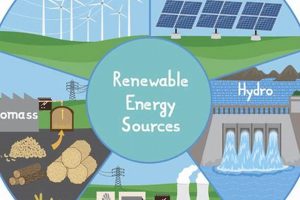
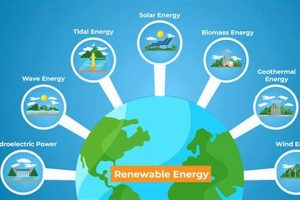
Determining the single most critical sustainable power generation method presents a complex challenge, as each possesses unique strengths and addresses specific needs within varied geographical and infrastructural contexts. These resources harness naturally replenishing flows, contrasting sharply with finite fossil fuels. Solar irradiation, wind currents, geothermal gradients, and flowing water are examples of these persistent energy streams.
The significance of these alternatives stems from their potential to mitigate climate change by reducing greenhouse gas emissions and enhancing energy security through diversified supply chains. Historically, reliance on fossil fuels has driven economic growth, but the environmental consequences necessitate a fundamental shift. The adoption of these resources fosters technological innovation, creates new employment opportunities, and promotes sustainable development globally. Their deployment can also empower local communities, reducing dependence on centralized power grids.
This article will explore the diverse array of sustainable power generation options, examine their respective advantages and limitations, and analyze the factors influencing their deployment and effectiveness across different regions and applications. It will delve into the technological advancements driving efficiency gains, the economic considerations shaping investment decisions, and the policy frameworks facilitating widespread adoption.
Guiding Principles for Renewable Energy Prioritization
A strategic approach is essential when evaluating and implementing renewable energy solutions to ensure optimal resource allocation and environmental impact.
Tip 1: Conduct a Comprehensive Resource Assessment: Thoroughly evaluate the available renewable resources (solar, wind, hydro, geothermal, biomass) within a specific geographic area. This assessment should quantify the resource potential and identify any geographical or environmental constraints. For instance, solar irradiance data is crucial for determining the feasibility of photovoltaic installations, while wind speed measurements are essential for wind farm development.
Tip 2: Consider Grid Infrastructure Compatibility: Assess the existing electrical grid’s capacity to integrate intermittent renewable energy sources like solar and wind. Upgrades to transmission lines, substations, and energy storage systems may be necessary to maintain grid stability. For example, regions with limited grid capacity may prioritize distributed generation solutions to reduce transmission losses and enhance local resilience.
Tip 3: Evaluate Environmental Impact Holistically: While renewable energy generally has a lower environmental footprint than fossil fuels, a comprehensive environmental impact assessment is crucial. Consider factors like land use changes, water consumption, habitat disruption, and lifecycle emissions from manufacturing and disposal. For instance, large-scale hydropower projects can have significant impacts on river ecosystems, requiring careful mitigation strategies.
Tip 4: Prioritize Energy Efficiency Measures: Before investing heavily in renewable energy generation, implement energy efficiency measures to reduce overall energy demand. Building insulation, efficient appliances, and smart grid technologies can significantly decrease energy consumption, reducing the need for extensive renewable energy infrastructure. For example, implementing energy-efficient building codes can substantially lower the energy demand of new constructions.
Tip 5: Analyze Lifecycle Costs and Economic Feasibility: Conduct a thorough lifecycle cost analysis, considering capital costs, operating expenses, maintenance requirements, and decommissioning costs. Compare the lifecycle costs of different renewable energy technologies to determine the most economically viable options. Consider factors like carbon pricing mechanisms and government incentives that can improve the economic competitiveness of renewable energy projects. For example, government subsidies can significantly reduce the upfront costs of solar panel installations, making them more attractive to homeowners and businesses.
Tip 6: Promote Technological Innovation and Research & Development: Support ongoing research and development efforts to improve the efficiency, reliability, and cost-effectiveness of renewable energy technologies. Encourage innovation in areas such as energy storage, smart grids, and advanced materials. Investment in research and development is crucial for unlocking the full potential of renewable energy and addressing the challenges of intermittency and grid integration.
These guidelines provide a framework for informed decision-making, promoting the effective utilization of sustainable resources and their integration into energy systems.
The subsequent sections will delve into specific case studies and policy recommendations, further illustrating the importance of strategic planning in the renewable energy sector.
1. Global Resource Availability

Global resource availability forms a foundational consideration when evaluating the potential and impact of any renewable energy source. The inherent capacity of a power generation method to be deployed across diverse geographical locations, irrespective of localized resource limitations, directly influences its overall significance. For example, solar irradiance, although variable depending on latitude and atmospheric conditions, is present across virtually all regions of the Earth, making solar photovoltaic technology a broadly applicable solution. Conversely, geothermal energy, reliant on specific geological formations with high thermal gradients, is geographically constrained, limiting its universal applicability. Therefore, a resource’s ubiquity dictates its capacity to contribute substantially to global energy needs.
The practical significance of understanding global resource availability lies in its influence on strategic energy planning and infrastructure investment. Nations with abundant sunlight, for instance, can prioritize solar energy development, potentially achieving energy independence and reducing reliance on imported fossil fuels. Similarly, regions with consistent wind patterns can leverage wind energy to diversify their energy mix and enhance grid stability. These strategic decisions necessitate accurate resource mapping and comprehensive assessments of the technical and economic feasibility of exploiting available resources. The absence of reliable data on resource availability can lead to misallocation of resources and inefficient energy policies.
In conclusion, global resource availability acts as a crucial determinant of a renewable energy source’s overarching importance. The wider the geographic distribution and the more readily accessible a renewable resource is, the greater its potential to contribute to the global energy transition and mitigate climate change. Challenges remain in accurately quantifying and forecasting resource availability under changing climatic conditions; however, prioritizing resource assessment is essential for informed decision-making and effective energy policy implementation.
2. Energy Security Enhancement

Energy security enhancement constitutes a critical driver in the transition toward sustainable power generation. Reliance on geographically concentrated and politically volatile fossil fuel reserves presents inherent vulnerabilities to national economies and infrastructure. Diversifying energy sources through the integration of sustainable alternatives directly mitigates these risks. The most influential renewable energy source, therefore, is one capable of widespread deployment, thereby reducing dependence on any single fuel or region.
The expansion of distributed renewable generation capacity, such as rooftop solar photovoltaic systems and community wind farms, strengthens energy security by decentralizing power production. This reduces vulnerability to large-scale disruptions caused by natural disasters, cyberattacks, or geopolitical events. For instance, Germany’s significant investment in solar and wind power has decreased its reliance on imported natural gas, bolstering its energy independence. Similarly, island nations are increasingly adopting renewable energy solutions to reduce their dependence on costly and environmentally damaging diesel fuel imports.
Ultimately, the contribution of sustainable power generation to energy security is multifaceted. It encompasses resource diversification, enhanced grid resilience, and reduced exposure to price volatility in global fossil fuel markets. The most impactful renewable energy source from a security perspective is the one that maximizes these benefits while minimizing environmental impact and economic costs. Prioritization of resources based on localized availability and suitability is crucial for achieving sustainable and secure energy systems.
3. Environmental Impact Reduction
Environmental impact reduction is a paramount consideration when evaluating different renewable energy sources. Its importance stems from the urgent need to mitigate climate change, preserve ecosystems, and safeguard human health. The renewable energy source that most effectively minimizes environmental harm is arguably the most critical in the long-term.
- Lower Greenhouse Gas Emissions
The primary advantage of renewable energy sources lies in their significantly lower greenhouse gas emissions compared to fossil fuels. Solar, wind, hydro, and geothermal power plants, during operation, produce minimal or no carbon dioxide, methane, or other greenhouse gases. This reduces the accumulation of these gases in the atmosphere, thereby mitigating global warming and its associated consequences, such as sea-level rise, extreme weather events, and disruptions to agriculture.
- Reduced Air and Water Pollution
Fossil fuel combustion releases harmful air pollutants, including sulfur dioxide, nitrogen oxides, and particulate matter, which contribute to respiratory illnesses and other health problems. Renewable energy sources, with the exception of some biomass technologies, produce significantly less air pollution. Furthermore, they typically require less water for operation than conventional power plants, conserving vital water resources and reducing the risk of water pollution associated with coal mining, oil drilling, and nuclear energy.
- Minimized Land Use Impacts
While all energy sources have land use implications, renewable energy technologies vary significantly in their land footprint. Large-scale hydropower projects can inundate vast areas of land, displacing communities and disrupting ecosystems. Conversely, solar photovoltaic arrays can be installed on rooftops or repurposed brownfield sites, minimizing land use impacts. Wind farms, while requiring large land areas, can often coexist with agriculture or grazing. Careful planning and site selection are essential to minimize the land use footprint of renewable energy projects and avoid conflicts with other land uses.
- Sustainable Resource Management
Renewable energy sources, by definition, rely on naturally replenishing resources, such as sunlight, wind, and flowing water. Sustainable management of these resources is crucial to ensure their long-term availability and minimize environmental impacts. For example, maintaining minimum stream flows in rivers is essential to protect aquatic ecosystems when developing hydropower projects. Similarly, promoting responsible forestry practices is crucial for sustainable biomass energy production. The renewable energy source that promotes the most sustainable resource management practices is likely to have the most enduring positive environmental impact.
The diverse range of environmental impacts associated with different renewable energy sources necessitates a comprehensive assessment considering all relevant factors. The ideal choice balances greenhouse gas emission reductions with other environmental considerations, such as air and water quality, land use, and resource sustainability. Ultimately, the renewable energy source that minimizes the overall environmental burden while meeting energy needs is of the highest importance.
4. Economic Viability Factors

The economic viability of a renewable energy source is inextricably linked to its overall importance. A technology demonstrating strong environmental benefits and resource availability is less impactful if it remains economically uncompetitive. Therefore, the most strategically significant renewable option is one that achieves economic parity or superiority compared to conventional energy sources, thereby accelerating its adoption and contribution to the global energy transition. Levelized cost of energy (LCOE), initial capital investment, operational and maintenance expenses, and integration costs all influence the economic attractiveness of any specific renewable technology.
The trajectory of solar photovoltaic (PV) technology provides a compelling example. Initially, high manufacturing costs hindered its widespread deployment. However, sustained technological advancements, economies of scale in production, and supportive government policies have dramatically reduced the LCOE of solar PV, making it cost-competitive, and in some cases, cheaper than fossil fuel-based generation in numerous regions. This enhanced economic viability has driven exponential growth in solar PV capacity worldwide, significantly contributing to greenhouse gas emission reductions and energy security enhancement. Conversely, certain geothermal energy projects, despite their potential for continuous baseload power, may face high upfront capital costs associated with drilling and resource exploration, limiting their economic feasibility and broader adoption.
The long-term importance of a renewable energy source is therefore dependent on its ability to achieve and maintain economic competitiveness. Continuous innovation, optimized supply chains, strategic policy support, and efficient grid integration are essential to drive down costs and unlock the full potential of renewable energy technologies. Addressing the economic viability factors is not merely a financial consideration; it is a critical pathway to enabling the widespread adoption of sustainable energy solutions and achieving global climate goals. Furthermore, understanding the economic landscape of each renewable option allows for a pragmatic and effective allocation of resources, maximizing the impact of investments in a sustainable energy future.
5. Technological Advancement Imperatives

Sustained technological advancement is paramount in determining the ultimate importance of any renewable energy source. Progress in materials science, engineering, and grid management directly impacts the efficiency, reliability, and economic viability of these technologies, thereby influencing their capacity to contribute to global energy demand and decarbonization efforts. The renewable energy source that benefits most from ongoing innovation and achieves substantial performance improvements is poised to become the most consequential.
- Enhanced Energy Conversion Efficiency
Improvements in energy conversion efficiency directly translate to greater power output from a given resource input. For solar photovoltaic (PV) technology, advancements in solar cell materials and design have led to steadily increasing efficiencies, allowing for more electricity generation from the same surface area. Similarly, advancements in wind turbine blade aerodynamics and generator technology have enhanced the efficiency of wind energy conversion. These improvements reduce the levelized cost of energy and improve the competitiveness of renewable sources compared to fossil fuels. Technologies that demonstrate a steeper trajectory of efficiency gains are inherently more valuable.
- Improved Energy Storage Solutions
The intermittent nature of many renewable energy sources, such as solar and wind, necessitates the development of effective energy storage solutions. Advancements in battery technology, pumped hydro storage, and other storage methods are crucial for ensuring a reliable and dispatchable supply of renewable energy. Improved energy storage reduces the variability of renewable sources, allowing them to provide baseload power and contribute to grid stability. The integration of advanced storage technologies is, therefore, a critical factor in evaluating the potential of various renewable energy options.
- Smart Grid Integration Technologies
The seamless integration of renewable energy sources into the existing electrical grid requires sophisticated grid management technologies. Smart grids, equipped with advanced sensors, controls, and communication systems, enable dynamic balancing of supply and demand, optimizing the flow of electricity and enhancing grid stability. These technologies facilitate the integration of distributed generation resources, such as rooftop solar PV systems, and improve the overall resilience of the grid. The development and deployment of smart grid technologies are essential for maximizing the potential of renewable energy and minimizing curtailment.
- Advanced Materials and Manufacturing Processes
Innovation in materials science and manufacturing processes is driving down the cost and improving the performance of renewable energy technologies. The development of lighter and stronger materials for wind turbine blades allows for the construction of larger and more efficient turbines. Similarly, advancements in thin-film solar cell technology are reducing the manufacturing costs and material requirements for solar PV panels. The continued development of advanced materials and manufacturing processes is crucial for reducing the upfront costs and improving the lifecycle performance of renewable energy systems.
In conclusion, the imperatives of technological advancement are inextricably linked to determining the most important renewable energy source. The technologies demonstrating the greatest potential for sustained innovation, efficiency improvements, cost reductions, and grid integration capabilities are poised to play the most significant role in shaping a sustainable energy future. Prioritizing research and development efforts in these areas is crucial for accelerating the global energy transition and achieving climate goals.
Frequently Asked Questions
This section addresses common inquiries regarding the comparative importance of different renewable energy technologies, providing factual answers to facilitate a deeper understanding of the subject.
Question 1: What metrics are used to assess the importance of a renewable energy source?
Assessment criteria include, but are not limited to, global resource availability, lifecycle greenhouse gas emissions, levelized cost of energy (LCOE), energy security implications, and technological maturity.
Question 2: Does geographic location significantly impact the viability of different renewable energy technologies?
Yes, geographical factors heavily influence resource availability and, consequently, the economic feasibility of various technologies. For example, solar energy is more suitable for regions with high solar irradiance, while geothermal energy is contingent on specific geological formations.
Question 3: How does energy storage affect the overall importance of intermittent renewable energy sources like solar and wind?
Effective energy storage solutions are critical for mitigating the intermittency of solar and wind power, enabling them to provide a more reliable and dispatchable energy supply. The advancement and deployment of energy storage technologies enhance the overall value and importance of these variable renewable sources.
Question 4: What role do government policies play in determining the prominence of different renewable energy technologies?
Government policies, such as subsidies, tax incentives, and mandates, can significantly influence the economic competitiveness and market penetration of renewable energy sources. Supportive policies can accelerate the adoption of promising technologies, while unfavorable policies can hinder their progress.
Question 5: Is there a single renewable energy source that can meet all global energy needs?
It is unlikely that a single renewable energy source can meet all global energy needs due to resource constraints, technological limitations, and regional variations in energy demand and infrastructure. A diversified portfolio of renewable energy technologies, tailored to specific local conditions, is more likely to provide a sustainable and reliable energy supply.
Question 6: How do environmental impacts beyond greenhouse gas emissions factor into the importance of a renewable energy source?
Environmental impacts beyond greenhouse gas emissions, such as land use changes, water consumption, habitat disruption, and resource depletion, are crucial considerations. A holistic environmental assessment is necessary to determine the true sustainability and overall importance of a renewable energy technology.
In summary, the importance of a renewable energy source is a multifaceted concept, influenced by technical, economic, environmental, and policy factors. A comprehensive evaluation is essential to identify the most appropriate solutions for specific contexts and ensure a sustainable energy future.
The next section will explore the future trends shaping the renewable energy landscape.
Concluding Assessment of Renewable Energy Prioritization
The preceding analysis demonstrates that determining the singular “what is the most important renewable energy source” is a complex undertaking. The relative importance of each option is contingent upon a confluence of factors, including geographical context, technological maturity, economic viability, and strategic policy alignment. No single resource emerges as universally superior; instead, a diversified portfolio, tailored to regional specificities, offers the most pragmatic path toward a sustainable energy future. Prioritization requires a meticulous assessment of resource availability, lifecycle environmental impacts, and grid integration challenges.
The transition to a decarbonized energy system necessitates sustained investment in research and development, supportive policy frameworks, and collaborative efforts across governments, industries, and research institutions. Continued progress in energy storage, grid modernization, and advanced materials will be critical to unlocking the full potential of renewable energy technologies. The collective responsibility lies in fostering innovation, mitigating environmental risks, and ensuring equitable access to clean and affordable energy for all. The urgency of climate change demands decisive action and a commitment to building a resilient and sustainable energy future.