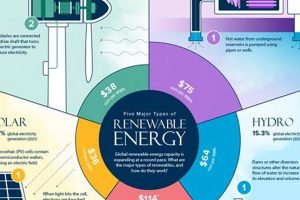
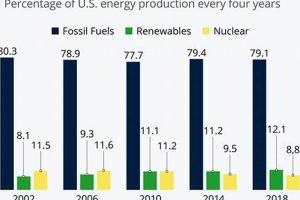
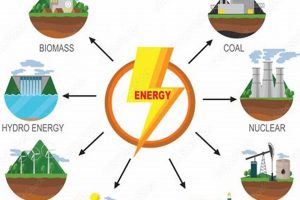
Alternative power generation methods represent a shift from traditional fossil fuels. These methods encompass technologies like solar photovoltaic systems, wind turbines, geothermal plants, and advanced nuclear reactors. An example is concentrated solar power, which uses mirrors to focus sunlight and generate heat, subsequently driving turbines to produce electricity.
The adoption of these approaches is crucial for mitigating climate change, reducing reliance on finite resources, and enhancing energy security. Historically, dependence on fossil fuels has contributed to environmental degradation and geopolitical instability. Diversifying the energy mix through sustainable and renewable avenues promotes a more resilient and environmentally sound future. This transition can lead to economic growth through the creation of jobs in the emerging green technology sector.
The subsequent sections will delve into specific examples of these power generation technologies, examining their operational principles, benefits, challenges, and potential for large-scale implementation. Furthermore, the economic and policy factors influencing their adoption will be explored.
Strategies for Harnessing Advanced Power Generation
The following are evidence-based strategies for successfully integrating and deploying advanced power generation technologies, addressing both practical considerations and broader societal implications.
Tip 1: Prioritize Research and Development: Significant investment in research is essential to improve efficiency, reduce costs, and overcome technological barriers associated with these technologies. Government funding and private sector partnerships are crucial for fostering innovation.
Tip 2: Implement Supportive Policy Frameworks: Governments should establish clear and consistent policies, including tax incentives, subsidies, and carbon pricing mechanisms, to encourage investment in advanced power generation. These policies should provide long-term stability and predictability for investors.
Tip 3: Develop Robust Grid Infrastructure: Modernizing and expanding the electrical grid is crucial for accommodating the intermittent nature of many these tech. Smart grids with advanced energy storage solutions are necessary to ensure a reliable and resilient power supply.
Tip 4: Foster Public-Private Partnerships: Collaboration between public and private entities can leverage the strengths of both sectors. Governments can provide funding and regulatory support, while private companies can bring technological expertise and operational efficiency.
Tip 5: Promote Public Awareness and Education: Educating the public about the benefits of these technologies is crucial for gaining acceptance and support. Public awareness campaigns can address concerns about environmental impacts and economic costs.
Tip 6: Ensure Community Engagement: Engaging local communities in the planning and development of energy projects is essential for addressing social and environmental concerns. This includes providing opportunities for public input and ensuring that projects benefit the local economy.
Tip 7: Focus on Energy Storage Solutions: Developing and deploying effective energy storage technologies, such as batteries and pumped hydro storage, is critical for addressing the intermittency challenges associated with solar and wind power.
These strategies highlight the importance of a multifaceted approach to successfully adopting new energy technologies. By addressing technical, economic, policy, and social factors, it is possible to unlock the full potential of these technologies and create a more sustainable and resilient energy future.
The subsequent sections will explore specific case studies of successful implementations of these strategies and provide further insights into the challenges and opportunities that lie ahead.
1. Technological Innovation and Power Generation

Technological innovation is the engine driving the development and deployment of advanced power generation methods. Without continuous advancements in science and engineering, the transition away from traditional fossil fuels would be severely constrained. Progress in materials science, engineering design, and control systems is essential for enhancing efficiency, reducing costs, and improving the reliability of these alternatives.
- Materials Science Advancements
The discovery and refinement of novel materials are fundamental to improving power generation. For example, the development of more efficient photovoltaic materials, such as perovskites and organic semiconductors, has the potential to significantly increase the energy conversion efficiency of solar panels. Similarly, advancements in high-temperature superconducting materials can improve the efficiency of energy transmission and storage, reducing energy losses in the grid.
- Engineering and Design Optimization
Innovative engineering and design strategies play a critical role in enhancing the performance of power generation systems. For instance, improved turbine designs for wind power have led to greater energy capture and reduced operational costs. Furthermore, optimized reactor designs for nuclear power can enhance safety and efficiency. The integration of advanced control systems and artificial intelligence algorithms can also improve the operation and maintenance of power plants, reducing downtime and optimizing energy output.
- Energy Storage Technologies
Effective energy storage solutions are essential for addressing the intermittency challenges associated with renewable power sources. Advancements in battery technology, such as lithium-ion, flow batteries, and solid-state batteries, are crucial for storing excess energy generated during periods of high production and releasing it during periods of low production. Additionally, the development of large-scale energy storage systems, such as pumped hydro storage and compressed air energy storage, can provide grid-scale energy storage capabilities.
- Smart Grid Technologies
The integration of advanced communication and control systems, known as smart grid technologies, is essential for managing the complex and dynamic nature of modern power grids. Smart grids enable real-time monitoring and control of power flows, allowing for more efficient and reliable operation of the grid. They also facilitate the integration of distributed generation sources, such as rooftop solar panels, and enable demand response programs, which can reduce peak demand and improve grid stability.
These facets illustrate how technological innovation is not merely an isolated pursuit, but rather a critical enabler of advanced power generation. Continuous investment in research and development, coupled with effective technology transfer mechanisms, is essential for accelerating the transition to a sustainable and resilient energy future. Further advancements in these areas will continue to drive down costs, improve performance, and expand the deployment of advanced power generation systems worldwide.
2. Economic Viability
The economic viability of alternative power generation methods is a critical determinant of their widespread adoption. Without cost-effectiveness, even the most technologically advanced and environmentally sound approaches will struggle to compete with established fossil fuel-based systems. The causal relationship is direct: if the cost of generating power through these methods is significantly higher than conventional sources, market penetration will be limited, regardless of environmental benefits. Therefore, economic considerations are not secondary but rather fundamental to the integration of alternative power sources into the energy landscape. A primary aspect of economic viability includes initial capital investment, operational costs, and the cost of financing. High upfront capital investments, even for long-term cost-effective solutions, can be a barrier to entry. Examples include concentrated solar power (CSP) plants, which often require substantial initial outlay despite having low operational costs compared to coal-fired power plants.
Ongoing advancements in technologies related to sustainable energy power generation are gradually reducing the costs. The decreasing levelized cost of energy (LCOE) for wind and solar photovoltaic (PV) systems is a compelling illustration. The LCOE considers the total lifetime costs of a generating asset, including capital, operations, maintenance, and fuel, divided by the total energy produced. As technology improves and economies of scale are realized, the LCOE of wind and solar has plummeted, making them increasingly competitive with fossil fuel alternatives. For instance, large-scale solar PV projects in regions with high solar irradiance now frequently achieve LCOEs comparable to, or even lower than, natural gas-fired power plants. Policy and regulatory frameworks play a crucial role in shaping the economic landscape for these sources. Subsidies, tax incentives, and carbon pricing mechanisms can level the playing field and incentivize investment in clean energy technologies. Feed-in tariffs, which guarantee a fixed price for renewable energy generated and fed into the grid, have been effective in stimulating adoption. However, the design and implementation of these policies must be carefully considered to avoid unintended consequences and ensure long-term sustainability.
Achieving economic viability also hinges on addressing the intermittency challenges associated with several alternative power sources. Investments in energy storage technologies, such as batteries and pumped hydro storage, are essential to ensure a reliable and consistent power supply. Integrating smart grid technologies and demand-response programs can further optimize grid management and reduce the need for costly peaking power plants. The economic viability of a particular approach must be evaluated in a holistic manner, taking into account its potential to create jobs, reduce air pollution, and enhance energy security. While upfront costs may be higher, the long-term benefits for society and the environment can outweigh these initial investments. Successfully harnessing these sources is not solely about technological advancements; it depends on economic competitiveness, a supportive regulatory framework, and a comprehensive understanding of lifecycle costs and benefits.
3. Environmental Sustainability

Environmental sustainability is intrinsically linked to the adoption of new sources of energy. The utilization of fossil fuels has demonstrably contributed to climate change, air pollution, and habitat destruction. Consequently, the imperative to mitigate these adverse effects necessitates a transition toward energy sources with a reduced environmental footprint. Alternative energy technologies, such as solar photovoltaic systems, wind turbines, geothermal plants, and hydroelectric power, offer potential avenues for diminishing reliance on carbon-intensive fuels. The extent to which these energy production methods contribute to environmental sustainability hinges on a comprehensive lifecycle assessment, accounting for resource extraction, manufacturing processes, operational emissions, and end-of-life disposal. For example, while solar energy generation itself produces minimal emissions, the manufacturing of solar panels requires energy and resources. Similarly, wind turbines, although emissions-free during operation, can pose risks to avian populations and may require significant land use. Hydroelectric dams, while providing renewable energy, can alter river ecosystems and displace communities. The environmental benefits are contingent upon conscientious management of each stage of the energy production process.
Practical applications of new energy sources aimed at improving environmental sustainability are increasingly visible. The deployment of large-scale solar farms in previously degraded land, such as abandoned mining sites, exemplifies the integration of energy production with environmental restoration. The implementation of offshore wind farms, strategically located to minimize impacts on marine ecosystems, demonstrates the potential for balancing energy generation with biodiversity conservation. Further, the development of closed-loop geothermal systems reduces the risk of groundwater contamination and minimizes land disturbance. The significance lies not only in the energy produced but also in the ancillary benefits gained through careful project design and execution. The transition is not without challenges, however. The intermittent nature of solar and wind energy necessitates the development of energy storage solutions, such as batteries, which themselves have environmental implications related to resource extraction and disposal. The widespread adoption of electric vehicles, while reducing tailpipe emissions, increases the demand for electricity, which, if generated from fossil fuels, could offset some of the environmental gains. Moreover, the manufacturing and installation of new energy infrastructure require significant investment in resources and energy, raising concerns about the overall carbon footprint.
In summary, environmental sustainability is a critical component of the transition to new sources of energy, but its realization depends on a holistic approach that considers the full lifecycle impacts of each energy technology. Addressing the challenges associated with resource extraction, manufacturing processes, grid integration, and waste management is essential for maximizing the environmental benefits of alternative power sources. Continuous research, innovation, and policy development are necessary to ensure that the pursuit of new energy solutions genuinely contributes to a more sustainable future.
4. Policy and Regulation

Policy and regulation form the framework that governs the development, deployment, and integration of new sources of energy. They provide the necessary incentives, standards, and guidelines for fostering innovation, attracting investment, and ensuring the sustainable operation of alternative energy systems. Without a robust and well-defined regulatory environment, the transition from traditional fossil fuels to alternative power generation methods would face significant impediments.
- Incentive Mechanisms
Incentive mechanisms are policy tools designed to encourage investment in renewable and sustainable energy projects. These can take various forms, including tax credits, subsidies, feed-in tariffs, and renewable energy certificates. Tax credits reduce the upfront costs of energy projects, while subsidies provide direct financial support. Feed-in tariffs guarantee a fixed price for renewable energy supplied to the grid, offering long-term revenue certainty. Renewable energy certificates create a market for renewable energy, allowing utilities to meet their renewable energy obligations by purchasing certificates from renewable energy generators. For example, the Investment Tax Credit (ITC) in the United States has been instrumental in driving solar energy deployment by reducing the tax burden on solar projects. Without such incentives, renewable energy projects may struggle to compete with established fossil fuel-based systems, which often benefit from historical subsidies and established infrastructure.
- Regulatory Standards and Permitting Processes
Regulatory standards and permitting processes establish the requirements for the design, construction, and operation of new energy facilities. These standards ensure that energy projects meet safety, environmental, and performance criteria. Clear and streamlined permitting processes can reduce the time and cost associated with developing energy projects, while stringent environmental standards can minimize their ecological impact. For example, environmental impact assessments (EIAs) are often required for large-scale energy projects to evaluate their potential effects on air and water quality, wildlife habitats, and local communities. Regulatory bodies, such as the Environmental Protection Agency (EPA) in the United States, play a crucial role in setting and enforcing these standards. The presence of transparent and efficient regulatory frameworks fosters investor confidence and promotes sustainable energy development.
- Grid Integration Policies
Grid integration policies govern how new sources of energy are connected to the electricity grid. These policies address issues such as interconnection standards, grid access fees, and net metering rules. Interconnection standards ensure that new energy facilities meet technical requirements for grid compatibility, while grid access fees determine the cost of using the grid to transport electricity. Net metering rules allow consumers with distributed generation systems, such as rooftop solar panels, to receive credit for excess electricity they send back to the grid. Effective grid integration policies are essential for accommodating the intermittent nature of many renewable energy sources, such as solar and wind power. They also promote the development of distributed generation systems, which can enhance grid resilience and reduce transmission losses. For example, states with supportive net metering policies have seen higher rates of solar adoption compared to states with less favorable policies.
- Carbon Pricing Mechanisms
Carbon pricing mechanisms aim to internalize the environmental costs of fossil fuel consumption by placing a price on carbon emissions. These mechanisms can take the form of carbon taxes or cap-and-trade systems. Carbon taxes directly tax carbon emissions, while cap-and-trade systems set a limit on total emissions and allow companies to trade emission allowances. By increasing the cost of fossil fuels, carbon pricing mechanisms incentivize investment in low-carbon energy sources. The European Union Emissions Trading System (EU ETS) is an example of a cap-and-trade system that has been implemented to reduce greenhouse gas emissions from the power sector and other industries. The effectiveness of carbon pricing mechanisms depends on their design and implementation, as well as the level of political support they receive. Well-designed carbon pricing policies can provide a strong signal for investment in clean energy technologies and contribute to achieving climate change mitigation goals.
These facets are not mutually exclusive but rather interconnected components of a comprehensive regulatory approach. The effectiveness of policy and regulation in promoting is contingent upon the degree to which they are aligned with each other and with broader energy and environmental objectives. Clear, consistent, and predictable policies are essential for creating a stable investment climate and accelerating the transition to a cleaner and more sustainable energy future.
5. Energy Security

Energy security, defined as the uninterrupted availability of energy sources at an affordable price, is inextricably linked to the development and deployment of new sources of energy. Dependence on a limited range of energy suppliers, particularly those located in geopolitically unstable regions, poses significant risks to a nation’s economy and security. This reliance exposes countries to price volatility, supply disruptions, and potential political coercion. The integration of diversified energy sources, particularly domestically abundant renewable resources, is a strategic imperative for mitigating these vulnerabilities.
Alternative power generation methods directly address the vulnerabilities inherent in reliance on traditional fossil fuels. For instance, solar, wind, geothermal, and biomass energy can be harnessed within a nation’s borders, reducing dependence on foreign imports and fostering energy independence. Germany’s Energiewende, despite its challenges, exemplifies a concerted effort to transition towards renewable energy sources to enhance energy security. Similarly, the development of shale gas resources in the United States has significantly reduced its reliance on imported natural gas, bolstering its energy security posture. The diversification of the energy mix not only reduces reliance on specific suppliers but also enhances the resilience of the energy system to disruptions caused by natural disasters, cyberattacks, or geopolitical events. A distributed energy system, comprising a network of decentralized energy sources, is inherently more robust than a centralized system reliant on a few large power plants.
In conclusion, the pursuit of enhanced energy security provides a compelling rationale for the development and adoption of new sources of energy. By reducing dependence on volatile global markets and fostering domestic energy production, nations can enhance their economic stability, geopolitical leverage, and resilience to unforeseen disruptions. Addressing the intermittency challenges of renewable energy sources through advanced storage technologies and smart grid infrastructure is crucial for fully realizing the energy security benefits. The long-term strategic advantages of a diversified and domestically sourced energy supply outweigh the initial investment costs associated with transitioning to alternative power generation methods.
Frequently Asked Questions
This section addresses common inquiries regarding alternative power generation methods, providing concise and factual responses based on current understanding and established research.
Question 1: What constitutes a “new” source of energy, and how does it differ from traditional energy sources?
The term “new” in this context refers to energy sources that are not based on traditional fossil fuels like coal, oil, and natural gas. These often include renewable resources such as solar, wind, geothermal, and biomass, as well as advanced nuclear technologies.
Question 2: Are these power generation methods truly sustainable, considering the resources required for their construction and maintenance?
Sustainability is a complex issue. While these sources generally have a lower environmental impact than fossil fuels, their sustainability depends on factors like material sourcing, manufacturing processes, and end-of-life disposal. Lifecycle assessments are crucial for evaluating their true sustainability.
Question 3: What are the primary barriers to widespread adoption of advanced power generation technologies?
Key barriers include high upfront costs, intermittency challenges (particularly for solar and wind), the need for grid infrastructure upgrades, and, in some cases, regulatory hurdles.
Question 4: How do governments support the development and implementation of alternative energy technologies?
Governments employ various policy tools, including tax incentives, subsidies, feed-in tariffs, and carbon pricing mechanisms, to encourage investment in clean energy and make it more competitive with fossil fuels.
Question 5: Can these sources provide a reliable and consistent supply of energy, given the intermittent nature of some renewable resources?
Energy storage solutions, such as batteries, pumped hydro storage, and thermal storage, are essential for addressing intermittency. Smart grid technologies and demand-response programs also play a role in maintaining grid stability.
Question 6: What is the potential for these power generation methods to meet future global energy demand?
Projections vary, but most indicate that clean energy sources will play an increasingly significant role in meeting global energy needs. The pace of adoption will depend on technological advancements, policy support, and economic factors.
In summary, while these emerging technologies offer a promising path toward a more sustainable energy future, careful consideration of their economic, environmental, and technical aspects is essential for ensuring their effective integration into the energy system.
The following section will explore case studies of successful implementations of these strategies and provide further insights into the challenges and opportunities that lie ahead.
Conclusion
The exploration of new sources of energy underscores their critical importance in addressing the multifaceted challenges of climate change, energy security, and sustainable development. These alternative power generation methods offer viable pathways to diversify energy supplies, reduce reliance on finite fossil fuel reserves, and mitigate the environmental consequences of traditional energy production.
The continued pursuit of new sources of energy is not merely an option but a necessity for securing a stable and sustainable future. Investment in research, supportive policy frameworks, and public awareness initiatives are essential to accelerate their adoption and unlock their full potential. The global energy landscape demands a proactive and concerted effort to transition towards a cleaner and more resilient energy system, benefiting present and future generations.